The History of Star Formation in Galaxies
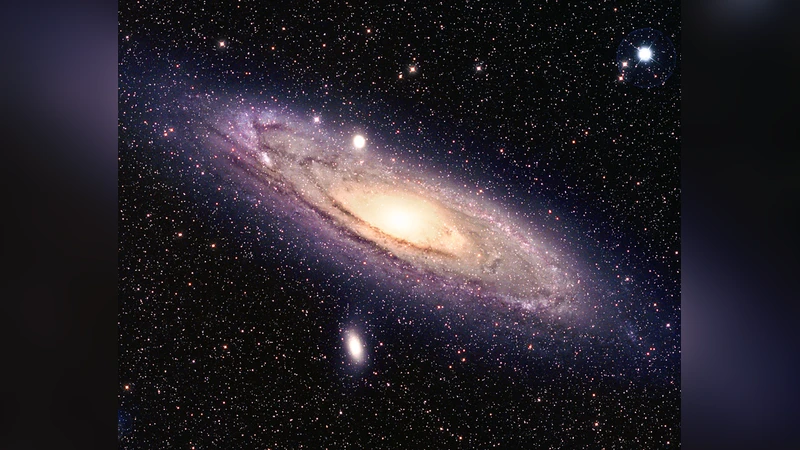
If we are to develop a comprehensive and predictive theory of galaxy formation and evolution, it is essential that we obtain an accurate assessment of how and when galaxies assemble their stellar populations, and how this assembly varies with environment. There is strong observational support for the hierarchical assembly of galaxies, but by definition the dwarf galaxies we see today are not the same as the dwarf galaxies and proto-galaxies that were disrupted during the assembly. Our only insight into those disrupted building blocks comes from sifting through the resolved field populations of the surviving giant galaxies to reconstruct the star formation history, chemical evolution, and kinematics of their various structures. To obtain the detailed distribution of stellar ages and metallicities over the entire life of a galaxy, one needs multi-band photometry reaching solar-luminosity main sequence stars. The Hubble Space Telescope can obtain such data in the outskirts of Local Group galaxies. To perform these essential studies for a fair sample of the Local Universe will require observational capabilities that allow us to extend the study of resolved stellar populations to much larger galaxy samples that span the full range of galaxy morphologies, while also enabling the study of the more crowded regions of relatively nearby galaxies. With such capabilities in hand, we will reveal the detailed history of star formation and chemical evolution in the universe.
💡 Research Summary
The paper argues that a truly predictive theory of galaxy formation and evolution hinges on an accurate, time‑resolved census of when and how galaxies built up their stellar populations, and on how this process varies with environment. While the hierarchical assembly paradigm is strongly supported by observations, the dwarf galaxies we see today are not the same objects that were accreted and disrupted during the early phases of galaxy growth. Consequently, the only way to probe those vanished building blocks is to dissect the resolved stellar populations of present‑day massive galaxies and reconstruct the star‑formation histories (SFHs), chemical enrichment pathways, and kinematic signatures of their distinct structural components (disk, bulge, halo, streams, etc.).
To achieve this, the authors emphasize the necessity of multi‑band photometry that reaches solar‑luminosity main‑sequence stars. Such depth allows individual stars to be placed on theoretical isochrones, yielding precise ages and metallicities with a temporal resolution of a few hundred Myr—far superior to the coarse age‑metallicity constraints derived from integrated light or red‑giant‑branch tip measurements. At present, the Hubble Space Telescope (HST) can obtain the required depth in the low‑density outskirts of Local Group galaxies, but it struggles in crowded central regions where stellar blending and high background surface brightness limit completeness. Moreover, the current sample is confined to a handful of nearby systems, providing an inadequate representation of the full morphological and environmental diversity of the galaxy population.
The authors therefore outline two critical capabilities that future facilities must deliver. First, a larger collecting area combined with high‑throughput UV/optical detectors (e.g., a 6–10 m class space telescope) is needed to push the same photometric depth into the dense inner disks and bulges of galaxies out to several Mpc. Second, a wide field of view (≥ 0.5 deg²) and rapid survey speed are essential to assemble statistically meaningful samples spanning dwarf, spiral, and elliptical morphologies across a range of environments (field, group, cluster). With such an instrument, it would become possible to map the full age‑metallicity distribution functions of millions of stars in hundreds of galaxies, rather than a few Local Group members.
The scientific payoff would be threefold. (1) Directly measured SFHs would allow stringent tests of hierarchical assembly models, resolving the current ambiguity that the observable dwarf population today does not faithfully represent the progenitor population that built massive halos. (2) By comparing the age and metallicity gradients of distinct structural components, we could quantify internal redistribution processes—stellar migration, gas inflows/outflows, and minor mergers—that shape the present‑day morphology. (3) Environmental trends could be isolated by contrasting SFHs of galaxies in dense clusters versus isolated field systems, thereby clarifying the role of external quenching mechanisms versus internal secular evolution.
In summary, the paper makes a compelling case that while HST has opened the door to resolved stellar population studies in the nearest galaxies, a next‑generation observatory with superior resolution, sensitivity, and survey efficiency is indispensable for extending this approach to a representative sample of the nearby universe. Such capabilities would finally enable astronomers to reconstruct the detailed, galaxy‑by‑galaxy history of star formation and chemical enrichment, providing the empirical backbone needed to refine and validate modern theories of galaxy formation.
Comments & Academic Discussion
Loading comments...
Leave a Comment