The Formation and Evolution of Planetary Systems: The Search for and Characterization of Young Planets
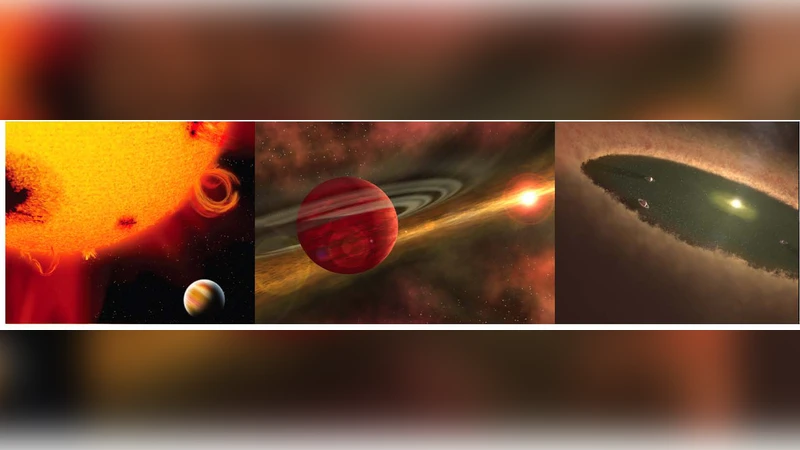
Despite the revolution in our knowledge resulting from the detection of planets around mature stars, we know almost nothing about planets orbiting young stars because rapid rotation and active photospheres preclude detection by radial velocities or transits and because direct imaging has barely penetrated the requisite range of high contrast and angular resolution. Of the techniques presently under consideration for the coming decade, only space-based astrometry offers the prospect of discovering gas giants (100 to » 300 Mearth), lower mass systems such as icy giants (10 to 100 Mearth), and even a few rocky, super-Earths 300 Mearth) orbiting stars ranging in age from 1 to 100 Myr. Astrometry will complement high contrast imaging which should be able to detect gas giants (1~10 MJup) in orbits from a few to a few hundred AU. An astrometric survey in combination with imaging data for a subsample of objects will allow a detailed physical understanding of the formation and evolution of young gas giant planets impossible to achieve by any one technique.
💡 Research Summary
The paper addresses a glaring gap in exoplanet science: the near‑absence of observational data on planets orbiting young stars (ages ≈ 1–100 Myr). While thousands of planets have been discovered around mature, Sun‑like stars, the conventional detection techniques—radial‑velocity (RV) measurements and transit photometry—fail for young stars because rapid rotation, strong magnetic activity, and extensive star‑spot coverage introduce noise levels that swamp planetary signals. Direct imaging, although advancing, is limited by current high‑contrast and angular‑resolution capabilities; it can only detect massive gas giants (≈1–10 MJup) at wide separations (tens to hundreds of AU). Consequently, the formation and early dynamical evolution of planetary systems remain poorly constrained.
The authors argue that space‑based astrometry, capable of micro‑arcsecond positional precision, is the only technique poised to fill this observational void in the coming decade. By measuring the reflex motion of a star caused by an orbiting companion, astrometry directly yields the planet’s orbital elements and true mass, independent of inclination ambiguities that plague RV data. The paper outlines the mass‑sensitivity range of a next‑generation astrometric mission: it can detect gas giants (≈100–>300 M⊕), icy giants (≈10–100 M⊕), and even a handful of super‑Earths (≈300 M⊕) around stars spanning the full 1–100 Myr age range. This mass coverage bridges the gap between the high‑mass, wide‑orbit planets accessible to imaging and the lower‑mass, close‑in planets that dominate mature‑star surveys.
A central insight is the synergistic power of combining astrometry with high‑contrast imaging. Astrometry provides precise orbital geometry and dynamical mass, which calibrates the luminosity‑mass‑age relations used in imaging analyses. Imaging, in turn, supplies spectra, effective temperatures, and atmospheric compositions that, when paired with the dynamical mass, enable robust interior structure modeling. This joint approach can discriminate between competing formation scenarios—core accretion versus disk instability—by comparing observed mass‑radius‑temperature relationships and orbital architectures with theoretical predictions.
The authors propose a concrete survey strategy: target a volume‑limited sample of nearby (≤150 pc) young stars across the 1–100 Myr interval, allocating multiple astrometric observations per star over several years to average out stellar jitter and achieve the required signal‑to‑noise. The expected yield is several hundred planets with well‑determined masses and orbits, a subset of which will be bright enough for direct imaging with upcoming extreme‑AO instruments or space coronagraphs. The combined dataset will map the planetary mass function at early ages, trace migration pathways, and quantify the frequency of wide‑orbit giants versus close‑in super‑Earths.
In summary, the paper makes a compelling case that space‑based astrometry is the only feasible method to discover and characterize the bulk of the young planetary population, especially those below the imaging detection threshold. When coupled with high‑contrast imaging, it will deliver a comprehensive physical picture of planetary birth and early evolution—information unattainable by any single technique. The authors conclude that such a coordinated astrometric‑imaging program should be a flagship priority for the next decade, as it will fundamentally advance our understanding of how planetary systems, including our own, originate and evolve.
Comments & Academic Discussion
Loading comments...
Leave a Comment