Properties of Dark Matter Revealed by Astrometric Measurements of the Milky Way and Local Galaxies
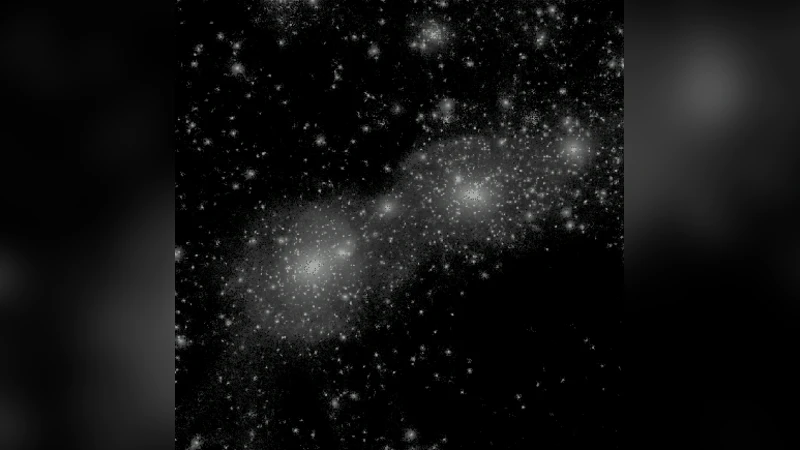
The fact that dark matter (DM), thus far, has revealed itself only on scales of galaxies and larger, again thrusts onto astrophysics the opportunity and the responsibility to confront the age old mystery “What is the nature of matter?” By deriving basic data on the nature of DM - e.g., mass of its particle(s), present mean temperature, distribution in galaxies and other structures in the universe, and capacity for dissipational collapse - we will be uncovering the properties of the dominant species of matter in the universe and significantly extending the standard models of particle physics. Determining the mass of the DM particle to an order of magnitude would help to sort out the particle family to which it (or they) belongs. Beyond mass, there are issues of stability. The DM particle may be unstable with a measurable half-life, or it may become unstable after absorbing a certain amount of energy from collisions. In both cases it would contribute to the present hot dark matter component. Some key parameters of DM can most accurately be measured in the very nearby universe because DM dominates the mass in the outer Milky Way (MW), in other galaxies in the Local Group, and in the Local Group in its entirety. The presence and amount of DM can be quantified by study of dynamical processes observable in fine detail within these entities. Precise measurements of 3-D velocities for stars, coherent star streams, and stars in satellite stellar systems out to the edge of the Galaxy can reveal “what is the shape, orientation, density law, and lumpiness of the dark matter halo” as well as “what is the total mass of the Galaxy?”
💡 Research Summary
The paper argues that the only current evidence for dark matter (DM) comes from scales of galaxies and larger, and that this fact makes the nearby Universe an ideal laboratory for extracting the fundamental properties of the dominant matter component. By focusing on the Milky Way (MW), its outer halo, and the Local Group (LG) of galaxies, the authors propose that precise three‑dimensional stellar kinematics—derived from astrometric missions such as Gaia, supplemented by spectroscopic radial velocities—can be used to map the gravitational potential generated by DM with unprecedented accuracy.
Key observational strategy
- 3‑D stellar velocities – Combining proper motions, parallaxes, and line‑of‑sight velocities yields full space motions for millions of stars out to the edge of the Galactic disk and into the halo (tens to hundreds of kiloparsecs).
- Coherent stellar streams – Tidal streams (e.g., Sagittarius, GD‑1, Orphan) preserve the phase‑space structure of the halo. Their widths, density variations, and velocity dispersions are sensitive to the shape (flattening, triaxiality) and lumpiness (sub‑halo population) of the DM halo.
- Satellite galaxies and globular clusters – The orbital poles, eccentricities, and internal velocity dispersions of dwarf spheroidals and globular clusters provide independent constraints on the total mass, concentration, and radial density law of the MW halo.
By fitting these data to dynamical models (Jeans analysis, distribution‑function methods, and N‑body stream fitting), the authors claim that one can determine:
- Total mass of the Milky Way (M_vir) to within ~10 % and the radial density profile (e.g., NFW vs. cored).
- Halo shape and orientation – axis ratios and tilt relative to the Galactic disk, which are crucial for testing predictions of cold‑dark‑matter (CDM) simulations.
- Sub‑halo abundance – the level of “lumpiness” inferred from stream perturbations directly tests the CDM prediction of numerous ~10⁶–10⁸ M⊙ sub‑structures.
Implications for particle physics
The dynamical temperature of the halo (i.e., the velocity dispersion) translates into a present‑day mean kinetic energy for DM particles, allowing a distinction between “cold” (v ≈ 10⁻³ c) and “warm” (v ≈ 10⁻² c) candidates. If the inferred temperature is higher than expected for a pure CDM population, the authors argue that a warm component (e.g., sterile neutrinos) must be present.
The paper further discusses how the measured phase‑space density can be combined with cosmological relic‑abundance calculations to constrain the DM particle mass to within an order of magnitude (roughly 1 GeV – 1 TeV). This range would narrow the viable particle families to weakly interacting massive particles (WIMPs), axion‑like particles, or heavier hidden‑sector states.
Two scenarios of DM instability are explored:
- Intrinsic decay – If DM particles have a finite half‑life (∼10⁹–10¹⁰ yr), their decay products would contribute a hot‑DM component, altering the halo’s velocity distribution.
- Collision‑induced activation – High‑energy collisions in dense sub‑halos could excite DM to an unstable state that subsequently decays, again injecting relativistic particles.
Both cases would leave observable imprints in the outer halo’s velocity anisotropy and in the cosmic‑ray background, providing indirect tests of DM longevity.
Dissipative collapse – The authors examine whether DM can undergo radiative cooling and collapse to form a central “dark disk.” The presence or absence of such a component can be inferred from the vertical kinematics of disk stars and from the shape of the inner halo. A detected dark disk would imply that DM possesses non‑gravitational self‑interactions, dramatically reshaping particle‑physics models.
Future prospects – The paper emphasizes that upcoming astrometric missions (e.g., Gaia Data Release 4, the Nancy Grace Roman Space Telescope, and future ground‑based facilities like the Vera C. Rubin Observatory) will extend precise proper‑motion measurements to fainter, more distant stars and to a larger fraction of the LG. Coupled with deep spectroscopic surveys (e.g., DESI, 4MOST), these data will tighten constraints on the halo mass profile to a few percent, resolve sub‑halo populations down to 10⁶ M⊙, and potentially detect signatures of DM decay or self‑interaction.
In summary, by exploiting the exquisite 3‑D kinematic information now available for the Milky Way and its nearest companions, the authors argue that we can move from purely gravitational evidence of dark matter to quantitative measurements of its particle properties—mass, temperature, stability, and interaction strength—thereby bridging astrophysics and particle physics and opening a new era of “dark‑matter astronomy.”
Comments & Academic Discussion
Loading comments...
Leave a Comment