New Worlds: Evaluating terrestrial planets as astrophysical objects
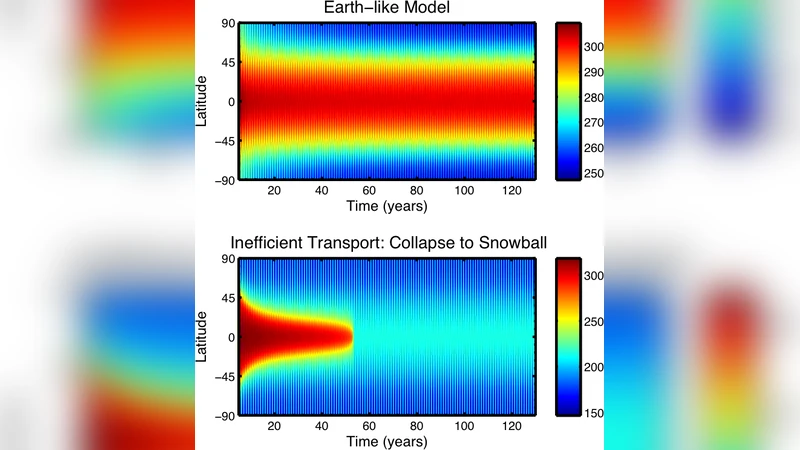
Terrestrial exoplanets are on the verge of joining the ranks of astronomically accessible objects. Interpreting their observable characteristics, and informing decisions on instrument design and use, will hinge on the ability to model these planets successfully across a vast range of configurations and climate forcings. A hierarchical approach that addresses fundamental behaviors as well as more complex, specific, situations is crucial to this endeavor and is presented here. Incorporating Earth-centric knowledge, and continued cross-disciplinary work will be critical, but ultimately the astrophysical study of terrestrial exoplanets must be encouraged to develop as its own field.
💡 Research Summary
The paper “New Worlds: Evaluating terrestrial planets as astrophysical objects” argues that terrestrial exoplanets are about to become routine observational targets, and that the scientific return from upcoming facilities such as JWST, ELT, and ARIEL will depend critically on our ability to model these worlds across an enormous range of physical conditions. The authors propose a hierarchical modeling framework that starts with the most fundamental physics—mass, radius, bulk composition, radiative‑convective equilibrium, and simple equations of state—and progressively adds layers of complexity. At the second tier, they incorporate atmospheric chemistry networks, cloud microphysics, surface‑atmosphere heat exchange, and the spectral energy distribution of the host star. By adapting Earth‑centric climate models (e.g., CAM, LMD‑G) they are able to capture non‑linear feedbacks from gases such as methane, ammonia, and hydrogen sulfide, while also accounting for the diverse stellar environments of M‑, K‑, and G‑type dwarfs.
The third tier consists of full three‑dimensional general‑circulation simulations that resolve atmospheric, oceanic, cryospheric, and topographic processes on a planet‑wide grid. Adaptive time‑stepping and high‑resolution meshes allow the model to capture regional climate variability, jet streams, ocean currents, and polar ice feedbacks without prohibitive computational cost. Crucially, the authors embed a “observation‑model feedback loop” in which synthetic spectra, phase curves, and time‑dependent light curves generated by the 3‑D model are directly compared to real data. Bayesian inference techniques are used to invert observed signals and constrain model parameters, providing a rigorous quantification of uncertainties.
A major theme of the paper is the limitation of a purely Earth‑centric approach. While Earth’s climate system offers a valuable template, exoplanets may experience extreme irradiation, rapid rotation, high orbital eccentricity, or exotic bulk compositions that give rise to novel physical and chemical phenomena. The authors therefore advocate for a cross‑disciplinary research network that brings together astrophysicists, atmospheric chemists, oceanographers, geologists, and laboratory experimentalists. Laboratory studies at high pressure and temperature, combined with numerical experiments, are essential to extend Earth‑based knowledge to the exotic regimes encountered on distant worlds.
The paper also discusses practical implications for instrument design and mission planning. By using the hierarchical models to produce “sensitivity maps,” scientists can identify which wavelengths, spectral resolutions, and temporal sampling strategies are most diagnostic for a given planetary scenario. This information can guide the allocation of limited observing time on flagship telescopes. Moreover, the authors call for the creation of open‑access databases and standardized model interfaces so that the broader community can share and benchmark results. They suggest integrating machine‑learning surrogates to accelerate parameter sweeps and to enable real‑time model updates as new data arrive.
In conclusion, the authors argue that establishing terrestrial exoplanets as a distinct astrophysical discipline requires a systematic, multi‑scale modeling strategy, judicious extension of Earth‑based climate science, and sustained interdisciplinary collaboration. By doing so, the community will be equipped to interpret the wealth of forthcoming observations, to optimize future instrument concepts, and ultimately to assess the habitability and diversity of Earth‑like worlds throughout the galaxy.
Comments & Academic Discussion
Loading comments...
Leave a Comment