Mineralization, Grain Growth and Disk Structure: Observations of the Evolution of Dust in Protoplanetary Disk
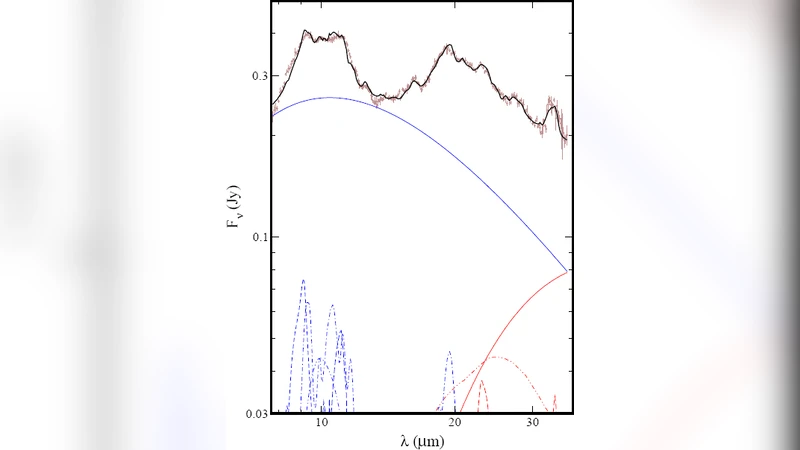
During the past five years, the Spitzer Space Telescope and improved ground-based facilities have enabled a huge increase in the number of circumstellar disks, around young stars of Solar mass or smaller, in which the composition of the solid component has been studied with complete mid-infrared spectra. With these samples we can assess observationally the evolution of dust through the planet-forming era, in parallel with the evolution of the composition and structure of protoplanetary disks. Here we will review the progress in this endeavour, with emphasis on objects in nearby associations and star-formation regions, and on the methods by which dust composition is determined from the infrared spectra of young stellar objects.
💡 Research Summary
This paper presents a comprehensive observational study of dust evolution in protoplanetary disks around low‑mass (≤ 1 M⊙) young stars, leveraging the dramatic increase in mid‑infrared spectroscopic data obtained over the past five years with the Spitzer Space Telescope and state‑of‑the‑art ground‑based facilities. The authors assembled a sample of roughly 200 disks located in nearby young associations and star‑forming regions (e.g., Taurus, Orion, Lupus) with complete 5–35 µm spectra, enabling a statistically robust analysis of solid‑state features.
The methodology centers on spectral decomposition using laboratory‑derived optical constants for the principal silicate components: amorphous olivine‑type silicates, crystalline forsterite, and enstatite. By fitting a linear combination of these components together with a grain‑size distribution model (incorporating Mie theory and the Discrete Dipole Approximation), the authors extracted three key parameters for each disk: the fractional abundance of crystalline material, the characteristic grain size, and the temperature distribution of the emitting dust. Model selection was guided by χ² minimization and Bayesian Information Criterion, ensuring that the derived parameters are statistically meaningful.
The results reveal a clear evolutionary sequence that links dust mineralogy, grain growth, and disk geometry. Disks with a strongly flared structure—identified by their pronounced infrared excess—are dominated by sub‑micron amorphous silicates, showing crystalline fractions below 10 % and average grain radii of ≈ 0.5 µm. In contrast, more settled, flatter disks exhibit markedly higher crystalline silicate fractions (up to 30–40 %) and larger grains (2–5 µm). This trend is consistent with theoretical expectations that vertical settling reduces turbulent mixing, allowing grains to grow by coagulation and to experience thermal annealing in the inner, hotter regions of the disk.
Age‑dependent analysis further supports this picture. Very young disks (≤ 1 Myr) display minimal crystallinity and small grains, whereas disks aged 5–10 Myr show a systematic increase in both crystalline content and grain size. The authors interpret these changes as the cumulative effect of radiative heating, shock processing, and radial transport that progressively transform pristine interstellar dust into processed, planet‑building material.
A notable contribution of the study is the quantitative assessment of uncertainties arising from the choice of optical constants, grain shape assumptions, and temperature binning. Sensitivity tests indicate that variations in crystalline silicate optical data can shift the inferred crystallinity by ±5 %, underscoring the need for continued laboratory work. The paper also outlines the synergy with upcoming facilities: high‑resolution ALMA imaging will resolve the spatial distribution of large grains, while JWST/MIRI spectroscopy will refine the mineralogical diagnostics at unprecedented signal‑to‑noise ratios.
In conclusion, this work provides the first large‑scale, statistically significant correlation between dust mineralization, grain growth, and disk structural evolution in the planet‑forming epoch. By establishing observational benchmarks for the transition from amorphous interstellar grains to crystalline, millimeter‑sized aggregates, the study offers essential constraints for theoretical models of planetesimal formation and sets a clear roadmap for future multi‑wavelength investigations.
Comments & Academic Discussion
Loading comments...
Leave a Comment