How and When do Planets Form? The Inner Regions of Planet Forming Disks at High Spatial and Spectral Resolution
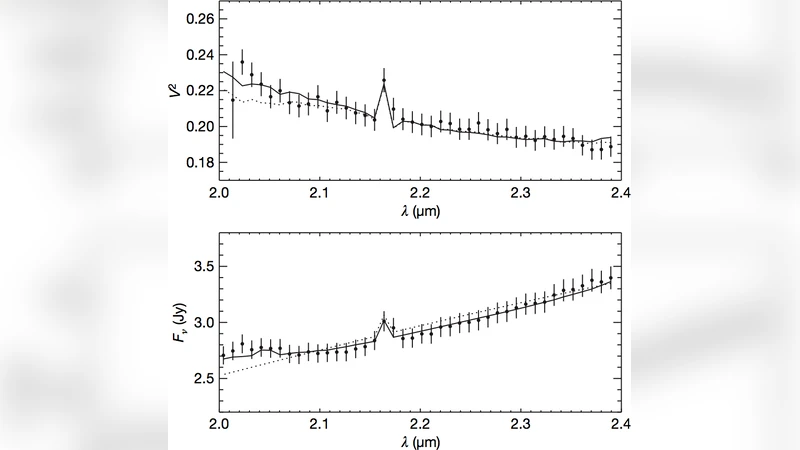
The formation of planets is one of the major unsolved problems in modern astrophysics. Planets are believed to form out of the material in circumstellar disks known to exist around young stars, and which are a by-product of the star formation process. Therefore, the physical conditions in these disks - structure and composition as a function of stellocentric radius and vertical height, density and temperature profiles of each component - represent the initial conditions under which planets form. Clearly, a good understanding of disk structure and its time evolution are crucial to understanding planet formation, the evolution of young planetary systems (e.g. migration), and the recently discovered, and unanticipated, diversity of planetary architectures. However, the inner disk regions (interior to ~10 AU) most relevant in the context of planet formation are very poorly known, primarily because of observational challenges in spatially resolving this region. In this contribution we discuss opportunities for the next decade from spectrally and spatially resolved observations, and from direct imaging, using infrared long baseline interferometry.
💡 Research Summary
The formation of planets remains one of the most compelling unsolved problems in modern astrophysics, largely because the physical conditions that give rise to planetary systems are hidden deep within the inner regions of circumstellar disks. These inner zones—typically within 10 AU of the host star and especially the sub‑AU region where temperatures range from a few hundred to over a thousand kelvin—are where solid material first condenses, planetary cores grow rapidly, and migration processes begin to sculpt the architecture of nascent planetary systems. Yet, despite the central role of this region, our empirical knowledge is limited by the inability of existing facilities to resolve spatial scales smaller than a few tens of astronomical units at the relevant infrared wavelengths.
In this contribution the authors outline a comprehensive observational strategy for the next decade that leverages the unique capabilities of infrared long‑baseline interferometry combined with high‑resolution spectroscopy. Instruments such as VLTI/GRAVITY, CHARA/MIRC‑X, and the forthcoming ELT‑METIS can achieve angular resolutions of 0.1 mas (≈0.014 AU at 140 pc), effectively opening a direct window onto the inner disk. By measuring the spatial distribution of continuum emission together with molecular line emission (e.g., CO v = 1‑0, H₂O, OH) at spectral resolutions λ/Δλ ≥ 10⁴, it becomes possible to map temperature, density, and velocity fields across the region where planetesimals coalesce.
A key innovation highlighted in the paper is spectro‑interferometry, which simultaneously resolves the geometry of line and continuum emission. This technique allows researchers to disentangle the contributions of gas and dust, to locate snow lines with unprecedented precision, and to quantify the optical depth structure that governs radiative transfer in the disk. The resulting data can be fed directly into three‑dimensional magneto‑hydrodynamic (MHD) simulations that include detailed chemistry, thereby constraining model parameters that have previously been treated as free.
The authors also emphasize the importance of temporal monitoring. Infrared interferometers can be scheduled for repeated observations on timescales of weeks to months, enabling the detection of rapid brightness fluctuations, line‑profile changes, or the emergence of new asymmetries. Such variability may signal episodic accretion events, magnetorotational instability‑driven turbulence, or the early stages of planet‑disk interaction, providing a dynamic view of processes that are otherwise inferred only indirectly.
Beyond interferometry, the paper proposes a synergistic roadmap that integrates direct imaging from JWST, ELT adaptive‑optics instruments, and (sub)millimeter observations from ALMA. Wide‑field infrared imaging will capture the larger‑scale disk morphology, while ALMA will continue to trace the colder outer regions. Together with the high‑resolution interferometric data, this multi‑wavelength approach will deliver a coherent, multi‑scale picture of disk structure, composition, and evolution.
In conclusion, the authors argue that the combination of high‑spatial‑resolution infrared interferometry and high‑spectral‑resolution diagnostics will finally allow us to probe the inner 10 AU of planet‑forming disks directly. This breakthrough will transform our understanding of the initial conditions for planet formation, the mechanisms of planetary migration, and the origin of the remarkable diversity observed in exoplanetary systems. The anticipated technological advances and coordinated observing campaigns over the next ten years are poised to shift planet formation from a largely theoretical framework to an empirically grounded science.
Comments & Academic Discussion
Loading comments...
Leave a Comment