Kinematics and Formation Mechanisms of High-Redshift Galaxies
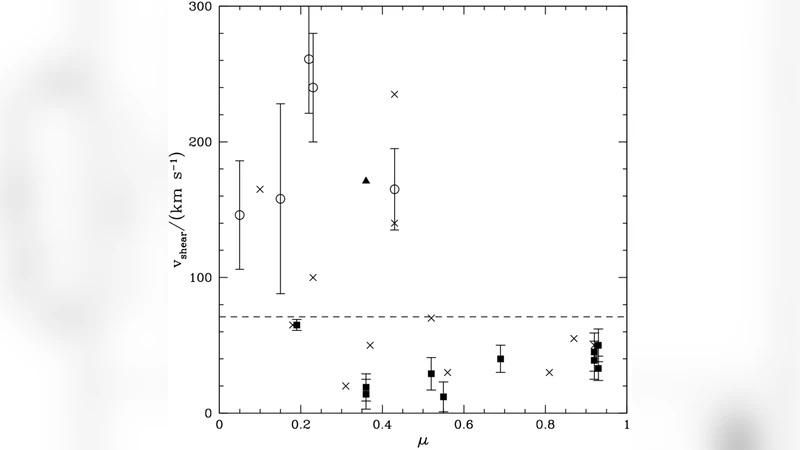
Recent years have witnessed a substantial increase in our ability to trace the spatially resolved properties of rapidly star-forming galaxies in the high-redshift universe and numerous studies have suggested the importance of turbulent gas-phase kinematics. In this submission to the Astro 2010 Decadal survey we outline some of the major outstanding questions regarding the kinematics and formation history of these galaxies, such as the prevalence of various kinematic models, the relation to lower surface-brightness populations and faint AGN, and the implications for the evolution of gas accretion and cooling mechanisms with redshift. We comment on the capability of future large optical/IR and millimeter wavelength facilities to address these questions.
💡 Research Summary
The paper reviews the rapid progress made in spatially resolved observations of intensely star‑forming galaxies at high redshift (z≈1–3) and frames a set of outstanding questions about their kinematics and formation histories. First, the authors note that existing data are dominated by bright, high‑surface‑brightness systems that show strong emission lines, often referred to as “class A” galaxies. Because these objects represent only the tip of the iceberg, the prevalence of different kinematic regimes—pure rotating disks, turbulence‑dominated disks, or hybrid configurations that include large‑scale inflows, outflows, and asymmetric motions—remains uncertain. A comprehensive census must also incorporate lower‑surface‑brightness “class B” galaxies and faint active galactic nuclei (AGN) that are currently under‑sampled.
Second, the paper asks how the identified kinematic modes correlate with fundamental galaxy properties such as stellar mass, star‑formation rate, metallicity, and large‑scale environment (e.g., filamentary connections or cluster membership). The authors discuss two competing theoretical frameworks for gas accretion: the cold‑flow scenario, in which relatively cool streams penetrate the halo and directly fuel the central galaxy, generating high turbulence and elevated star‑formation efficiencies; and the hot‑mode accretion scenario, which becomes dominant once a halo exceeds a critical mass, leading to shock‑heated gas that settles into a more stable rotating disk. Distinguishing which galaxies follow which pathway is essential for linking observed kinematics to underlying gas‑accretion physics.
Third, the evolution of gas cooling mechanisms with redshift is highlighted. The transition from cold‑flow‑driven turbulence to hot‑mode‑driven stability should manifest as systematic changes in line ratios, velocity dispersions, and spatially resolved temperature and density structures. Multi‑line spectroscopy (e.g., Hα,
Comments & Academic Discussion
Loading comments...
Leave a Comment