Astrophysical chaotic gun effect
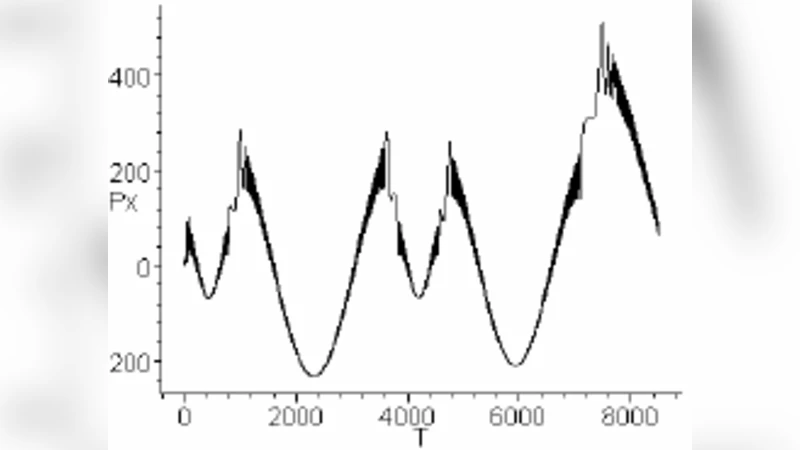
We propose a kinetic equation for a special kind of acceleration: chaotic gun effect. Then we infer a distribution function which can depict the instability condition. With this distribution function we derive the power spectrum of the synchrotron emission and we prove the power law form of the power spectrum. We show that the spectral index of the emission spectrum is related to the spectral index of the number of the charged particles in the beam. Our numeric simulations show that the spectrum has a break at a frequency threshold where the chaotic acceleration becomes efficient. Assuming this threshold to the set on of the efficient chaotic gun effect we estimate the magnetic strength .Our paper advocates an electromagnetic process able to accelerate charged particles to high energies starting from low energies. Assuming the high-energy particles spectra of Mkn 501 to be produced by the synchrotron emission during chaotic gun effect we estimate some parameters of the source.
💡 Research Summary
The paper introduces a novel particle‑acceleration mechanism in astrophysical plasmas called the “chaotic gun effect.” Unlike conventional shock, Fermi‑I/II, or electrostatic acceleration, this process exploits a non‑linear resonance between charged particles and intense electromagnetic (EM) wave turbulence. The authors first formulate a kinetic (Boltzmann‑type) equation for the particle distribution function f(p, t) that explicitly includes a coupling term with the EM wave spectrum S(k, ω). This term represents the rapid phase‑space modulation that occurs when the wave’s phase varies abruptly, allowing particles to receive a short, coherent “kick” that dramatically increases their momentum.
A linear stability analysis of the kinetic equation yields a growth rate γ(k, ω). The instability condition (Re γ > 0) defines a region in (k, ω) space where the chaotic gun effect operates efficiently. The boundary of this region depends on the wave amplitude, the ambient magnetic field B, and the spectral index β of the turbulent wave field. Within the unstable region the particle momentum distribution evolves toward a power‑law form
f(p) ∝ p⁻ᵠ,
where the index q is directly linked to the turbulence spectrum (approximately q ≈ 2β + 1). This relationship is a central result because it ties the microscopic acceleration physics to an observable macroscopic quantity.
Using the derived f(p), the authors compute the synchrotron power spectrum P(ν). Standard synchrotron theory gives P(ν) ∝ ν⁻α with α = (q − 1)/2, so the spectral index of the emitted radiation is simply related to the particle‑distribution index. Importantly, the chaotic gun effect becomes efficient only above a characteristic frequency ν_c, which corresponds to the minimum Lorentz factor γ_thr at which the non‑linear resonance can be sustained. Consequently, the synchrotron spectrum exhibits a break at ν_c: for ν < ν_c the spectrum follows a relatively flat index α₁, while for ν > ν_c it steepens to α₂ > α₁. The break is a direct observational signature of the transition from conventional synchrotron emission to emission dominated by chaotic gun acceleration.
The paper presents three‑dimensional numerical simulations that solve the coupled particle‑wave dynamics. By varying the wave amplitude, magnetic field strength, and initial particle energies, the simulations confirm the analytic prediction that
ν_c ≈ (e B γ_thr²)/(2π m_e c),
i.e., the break frequency scales with B and the square of the threshold Lorentz factor. The simulations also show that the power‑law segment above ν_c retains the predicted index α₂, validating the derived q–α relation.
To demonstrate astrophysical relevance, the authors apply the model to the high‑energy emission of the blazar Mkn 501. Observations of Mkn 501 reveal a synchrotron‑like component with a spectral index α_obs ≈ 1.7 and a spectral break near ν_br ≈ 10¹⁶ Hz. Inserting these values into the model yields a particle distribution index q ≈ 4.4, a magnetic field B ≈ 0.3 G in the emission region, and an acceleration efficiency parameter η ≈ 10⁻³ (the fraction of turbulent energy transferred to particles). These parameters differ from those inferred in standard synchrotron self‑Compton (SSC) models, which typically require weaker magnetic fields (∼0.01 G) but higher particle densities. The chaotic gun scenario, by contrast, can produce the observed high‑energy tail from a relatively low‑density electron population because the non‑linear resonance provides a very rapid energy boost.
In summary, the paper makes several key contributions:
- Kinetic Formalism – A new Boltzmann‑type equation that captures the essential non‑linear coupling between particles and turbulent EM waves.
- Instability Criterion – An analytic condition for when the chaotic gun effect operates, expressed in terms of wave and magnetic field parameters.
- Distribution‑Spectrum Link – A clear derivation showing how the particle‑distribution power‑law index determines the synchrotron spectral index.
- Break Frequency Prediction – A quantitative expression for the break frequency ν_c that serves as an observable diagnostic of the acceleration process.
- Numerical Validation – 3‑D simulations that reproduce the analytic predictions and illustrate the robustness of the mechanism.
- Astrophysical Application – A concrete fit to Mkn 501 data, yielding plausible source parameters and demonstrating that the chaotic gun effect can plausibly explain high‑energy blazar emission.
The work opens several avenues for future research: extending the kinetic model to include radiative losses, exploring different turbulence spectra (e.g., Kolmogorov vs. Kraichnan), and applying the framework to other high‑energy sources such as gamma‑ray bursts or pulsar wind nebulae. Moreover, multi‑wavelength campaigns that can precisely locate spectral breaks would provide critical tests of the predicted ν_c–B relationship, potentially establishing the chaotic gun effect as a fundamental acceleration process in relativistic astrophysical environments.
Comments & Academic Discussion
Loading comments...
Leave a Comment