Astrophysics with Radioactive Atomic Nuclei
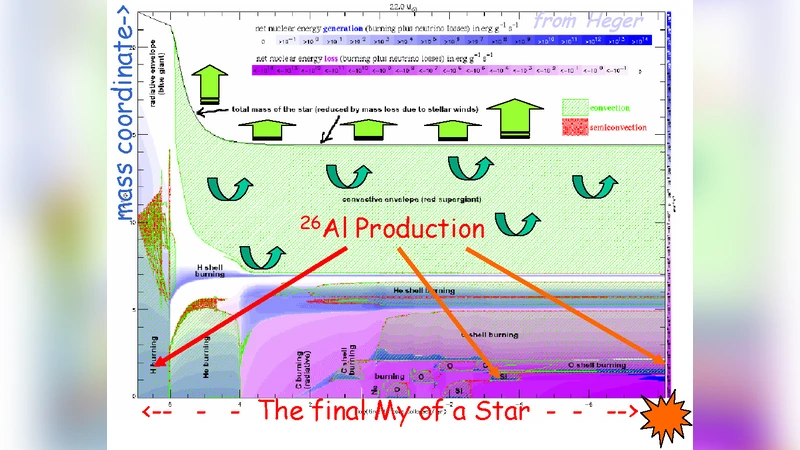
We propose to advance investigations of electromagnetic radiation originating in atomic nuclei beyond its current infancy to a true astronomy. This nuclear emission is independent from conditions of gas, thus complements more traditional stronomical methods used to probe the nearby universe. Radioactive gamma-rays arise from isotopes which are made in specific locations inside massive stars, their decay in interstellar space traces an otherwise not directly observable hot and tenuous phase of the ISM, which is crucial for feedback from massive stars. Its intrinsic clocks can measure characteristic times of processes within the ISM. Frontier questions that can be addressed with studies in this field are the complex interiors of massive stars and supernovae which are key agents in galactic dynamics and chemical evolution, the history of star-forming and supernova activity affecting our solar-system environment, and explorations of occulted and inaccessible regions of young stellar nurseries in our Galaxy.
💡 Research Summary
The paper proposes to elevate the study of radioactive gamma‑ray emission from atomic nuclei to a mature branch of astronomy, arguing that such emission provides a unique, gas‑independent probe of the hot, tenuous phases of the interstellar medium (ISM) that are otherwise invisible to conventional wavelength regimes. Radioactive isotopes such as ^26Al, ^60Fe, ^44Ti, and ^56Co are synthesized in well‑defined sites within massive stars and supernovae; their subsequent decay in interstellar space produces characteristic gamma‑ray lines (e.g., 1.809 MeV for ^26Al, 1.173 MeV and 1.332 MeV for ^60Fe, 1.157 MeV for ^44Ti). Because the photons travel essentially unattenuated through the Galaxy, the observed line intensities and sky distributions directly trace the locations, yields, and transport of freshly synthesized nuclei, thereby offering a “clock” that measures the timing of astrophysical processes on timescales ranging from 10⁴ to 10⁶ years.
The authors first review the nucleosynthetic pathways that create these isotopes. ^26Al is produced primarily during hydrogen burning (Mg–Al cycle) and later expelled by stellar winds from Wolf‑Rayet stars; ^60Fe originates in later burning stages and is ejected during core‑collapse supernova explosions. ^44Ti and ^56Co are synthesized in the innermost layers of the supernova shock and decay on much shorter timescales, providing a direct diagnostic of the explosion dynamics, asymmetries, and mixing. By measuring line ratios such as ^26Al/^60Fe, one can simultaneously constrain massive‑star interior mixing, reaction rates, and the recent star‑formation history of the Milky Way.
Current observational status is summarized: the COMPTEL instrument on CGRO and the SPI spectrometer on INTEGRAL have produced the first all‑sky maps of ^26Al and ^60Fe, revealing a distribution that follows the Galactic spiral arms and massive‑star associations. Pointed observations have detected ^44Ti from the Cassiopeia A remnant and SN 1987A, allowing estimates of ejecta mass and asymmetry. However, limited sensitivity, modest angular resolution (≈2–3°), and high instrumental background have prevented detailed studies of weaker lines, fine spatial structures, and time variability.
The paper then outlines the technological roadmap for the next decade. Proposed missions such as COSI (a balloon‑borne Compton telescope), AMEGO (a space‑based MeV gamma‑ray observatory), and e‑ASTROGAM aim to achieve energy resolutions of ΔE/E ≈ 0.1 % and angular resolutions better than 0.2°, together with background‑rejection schemes based on active shielding and event‑by‑event Compton kinematics. These capabilities will enable (i) precise mapping of ^26Al and ^60Fe to resolve individual star‑forming complexes, (ii) detection of ^44Ti in a larger sample of young supernova remnants, (iii) searches for even shorter‑lived isotopes (e.g., ^22Na, ^7Be) that could trace recent nova activity, and (iv) time‑domain studies of line flux variations that reflect ISM transport and decay.
Scientific opportunities are grouped into four frontier questions. First, the internal physics of massive stars: by comparing observed isotope yields with stellar evolution models, one can test convective overshoot, rotation‑induced mixing, and nuclear reaction rates that remain uncertain. Second, the mechanism of core‑collapse supernovae: the spatial distribution and total mass of ^44Ti provide constraints on explosion asymmetry, jet formation, and fallback. Third, Galactic ecosystem and feedback: the cumulative gamma‑ray luminosity from ^26Al and ^60Fe quantifies the energy and momentum injected into the ISM by massive‑star winds and supernovae, informing models of superbubble formation and large‑scale gas circulation. Fourth, the Solar System’s recent environment: excess ^60Fe found in deep‑sea sediments and lunar samples can be linked to nearby supernovae; gamma‑ray observations can identify candidate progenitors and estimate the timing and distance of such events.
Finally, the authors propose an integrated research program that couples high‑resolution gamma‑ray data with multi‑wavelength observations (infrared dust maps, radio CO surveys, X‑ray supernova remnant studies) and state‑of‑the‑art nucleosynthesis simulations. By establishing a feedback loop between theory and observation, the field can move from qualitative detection to quantitative astrophysics, ultimately delivering a comprehensive picture of how massive stars shape the chemical and dynamical evolution of galaxies. The paper concludes that, with the imminent launch of next‑generation MeV observatories, radioactive gamma‑ray astronomy is poised to become a cornerstone of modern astrophysics, offering unparalleled insight into stellar interiors, explosive nucleosynthesis, and the life cycle of matter in the Milky Way.
Comments & Academic Discussion
Loading comments...
Leave a Comment