Pushing off the walls: a mechanism of cell motility in confinement
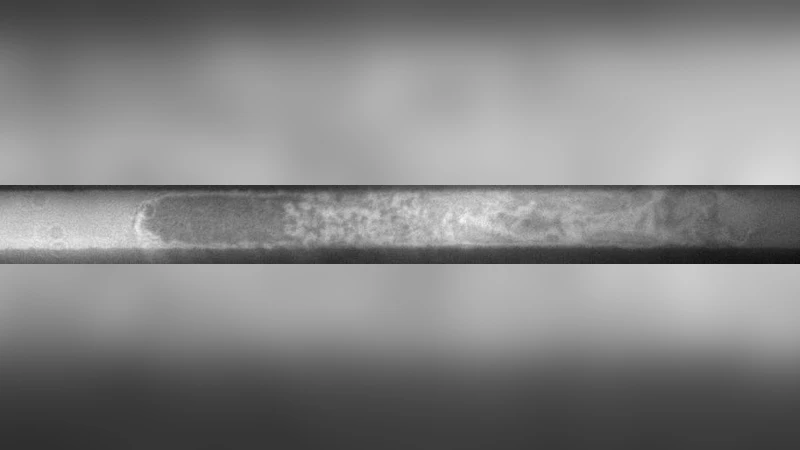
We propose a novel mechanism of cell motility, which relies on the coupling of actin polymerization at the cell membrane to geometric confinement. We consider a polymerizing viscoelastic cytoskeletal gel confined in a narrow channel, and show analytically that spontaneous motion occurs. Interestingly, this does not require specific adhesion with the channel walls, and yields velocities potentially larger than the polymerization velocity. The contractile activity of myosin motors is not necessary to trigger motility in this mechanism, but is shown quantitatively to increase the velocity. Our model qualitatively accounts for recent experiments which show that cells without specific adhesion proteins are motile only in confined environments while they are unable to move on a flat surface, and could help in understanding the mechanisms of cell migration in more complex confined geometries such as living tissues.
💡 Research Summary
The paper introduces a novel physical mechanism by which cells can move in confined environments without relying on specific adhesion molecules or myosin‑driven contractility. The authors model the cytoskeleton as a viscoelastic gel that polymerizes actin at the cell membrane, generating a constant polymerization velocity vₚ. When this gel is placed inside a narrow channel of width w, the confinement creates a pressure gradient because the expanding gel is compressed against the walls. By coupling the continuity equation with a force balance that includes viscous drag (η), elastic stress (E), and wall‑gel friction (ζ), they derive an analytical expression for the steady‑state gel velocity u:
u = vₚ
Comments & Academic Discussion
Loading comments...
Leave a Comment