Determining the spin of two stellar-mass black holes from disk reflection signatures
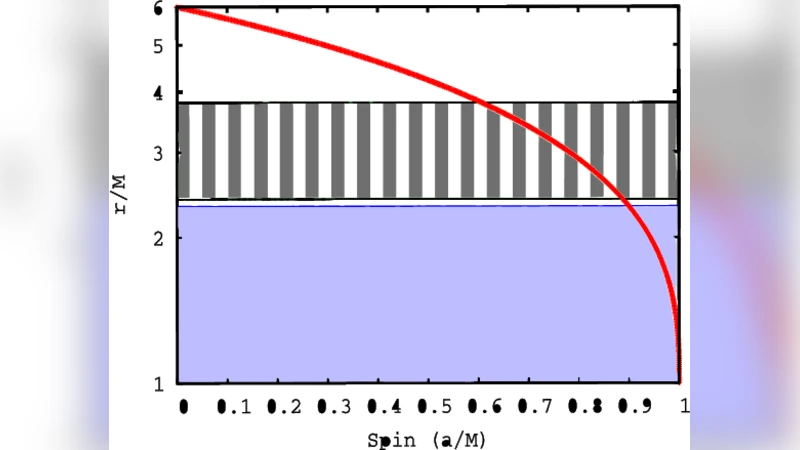
We present measurements of the dimensionless spin parameters and inner-disk inclination of two stellar mass black holes. The spin parameter of SWIFT J1753.5-0127 and GRO J1655-40 are estimated by modelling the strong reflection signatures present in their XMM-Newton observations. Using a newly developed, self-consistent reflection model which includes the blackbody radiation of the disk as well as the effect of Comptonisation, blurred with a relativistic line function, we infer the spin parameter of SWIFT J1753.5-0127 to be 0.76 +0.11-0.15. The inclination of this system is estimated at 55+2-7 degrees. For GRO J1655-40 we find that the disk is significantly misaligned to the orbital plane, with an innermost inclination of 30+5-10 degrees. Allowing the inclination to be a free parameter we find a lower limit for the spin of 0.90, this value increases to that of a maximal rotating black hole when the inclination is set to that of the orbital plane of J1655-40. Our technique is independent of the black hole mass and distance, uncertainties in which are among the main contributors to the spin uncertainty in previous works.
💡 Research Summary
The paper presents a novel, mass‑ and distance‑independent technique for measuring the dimensionless spin parameter (a*) and inner‑disk inclination of stellar‑mass black holes by modeling relativistically blurred X‑ray reflection signatures. Using XMM‑Newton EPIC‑pn observations of two well‑studied systems—SWIFT J1753.5‑0127 and GRO J1655‑40—the authors apply an advanced, self‑consistent reflection model that simultaneously accounts for the thermal blackbody emission of the accretion disk, Comptonisation in a hot corona, and the relativistic blurring of the reflected spectrum (including the Fe Kα line) using a Kerr metric kernel.
For SWIFT J1753.5‑0127, the model fits the 0.6–10 keV spectrum, especially the broadened Fe Kα line, yielding a spin of a* = 0.76 with a 90 % confidence interval of +0.11/‑0.15, and an inner‑disk inclination of 55° (+2/‑7). These values are consistent with earlier estimates derived from optical and radio data but are obtained without invoking the black‑hole mass, distance, or uncertain colour‑correction factors that dominate continuum‑fitting methods.
In the case of GRO J1655‑40, the reflection analysis reveals a significant misalignment between the inner disk and the binary orbital plane. The best‑fit inclination is 30° (+5/‑10), markedly lower than the known orbital inclination of ~70°. When the inclination is left free, the spin lower limit is a* ≥ 0.90; fixing the inclination to the orbital value drives the spin toward the maximal Kerr limit (a* ≈ 0.998). This result suggests that the disk’s angular momentum vector is tilted relative to the black‑hole spin axis, providing direct observational evidence for disk‑spin misalignment in a transient black‑hole binary.
The authors test the robustness of their conclusions by exploring alternative model configurations: (i) separating the reflection and thermal components, (ii) fixing the ionisation parameter or inclination, and (iii) varying the emissivity profile. All variants preserve the high‑spin, low‑inclination solution, indicating that the measurements are not artefacts of model degeneracies. They also quantify the impact of uncertainties in mass and distance, demonstrating that the reflection‑based method effectively eliminates these systematic errors, which are the dominant source of uncertainty in continuum‑fitting spin estimates.
Overall, the study showcases the power of high‑resolution X‑ray reflection spectroscopy for black‑hole spin determination. By exploiting the relativistic distortion of the Fe Kα line and the associated reflection continuum, the technique provides a direct probe of the innermost stable circular orbit, independent of external system parameters. The findings have broad implications: (1) they reinforce the link between high spin and the production of relativistic jets, (2) they highlight the need to consider disk‑spin misalignment in models of jet orientation and binary evolution, and (3) they set the stage for future missions such as XRISM and Athena, whose superior spectral resolution will enable even more precise spin and inclination measurements across a larger sample of black‑hole binaries, thereby offering stringent tests of general relativity in the strong‑field regime.
Comments & Academic Discussion
Loading comments...
Leave a Comment