Observations of multiple populations in star clusters
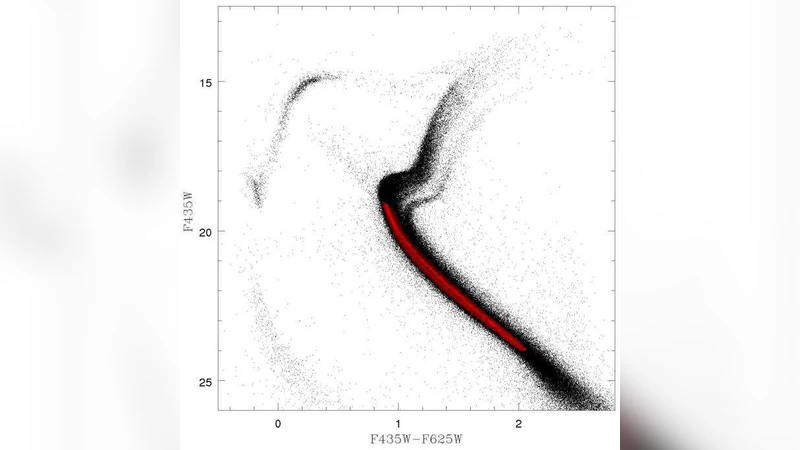
An increasing number of photometric observations of multiple stellar populations in Galactic globular clusters is seriously challenging the paradigm of GCs hosting single, simple stellar populations. These multiple populations manifest themselves in a split of different evolutionary sequences as observed in the cluster color-magnitude diagrams. Multiple stellar populations have been identified in Galactic and Magellanic Cloud clusters. In this paper we will summarize the observational scenario.
💡 Research Summary
The paper provides a comprehensive review of the growing body of observational evidence that Galactic globular clusters (GCs) and their counterparts in the Magellanic Clouds host multiple stellar populations rather than a single, simple stellar population. The authors begin by outlining the traditional view of GCs as co‑eval, chemically homogeneous systems and then detail how high‑precision photometry—particularly in the ultraviolet and narrow‑band filters—has revealed split main sequences, sub‑giant branches, red‑giant branches, and horizontal branches within individual clusters. Representative examples such as the four distinct main sequences in NGC 2808 and the complex red‑giant branch morphology of ω Centauri illustrate the ubiquity of these features. Spectroscopic follow‑up confirms that the photometric splits correspond to real chemical differences: variations in helium content, CNO‑cycle elements, sodium, aluminum, oxygen, and magnesium are systematically observed between the sub‑populations. Two principal formation scenarios are discussed. The first invokes a second generation of stars forming from gas that remained after the first burst, enriched by the ejecta of massive stars, fast‑rotating massive stars, or massive binaries, leading to higher helium and altered light‑element abundances. The second scenario emphasizes the role of asymptotic‑giant‑branch (AGB) stars and their slow winds, which can re‑process the intra‑cluster medium and trigger a later star‑formation episode. Both mechanisms predict only a modest age spread—typically a few hundred million years—making it difficult to detect directly, but precise photometric age dating combined with dynamical modeling can place constraints. Dynamical studies further suggest that the different populations may have started with distinct initial mass functions and spatial distributions, with the helium‑rich component initially more centrally concentrated and later redistributed through mass loss and two‑body relaxation. The detection of analogous multiple populations in Magellanic Cloud clusters, especially in younger, massive clusters, indicates that this phenomenon is not confined to the Milky Way but is a generic outcome of dense star‑cluster formation. The authors conclude that GCs must be re‑interpreted as complex, multi‑phase systems that undergo chemical self‑enrichment and dynamical evolution. They call for future work that combines ultra‑high‑resolution spectroscopy, long‑term N‑body simulations, and multi‑wavelength photometric surveys to unravel the detailed chronology and physics of multiple population formation.
Comments & Academic Discussion
Loading comments...
Leave a Comment