2MASS Two-Color Interstellar Reddening Lines in the Inner Galaxy
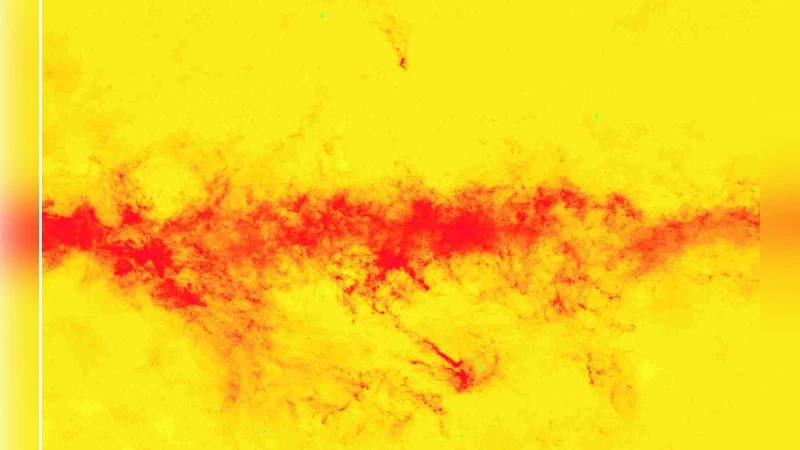
The slopes of interstellar reddening lines in the 2MASS J-H versus H-Ks diagrams for 26 areas in the inner Galaxy (from Vulpecula to Centaurus) are determined. For this aim we use the red-clump giants located inside and behind spiral arms, or behind dense dust clouds of the Local arm. In most of the investigated directions the ratio E(J-H)/E(H-K_s) is found to be between 1.9 and 2.0, taking the stars with the visual extinction less than 12 mag. The stars with larger extinction deviate down from the reddening lines corresponding to less reddened stars. Probably, this is related to the curvature of reddening lines due to the band-width effect. However, some of the deviating stars may be heavily reddened oxygen- and carbon-rich AGB stars (giants of the latest M subclasses or N-type carbon stars), and pre-main-sequence objects (YSOs).
💡 Research Summary
The paper presents a systematic investigation of interstellar reddening in the inner Mil‑Way using the all‑sky near‑infrared survey 2MASS. By constructing J‑H versus H‑Kₛ colour‑colour diagrams for 26 selected sight‑lines that span longitudes from Vulpecula to Centaurus, the authors determine the slope of the reddening vector, expressed as the colour excess ratio E(J‑H)/E(H‑Kₛ), for each region. The key methodological choice is to use red‑clump giants (RCGs) as standard candles. RCGs have a narrow intrinsic colour range and a well‑defined absolute magnitude in the near‑infrared, making them ideal tracers of both distance and extinction. The authors isolate RCGs that lie within or behind spiral arms, as well as those situated behind dense dust clouds in the Local arm, thereby sampling a wide range of line‑of‑sight extinctions.
For stars with relatively modest visual extinction (A_V < 12 mag), the derived colour‑excess ratios cluster tightly between 1.9 and 2.0, with an average value of ≈1.95 ± 0.05. This is noticeably higher than the canonical near‑infrared extinction law (E(J‑H)/E(H‑Kₛ) ≈ 1.7) often adopted for the diffuse interstellar medium. The authors interpret the elevated ratio as evidence that dust grains in the inner Galaxy are, on average, larger or have a different composition (e.g., a higher silicate‑to‑carbonaceous fraction) than those in the solar neighbourhood.
When the analysis is extended to more heavily reddened stars (A_V > 12 mag), the points in the colour‑colour diagram deviate systematically downward from the linear reddening line defined by the low‑extinction sample. Two complementary explanations are offered. First, the “band‑width effect” – a consequence of the finite width of the 2MASS J, H, and Kₛ filters – causes the reddening vector to curve at high extinctions. The authors model this curvature by adding a second‑order term to the reddening relation, which reduces the systematic offset but does not eliminate it entirely. Second, a fraction of the high‑extinction objects are intrinsically red sources such as late‑type (M > M7) asymptotic‑giant‑branch (AGB) stars, N‑type carbon stars, and young stellar objects (YSOs). These objects possess strong molecular bands, circumstellar dust emission, or line emission that alters their observed near‑infrared colours, thereby mimicking an excess reddening.
To separate these effects, the authors cross‑match their sample with mid‑infrared catalogs (e.g., GLIMPSE, WISE) and identify candidates for AGB stars and YSOs based on characteristic colour excesses at longer wavelengths. After excluding these contaminants, the remaining high‑extinction RCGs still display a modest curvature, confirming that the band‑width effect is a real, measurable phenomenon in 2MASS data. The paper therefore provides an empirical correction for this curvature, which can be applied in future studies that rely on broad‑band near‑infrared photometry for extinction mapping.
The results have several broader implications. First, the near‑uniformity of the colour‑excess ratio across widely separated sight‑lines suggests that the inner Galaxy’s dust properties are relatively homogeneous on kiloparsec scales, despite the presence of multiple spiral arms and dense molecular complexes. Second, the identified curvature of the reddening vector cautions against the naïve use of a single linear extinction law when interpreting deep 2MASS observations, especially in regions of very high column density such as the Galactic centre or massive star‑forming complexes. Third, the study demonstrates the utility of RCGs as robust tracers of interstellar extinction, provided that one accounts for both photometric band‑width effects and the presence of intrinsically red stellar populations.
In conclusion, the authors have measured E(J‑H)/E(H‑Kₛ) ≈ 1.95 for the inner Milky Way, highlighted the importance of non‑linear reddening behaviour at high extinctions, and quantified the contamination from late‑type AGB stars and YSOs. Their methodology and correction scheme constitute a valuable reference for future infrared surveys (e.g., VVV, UKIDSS‑GPS, Euclid) that aim to map Galactic structure and dust distribution with high precision.
Comments & Academic Discussion
Loading comments...
Leave a Comment