Formation of young boxy/peanut bulges in ringed barred galaxies
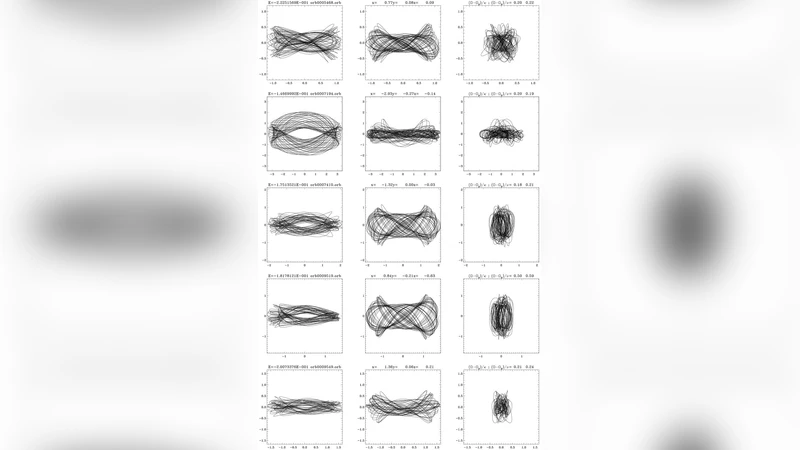
We investigate whether the formation mechanism of boxy and peanut-shaped (B/PS) bulges could depend on the gas content of the galaxy. We have performed N-body simulations with and without a gaseous component. In the second case star formation/feedback recipes have also been implemented to create new stellar populations. As in many previous studies, in our N-body collisionless simulation, the B/PS is due to the classical break in the z mirror symmetry lasting roughly 200 Myr. When a gaseous component and star formation recipes are added to the simulation, the bulge-growing mechanism is quite different. The young stellar population that is born in the thin gaseous disc rapidly populates vertical resonant orbits triggered by the combined effects of the linear horizontal and vertical ILRs. This leads to a B/PS bulge mainly made of stellar material younger than the surrounding population. The non-linear analysis of the orbital structure shows that the main orbit family responsible for the B/PS is not the same in the two cases. The 2:2:1 orbits prevail in the collisionless simulation whereas additional asymmetrical families contribute to the B/PS if a dissipative component is present and can form new stars. We found that 2:3:1 and 2:5:1 orbits trap a significant fraction of the mass. A flat ringed discy stellar component also appears simultaneously with the thickening of the young population. It is due to the star formation in a nuclear gaseous disc located in the central kpc, inside the ILR, and accumulated there by the torques exerted by the large-scale bar. Remarkably, it remains flat throughout the simulation although it develops a nuclear bar, leading to a double-barred galaxy. We predict that two populations of B/PS bulges could exist and even coexist in the same galaxy.
💡 Research Summary
The authors address a long‑standing question in galactic dynamics: does the presence of gas and ongoing star formation alter the way boxy/peanut‑shaped (B/PS) bulges are built in barred, ringed disc galaxies? To answer this, they run two high‑resolution N‑body experiments. The first is a purely collisionless simulation (stars only), reproducing the classic picture in which the bar drives a vertical instability, breaking the z‑mirror symmetry for roughly 200 Myr. In this case the dominant orbital family is the 2:2:1 resonance (two radial oscillations for each vertical oscillation), and the resulting B/PS bulge is composed mainly of the pre‑existing, older stellar population.
The second experiment adds a gaseous disc and implements star‑formation and feedback recipes. The bar torques the gas inward, building a dense nuclear gaseous disc inside the inner Lindblad resonance (ILR). Continuous star formation in this thin disc creates a young stellar component that initially follows the gas plane. However, the combined action of the horizontal and vertical ILRs excites a set of non‑linear resonances. Young stars are rapidly captured onto asymmetric families such as 2:3:1 and 2:5:1, which have a larger vertical excursion than the classic 2:2:1 family. As a result, a B/PS bulge forms that is dominated by stars younger than ~1 Gyr, while the older population remains comparatively less thickened.
Simultaneously, the inflowing gas settles into a flat, ring‑like stellar disc within the central kiloparsec. This “nuclear disc” stays geometrically thin throughout the run, even as it develops its own nuclear bar, producing a double‑barred configuration. The authors emphasize that the orbital analysis shows a clear shift in the backbone of the B/PS structure: in the collisionless case the 2:2:1 family traps most of the mass, whereas in the dissipative, star‑forming case a significant fraction of the mass is trapped by the 2:3:1 and 2:5:1 families.
From these results the authors propose that two distinct populations of B/PS bulges can exist, and that they may even coexist in a single galaxy: a “classical” B/PS built from pre‑existing stars via the vertical buckling of the bar, and a “young” B/PS built from stars formed in the nuclear gas disc and subsequently lifted onto vertical resonant orbits. This dual‑population scenario makes concrete, testable predictions. For example, integral‑field spectroscopy should reveal a vertical gradient in stellar age across the bulge, with younger stars concentrated in the boxy/peanut region. Near‑infrared imaging could detect the flat nuclear disc and its embedded nuclear bar, while kinematic maps would show the signature of asymmetric resonant families (e.g., higher‑order moments deviating from pure cylindrical rotation).
Overall, the paper demonstrates that gas dynamics and star formation are not merely peripheral processes but can fundamentally reshape the orbital architecture that supports B/PS bulges. By coupling hydrodynamics, feedback, and detailed orbital analysis, the study opens a new avenue for interpreting the observed diversity of bulge morphologies in barred galaxies and for linking them to their recent evolutionary histories.
Comments & Academic Discussion
Loading comments...
Leave a Comment