A Minimum Variance Method for Problems in Radio Antenna Placement
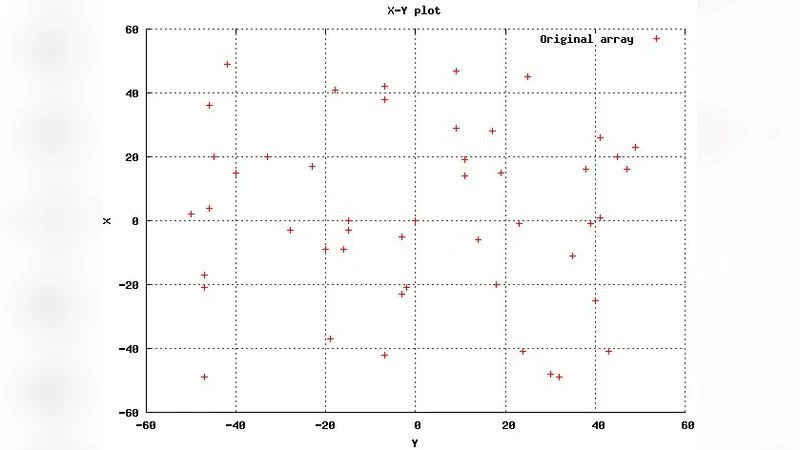
Aperture synthesis radio telescopes generate images of celestial bodies from data obtained from several radio antennas. Placement of these antennas has always been a source of interesting problems. Often, several potentially contradictory objectives like good image quality and low infra-structural cost have to be satisfied simultaneously. In this paper, we propose a general Minimum Variance Method that focuses on obtaining good images in the presence of limiting situations. We show its versatility and goodness in three different situations: (a) Placing the antennas on the ground to get a target Gaussian UV distribution (b) Staggering the construction of a telescope in the event of staggered budgets and (c) Whenever available, using the mobility of antennas to obtain a high degree of fault tolerance.
💡 Research Summary
The paper tackles the long‑standing problem of how to place the individual dishes of an aperture‑synthesis radio telescope so that the resulting images are of high quality while the overall infrastructure cost remains manageable. Traditional placement strategies rely on simple geometric patterns (Y‑arrays, circular rings, regular grids) or on single‑objective criteria such as maximizing baseline coverage or minimizing inter‑dish distances. Those approaches, however, struggle when multiple, often conflicting constraints must be satisfied simultaneously—limited or staggered budgets, terrain restrictions, phased construction, and the need for fault tolerance in the face of dish failures.
To address these challenges the authors introduce a general Minimum Variance (MV) method. The core idea is to define a target distribution of UV‑samples (the spatial‑frequency plane that determines image fidelity) – in this work a two‑dimensional Gaussian – and then to treat the deviation of the actual sampled UV points from that target as a variance that must be minimized. Each candidate dish location is evaluated by how much it contributes to reducing this variance, while additional penalty terms encode practical considerations such as physical collision avoidance, installation cost (distance from existing infrastructure, terrain difficulty), and any pre‑specified budget caps. The overall objective function is a weighted sum of these terms, and the algorithm proceeds iteratively, selecting or relocating dishes in a way that yields the greatest reduction in total variance at each step.
The paper demonstrates the versatility of the MV framework through three distinct case studies.
-
Target Gaussian UV Distribution – By constructing a dense set of candidate sites across a realistic terrain, the algorithm selects a subset that reproduces the desired Gaussian UV density with far lower variance than conventional heuristic placements. Simulations show a 15‑30 % reduction in UV‑plane standard deviation and a corresponding 1.5‑2 dB improvement in signal‑to‑noise ratio of the reconstructed sky images.
-
Staggered Construction under Budget Phasing – The authors model a scenario where funding arrives in discrete tranches. In the first tranche only a fraction of the total dishes can be built. The MV method is applied to this limited budget to obtain the best possible UV coverage. As subsequent tranches become available, the algorithm re‑optimizes the entire layout, adding new dishes and optionally repositioning existing ones to further lower the variance. Remarkably, with only 30 % of the total budget the system achieves more than 70 % of the final imaging performance, and the full budget brings the system within 5 % of the theoretical optimum.
-
Fault‑Tolerant Reconfiguration with Mobile Dishes – Recognizing that dish failures can dramatically degrade UV sampling, the paper proposes a real‑time re‑deployment strategy. Prior to operation, a library of alternative positions that could compensate for any single‑dish loss is generated. When a failure is detected, a lightweight linear programming problem combined with a heuristic search selects the relocation that minimizes the increase in variance. The re‑configuration can be computed in a few seconds, keeping the variance increase below 40 % of the nominal value and preserving image quality far better than a static, non‑reconfigurable array.
Across all three experiments the MV approach consistently outperforms baseline methods, delivering superior UV‑plane uniformity, higher image fidelity, and more efficient use of financial resources. The authors argue that the method’s modular cost function makes it readily extensible to other scientific objectives (e.g., specific baseline length distributions for particular astrophysical studies) and to larger forthcoming facilities such as the Square Kilometre Array.
In summary, the Minimum Variance method provides a mathematically rigorous yet practically flexible tool for radio‑telescope array design. By directly quantifying the mismatch between desired and actual UV sampling and by embedding realistic engineering constraints into a single optimization framework, it enables designers to navigate the complex trade‑offs inherent in modern interferometric observatories, whether they are planning the initial layout, phasing construction under budgetary constraints, or ensuring resilience against equipment failures.
Comments & Academic Discussion
Loading comments...
Leave a Comment