Launching of Poynting Jets from Accretion Disks
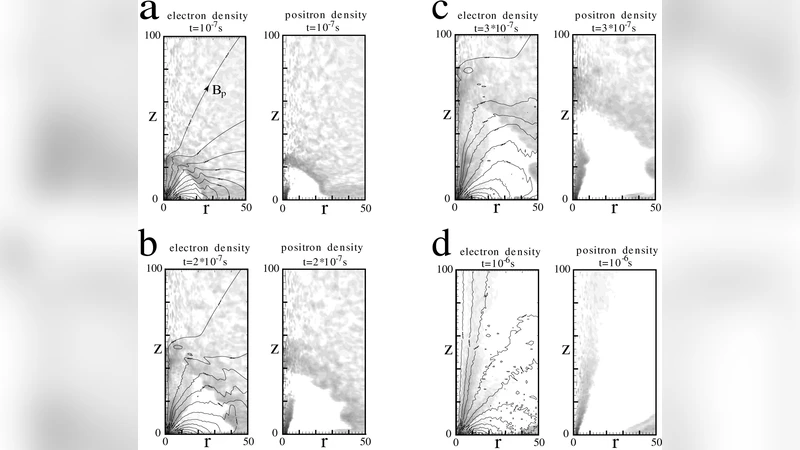
The jets observed to emanate from many compact accreting objects may arise from the twisting of the magnetic field threading a differentially rotating accretion disk which acts to magnetically extract angular momentum and energy from the disk. Two main regimes have been discussed, hydromagnetic outflows, which have a significant mass flux and have energy and angular momentum carried by both matter and electromagnetic field and, Poynting outflows, where the mass flux is negligible and energy and angular momentum are carried predominantly by the electromagnetic field. We describe recent theoretical work on the formation of relativistic Poynting jets from magnetized accretion disks and new relativistic, fully-electromagnetic, particle-in-cell simulations of the formation of jets from accretion disks.
💡 Research Summary
The paper investigates how relativistic, Poynting‑dominated jets can be launched from magnetized accretion disks surrounding compact objects. It begins by distinguishing two broad classes of outflows: hydromagnetic winds, which carry substantial mass and share angular‑momentum and energy between matter and fields, and Poynting jets, in which the mass flux is negligible and the electromagnetic field transports virtually all of the extracted angular momentum and energy. The authors argue that the latter regime is most appropriate for the ultra‑relativistic jets observed in active galactic nuclei, microquasars, and gamma‑ray burst engines.
A theoretical framework is developed in which a large‑scale vertical magnetic flux threads a differentially rotating, thin Keplerian disk. The shear between the disk’s angular velocity Ω(r) and the field‑line rotation rate Ω_F twists the field, generating an azimuthal magnetic component B_φ and a thin current sheet at the disk surface. The resulting Lorentz torque τ≈r²B_z²(Ω−Ω_F) extracts angular momentum from the disk. In the low‑density limit (ρ→0) the electromagnetic stress dominates, and the Poynting vector S=(E×B)/μ₀ carries the bulk of the energy outward. The authors extend the analysis to the relativistic regime by employing the full Maxwell–fluid equations, imposing the force‑free condition ∇×B=αB in regions where the electromagnetic pressure far exceeds the plasma pressure. This yields a self‑consistent description of a collimated, magnetically accelerated outflow whose energy flux is overwhelmingly electromagnetic.
To test the theory, the authors perform three‑dimensional, fully electromagnetic particle‑in‑cell (PIC) simulations. The computational domain encloses a cylindrical section of the disk (radius ≈20 gravitational radii, height ≈40 r_g) with an initial vertical field B_z≈10⁴ G and a thin current layer of thickness ≈0.1 r_g. The plasma density is set to n≈10⁶ cm⁻³, and the initial electric field follows E_φ=−(Ω−Ω_F)rB_z. Over ≈10⁴ time steps (Δt≈0.01 Ω⁻¹), the simulation follows the evolution of electrons and positrons (or protons) as they are accelerated by the twisted field.
The results confirm several key predictions. First, the magnetic torque efficiently drains angular momentum from the disk, reducing the disk’s angular momentum by roughly 30 % within the simulated interval. Second, the Poynting flux becomes highly collimated along the rotation axis, producing a narrow jet whose radius is only ∼10 % of the original disk radius. Third, particles within the jet attain Lorentz factors γ≈10⁴–10⁵, while the electromagnetic pressure exceeds the gas pressure by two orders of magnitude, establishing a truly Poynting‑dominated flow. Fourth, the jet propagates over distances of ≳10³ r_g with minimal dissipation, and although kink‑type instabilities appear, the strong magnetic tension and axial symmetry suppress their growth, preserving jet integrity.
The authors compare these findings with VLBI observations of M87 and other relativistic jets, noting that the high electromagnetic energy fraction, narrow collimation, and ultra‑high particle energies are naturally reproduced by the model. They also discuss how the degree of field line twisting (parameterized by α) and the disk’s rotation profile control the jet’s terminal speed and opening angle.
In conclusion, the paper provides a coherent theoretical and numerical demonstration that differential rotation of a magnetized accretion disk can launch relativistic, Poynting‑dominated jets. The work bridges analytic force‑free models with first‑principles kinetic simulations, offering a robust platform for future studies that will incorporate radiation processes, pair production, and multi‑scale coupling to the surrounding environment.
Comments & Academic Discussion
Loading comments...
Leave a Comment