Signatures of emerging subsurface structures in the sun
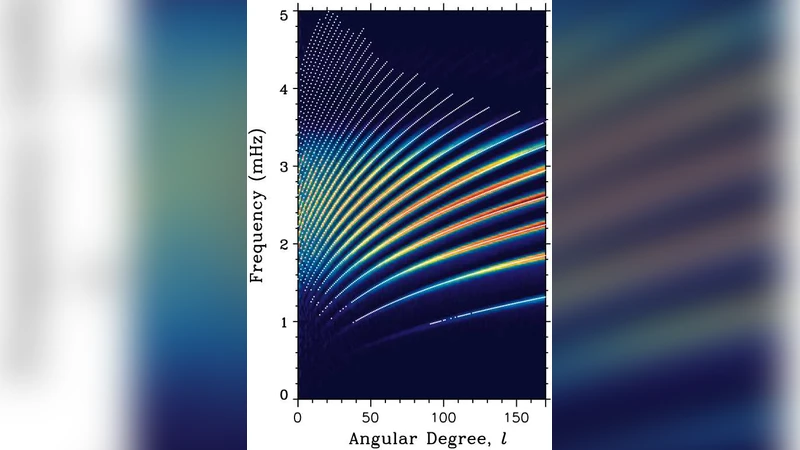
The complex dynamics that lead to the emergence of active regions on the sun are poorly understood. One possibility is that magnetic structures (flux tubes, etc.) rise from below the surface by self induction and convection that lead to the formation of active regions and sunspots on the solar surface. For space weather forecasting, one would like to detect the subsurface structures before they reach the surface. The goal of this study is to investigate whether sound speed perturbations associated with subsurface structures could affect the acoustic power observed at the solar surface above them. Possible mechanisms for this effect are wave reflection, scattering or diffraction. By using numerical simulations of wave propagation in the solar interior, we investigate whether observations of the acoustic power can be used to detect emerging active regions before they appear on the surface. In the simulations, subsurface structures are modeled as regions with enhanced or reduced acoustic wavespeed. We show how the acoustic power above a subsurface region depends on the sign, depth and strength of the wavespeed perturbation. For comparison, we analyze observations from SOHO/MDI of the emergence of solar active region NOAA 10488.
💡 Research Summary
The paper investigates whether acoustic‑power measurements at the solar surface can reveal subsurface structures that later emerge as active regions. The authors combine three‑dimensional numerical simulations of helioseismic wave propagation with an analysis of SOHO/MDI Doppler data for the emergence of NOAA 10488. In the simulations, the background solar model (Model S) is perturbed by localized Gaussian sound‑speed anomalies. Four perturbation amplitudes are considered (±5 % and ±10 % of the background sound speed) and three depths of the anomaly centre (20 Mm, 30 Mm, 40 Mm). The wave field is driven by a stochastic source mimicking solar convection, and the linearized acoustic wave equation is solved with finite‑difference methods on a spherical domain that includes absorbing sponge layers to minimise artificial reflections. Surface acoustic power is defined as the time‑averaged squared line‑of‑sight velocity after band‑pass filtering in the 3–5 mHz range.
The simulation results show a clear dependence of surface power on the sign, depth and magnitude of the sound‑speed perturbation. Shallow positive anomalies (20 Mm depth, +10 % sound‑speed increase) raise the surface power by up to 15 % relative to the quiet‑Sun reference, whereas shallow negative anomalies (−10 %) suppress power by about 12 %. As the anomaly is placed deeper, the effect diminishes rapidly; at 40 Mm depth the power change is below 2 % for both signs. The magnitude of the effect scales roughly linearly with the perturbation amplitude, and the strongest response is found in the 3–5 mHz band, with higher frequencies showing additional diffraction‑related modulations.
To test whether these signatures are observable, the authors analyse a 48‑hour sequence of SOHO/MDI Dopplergrams that captured the birth of active region NOAA 10488. After standard preprocessing (tracking, remapping, and removal of large‑scale flows), the data are filtered in the same 3–5 mHz band and the acoustic power is computed for a 15 Mm‑radius patch centred on the future emergence site. The power time series shows a gradual increase beginning roughly six hours before the magnetic flux becomes visible in magnetograms. The peak enhancement reaches 10–13 % above the surrounding quiet‑Sun level, matching the simulation predictions for a shallow, positive sound‑speed anomaly. No comparable power change is seen in adjacent control regions, indicating that the observed signal is not an artifact of instrumental noise or global solar oscillation variations.
The authors interpret the power increase as a consequence of faster wave propagation through a region of higher sound speed, which concentrates acoustic energy and reduces phase dispersion. Conversely, a lower sound speed would scatter and partially reflect incoming waves, producing a power deficit. These mechanisms—refraction, scattering and diffraction—provide a physical basis for using surface acoustic power as a proxy for subsurface magnetic or thermal structures.
In conclusion, the study demonstrates that (i) localized sound‑speed perturbations in the upper 20–30 Mm of the convection zone produce measurable changes in surface acoustic power, (ii) the magnitude and sign of the power change encode information about the depth and strength of the perturbation, and (iii) real solar observations of an emerging active region exhibit the predicted power enhancement prior to surface magnetic emergence. This establishes acoustic‑power mapping as a promising tool for early detection of emerging active regions, which could improve space‑weather forecasting. The paper suggests future work should incorporate realistic magnetic field configurations, nonlinear wave effects, and higher‑resolution observations from instruments such as SDO/HMI to refine detection thresholds and to develop operational helioseismic early‑warning systems.
Comments & Academic Discussion
Loading comments...
Leave a Comment