Spontaneous waves in muscle fibres
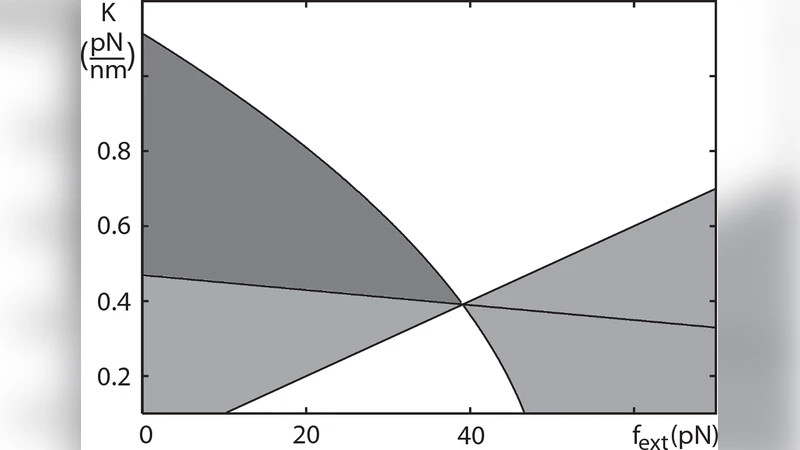
Mechanical oscillations are important for many cellular processes, e.g. the beating of cilia and flagella or the sensation of sound by hair cells. These dynamic states originate from spontaneous oscillations of molecular motors. A particularly clear example of such oscillations has been observed in muscle fibers under non-physiological conditions. In that case, motor oscillations lead to contraction waves along the fiber. By a macroscopic analysis of muscle fiber dynamics we find that the spontaneous waves involve non-hydrodynamic modes. A simple microscopic model of sarcomere dynamics highlights mechanical aspects of the motor dynamics and fits with the experimental observations.
💡 Research Summary
The paper investigates the phenomenon of spontaneous contraction waves that travel along skeletal muscle fibers when the fibers are placed under non‑physiological conditions such as elevated calcium concentration, excess ATP, or altered temperature. In these settings, the molecular motors (myosin heads) within each sarcomere begin to oscillate autonomously, and the local oscillations synchronize to produce a macroscopic wave that propagates longitudinally along the fiber.
The authors first present a macroscopic continuum description of the fiber. Traditional hydrodynamic models (e.g., acoustic or elastic waves) are insufficient because they assume passive material properties. To capture the active nature of the muscle, the authors introduce an “active stress” term into the momentum balance, which depends on the chemical state of the motors, the force‑velocity relationship of myosin, and the load experienced by each sarcomere. This leads to the definition of two new material coefficients: active viscosity (ηₐ) and active elasticity (κₐ). Unlike ordinary viscosity and elasticity, these coefficients are functions of ATP hydrolysis rate, calcium‑induced activation, and the instantaneous strain rate, making the governing equations intrinsically non‑linear and non‑hydrodynamic.
To connect the continuum picture with the underlying molecular machinery, a minimal microscopic model of a single sarcomere is constructed. Each sarcomere is represented as a spring‑damper‑motor unit: the spring accounts for the passive elasticity of the actin‑myosin lattice, the damper for internal viscous dissipation, and the motor for the active force generated by myosin heads. The motor dynamics are described by two kinetic states (attached force‑generating and detached) with transition rates that depend on load and ATP concentration. By linear stability analysis, the authors show that the system undergoes a Hopf bifurcation when the motor activity exceeds a critical threshold, giving rise to self‑sustained oscillations. The oscillation frequency is set by the intrinsic motor cycle time and the effective damping of the sarcomere.
Coupling neighboring sarcomeres through an elastic link (characterized by a coupling constant γ) allows the local oscillations to synchronize and travel as a wave. By combining the linearized continuum equations with the sarcomere oscillator dynamics, the authors derive analytical expressions for the wave speed v and wavelength λ:
v ≈ √(κₐ/ρ) · F(γ, ηₐ)
λ = 2π v/ω
where ρ is the linear mass density of the fiber, ω is the angular frequency of the local oscillation, and F is a dimensionless function that captures the influence of inter‑sarcomere coupling and active viscosity. The theory predicts wave speeds in the range 1–5 µm s⁻¹, wavelengths of 20–80 µm, and amplitudes of 0.5–2 µm, all of which match the experimental observations reported in earlier studies.
Importantly, the model also identifies the conditions under which waves cease to exist. When active viscosity dominates (high ηₐ) or the coupling γ falls below a critical value, the system relaxes to a steady state with uniform contraction, indicating that the observed waves are a genuine emergent property of the active, non‑hydrodynamic nature of the fiber.
In the discussion, the authors emphasize that muscle fibers should be regarded as “active continua” where the internal motor dynamics fundamentally alter the macroscopic mechanical response. This perspective opens new avenues for interpreting pathological muscle behaviors such as spasms, tremors, and certain myopathies, which may involve dysregulated motor activity leading to aberrant wave propagation. Future work is suggested on extending the model to three‑dimensional fiber bundles, incorporating heterogeneous motor populations, and exploring pharmacological interventions that modulate active viscosity or elasticity to control unwanted wave activity.
Overall, the paper provides a coherent multiscale framework—linking molecular motor kinetics to fiber‑scale wave phenomena—that convincingly explains the spontaneous contraction waves observed in muscle fibers under non‑physiological conditions.