Realistic Numerical Modeling of Solar Magnetoconvection and Oscillations
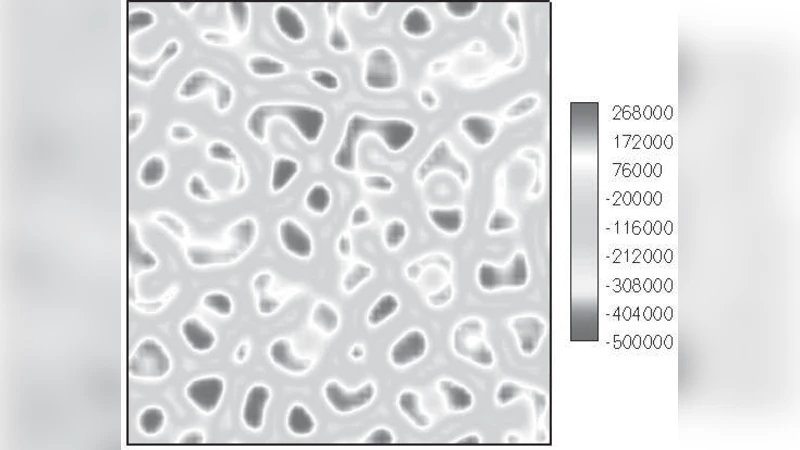
We have developed 3D, compressible, non-linear radiative MHD simulations to study the influence of the magnetic field of various strength and geometry on the turbulent convective cells and on the excitation mechanisms of the acoustic oscillations. The results reveal substantial changes of the granulation structure with increased magnetic field, and a frequency-dependent reduction in the oscillation power. These simulation results reproduce the enhanced high-frequency acoustic emission observed at the boundaries of active region (“acoustic halo” phenomenon). In the presence of inclined magnetic field the solar convection develops filamentary structure with flows concentrated along magnetic filaments, and also exhibits behavior of running magnetoconvective waves, resembling recent observations of the sunspot penumbra dynamics from Hinode/SOT.
💡 Research Summary
This paper presents a comprehensive study of how magnetic fields of varying strength and inclination affect solar convection and acoustic oscillations, using state‑of‑the‑art three‑dimensional compressible non‑linear radiative magnetohydrodynamic (MHD) simulations. The authors build upon the realistic solar convection framework pioneered by Stein & Nordlund (2001), incorporating a sub‑grid‑scale turbulence model (Moin et al. 1991) and multi‑group radiative transfer to capture the energetics of the photosphere and the shallow sub‑photospheric layers.
The computational domain spans 6 Mm horizontally and 4 Mm vertically, with periodic lateral boundaries and open top/bottom conditions. Several series of runs are performed: (i) vertical magnetic fields of 0, 300, 600, and 1200 G, and (ii) an inclined field case with 800 G strength tilted by 85° from the vertical. The simulations are evolved for 60 hours of solar time, storing snapshots every 30 seconds for subsequent analysis.
Granulation morphology. The visualizations of temperature, vertical velocity, and magnetic field at the visible surface demonstrate a clear trend: as the imposed vertical field increases, the characteristic granule size shrinks dramatically—from an average of ~2 Mm in the non‑magnetic case to less than 0.75 Mm at 1200 G. Simultaneously, granules become hotter, while the down‑flows in intergranular lanes weaken. Magnetic flux is swept into the lanes, reproducing the “flux expulsion” effect reported in earlier studies (Stein & Nordlund 2002). This size reduction is directly linked to the suppression of large‑scale convective motions by magnetic tension, a phenomenon routinely observed in active regions.
Acoustic power spectra. The authors compute power spectra of the vertically averaged velocity by Fourier‑transforming the time series at each horizontal location and then averaging horizontally. Five distinct p‑mode peaks appear at the resonant frequencies of the computational box (2.07, 3.03, 4.10, 5.23, 6.52 mHz). In addition, broad high‑frequency peaks (6–12 mHz) corresponding to pseudo‑modes are identified. With increasing magnetic field, the overall power distribution shifts toward higher frequencies, and the pseudo‑mode amplitudes grow, reaching a maximum at Bz≈600 G. This behavior reproduces the observed “acoustic halo”—enhanced high‑frequency acoustic emission surrounding active regions. At stronger fields (≈1200 G) the power of both p‑modes and pseudo‑modes declines, reflecting the overall suppression of convective driving. The authors argue that moderate fields (∼600 G) produce smaller, faster convective eddies that efficiently generate high‑frequency acoustic waves, whereas very strong fields inhibit motion at all scales.
Inclined field dynamics. In the inclined‑field experiment, the magnetoconvective pattern exhibits a clear propagation along the direction of the magnetic field, reminiscent of the “running convective wave” reported in earlier MHD simulations (Hurlburt et al. 1996). The flow organizes into filamentary structures aligned with the horizontal component of the field. A time‑distance diagram of vertical velocity at the photosphere shows traveling convective elements moving at 1–1.2 km s⁻¹, while the horizontal flow reaches ≈4 km s⁻¹. These speeds and the filamentary morphology closely match the Evershed flow observed in sunspot penumbrae by Hinode/SOT (Ichimoto et al. 2009). The results support the interpretation that the Evershed effect is a manifestation of thermally driven convection guided by a strong, highly inclined magnetic field.
Conclusions. The simulations confirm several key observational facts: (1) granule size diminishes with increasing magnetic field strength; (2) magnetic flux is preferentially concentrated in intergranular lanes, weakening down‑flows; (3) acoustic power is redistributed toward higher frequencies, producing a halo of enhanced emission at moderate field strengths (~600 G); (4) inclined strong fields generate filamentary convection and fast, directed magnetoconvective waves that reproduce penumbral flow characteristics. By reproducing these phenomena within a single, self‑consistent radiative MHD framework, the study demonstrates that realistic numerical modeling is a powerful tool for interpreting high‑resolution solar observations and for probing the physical mechanisms that couple magnetic fields, convection, and acoustic oscillations in the Sun’s outer layers.
Comments & Academic Discussion
Loading comments...
Leave a Comment