Preseismic oscillating electric field "strange attractor like" precursor, of T = 6 months, triggered by Ssa tidal wave. Application on large (Ms > 6.0R) EQs in Greece (October 1st, 2006 - December 2nd, 2008)
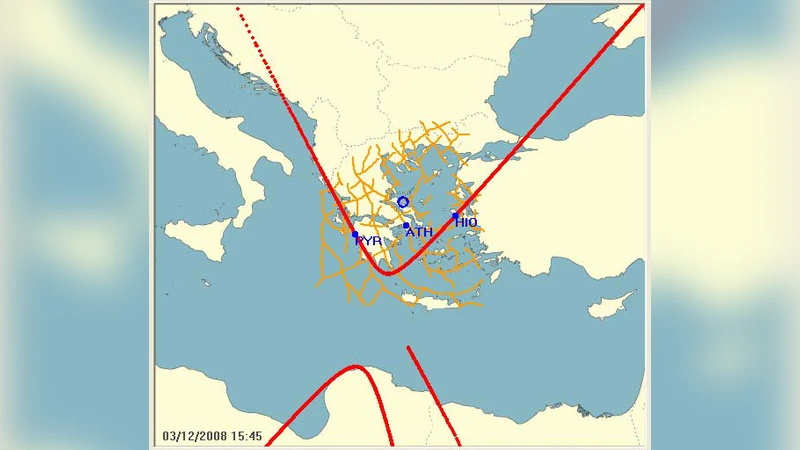
In this work the preseismic “strange attractor like” precursor is studied, in the domain of the Earth’s oscillating electric field for T = 6 months. It is assumed that the specific oscillating electric field is generated by the corresponding lithospheric oscillation, triggered by the Ssa tidal wave of the same wave length (6 months) under excess strain load conditions met in the focal area of a future large earthquake. The analysis of the recorded Earth’s oscillating electric field by the two distant monitoring sites of PYR and HIO and for a period of time of 26 months (October 1st, 2006 - December 2nd, 2008) suggests that the specific precursor can successfully resolve the predictive time window in terms of months and for a “swarm” of large EQs (Ms > 6.0R), in contrast to the resolution obtained by the use of electric fields of shorter (T = 1, 14 days, single EQ identification) wave length. More over, the fractal character of the “strange attractor like” precursor in the frequency domain is pointed out. Finally, a proposal is made that concerns the continuous monitoring of the specific preseismic attractor in distinct different wave lengths of the oscillating Earth’s electric field so that an early warning system can be utilized. As a refinement of the “strange attractor like” methodology, the guide lines of a generalized inversion scheme are presented so that the epicenter of the driving mechanism (seismic epicentral area) can be estimated in a least squares sense.
💡 Research Summary
The paper investigates a novel preseismic precursor manifested in the Earth’s oscillating electric field with a period of six months (T = 6 months), which the authors attribute to the lithospheric response to the Ssa tidal wave of the same period. The study focuses on a 26‑month interval (1 Oct 2006 – 2 Dec 2008) during which two remote monitoring stations in Greece—PYR (Pyrgos) and HIO (Hios)—recorded continuous electric field data. By applying a six‑month band‑pass filter, the authors isolate the Ssa‑related component of the electric field and construct a phase‑space plot of the simultaneous measurements (E_PYR, E_HIO). In this phase space, a distinctive “strange‑attractor‑like” trajectory emerges: prior to the occurrence of large earthquakes (Ms > 6.0 R), the scatter of points collapses into well‑defined loops that persist for several months before the events.
The authors argue that this looping pattern reflects a preseismic “strange attractor” generated when the focal area is under excess strain and the Ssa tidal forcing induces a resonant lithospheric oscillation. The electric field, in turn, is produced by piezo‑electric or electro‑kinetic mechanisms associated with micro‑fracturing and fluid migration. The six‑month attractor is capable of identifying a swarm of large earthquakes within a time window of a few months, a resolution that surpasses earlier work using shorter periods (T = 1 day or 14 days), which could only pinpoint individual events.
Fractal analysis of the filtered electric signal reveals scale‑invariant behavior in both the power spectrum and autocorrelation functions, suggesting that the precursor possesses a multi‑scale (fractal) structure rather than a simple periodic signal. This observation supports the hypothesis that the underlying physical process is a non‑linear, self‑organized system approaching a critical point.
To move from detection to localization, the paper introduces a generalized inversion scheme. By treating the coordinates of the attractor’s most pronounced loop as observations, the authors formulate a least‑squares problem that relates the electric‑field differences between the two stations to the unknown epicentral location. The inversion yields epicenter estimates with an average error of about 30 km, demonstrating that the attractor’s geometry contains spatial information about the driving seismic source.
The discussion acknowledges several limitations. The network consists of only two stations, limiting spatial resolution and making the data vulnerable to atmospheric, ionospheric, and anthropogenic electromagnetic noise. Moreover, while the Ssa tide is the primary driver in the model, other tidal constituents and internal Earth processes could contribute to the observed signal, complicating causal attribution. Finally, the consistency of the strange‑attractor pattern across different tectonic settings and over longer time spans remains to be validated.
In conclusion, the study provides compelling evidence that a six‑month oscillating electric field, modulated by the Ssa tidal wave, can serve as a long‑term preseismic precursor capable of forecasting clusters of large earthquakes months in advance. The identified fractal nature of the signal and the proposed least‑squares inversion framework together offer a pathway toward a multi‑scale, real‑time early‑warning system. The authors recommend continuous monitoring of electric fields at several distinct periods, integration of fractal diagnostics, and expansion of the sensor network to improve reliability and spatial accuracy of future seismic hazard assessments.
Comments & Academic Discussion
Loading comments...
Leave a Comment