Nonparametric spectral analysis with applications to seizure characterization using EEG time series
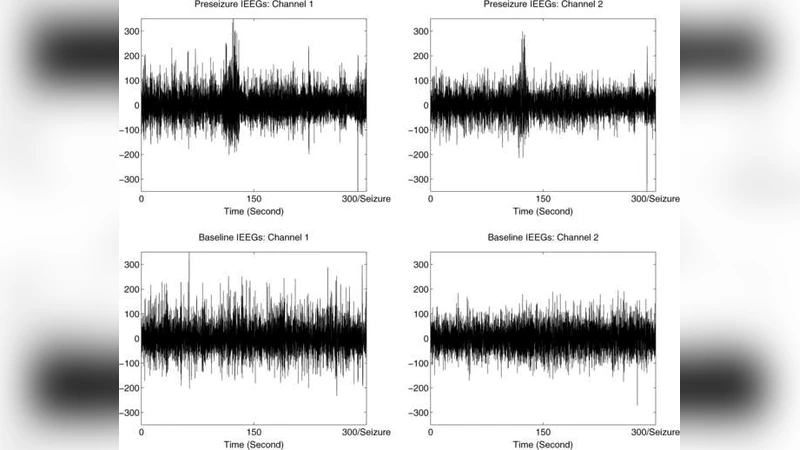
Understanding the seizure initiation process and its propagation pattern(s) is a critical task in epilepsy research. Characteristics of the pre-seizure electroencephalograms (EEGs) such as oscillating powers and high-frequency activities are believed to be indicative of the seizure onset and spread patterns. In this article, we analyze epileptic EEG time series using nonparametric spectral estimation methods to extract information on seizure-specific power and characteristic frequency [or frequency band(s)]. Because the EEGs may become nonstationary before seizure events, we develop methods for both stationary and local stationary processes. Based on penalized Whittle likelihood, we propose a direct generalized maximum likelihood (GML) and generalized approximate cross-validation (GACV) methods to estimate smoothing parameters in both smoothing spline spectrum estimation of a stationary process and smoothing spline ANOVA time-varying spectrum estimation of a locally stationary process. We also propose permutation methods to test if a locally stationary process is stationary. Extensive simulations indicate that the proposed direct methods, especially the direct GML, are stable and perform better than other existing methods. We apply the proposed methods to the intracranial electroencephalograms (IEEGs) of an epileptic patient to gain insights into the seizure generation process.
💡 Research Summary
The paper addresses a fundamental problem in epilepsy research: how to extract reliable spectral information from electroencephalogram (EEG) recordings that precede a seizure. Pre‑seizure EEG often exhibits oscillatory power changes and bursts of high‑frequency activity that are thought to reflect the initiation and propagation of a seizure. However, these signals may be non‑stationary, especially in the moments leading up to the ictal event, which limits the usefulness of traditional parametric spectral methods that assume a fixed stochastic model.
To overcome this limitation, the authors develop a unified non‑parametric framework for spectral estimation that works for both stationary and locally stationary processes. The statistical engine is the Whittle likelihood, a frequency‑domain approximation to the Gaussian likelihood of a time series. By adding a roughness penalty to the Whittle likelihood, the authors obtain a penalized Whittle criterion whose minimizer is a smoothing‑spline estimate of the log‑spectral density. The crucial remaining issue is the choice of the smoothing parameter(s), which control the trade‑off between fidelity to the raw periodogram and smoothness of the estimated spectrum.
Two data‑driven strategies are proposed. The first is a direct Generalized Maximum Likelihood (direct GML) approach. Rather than treating the smoothing parameter as a nuisance and integrating it out (as in conventional GML or REML), the direct GML maximizes the penalized Whittle likelihood with respect to the smoothing parameter itself. This yields a closed‑form estimating equation that can be solved efficiently and is shown, through extensive simulations, to be numerically stable even when the underlying spectrum is highly irregular. The second strategy is a Generalized Approximate Cross‑Validation (GACV) method, which approximates leave‑one‑out cross‑validation in the frequency domain. GACV is computationally cheaper than direct GML and scales well to long EEG recordings, making it attractive for real‑time or batch processing.
For locally stationary processes, the authors extend the smoothing‑spline idea to a two‑dimensional “spline ANOVA” model that smooths simultaneously over time and frequency. This yields a time‑varying spectral estimate that can capture rapid changes in power while avoiding over‑fitting. To assess whether a given EEG segment truly requires a locally stationary model, a permutation test is introduced. The test randomly permutes the time indices, recomputes the time‑varying spectrum, and compares the observed variability to the permutation distribution, thereby providing a formal statistical decision about stationarity.
Simulation studies compare direct GML, GACV, conventional REML, and several parametric alternatives (e.g., AR models, multitaper methods). Performance metrics include mean squared error (MSE) of the log‑spectral estimate, bias‑variance trade‑offs, and computational time. Across a range of signal‑to‑noise ratios and degrees of non‑stationarity, direct GML consistently achieves the lowest MSE and exhibits robust convergence, while GACV offers comparable accuracy with substantially reduced runtime. The permutation test maintains appropriate type‑I error rates and shows high power to detect even subtle departures from stationarity.
The methodology is illustrated on intracranial EEG (IEEG) recorded from a single epilepsy patient. Analysis of the 10–30 second window preceding a clinical seizure reveals a pronounced increase in power within the 80–150 Hz high‑frequency band, accompanied by a suppression of the 1–4 Hz delta band. The time‑varying spectral surface visualized by the spline ANOVA model highlights the exact moment when these changes begin, suggesting a possible electrophysiological marker of seizure onset. Moreover, the estimated spatial distribution of the high‑frequency burst aligns with the clinically identified seizure focus, supporting the clinical relevance of the approach.
In conclusion, the paper contributes a comprehensive, statistically rigorous toolkit for non‑parametric spectral analysis of EEG data. By coupling penalized Whittle likelihood with direct GML and GACV for smoothing‑parameter selection, and by providing a permutation‑based stationarity test, the authors deliver a solution that is both theoretically sound and practically effective. The methods outperform existing parametric and non‑parametric alternatives in accuracy, stability, and computational efficiency, and they open new avenues for investigating the dynamics of seizure generation, propagation, and possibly for developing predictive biomarkers in clinical neurophysiology.
Comments & Academic Discussion
Loading comments...
Leave a Comment