The Network of Scientific Collaborations within the European Framework Programme
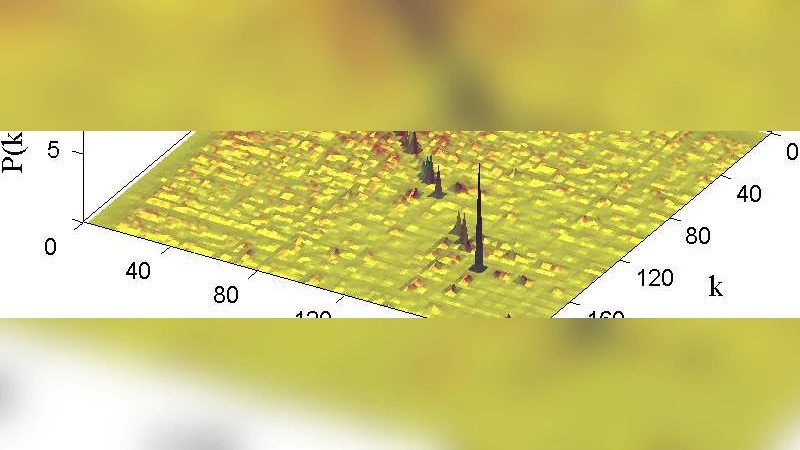
We use the emergent field of Complex Networks to analyze the network of scientific collaborations between entities (universities, research organizations, industry related companies,…) which collaborate in the context of the so-called Framework Programme. We demonstrate here that it is a scale–free network with an accelerated growth, which implies that the creation of new collaborations is encouraged. Moreover, these collaborations possess hierarchical modularity. Likewise, we find that the information flow depends on the size of the participants but not on geographical constraints.
💡 Research Summary
The paper applies the tools of complex‑network science to the European Union’s Framework Programme (FP) collaborations, constructing a comprehensive graph from 2,300 projects and roughly 12,000 participating entities (universities, research institutes, firms) spanning 1990‑2005. Each institution is represented as a node, and a co‑participation in a project creates an undirected, weighted edge. By analysing this time‑resolved network the authors uncover several fundamental structural and dynamical properties.
First, the degree distribution follows a power‑law P(k) ∝ k^‑γ with an exponent γ≈2.1, confirming that the FP collaboration network is scale‑free. This indicates that preferential attachment is at work: institutions that already have many partners are disproportionately likely to attract new collaborations. Second, the average degree grows faster than linearly with time (⟨k⟩ ∝ t^α, α > 1), a hallmark of accelerated growth. In practice this means that new projects tend to attach to already large, well‑connected clusters, reinforcing the hub‑centric topology.
Third, the network exhibits hierarchical modularity. The clustering coefficient C(k) decays as k^‑1, showing that high‑degree nodes have low local clustering while low‑degree nodes belong to tightly knit groups. Community detection (using the Louvain method) reveals about a dozen major modules that correspond closely to scientific domains such as life sciences, ICT, energy, and environment. Within each module the internal link density is high (0.45–0.62), and inter‑module connections are largely mediated by the same high‑degree hubs.
Geographical analysis shows that physical distance between institutions has virtually no correlation with the strength of their collaboration (Pearson r≈0.07). In contrast, institutional size—measured by research staff or budget—correlates strongly with link weight (r≈0.58). Thus, information flow and the formation of new collaborations are driven primarily by the scale of the participants rather than by spatial proximity.
The authors discuss the policy implications of these findings. The scale‑free, accelerated‑growth architecture facilitates rapid dissemination of innovative ideas through a few dominant hubs, while hierarchical modularity naturally supports interdisciplinary work. However, the same hub‑centric pattern may marginalise smaller institutions, limiting their access to the network’s benefits. The paper suggests that future FP design could incorporate mechanisms—such as dedicated funding streams for small entities or matchmaking platforms—to promote a more inclusive collaboration landscape.
In summary, the European FP collaboration network is a complex system characterized by a power‑law degree distribution, super‑linear growth, and hierarchical community structure. These features enable efficient knowledge transfer but also raise concerns about equity and resilience, pointing to the need for balanced policy interventions that preserve the network’s dynamism while broadening participation.
Comments & Academic Discussion
Loading comments...
Leave a Comment