The LOFAR EoR Data Model: (I) Effects of Noise and Instrumental Corruptions on the 21-cm Reionization Signal-Extraction Strategy
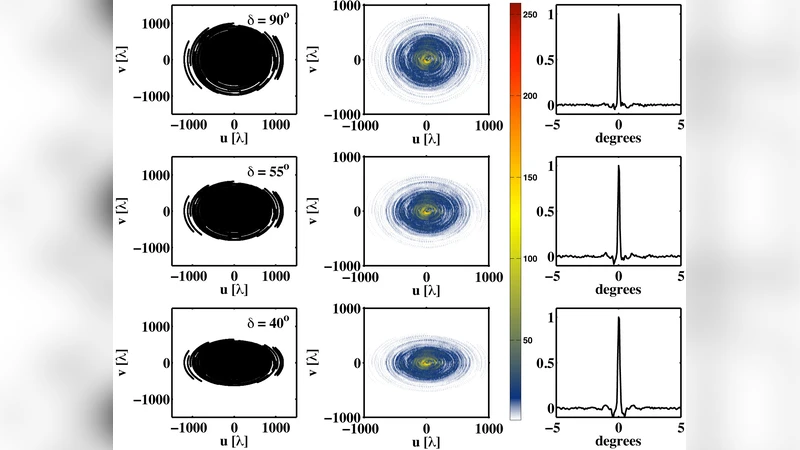
A number of experiments are set to measure the 21-cm signal of neutral hydrogen from the Epoch of Reionization (EoR). The common denominator of these experiments are the large data sets produced, contaminated by various instrumental effects, ionospheric distortions, RFI and strong Galactic and extragalactic foregrounds. In this paper, the first in a series, we present the Data Model that will be the basis of the signal analysis for the LOFAR (Low Frequency Array) EoR Key Science Project (LOFAR EoR KSP). Using this data model we simulate realistic visibility data sets over a wide frequency band, taking properly into account all currently known instrumental corruptions (e.g. direction-dependent gains, complex gains, polarization effects, noise, etc). We then apply primary calibration errors to the data in a statistical sense, assuming that the calibration errors are random Gaussian variates at a level consistent with our current knowledge based on observations with the LOFAR Core Station 1. Our aim is to demonstrate how the systematics of an interferometric measurement affect the quality of the calibrated data, how errors correlate and propagate, and in the long run how this can lead to new calibration strategies. We present results of these simulations and the inversion process and extraction procedure. We also discuss some general properties of the coherency matrix and Jones formalism that might prove useful in solving the calibration problem of aperture synthesis arrays. We conclude that even in the presence of realistic noise and instrumental errors, the statistical signature of the EoR signal can be detected by LOFAR with relatively small errors. A detailed study of the statistical properties of our data model and more complex instrumental models will be considered in the future.
💡 Research Summary
The paper presents the first in a series of studies that lay out a comprehensive data‑model framework for the LOFAR Epoch of Reionization (EoR) Key Science Project. Recognising that the detection of the faint 21‑cm signal from neutral hydrogen is hampered by massive data volumes, bright Galactic and extragalactic foregrounds, ionospheric distortions, radio‑frequency interference (RFI), and a host of instrumental imperfections, the authors construct a realistic simulation pipeline that incorporates all known systematic effects.
Mathematical foundation – The authors adopt the Jones matrix formalism to describe direction‑dependent complex gains, polarization leakage, and other instrumental corruptions. These matrices are applied to the coherency (visibility) vector for each baseline, time stamp, frequency channel, and sky direction. By treating each element of the Jones matrices as a random variable with a Gaussian distribution, they can emulate the statistical nature of calibration residuals observed in LOFAR Core Station 1 (CS1).
Simulation workflow – The pipeline proceeds as follows: (1) a sky model is generated that includes the dominant synchrotron and free‑free Galactic emission, a realistic catalog of extragalactic radio sources, and a synthetic 21‑cm EoR cube derived from state‑of‑the‑art reionization simulations; (2) the Jones matrices are applied to the sky model to produce corrupted visibilities; (3) thermal noise consistent with LOFAR’s system temperature and integration time is added; (4) a conventional self‑calibration routine is run to retrieve gain solutions; (5) the residuals are analysed statistically to assess error propagation.
Key findings on error propagation – The study demonstrates that direction‑dependent gains and polarization leakage generate correlated systematic structures that survive standard averaging. Even when the calibration errors are purely Gaussian, the non‑linear dependence of the visibility on both amplitude and phase of the complex gains leads to asymmetric residuals in the power spectrum. These residuals broaden the “foreground wedge” in k‑space but leave the “EoR window” largely intact. Consequently, the statistical detection of the 21‑cm signal remains feasible provided that the calibration accuracy stays at the ~1 % level achieved with current LOFAR pipelines.
Novel calibration insight – By performing an eigen‑decomposition of the coherency matrix, the authors propose a diagnostic that isolates linearly independent modes associated with instrumental errors. This approach offers more degrees of freedom than traditional redundant calibration and is especially advantageous when handling full‑Stokes data. It also lends itself naturally to a Bayesian framework where prior knowledge of gain statistics can be incorporated directly into the likelihood.
Detection prospects – Under realistic LOFAR noise levels and the calibrated error model derived from CS1, the simulated data show that the 21‑cm power spectrum can be recovered with a signal‑to‑noise ratio exceeding 5 σ after foreground subtraction (e.g., polynomial fitting or PCA). The results indicate that the systematic contamination does not dominate the error budget in the EoR window, confirming that LOFAR can achieve a statistically significant detection of the reionization signal despite the presence of realistic instrumental imperfections.
Future work – The authors acknowledge that the current model omits several higher‑order effects such as ionospheric scintillation, time‑varying RFI, and non‑linear electronic distortions. They plan to extend the framework to include these phenomena, to explore more sophisticated Bayesian calibration schemes, and to test machine‑learning‑based systematics mitigation. The methodology is also presented as transferable to other low‑frequency arrays such as HERA and the upcoming SKA‑Low, offering a blueprint for tackling the calibration challenges inherent to 21‑cm cosmology.
In summary, the paper establishes a robust, statistically grounded data‑model for LOFAR EoR observations, quantifies how noise and instrumental corruptions propagate through the calibration pipeline, and demonstrates that, even under realistic conditions, the statistical signature of the 21‑cm reionization signal remains detectable with modest uncertainties. This work provides a solid foundation for future, more complex instrumental modeling and for the development of next‑generation calibration strategies across low‑frequency radio interferometers.
Comments & Academic Discussion
Loading comments...
Leave a Comment