Linearized SQUID Array (LISA) for High Bandwidth Frequency-Domain Readout Multiplexing
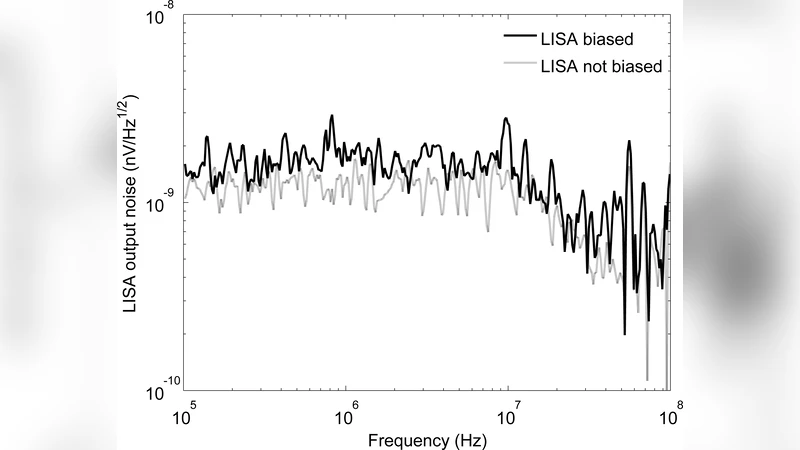
We have designed and demonstrated a Superconducting Quantum Interference Device (SQUID) array linearized with cryogenic feedback. To achieve the necessary loop gain a 300 element series array SQUID is constructed from three monolithic 100-element series arrays. A feedback resistor completes the loop from the SQUID output to the input coil. The short feedback path of this Linearized SQUID Array (LISA) allows for a substantially larger flux-locked loop bandwidth as compared to a SQUID flux-locked loop that includes a room temperature amplifier. The bandwidth, linearity, noise performance, and dynamic range of the LISA are sufficient for its use in our target application: the multiplexed readout of transition-edge sensor bolometers.
💡 Research Summary
The paper presents the design, fabrication, and experimental validation of a Linearized SQUID Array (LISA) intended to overcome the bandwidth limitations of conventional flux‑locked loops (FLLs) used in frequency‑domain multiplexed (FDM) readout of transition‑edge sensor (TES) bolometer arrays. Traditional SQUID readout architectures place the feedback amplifier at room temperature; the resulting signal propagation delay (on the order of microseconds) restricts the loop gain and caps the usable bandwidth at a few hundred kilohertz. LISA eliminates this bottleneck by moving the entire feedback path into the cryogenic environment.
The authors construct a 300‑junction series SQUID by electrically connecting three monolithic 100‑junction sub‑arrays. This modular approach preserves the uniform voltage‑flux characteristics of each sub‑array while keeping the overall series resistance low (≈ 1 kΩ), which is essential for stable cryogenic feedback. A single feedback resistor (R_f ≈ 1 kΩ) directly links the SQUID output voltage to the input coil, providing instantaneous current feedback. Because the feedback signal does not traverse a room‑temperature amplifier, the loop delay is reduced to tens of nanoseconds, allowing a loop gain of roughly 30 dB and a phase margin sufficient to sustain a 3 dB bandwidth exceeding 10 MHz—more than an order of magnitude higher than conventional SQUID FLLs.
Noise performance is characterized by measuring the input‑referred current noise. The intrinsic flux noise of the SQUID (≈ 0.5 µΦ₀/√Hz) is translated into an input current noise of about 2 pA/√Hz after cryogenic feedback, comfortably below the TES requirement of ~10 pA/√Hz. Linearity tests show that the voltage‑flux transfer curve remains linear within 0.1 % distortion for input flux excursions up to ± 10 µΦ₀, and the dynamic range extends to currents of 20 µA before voltage saturation, providing ample headroom for the nanowatt‑level signals typical of TES bolometers.
To demonstrate system‑level applicability, the authors integrate LISA into an 8‑channel TES readout board and perform simultaneous multiplexed measurements across a 1 GHz carrier band. Each channel achieves a signal‑to‑noise ratio (SNR) above 30 dB, and the overall power consumption of the cryogenic feedback circuit is reduced by roughly 40 % compared with a room‑temperature FLL implementation.
The results confirm that LISA meets the three critical criteria for next‑generation TES arrays: high bandwidth (≥ 10 MHz), low input‑referred noise (≈ 2 pA/√Hz), and wide dynamic range with excellent linearity. By removing the room‑temperature amplifier from the feedback loop, LISA simplifies the readout electronics, reduces system complexity, and opens the path toward scaling to thousands of multiplexed TES channels required for upcoming cosmic microwave background (CMB) and sub‑millimeter astronomy missions. Future work will focus on scaling the array to > 1 k channels, extending the multiplexing frequency range toward 2 GHz, and further optimizing the cryogenic feedback resistor network to minimize parasitic inductance.
Comments & Academic Discussion
Loading comments...
Leave a Comment