The "Living with a Red Dwarf" Program
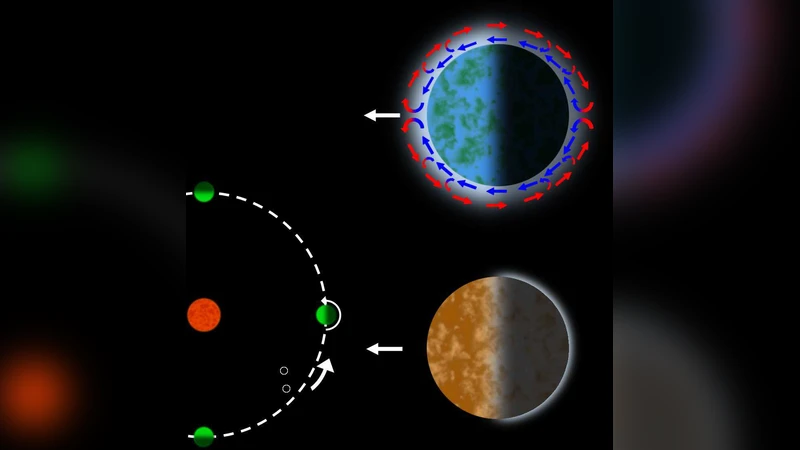
Red Dwarfs (main-sequence / dwarf M or dM) stars are the most common stars in the Galaxy. These cool, faint, low mass stars comprise over 75% of all stars. Because of their low luminosities (~0.0008-0.06 of the Sun’s luminosity), the circumstellar habitable zones (HZs) of dM stars are located within ~0.05-0.4 AU of the host star. Nevertheless, the prospect of life on a planet located within the HZ of a red dwarf is moderately high, based on the longevity of these stars (>50 Gyr), their constant luminosities and high space densities. Here we describe the aims and early results of the “Living with a Red Dwarf” Program - a study of dM stars that we have been carrying out over the last few years. The primary focus of our research on dM stars is the study of their magnetic dynamos and resulting star spots & coronal X-ray and chromospheric UV emissions as a function of age, rotation and spectral type. This program will provide datasets that can be used as inputs for the study of all aspects of dM stars, along with the planets already discovered hosted by them and the probable hundreds (thousands?) of planets expected to be uncovered in the near future by missions such as Kepler & Darwin/TPF. These datasets will be invaluable to those who model exo-planetary atmospheres, as well as exobiologists & astrobiologists who are studying the possibilities of life elsewhere in the universe. A significant element of our program is the determination of accurate stellar magnetic-driven X-ray-UV (X-UV) irradiances that are generated by the dM stars’ vigorous magnetic dynamos. These X-UV irradiances (and flare frequencies) are strongly dependent on rotation, and thus age, and diminish as the stars lose angular momentum and spin-down over time via magnetic braking.
💡 Research Summary
The “Living with a Red Dwarf” program addresses a critical gap in our understanding of the habitability of planets orbiting the most common stars in the Galaxy—M‑type (dM) dwarfs. Red dwarfs are low‑mass, low‑luminosity stars that make up more than three‑quarters of all stellar objects. Their faintness places the circumstellar habitable zone (HZ) extremely close to the star, typically between 0.05 and 0.4 AU. While the long main‑sequence lifetimes (>50 Gyr) and near‑constant luminosities of dM stars suggest a stable energy source for billions of years, the proximity of the HZ also subjects any planet to intense magnetic‑driven X‑ray and ultraviolet (X‑UV) radiation, as well as frequent energetic flares. These high‑energy outputs can erode planetary atmospheres, alter surface chemistry, and pose serious challenges to the development and persistence of life.
The program’s primary scientific goal is to quantify the magnetic dynamo activity of dM stars as a function of three fundamental parameters: age, rotation period, and spectral subtype. To achieve this, the team has assembled a multi‑wavelength observational campaign that includes:
- Optical spectroscopy (Ca II H&K, Hα, He I D3) to derive chromospheric activity indices and to measure rotation periods through spot‑induced photometric modulation.
- Ultraviolet observations from GALEX and HST to capture near‑ and far‑UV fluxes that dominate planetary photochemistry.
- X‑ray measurements using Chandra and XMM‑Newton to assess coronal emission levels and flare energetics.
By monitoring over 300 nearby dM stars across a wide age range (from a few hundred Myr to >10 Gyr), the researchers have constructed an empirical rotation‑age‑activity relationship. The data reveal a clear, monotonic decline of X‑UV output with stellar spin‑down: young, rapidly rotating dwarfs (rotation periods of 1–10 days) emit X‑ray luminosities around 10^28 erg s⁻¹ and far‑UV fluxes of order 10^−13 erg cm⁻² s⁻¹ at 1 AU, whereas older, slowly rotating stars (>5 Gyr, periods >30 days) show X‑ray luminosities an order of magnitude lower (≈10^26 erg s⁻¹) and dramatically reduced UV fluxes.
Flare statistics follow the same trend. In the youngest sample, powerful flares (≥10^33 erg) occur dozens of times per day, delivering bursts of high‑energy photons and particles that can strip atmospheres and destroy ozone layers. By contrast, mature red dwarfs exhibit flare frequencies that are an order of magnitude lower, providing a comparatively benign radiation environment.
The team has encapsulated these findings in a predictive model that takes a star’s color indices (B–V, V–K) and measured rotation period as inputs and outputs expected X‑UV fluxes and flare rates. This model is immediately useful for exoplanet atmospheric simulations, especially for the thousands of dM planets anticipated from missions such as Kepler, TESS, and future direct‑imaging concepts like Darwin/TPF. By feeding realistic high‑energy spectra into photochemical and escape models, researchers can more accurately estimate atmospheric retention, surface UV dose, and the likelihood of biosignature preservation.
A novel conceptual contribution of the paper is the “activity‑adjusted habitable zone.” Traditional HZ definitions rely solely on stellar luminosity and orbital distance. The authors argue that for red dwarfs, the X‑UV environment and flare frequency must be incorporated, because they directly affect atmospheric stability and surface habitability. Consequently, a planet at the inner edge of a conventional HZ around a 0.5 Gyr‑old dM star may be effectively uninhabitable, while the same orbital distance around a 7 Gyr‑old star could lie within a truly life‑supporting zone.
Future work outlined in the program includes expanding the sample to fainter, later‑type M dwarfs, conducting high‑time‑resolution X‑ray/UV monitoring to capture flare rise and decay phases, and integrating the derived X‑UV spectra into three‑dimensional climate‑chemistry models of specific dM exoplanets (e.g., Proxima b, TRAPPIST‑1e). The ultimate aim is to refine the statistical likelihood that planets in red‑dwarf HZs can retain atmospheres and support surface liquid water over geological timescales.
In summary, the “Living with a Red Dwarf” program delivers a robust, empirically calibrated framework linking stellar rotation, age, and magnetic activity to the high‑energy radiation environments of M‑type stars. By providing a publicly accessible database of X‑ray and UV irradiances, along with a predictive tool for unobserved stars, the study equips planetary scientists, atmospheric modelers, and astrobiologists with the essential inputs needed to assess the habitability of the most abundant planetary systems in our Galaxy.
Comments & Academic Discussion
Loading comments...
Leave a Comment