AGN and starburst in bright Seyfert galaxies: from IR photometry to IR spectroscopy
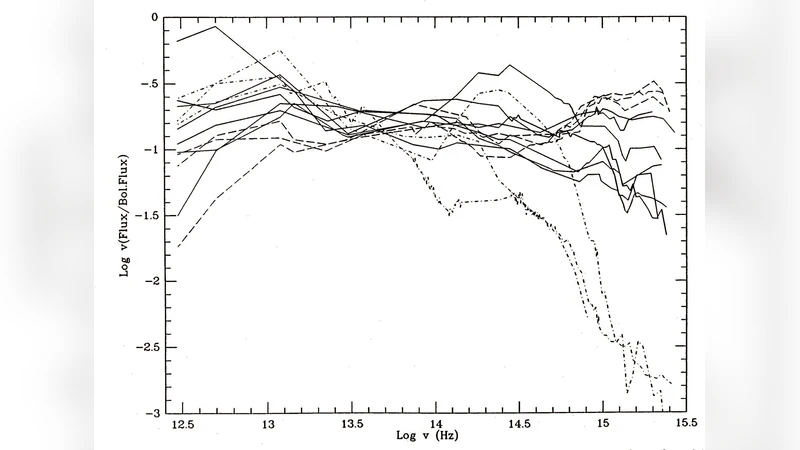
Infrared photometry and later infrared spectroscopy provided powerful diagnostics to distinguish between the main emission mechanisms in galaxies: AGN and Starburst. After the pioneering work on infrared photometry with IRAS in the far-IR and the S.Pedro Martir and ESO ground-based work in the near-IR, ISO photometry extended up to 200um the coverage of the galaxies energy distributions. Then Spitzer collected accurate mid-infrared spectroscopy on different samples of galaxies. We will review the work done on the 12um galaxy sample since the times of IRAS photometry to the new Spitzer spectroscopy. The main results on the multifrequency data of 12um selected Seyfert galaxies are presented and discussed in the light of unification and evolution models. The spectroscopic work of Spitzer will soon be complemented at longer wavelengths by the Herschel spectrometers and in the future by SPICA at higher redshift.
💡 Research Summary
This paper presents a comprehensive review of infrared (IR) studies of bright Seyfert galaxies selected from the 12 µm galaxy sample, tracing the evolution of diagnostic techniques from the early IRAS photometry through ISO photometry and spectroscopy to the high‑resolution mid‑infrared spectroscopy obtained with the Spitzer Space Telescope. The authors begin by summarizing the pioneering IRAS work, which provided far‑infrared (FIR) fluxes at 60 and 100 µm and established basic colour diagnostics (e.g., FIR/12 µm ratios) that could separate dust‑heated starburst emission from the hotter dust associated with active galactic nuclei (AGN). Ground‑based near‑infrared (NIR) imaging at S. Pedro Martir and ESO added J, H, and K band data, allowing the authors to probe the warm dust component close to the nucleus and to assess the contribution of stellar photospheres.
The ISO mission extended the spectral coverage to 2.5–200 µm, delivering continuous spectra that revealed the presence of polycyclic aromatic hydrocarbon (PAH) emission bands (particularly at 6.2, 7.7, 8.6, and 11.3 µm) and silicate absorption/emission features near 9.7 and 18 µm. By measuring PAH equivalent widths and silicate optical depths, the authors demonstrated that PAH strength correlates with star‑formation activity, whereas deep silicate absorption often signals a heavily obscured AGN. These ISO results laid the groundwork for a quantitative “AGN‑Starburst mixing diagram” based on the relative intensities of high‑ionisation fine‑structure lines such as
Comments & Academic Discussion
Loading comments...
Leave a Comment