Apodized Lyot Coronagraph for VLT-SPHERE: Laboratory tests and performances of a first prototype in the visible
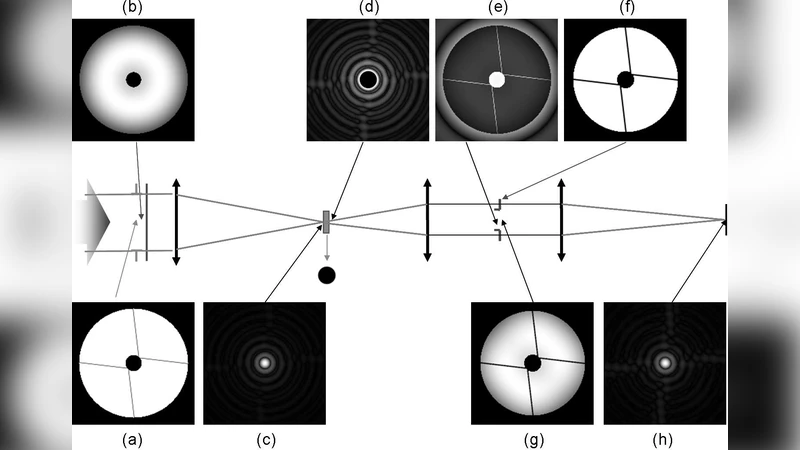
We present some of the High Dynamic Range Imaging activities developed around the coronagraphic test-bench of the Laboratoire A. H. Fizeau (Nice). They concern research and development of an Apodized Lyot Coronagraph (ALC) for the VLT-SPHERE instrument and experimental results from our testbed working in the visible domain. We determined by numerical simulations the specifications of the apodizing filter and searched the best technological process to manufacture it. We present the results of the experimental tests on the first apodizer prototype in the visible and the resulting ALC nulling performances. The tests concern particularly the apodizer characterization (average transmission radial profile, global reflectivity and transmittivity in the visible), ALC nulling performances compared with expectations, sensitivity of the ALC performances to misalignments of its components.
💡 Research Summary
The paper reports on the design, fabrication, and laboratory testing of a first‑generation Apodized Lyot Coronagraph (ALC) prototype intended for the VLT‑SPHERE instrument, with experiments carried out in the visible wavelength range (≈600 nm). The authors begin by outlining the scientific motivation for high‑contrast imaging of exoplanets and the need for an advanced coronagraph within SPHERE’s common path optics. They describe the classical Lyot coronagraph principle and its limitations, then introduce the ALC concept, which uses a spatially varying transmission (“apodizer”) to reshape the pupil illumination before the focal‑plane occulting mask. Because the VLT entrance pupil includes a central obscuration and four spider vanes, the optimal apodizer transmission profile has a “bagel” shape that was derived through numerical simulations and expressed as a seventh‑order polynomial.
The experimental bench consists of a He‑Ne laser and a broadband white source, a series of relay lenses forming two successive afocal systems, a 28 mm diameter pupil mask reproducing the VLT pupil, the fabricated apodizer, a focal‑plane Lyot mask (90 µm diameter, corresponding to 3 λ/D), and a Lyot stop matched to the pupil geometry. The apodizer was manufactured by depositing an Inconel 600 thin film on a BK7 substrate using a metal‑evaporation process; the target transmission was ~40 % with a radial profile matching the simulated design. The Lyot mask and stop were produced by chromium deposition on BK7.
Transmission measurements were performed by acquiring long‑exposure pupil images with and without the apodizer, dividing the two to obtain a radial transmission curve. The global transmission measured 39.9 %, close to the specification, but deviations exceeding the tolerance band were observed between 7 mm and 12.8 mm radius, indicating non‑uniformity in the thin‑film coating. Reflectivity was measured by replacing the apodizer with an aluminum mirror (90 % reflectance) and comparing the returned beam; the measured reflectivity versus wavelength agreed with thin‑film theory calculations.
Coronagraphic performance was evaluated by inserting the Lyot mask and stop and recording the residual point‑spread function (PSF). The achieved contrast in the laboratory reached the level predicted by the simulations (on the order of 10⁻⁴ at a few λ/D), confirming that the apodizer design and manufacturing process are adequate for SPHERE’s requirements. Sensitivity analyses showed that lateral misalignments of any component larger than ~0.1 mm or angular misalignments greater than ~0.05° cause a rapid degradation of the nulling performance, establishing tight alignment tolerances for the final instrument.
The authors conclude that the visible‑light tests successfully validate the ALC concept, the chosen manufacturing technique for the apodizer, and the alignment specifications needed for the near‑infrared implementation in SPHERE. They suggest further work to improve thin‑film uniformity, to extend testing to the infrared band, and to integrate the ALC into the full SPHERE optical train.
Comments & Academic Discussion
Loading comments...
Leave a Comment