Where Does the Disk Turn Into the Halo? Cool H I in the Outer Milky Way Disk
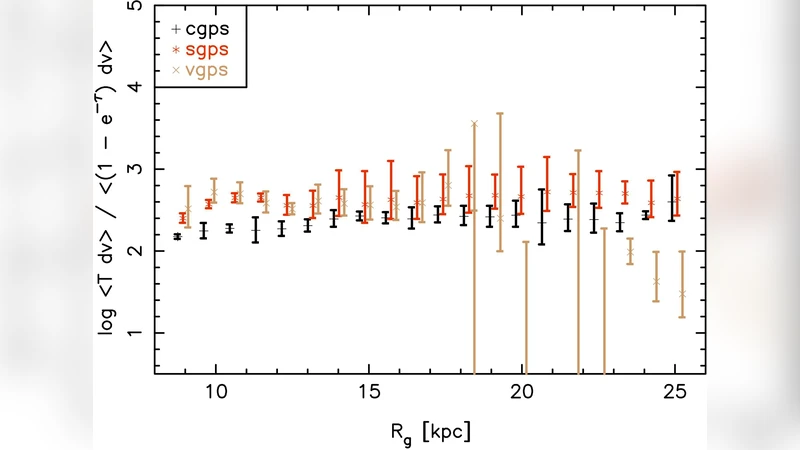
Using H I absorption spectra taken from the recent surveys of 21-cm line and continuum emission in the Galactic plane, the distribution of cool atomic clouds in the outer disk of the Milky Way is revealed. The warp of the midplane is clearly seen in absorption, as it is in emission, and the cool, neutral medium also shows flaring or increase in scale height with radius similar to that of the warm atomic hydrogen. The mixture of phases, as measured by the fraction of H I in the cool clouds relative to the total atomic hydrogen, stays nearly constant from the solar circle out to about 25 kpc radius. Assuming cool phase temperature ~50 K this indicates a mixing ratio of 15% to 20% cool H I, with the rest warm.
💡 Research Summary
The paper presents a comprehensive investigation of the distribution and physical properties of cool neutral hydrogen (CNM) clouds in the outer Milky Way disk, using 21‑cm H I absorption spectra drawn from recent large‑scale surveys of both line and continuum emission. By exploiting the high sensitivity of absorption against bright radio continuum sources, the authors are able to trace cold atomic gas that is otherwise invisible or heavily blended in emission‑only studies. The analysis reveals several key findings that together illuminate where the Galactic disk transitions into the halo.
First, the classic warp of the Galactic mid‑plane, long documented in H I emission, is also clearly visible in absorption. This demonstrates that the cold atomic component follows the same large‑scale bending of the disk as the warm neutral medium (WNM). Second, the authors detect a flaring of the CNM layer: the vertical scale height of the cool gas increases with Galactocentric radius in a manner comparable to that of the warm gas. This suggests that the vertical pressure balance governing both phases remains similar out to large radii, implying that the combined gravitational potential of the stellar disk, dark halo, and external pressure sources (e.g., cosmic rays, supernova‑driven turbulence) continues to shape the gas distribution far beyond the solar circle.
To quantify the phase mixture, the authors assume a characteristic CNM spin temperature of about 50 K—a value consistent with previous high‑resolution absorption studies. Using the measured optical depths and line widths, they derive the column density of the cool component and compare it to the total H I column obtained from emission. Remarkably, the fraction of H I residing in the cool phase stays roughly constant at 15 %–20 % from the solar radius (≈8 kpc) out to ≈25 kpc. This constancy is unexpected because theoretical models of galactic disks often predict a rapid decline of the cold fraction in the low‑density, low‑metallicity outer regions where the interstellar radiation field is weaker and cooling is less efficient. The observed stability of the CNM fraction therefore points to efficient cooling mechanisms—perhaps aided by residual dust, modest metallicity, or shielding by the warm gas—that persist even at large radii.
The paper also discusses the broader implications of a substantial CNM reservoir in the outer disk. Since CNM is the immediate precursor to molecular cloud formation, its presence suggests that the outer Galaxy may still be capable of forming molecular gas and, consequently, stars, albeit at a reduced rate. The authors argue that future high‑sensitivity molecular line surveys (e.g., with ALMA or the upcoming SKA) could test this hypothesis by searching for CO or other molecular tracers co‑located with the identified CNM clouds.
In addition to the phase balance, the authors compare their observational results with predictions from cosmological galaxy‑formation simulations. Those simulations typically predict a steep drop in the cold‑to‑warm H I ratio beyond the optical disk, driven by declining pressure and metallicity. The empirical finding of a relatively flat CNM fraction challenges these models and suggests that either the simulations underestimate the efficiency of cooling processes in the outer disk or that additional physical ingredients—such as magnetic support, cosmic‑ray heating, or localized compression events—must be incorporated.
Overall, the study provides the first large‑scale, absorption‑based map of cool atomic gas extending to the farthest reaches of the Milky Way’s gaseous disk. By demonstrating that the warp, flaring, and phase mixture of the CNM mirror those of the warm component, the authors argue that the transition from the thin, rotating disk to the more spheroidal halo is not marked by a sudden disappearance of cold gas. Instead, the cold phase persists, maintaining a roughly constant proportion of the total neutral hydrogen budget out to at least 25 kpc. This insight refines our understanding of the structural and dynamical interface between the Galactic disk and halo, and it sets the stage for future multi‑phase studies that will combine absorption, emission, and molecular observations to build a unified picture of the Milky Way’s outermost interstellar medium.
Comments & Academic Discussion
Loading comments...
Leave a Comment