Secular evolution and the assembly of bulges
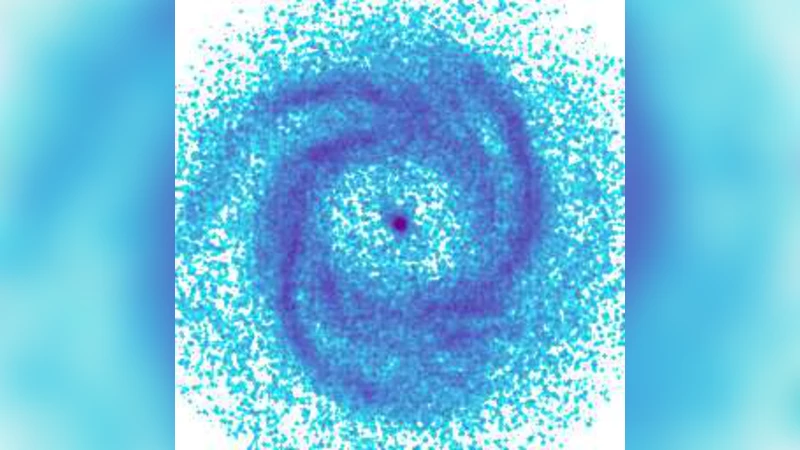
Bulges are of different types, morphologies and kinematics, from pseudo-bulges, close to disk properties (Sersic index, rotation fraction, flatenning), to classical de Vaucouleurs bulges, close to elliptical galaxies. Secular evolution and bar development can give rise to pseudo-bulges. To ensure prolonged secular evolution, gas flows are required along the galaxy life-time. There is growing evidence for cold gas accretion around spiral galaxies. This can explain the bar cycle of destruction and reformation, together with pseudo-bulge formation. However, bulges can also be formed through major mergers, minor mergers, and massive clumps early in the galaxy evolution. Bulge formation is so efficient that it is difficult to explain the presence of bulgeless galaxies today.
💡 Research Summary
The paper provides a comprehensive review of bulge diversity in disk galaxies and examines the physical processes that give rise to the two main bulge families: classical bulges, which resemble elliptical galaxies, and pseudo‑bulges, which retain many disk‑like properties. Classical bulges typically exhibit high Sérsic indices (n ≈ 4), low rotation support (V/σ < 1), and round, three‑dimensional shapes. They are thought to form rapidly through violent mechanisms such as major mergers, the accretion of massive satellite galaxies (minor mergers), or the inward migration of giant clumps that dominate high‑redshift, gas‑rich disks. In contrast, pseudo‑bulges have low Sérsic indices (n ≈ 1–2), high rotational fractions (V/σ > 1), and flattened morphologies that closely follow the host disk. Their formation is linked to long‑term secular evolution driven by non‑axisymmetric structures, principally stellar bars.
The authors describe how a bar redistributes angular momentum: it torques the surrounding disk, causing gas to lose angular momentum and flow inward along the bar’s leading edges. This inflow fuels central star formation, gradually building up a low‑n, rotation‑dominated stellar component. However, the same inflow also increases the central mass concentration, which can weaken or dissolve the bar. The paper emphasizes a feedback loop—bar formation, gas inflow, bar weakening, bar re‑formation—that can repeat over several gigayears if fresh cold gas continues to be supplied from the galaxy’s surroundings.
Observational evidence for continuous cold gas accretion is presented, including extended H I streams, low‑metallicity Lyman‑limit systems, and filamentary structures traced by deep 21‑cm surveys. These reservoirs provide the fuel required to sustain the bar cycle and, consequently, pseudo‑bulge growth. In environments where such accretion is scarce (e.g., low‑density fields), bars may never become strong enough to drive significant secular evolution, explaining the existence of bulgeless disks such as M33 and NGC 300.
The paper also evaluates the role of mergers and clump migration. Major mergers violently scramble stellar orbits, creating spheroidal remnants with high Sérsic indices and low rotation. Minor mergers contribute mass gradually, often preserving some disk structure while still building a classical bulge component. At early cosmic times (z > 2), turbulent, gas‑rich disks fragment into massive clumps (10⁸–10⁹ M⊙). Dynamical friction causes these clumps to spiral inward, coalescing into a dense central concentration that can serve as a seed for a classical bulge.
A central tension highlighted by the authors is the apparent over‑efficiency of bulge formation mechanisms. Simulations that include realistic gas accretion and merger histories tend to produce bulge‑dominated galaxies, yet a non‑negligible fraction of present‑day spirals remain essentially bulgeless. The authors propose two possible resolutions: (1) galaxies residing in regions with very low external gas supply experience weak or absent bar cycles, suppressing secular bulge growth; (2) low‑mass disks may never develop the violent instabilities required for massive clump formation, limiting classical bulge buildup.
In conclusion, the authors argue that bulge formation cannot be attributed to a single pathway. Instead, a hybrid framework is required, where secular evolution powered by sustained cold gas accretion and bar recycling coexists with episodic violent events such as mergers and early‑epoch clump migration. The relative importance of each channel depends on galaxy mass, environment, and cosmic epoch. Future work—high‑resolution cosmological simulations combined with deep multi‑wavelength observations of gas inflows and stellar kinematics—will be essential to quantify the contributions of each mechanism and to resolve the puzzle of why some massive spirals have managed to avoid substantial bulge growth.
Comments & Academic Discussion
Loading comments...
Leave a Comment