Changing the mechanical unfolding pathway of FnIII10 by tuning the pulling strength
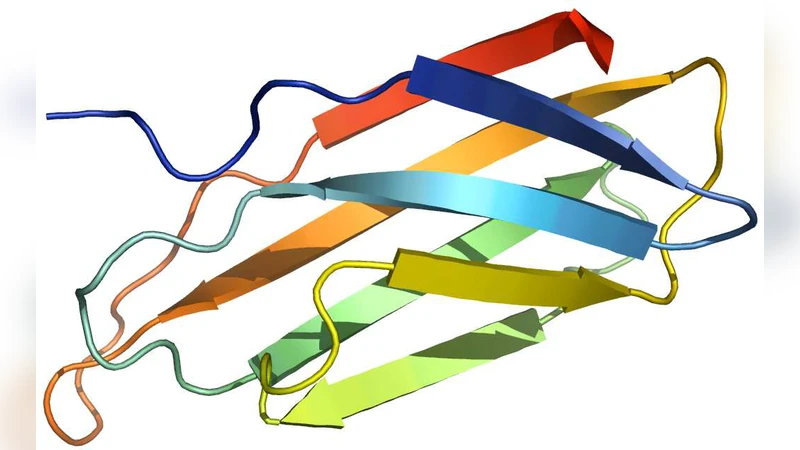
We investigate the mechanical unfolding of the tenth type III domain from fibronectin, FnIII10, both at constant force and at constant pulling velocity, by all-atom Monte Carlo simulations. We observe both apparent two-state unfolding and several unfolding pathways involving one of three major, mutually exclusive intermediate states. All the three major intermediates lack two of seven native beta-strands, and share a quite similar extension. The unfolding behavior is found to depend strongly on the pulling conditions. In particular, we observe large variations in the relative frequencies of occurrence for the intermediates. At low constant force or low constant velocity, all the three major intermediates occur with a significant frequency. At high constant force or high constant velocity, one of them, with the N- and C-terminal beta-strands detached, dominates over the other two. Using the extended Jarzynski equality, we also estimate the equilibrium free-energy landscape, calculated as a function of chain extension. The application of a constant pulling force leads to a free-energy profile with three major local minima. Two of these correspond to the native and fully unfolded states, respectively, whereas the third one can be associated with the major unfolding intermediates.
💡 Research Summary
The authors investigate the mechanical unfolding of the tenth type‑III domain of fibronectin (FnIII10) using an all‑atom implicit‑solvent model combined with Monte Carlo (MC) dynamics. Two pulling protocols are examined: constant force applied to the N‑ and C‑termini, and constant‑velocity pulling implemented via a harmonic spring that mimics an AFM cantilever. Six constant forces (50, 80, 100, 120, 150, 192 pN) and four pulling speeds (0.03, 0.05, 0.10, 1.0 fm per MC step) are explored at 288 K. The energy function consists of four terms – local electrostatics, excluded‑volume repulsion, hydrogen‑bond interactions, and an effective hydrophobic attraction – a form previously shown to reproduce folding thermodynamics of small peptides.
During each simulation the authors monitor native hydrogen bonds that link the seven β‑strands (A–G) of the β‑sandwich. A β‑strand pair is considered formed if at least 30 % of its native hydrogen bonds remain; the presence or absence of individual strands is inferred from the pattern of formed pairs. In constant‑force runs, the end‑to‑end distance L is histogrammed; peaks correspond to metastable states (native, intermediates, fully unfolded). In constant‑velocity runs, rupture events are identified as sharp force drops (>25 pN within a short time window), and the force just before the drop defines the rupture force of the associated state.
The simulations reveal two broad unfolding scenarios. At low forces or low pulling speeds, the protein often follows a three‑step pathway: native → intermediate → fully stretched. The intermediate appears at L≈12–16 nm and is characterized by the loss of exactly two β‑strands. Three distinct intermediate topologies are observed, each lacking a different pair of strands: (i) strands A and B, (ii) strands A and G, and (iii) strands A, B, F, and G (i.e., both N‑ and C‑terminal strands detached). At higher forces (≥120 pN) or higher speeds (≥0.10 fm/MC step), the third topology (simultaneous N‑ and C‑terminal detachment) dominates, accounting for roughly 70 % of trajectories, while the other two become rare. In many trajectories the protein unfolds in a single abrupt step directly from native to the stretched state, especially at the highest forces.
To connect these kinetic observations with thermodynamics, the authors apply the extended Jarzynski equality (EJE) to the constant‑velocity data. By weighting each trajectory with the exponential of the negative work (e^{−W/k_BT}) and combining with a harmonic bias term, they reconstruct the equilibrium free‑energy profile G₀(L) as a function of end‑to‑end distance. The resulting profile exhibits three pronounced minima: the native basin at L≈5 nm, a broad intermediate basin around L≈13 nm, and the fully unfolded basin near L≈30 nm. The depth of the intermediate minimum varies with pulling strength, reflecting the shift in pathway populations observed in the kinetic analysis.
Overall, the study demonstrates that the mechanical unfolding pathway of FnIII10 is highly sensitive to the magnitude of the applied force or pulling speed. While all three intermediate states are accessible under gentle pulling, strong pulling selects a specific pathway in which both terminal β‑strands detach early, lowering the free‑energy barrier and accelerating unfolding. These findings reconcile earlier experimental AFM observations of two‑step unfolding and intermediate formation, and suggest that cellular forces in the tens of piconewton range could modulate FnIII10’s structural state, potentially influencing the spatial arrangement of the RGD cell‑binding motif. Moreover, the work showcases the utility of an implicit‑solvent all‑atom model combined with Jarzynski‑based free‑energy reconstruction for probing complex, multi‑pathway protein mechanics that would be computationally prohibitive with fully explicit solvent simulations.
Comments & Academic Discussion
Loading comments...
Leave a Comment