Data Models for Radio Astronomy in the VO
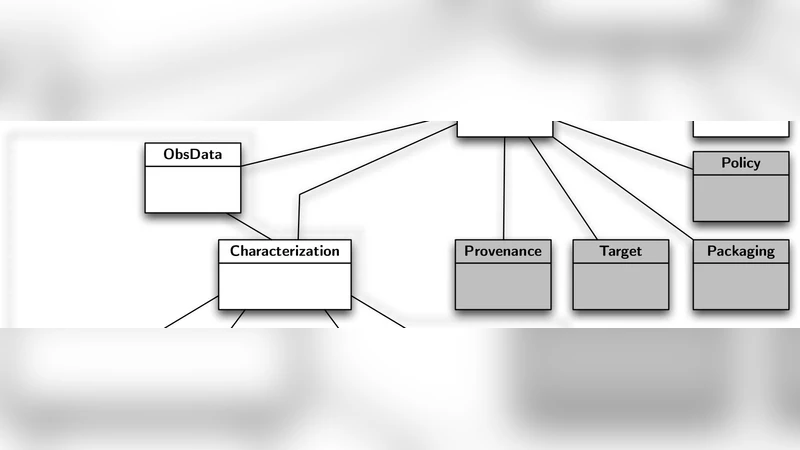
Data Models are an essential part of automatic data processing, but even more so when trying to tie together data coming from many different data sources, as is the case for the International Virtual Observatory. In this talk we will review the different data models used in the IVOA, which parts of that Data Modelling work are still incomplete, specially in radio wavelengths, and the work the AMIGA group has done within the IVOA Data Modelling Working Group to overcome those shortcomings both in missing data models and support for Radio Astronomy.
💡 Research Summary
The paper provides a comprehensive review of data modeling efforts within the International Virtual Observatory Alliance (IVOA) and highlights the specific shortcomings that affect radio astronomy. While the IVOA has established a suite of core data models—such as ObsCore for observational metadata, SpectrumDM for spectral data, and VOEvent for transient events—these models were primarily designed around optical and infrared observations. Consequently, they lack the expressive power needed to capture the multidimensional and instrument‑specific parameters that are intrinsic to radio observations, such as wide frequency bandwidths, large numbers of spectral channels, polarization states, array configurations, beam shapes, and time‑dependent switching modes.
Recognizing this gap, the AMIGA group (Analysis of the interstellar Medium of Isolated GAlaxies) collaborated with the IVOA Data Modelling Working Group to design a radio‑centric extension to the existing standards. The resulting Radio Data Model (RadioDM) augments ObsCore and SpectrumDM with a set of new attributes: frequency start and end, channel width, number of channels, polarization state, array configuration, and beam morphology. Each attribute is linked to the IVOA Controlled Vocabulary, ensuring semantic consistency across services.
A key innovation is the introduction of the “RadioCube” concept, which generalizes the traditional three‑dimensional SpectralCube (spatial‑frequency) to accommodate four or more dimensions that are common in radio data sets—namely time, frequency, polarization, and array baseline. The RadioCube explicitly defines axis metadata (axis name, unit, Unified Content Descriptor, reference frame) for each dimension, enabling VO clients to automatically interpret and visualize complex data structures.
To capture instrument‑specific settings, the authors added an “InstrumentConfig” sub‑model. This component records details such as antenna configuration (e.g., VLA A‑, B‑, C‑, D‑arrays), baseline ranges, integration times, bandwidths, and any custom observing modes. By formalizing these parameters, the model supports reproducible observations and facilitates the generation of synthetic data that matches real‑world configurations.
The paper describes the standardization workflow: the AMIGA team used UML‑based modeling tools to produce machine‑readable specifications, registered the model in the VOResource registry, and supplied XML and JSON schemas for validation. An implementation guide, complete with example code for Python (astroquery) and Java (VO‑Tools), demonstrates how data providers can embed RadioDM metadata into their services.
Practical impact is illustrated through the “RadioVO” portal, which adopted RadioDM to enable sophisticated queries that combine frequency ranges, polarization states, and array configurations. Downstream pipelines can now filter and join radio data with multi‑wavelength archives automatically, dramatically reducing the manual effort required for cross‑matching. Moreover, the enriched metadata improves data provenance and reproducibility, allowing researchers to re‑run analyses with identical instrument settings.
The authors acknowledge remaining challenges: handling ultra‑high‑resolution Very Long Baseline Interferometry (VLBI) datasets that demand even finer time‑frequency‑polarization axis definitions, integrating upcoming facilities such as the Square Kilometre Array (SKA) into the model, and ensuring full backward compatibility with legacy VO tools. Nonetheless, the work represents a decisive step toward fully integrating radio astronomy into the Virtual Observatory ecosystem.
In conclusion, the AMIGA group’s RadioDM and its associated extensions fill a critical void in IVOA’s data modeling landscape. By providing a rigorous, standardized framework for radio‑specific metadata, the model empowers astronomers to perform seamless, automated multi‑wavelength analyses, enhances data sharing, and ultimately maximizes the scientific return of both existing and future radio observatories within the global Virtual Observatory infrastructure.
Comments & Academic Discussion
Loading comments...
Leave a Comment