Enrichments over symmetric Picard categories
Categorical rings were introduced by Jibladze and Pirashvili in their paper "Third Mac Lane cohomology via categorical rings", Journal of Homotopy and related structures, 2, 2007, 187-216. We call those "2-rings". In these notes we present basic defi…
Authors: V. Schmitt
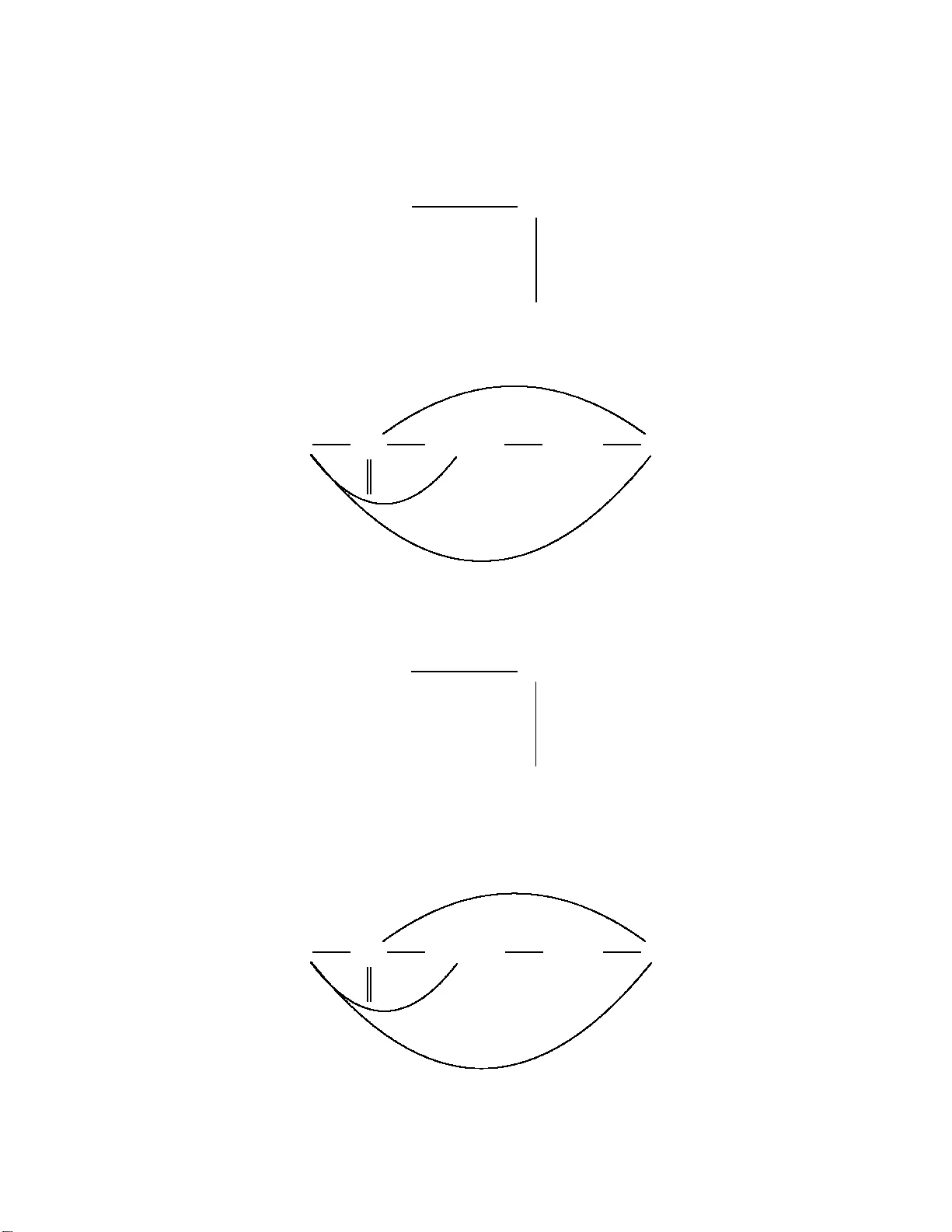
Enric hmen ts o v er symmetr ic Picard categori es Vincen t Sc hmitt email: vrrsc hmitt @ yahoo.fr Octob er 30, 2018 Abstract Categorica l rings w ere i ntrod uced in [JiPi07], w h ich w e call 2-rings. In these notes w e present basic d efinitions and results regarding 2-mo du les. This is w ork in progress. 1 In tro d uction Categoric a l rings were intro duced by M.Jibladze and T.Pir ashvili in [JiPi07]. W e ca ll tho s e 2-r ings. The pr esent s et of notes contains basic results a b o ut 2-mo dules and this work is in prog ress. Section 2 contains t echnical preliminaries, namely reminders o n symmetric Picard categories as w ell conv enient references to pr evious works. In particular the development s in [Sc h0 8] for symmetric monoidal categories tra ns po se well to symmetric Pica rd categ o ries and a suitable tensor pro duct can b e defined for the latter. Section 3 and 4 treat enrichmen ts over symmetric Picar d ca tegories . Those w er e introduced in [Dup08 ] a nd defined by means of mu ltilinea r maps. W e also define them using the tenso r pro duct. Section 5 c o ntains exp ected examples of 2-ring s a nd 2 -enrichmen ts. Section 6 c ontains basic results regarding ca tegories of A -mo dules for a 2- ring A . In particular we show that A -mo dules a re particular alge bras for the endo-2-functor A ⊗ − of the 2-catego ry of symmetric Pic ard ca tegories. A la rge app endix contains the more technical dev elo pments. 2 Preliminaries A categor ical group structure ( A , j ) consis ts of a monoida l catego ry A and an ass ignment for every ob ject a of A of an ob ject a • with an isomorphism j a : I → a • ⊗ a , ( a • is a n inverse of a ). W e are concerne d in this pap er with symmetric Pic ar d c ate gories which are the ca tegorical groups ( A , j ) for which A has a symmetric mono idal str ucture a nd its underlying category is a group oid. S P C de no tes the 2- categor y with ob jects symmetric Picar d catego ries, a rrows symmet- ric mono ida l functors and 2-cells monoida l natural tra nsformations. Ther e is a forge tful 2 -functor S P C → S M C forgetting the g roup structure whe r e S M C denotes the 2-c ategory with ob jects symmetric monoidal categ ories, ar r ows symmetric monoidal functors, a nd monoidal natural trans - formations as 2- cells. The 2-categ orical prop erties of S P C are s imilar to those of S M C , the la tter 2-catego ry has b een studied in different works in par ticular in [HyPo02] and in [Sch08]. W e refer the reader to this last work for basic notations, a nd more elab ora te results. In this fir s t section, we des c rib e br iefly and compare the imp orta nt pro pe r ties of S M C and S P C . The 2-categ ory S M C admits a n in ternal hom a nd the same holds for S P C whic h hom is inherited fr om S M C . The following was mentioned in [Dup08] with a r ather co ncise explana tion. Lemma 2.1 Given any t wo obje cts in A and B in S M C with B b eing a symmetric Pic ar d c ate gory, the internal hom [ A , B ] in S M C admits a symmetric Pic ar d stru ctur e given p ointwise by that of B . 1 W e pr esent a pro o f that relies on cohere nc e results for ca tegorica l gro ups from [Lap83]. (This work also contains r e fer ences to earlier works on the topic.) Let us reca ll these. F or a categorica l g roup A with family of isomorphisms j a : I → a • ⊗ a for each ob ject a there is a unique w ay of extending the assignment a 7→ a • int o a functor A op → A tha t makes the j a natural in a . It is a n equiv alence. W e will write it ( − ) • and write f • : b • → a • for the image of any arrow f : a → b by this functor . There is a coher ence theo r em stating that any pa ir of a and b of ob jects of A ther e is at most one “canonica l” arrow a → b , those canonical a rrows b eing the ones generated in an exp ected wa y from the cano nical ar rows from the monoidal structures a nd the j a ’s. Even tually Laplaza ’s pap er also pr ovides a combinatorial description of free catego r ical groups. Let us r e call also the following kno wn facts for any symmetric Pic a rd categor ies A and B . F or any symmetric monoidal functor ( F, F 2 , F 0 ) : A → B the comp onent F 0 is determined by F 2 . Actually a monoidal str uc tur e on a functor F : A → B is g iven by a natura l F 2 a,b : F a ⊗ F b → F ( a ⊗ b ) in B satisfying the o nly axio m that F a ⊗ ( F b ⊗ F c ) 1 ⊗ F 2 b,c ∼ = ( F a ⊗ F b ) ∼ = F c F 2 a,b ⊗ 1 F a ⊗ F ( b ⊗ c ) F 2 a,b ⊗ c F ( a ⊗ b ) ⊗ F c F 2 a ⊗ b, 1 F ( a ⊗ ( b ⊗ c )) F ( ∼ = ) F (( a ⊗ b ) ⊗ c ) commutes for any ob jects a , b and c of A . Also any natural tra nsformation σ : F → G : A → B betw ee n mono idal functors is monoida l if it sa tis fie s the only axio m that the diag ram in B F a ⊗ F b F 2 a,b / / σ a ⊗ σ b F ( a ⊗ b ) σ a ⊗ b Ga ⊗ Gb G 2 a,b / / G ( a ⊗ b ) commutes fo r any ob jects a , b o f A . Let us co nsider a symmetric Picar d ca tegory ( A , j ). Since A is a group oid, o ne has a functor A op → A which is the iden tity on ob jects and sends arrows to their in verses. The functor inv : A → A is obtained b y comp os ing the previo us functors and ( − ) • ab ov e. Let us denote b y ! the unique ca nonical arr ow b etw een tw o ob jects of A , when it exists. Lemma 2.2 F or any symmetric Pic ar d c ate gory ( A , j ) , the asso ciate d functor inv admits a sym- metric monoidal structur e wher e inv 2 has c omp onent inv 2 a,b : a • ⊗ b • → ( a ⊗ b ) • in any ( a, b ) the c omp osite a • ⊗ b • s / / b • ⊗ a • ! / / ( a ⊗ b ) • (which is also a • ⊗ b • ! / / ( b ⊗ a ) • s • / / ( a ⊗ b ) • ac c or ding to L emma 7.1 in App endix). PROOF:See Appendix 7.2. 2.3 F or any symmetric Pic ar d c ate gory ( A , j ) one has a monoidal natur al isomorphism I → inv ✷ id : A → A which c omp onent in any obje ct a is j a : I → a • ⊗ a . PROOF:See Appendix 7.4. 2 Now given ob jects A and B in S M C with ( B , j ) symmetric P icard, a group structur e is obtained on the hom [ A , B ] in S M C , which is a group oid, as follows. The strict symmetric monoidal functor [ A , − ] : [ B , B ] → [[ A , B ] , [ A , B ]] sends the monoidal transfor mation j : I → inv ✷ id : B → B of 2.3 to a monoidal transforma tion I [ A , I ] [ A ,j ] / / [ A , inv ✷ i d ] [ A , inv ] ✷ [ A , id ] [ A , inv ] ✷ id : [ A , B ] → [ A , B ] . which we define as the j on [ A , B ]. This is to say that F • for any symmetric monoidal F is the comp osite A F / / B inv / / B . and the natural isomorphisms j F : I ∼ = F • ✷ F are p o int wis e ( j F ) a : I → ( F a ) • ⊗ F a . Then for any monoidal σ : F → G : A → B one has that σ • : G • → F • is p oint wise ( σ a ) • : ( Ga ) • → ( F a ) • . W e will a lwa ys consider that this is the c ho sen group structure on [ A , B ] when cons ide r ed as an ob ject of S P C . This structure is deter mined by that o f B . One has a notion of strictness for arrows in S P C , which is differ ent from the no tion o f strictness in S M C . Let us consider any symmetric Picar d categor ies A and B . F or a symmetric monoidal functor F : A → B one ha s the natural isomorphism 2.4 F ( a • ) ∼ = a ( F a ) • . defined precisely in App endix-7 .5. A s ymmetric monoidal functor F : A → B is called a strict arrow in S P C when it preser ves strictly the monoidal structure and moreover preserves strictly the isomo rphisms j meaning that the natural isomo rphism 2.4 is an identit y o r equiv alently that for an y ob ject a in A , F se nds a • to ( F a ) • and j a : I → a • ⊗ a to j F a : I → ( F a ) • ⊗ F a . W e wr ite S trS P C for the sub-2 - categor y of S P C with same ob jects, strict arrows and 2-cells inherited fro m S P C . The r esults from [Sch08] r egarding S M C transp os e rather straig htf o r wardly to S P C as follows. Given an arbitr a ry symmetr ic P icard categor y C , it happ ens that the isomorphism D A , B , C : [ A , [ B , C ]] → [ B , [ A , C ]] defined in chapter 6 is a lso a strict a rrow in S P C . F or an y ar r ow F : A → [ B , C ] in S P C , its image F ∗ by D , called it “dual”, is strict in S P C if and only for any ob ject b of B , the arrow F ∗ ( b ) : A → C is strict in S P C . F or a ny ob jects A , B and C in S P C , the ar row [ A , − ] B , C : [ B , C ] → [[ A , B ] , [ A , C ]] defined in chapter 8 is str ict in S P C . The hom 2 -functor o f S M C defined in c hapter 9 induces b y r estriction a hom 2-functor S P C op × S P C → S P C for S P C . The statement s regar ding the 2 -naturality o f D (chapter 10) and the ev aluation functor s (chapter 11) still hold when replacing for mally S M C b y S P C . In particular the ev aluation functor s a re strict arr ows in S P C . Similarly to the ca se of the 2-catego ry S M C , one has a tensor pro duct in S P C . F or any symmetric Pica rd catego ries A and B , their tensor A ⊗ B satisfies the universal prop erty of the existence of a 2-natural iso morphism 2.5 S P C ( A , [ B , C ]) ∼ = C S trS P C ( A ⊗ B , C ) betw ee n 2-functors S trS P C → Cat in the ar gument C . Note that the 2-naturality in question inv olves only strict mor phisms in S P C . W e briefly sketc h a descr iption of the ab ov e tensor A ⊗ B by g enerator and relations. It is similar to that g iven with more details in [Sc h0 8] for the tensor 3 in S M C . W e consider a gr aph H with vertices the terms o f the fr ee { I , ( − ) • , ⊗} - a lgebra ov er the set Ob j ( A ) × O bj ( B ), i.e. they are w o rds of the for mal language containing a ll pa ir s ( a, b ) – which we write a ⊗ b – for ob jects a o f A and b of B , the one-symbol word I , the w or ds X • for any vertex X , a nd X ⊗ Y for any vertices X and Y . The set of edges of H cons ists of: - The “canonica l” edges for the sy mmetric monoida l structure which ar e the ass X,Y ,Z : X ⊗ ( Y ⊗ Z ) → ( X ⊗ Y ) ⊗ Z , r X : X ⊗ I → X , l X : I ⊗ X → X , s X,Y : X ⊗ Y → Y ⊗ X for all v er tices X , Y , Z ; - E dges j X : I → X • ⊗ X , one for each v er tex X ; - E dges γ a,a ′ ,b : ( a ⊗ b ) ⊗ ( a ′ ⊗ b ) → ( a ⊗ a ′ ) ⊗ b and δ a,b,b ′ : ( a ⊗ b ) ⊗ ( a ⊗ b ′ ) → a ⊗ ( b ⊗ b ′ ) indexed by ob jects a , a ′ of A and b , b ′ of B ; - E dges a ⊗ f : a ⊗ b → a ⊗ b ′ indexed by ob jects a of A and arrows f : b → b ′ of B ; - E dges f ⊗ b : a ⊗ b → a ′ ⊗ b indexed by ob jects b of B and arrows f : a → a ′ of A ; - Edges X ⊗ p : X ⊗ Y → X ⊗ Z a nd p ⊗ X : Y ⊗ X → Z ⊗ X for any vertex X and any edge p : Y → Z ; with the conv ention that edges ab ov e with different names ar e different. Let us consider F G ( H ) the free gro up o id on H , i.e its ar rows are mere concatenatio ns o f edges of H and their formal in verses. F or any vertex X , one ha s tw o gra ph endomorphisms of H , na mely X ⊗ − and − ⊗ X sending resp ectively an ar bitr ary edg e f : Y → Z to X ⊗ Y → X ⊗ Z , re s p. Y ⊗ X → Z ⊗ X . These tw o extend uniq ue ly to endofunctors of F G ( H ) and w e extend the nota tion X ⊗ f and f ⊗ X to denote the image s o f a r rows of F G ( H ) by these functor s. The tensor A ⊗ B is the quotient of F G ( H ) by the congruence genera ted by the following rela- tions ∼ on its ar rows from 2.6 to 2.2 0 b elow. F or all edg es X t / / Y and Z s / / W of H , 2.6 X ⊗ W t ⊗ W % % L L L L L L L L L L X ⊗ Z X ⊗ s 9 9 s s s s s s s s s s t ⊗ Z % % K K K K K K K K K K ∼ Y ⊗ W. Y ⊗ Z Y ⊗ s 9 9 r r r r r r r r r r 2.7 R elations giving the c oher enc e c onditions for ass , r , l and s in A ⊗ B . These are the following. - F or any vertices X , Y , Z and T , X ⊗ ( Y ⊗ ( Z ⊗ T )) ∼ ass / / 1 ⊗ ass ( X ⊗ Y ) ⊗ ( Z ⊗ T ) ass / / (( X ⊗ Y ) ⊗ Z ) ⊗ T X ⊗ (( Y ⊗ Z ) ⊗ T ) ass / / ( X ⊗ ( Y ⊗ Z )) ⊗ T . ass ⊗ 1 O O - F or any vertices X a nd Y , X ⊗ ( I ⊗ Y ) ass / / 1 ⊗ l & & N N N N N N N N N N N ∼ ( X ⊗ I ) ⊗ Y r ⊗ 1 x x p p p p p p p p p p p X ⊗ Y . 4 - F or any vertex X , X ⊗ I s / / r # # G G G G G G G G ∼ I ⊗ X l { { w w w w w w w w X . - F or any vertices X , Y and Z , X ⊗ ( Y ⊗ Z ) ass / / 1 ⊗ s ( X ⊗ Y ) ⊗ Z s / / ∼ Z ⊗ ( X ⊗ Y ) ass X ⊗ ( Z ⊗ Y ) ass / / ( X ⊗ Z ) ⊗ Y ( Z ⊗ X ) ⊗ Y . s ⊗ 1 o o 2.8 R elations for t he natur alities of ass , r , l , and s in A ⊗ B . F or instance, one ha s for any edge f : X → X ′ of H , and any vertices Y a nd Z , X ⊗ ( Y ⊗ Z ) ass X,Y ,Z / / ∼ f ⊗ 1 ( X ⊗ Y ) ⊗ Z ( f ⊗ 1) ⊗ 1 X ′ ⊗ ( Y ⊗ Z ) ass X ′ ,Y ,Z / / ( X ′ ⊗ Y ) ⊗ Z . W e will no t wr ite here the other relatio ns. Ther e are tw o mor e for the na turalities of ass X,Y ,Z in Y and Z , one for that of l X in X , one for that of r X in X a nd tw o for tho s e of s X,Y in X a nd Y . F or any ob ject a in A and any arrows b f / / b ′ g / / b ′′ in B , 2.9 a ⊗ b a ⊗ ( g ◦ f ) / / a ⊗ f # # H H H H H H H H H ∼ a ⊗ b ′′ a ⊗ b ′ a ⊗ g : : u u u u u u u u u F or any ob ject b in B a nd any arrows a f / / a ′ g / / a ′′ in A , 2.10 a ⊗ b ( g ◦ f ) ⊗ b / / f ⊗ b # # H H H H H H H H H ∼ a ′′ ⊗ b a ′ ⊗ b g ⊗ b : : u u u u u u u u u F or any ob jects a in A and b in B , 2.11 a ⊗ id b ∼ id a ⊗ b and 2.12 id a ⊗ b ∼ id a ⊗ b . where id b , id a and id a ⊗ b ab ov e a re the iden tities resp ectively a t b in B , at a in A and at a ⊗ b in F G ( H ). F or any arrows f : a → a ′ in A and g : b → b ′ in B , 5 2.13 a ⊗ b a ⊗ g f ⊗ b / / ∼ a ′ ⊗ b a ′ ⊗ g a ⊗ b ′ f ⊗ b ′ / / a ′ ⊗ b ′ . 2.14 R elations for the “natur alities” of γ a,a ′ ,b in a , a ′ and b and δ a,b,b ′ in a , b and b ′ . F or ins ta nce by the relations for the “naturality” of γ a,a ′ ,b in b it is mea nt that fo r an y ob jects a, a ′ in A and a ny arr ow g : b → b ′ in B , ( a ⊗ b ) ⊗ ( a ′ ⊗ b ) (1 ⊗ g ) ⊗ ( 1 ⊗ g ) γ a,a ′ ,b / / ∼ ( a ⊗ a ′ ) ⊗ b 1 ⊗ g ( a ⊗ b ′ ) ⊗ ( a ′ ⊗ b ′ ) γ a,a ′ ,b ′ / / ( a ⊗ a ′ ) ⊗ b ′ . W e will not wr ite explicitly now the five other r elations. F or any ob jects a in A and b , b ′ , b ′′ in B , 2.15 ( a ⊗ b ) ⊗ (( a ⊗ b ′ ) ⊗ ( a ⊗ b ′′ )) ass / / 1 ⊗ δ a,b ′ ,b ′′ ∼ (( a ⊗ b ) ⊗ ( a ⊗ b ′ )) ⊗ ( a ⊗ b ′′ ) δ a,b,b ′ ⊗ 1 ( a ⊗ b ) ⊗ ( a ⊗ ( b ′ ⊗ b ′′ )) δ a,b,b ′ ⊗ b ′′ ( a ⊗ ( b ⊗ b ′ )) ⊗ ( a ⊗ b ′′ ) δ a,b ⊗ b ′ ,b ′′ a ⊗ ( b ⊗ ( b ′ ⊗ b ′′ )) 1 ⊗ ass b,b ′ ,b ′′ / / a ⊗ (( b ⊗ b ′ ) ⊗ b ′′ ) . F or any ob jects a in A and b , b ′ in B , 2.16 ( a ⊗ b ) ⊗ ( a ⊗ b ′ ) δ a,b,b ′ / / s a ⊗ b,a ⊗ b ′ ∼ a ⊗ ( b ⊗ b ′ ) 1 ⊗ s b,b ′ ( a ⊗ b ′ ) ⊗ ( a ⊗ b ) δ a,b ′ ,b / / a ⊗ ( b ′ ⊗ b ) . F or any ob jects a , a ′ , a ′′ in A and b in B , 2.17 ( a ⊗ b ) ⊗ (( a ′ ⊗ b ) ⊗ ( a ′′ ⊗ b )) ass / / 1 ⊗ γ a ′ ,a ′′ ,b ∼ (( a ⊗ b ) ⊗ ( a ′ ⊗ b )) ⊗ ( a ′′ ⊗ b ) γ a,a ′ ,b ⊗ 1 ( a ⊗ b ) ⊗ (( a ′ ⊗ a ′′ ) ⊗ b )) γ a,a ′ ⊗ a ′′ ,b (( a ⊗ a ′ ) ⊗ b ) ⊗ ( a ′′ ⊗ b ) γ a ⊗ a ′ ,a ′′ ,b ( a ⊗ ( a ′ ⊗ a ′′ )) ⊗ b ass ⊗ 1 / / (( a ⊗ a ′ ) ⊗ a ′′ ) ⊗ b. F or any ob jects a , a ′ in A and b in B , 6 2.18 ( a ⊗ b ) ⊗ ( a ′ ⊗ b ) γ a,a ′ ,b / / s a ⊗ b,a ′ ⊗ b ∼ ( a ⊗ a ′ ) ⊗ b s a,a ′ ⊗ 1 ( a ′ ⊗ b ) ⊗ ( a ⊗ b ) γ a ′ ,a,b / / ( a ′ ⊗ a ) ⊗ b. F or any ob jects a , a ′ in A and b , b ′ in B , 2.19 (( a ⊗ b ) ⊗ ( a ⊗ b ′ )) ⊗ (( a ′ ⊗ b ) ⊗ ( a ′ ⊗ b ′ )) δ a,b,b ′ ⊗ δ a ′ ,b,b ′ ∼ (( a ⊗ b ) ⊗ ( a ′ ⊗ b )) ⊗ (( a ⊗ b ′ ) ⊗ ( a ′ ⊗ b ′ )) γ a,a ′ ,b ⊗ γ a,a ′ ,b ′ ( a ⊗ ( b ⊗ b ′ )) ⊗ ( a ′ ⊗ ( b ⊗ b ′ )) γ a,a ′ ,b ⊗ b ′ (( a ⊗ a ′ ) ⊗ b ) ⊗ (( a ⊗ a ′ ) ⊗ b ′ ) δ a ⊗ a ′ ,b,b ′ r r e e e e e e e e e e e e e e e e e e e e e e e e e e ( a ⊗ a ′ ) ⊗ ( b ⊗ b ′ ) . wher e the t op arr ow is t he c onc atenation ass X ⊗ Y ,Z,T / / ass − 1 X,Y ,Z ⊗ 1 / / (1 ⊗ s Y ,Z ) ⊗ T / / ass X,Z,Y ⊗ T / / ass X ⊗ Z,Y ,T − 1 / / with the ass − 1 b eing the formal inverses of e dges ass and X , Y , Z and T standing r esp e ct ively for a ⊗ b , a ⊗ b ′ , a ′ ⊗ b and a ′ ⊗ b ′ . 2.20 Exp ansions of al l r elations ab ove by iter ations of X ⊗ − and − ⊗ X for al l vertic es X . Whic h means precisely that the set of relations ∼ is the s ma llest set of r elations o n arrows of F G ( H ) co ntaining the pr evious relations (2.6 to 2.19) and satisfying the closure prop erties that for any relation f ∼ g : Y → Z tha t it contains and any vertex X , it contains also the relations X ⊗ f ∼ X ⊗ g : X ⊗ Y → X ⊗ Z and f ⊗ X ∼ g ⊗ X : Y ⊗ X → Z ⊗ X . The pro ofs that the above ca tegory A ⊗ B is a well defined symmetric Pic a rd categor y and that it satisfies the universal prop er ty 2.5, are similar to those in [Sch08] for the well definition and universal pro p er ty of the tenso r pro duct in S M C . W e will therefore not r eplicate them. F or any ob jects A , B and C in S P C , one obtains an adjunction E n ⊣ R n : [ A ⊗ B , C ] → [ A , [ B , C ]] in the 2- categor y S P C (in this case it is an equiv alence) with R n ◦ E n = 1 and wher e the ar- rows Rn A , B , C are strict. The isomorphism 2.5 b eco mes 2 - natural in A a nd B for a unique tenso r 2-functor S P C × S P C → S P C . There exists a free s ymmetric Picard ca tegory on one generator , which we s ha ll write I , that differs obviously fro m the “unit” for S M C wr itten I a nd defined in [Sch08]-chapter 1 8, but tha t has a very similar presentation by generator s and relation. The only differences are the following. Its set ob jects is now the free { I , ⊗ , ( − ) • } -algebr a ov er one g enerator ⋆ . It is a quotient of fr e e gr oup oid generated b y the gr aph containing the usual canonica l edges for the symmetric mono idal structur es 7 (the ass X,Y ,Z , r X , l X , s X,Y ) and moreov er containing one edge j X : I → X • ⊗ X for each ob ject X . The relations on this free gr oup oid defining I are just those for the naturalities of the collections ass , r , l and s , those expressing the coherence axioms for the s ymmetric monoida l s tructure, and relations expr essing the bifunctoriality of − ⊗ − : I × I → I . The universal prop erty defining I is that for any symmetric P icard categor y A , there exits a unique strict arrow v : I → [ A , A ] such that v ( ⋆ ) is the identit y arr ow at A → A with its stric t structure in S P C . One obtains with similar pr o ofs, simila r results. Namely: 2.21 F or any symmetric Pic ar d c ate gory A , the dual v ∗ : A → [ I , A ] of v : I → [ A , A ] has right adjoint in S P C the evaluation at ⋆ functor ev ⋆ : [ I , A ] → A . F ro m this one can exhibit a kind of “symmetric monoidal closed 2-structure” o n S P C in the same wa y as done in [Sch08] chapters 19, 2 0 a nd 21 for S M C . Namely one can define the canonical ar rows A ′ A , B , C : ( A ⊗ B ) ⊗ C → A ⊗ ( B ⊗ C ), R ′ A : A → A ⊗ I , L ′ A : A → I ⊗ A and S A , B : A ⊗ B → B ⊗ A in this case with resp ective inv er se equiv a lences A A , B , C , R A , L A and S B , A and s atisfying the (strict) cohe r ence ax io ms given in c hapter 20. Ev entually this 2- categoric al structure induces a symmetric mono idal c lo sed structure on S P C / ∼ where ∼ denotes the co ng ruence genera ted by the 2-c e lls of S P C . 3 S P C -categories, S P C -functors and S P C -natural transfor- mations S P C -ca tegories , S P C -functor s and S P C -natural transforma tions hav e b een cons ide r ed by M.Dupo nt in his thesis [Dup08 ]. They are resp ectively bicatego ries with homs in S P C , a nd pseudo -functors and ps eudo-natural tra nsformations with linea r comp one nts, i.e with arrows and 2- c e lls in the 2-catego ry S P C rather than in Cat . As such they obviously for m a 2-catego ry with a forg e tful 2-functor to the 2-catego r y of bicateg o ries, pseudo-functors and pseudo natura l transformations . W e start by recalling these no tio ns which a re actua lly slight (enriched) v ariations of the usual notions of bicatego ries, pseudo-functor s and pseudo- natural transfo r mations. By a n-linear natura l transfor mation σ b etw een n-linear ma ps F and G , written σ : F → G : A 1 × ... × A n → B we will mean a 2- cell of [ A 1 , [ A 2 , ..., [ A n , B ] ... ]. Multi-linear maps and m ultilinear natural tra nsformation comp os e in an evident wa y , which can b e justified by the 2 - natural isomor - phism D A , B , C : [ A , [ B , C ]] ∼ = [ B , [ A , C ]] and the existence o f a forg etful 2-functor S P C → Cat (see [Sch08] c ha pter 6). An enrichment ( A , c , j , α, ρ, λ ), over S P C also named an S P C -c ate gory and which we migh t sometimes denote simply by A , consis ts of the following data: - A small set with elements x , y , z ... ca lled the obje cts of A . - A map A sending any pair x , y o f o b jects to an ob ject A ( x, y ) of S P C sometimes a lso written A x,y for conv enience and ca lled the hom of x and y . - A collection of bilinea r maps c x,y ,z : A y ,z × A x,y → A x,z , the c omp osition maps index ed by ob jects x , y , z of A and we wr ite g ◦ f for c x,y ,z ( g , f ) for any o b jects g of A y ,z and f of A x,y and τ ∗ σ for c x,y ,z ( τ , σ ) for any arrows τ of A y ,z and σ of A x,y . - A collectio n of ob jects 1 x of A x,x indexed by ob jects x of A ; - Co llections of natural tra ns formations α x,y ,z ,t , whic h ar e triline ar , indexe d by ob jects x , y , z , t , and ρ x,y and λ x,y bo th line ar , as follows 3.1 ( α x,y ,z ,t ) h,g ,f : h ◦ ( g ◦ f ) → h ◦ ( g ◦ f ) which lies in A x,t for ob jects h in A z ,t , g in A y ,z and f in A x,y 8 3.2 ( ρ x,y ) f : f → f ◦ 1 x which lies in A x,y for ob jects f in A x,y ; 3.3 ( λ x,y ) f : f → 1 y ◦ f which lies in A x,y for o b jects f in A x,y ; and those are sub jects to the cohere nc e axioms 3.4 and 3.5 b elow. 3.4 F or any obje cts x , y , t and u of A , any obje cts f of A x,y , g of A y ,z , h of A z ,t and k of A t,u , the diagr am in A x,u k ◦ ( h ◦ ( g ◦ f ))) ( α x,z ,t,u ) k,h,g ◦ f / / k ∗ ( α x,y,z ,t ) h,g,f ( k ◦ h ) ◦ ( g ◦ f ) ( α x,y,z ,u ) k ◦ h,g,f k ◦ (( h ◦ g ) ◦ f ) ( α x,y,t,u ) k,h ◦ g,f / / ( k ◦ ( h ◦ g )) ◦ f ( α y,z ,t,u ) k,h,g ∗ f / / (( k ◦ h ) ◦ g ) ◦ f c ommu tes. 3.5 F or any obje cts x , y , z in A and any obje cts f of A ( x, y ) and g of A ( y , z ) the diagr am in A ( x, y ) g ◦ f g ∗ ( λ x,y ) f y y s s s s s s s s s s ( ρ y,z ) g ∗ f % % K K K K K K K K K K g ◦ (1 y ◦ f ) ( α x,y,y,z ) g, 1 y ,f / / ( g ◦ 1 y ) ◦ f c ommu tes. F or any S P C -ca tegory A , its underlying bicategory is denoted A 0 . Given tw o arbitra ry S P C -catego ries A and B , a S P C -fun ctor F : A → B consists of the fol- lowing data. - A map F sending ob jects of A to ob jects of B ; - Ar rows F x,y : A x,y → B F x,F y in S P C for each pair of ob jects x , y in A . - A co llection of biline ar natural transforma tions F 2 x,y ,z indexed b y ob jects x , y , z of A with com- po nents ( F 2 x,y ,z ) g,f : F y ,z ( g ) ◦ F x,y ( f ) → F x,z ( g ◦ f ) in B F x,F z for ob jects g in A y ,z and f in A x,y . - A collectio n of ar rows F 0 x : 1 F x → F x,x (1 x ) in B F x,F x indexed by ob jects x of A . Those ar e sub jects to the coherence axio ms 3.6, 3.7 and 3.8 b elow. 3.6 F or any obje cts x , y , z , t of A , and any obje cts f of A x,y , g of A y ,z and h of A z ,t the diagr am in B ( F x, F t ) F z ,t h ◦ ( F y ,z g ◦ F x,y f ) ( α F x ,F y,F z ,F t ) F h,F g,F f / / 1 ∗ ( F 2 x,y,z ) g,f ( F z ,t h ◦ F y ,z g ) ◦ F x,y f ( F 2 y,z ,t ) h,g ∗ 1 F z ,t h ◦ F x,z ( g ◦ f ) ( F 2 x,z ,t ) h,g ◦ f F y ,t ( h ◦ g ) ◦ F x,y f ( F 2 x,y,t ) h ◦ g,f F x,t ( h ◦ ( g ◦ f )) F x,t (( α x,y,z ,t ) h,f,g ) / / F x,t (( h ◦ g ) ◦ f ) 9 c ommu tes. 3.7 F or any obje cts x , y of A and any obje ct f of A x,y , the diagr am in B F x,F y F f F ( ρ x,y f ) ( ρ F x,F y ) F f / / F f ◦ 1 F x 1 ∗ F 0 x F ( f ◦ 1 x ) F f ◦ F (1 x ) ( F 2 x,x,y ) f, 1 x o o c ommu tes. 3.8 F or any obje cts x , y of A and any obje ct f of A x,y , the diagr am in B F x,F y F f F ( λ x,y f ) ( λ F x ,F y ) F f / / 1 F y ◦ F f F 0 y ∗ 1 F (1 y ◦ f ) F (1 y ) ◦ F f ( F 2 x,y,y ) 1 y ,f o o c ommu tes. Given tw o S P C -functors F , G : A → B a S P C -natura l tr ansformation ( σ , κ ) co nsists in a family of arr ows σ x of B F x,Gx indexed b y o b jects x of A together with a collection of linear natural transformatio ns κ x,y indexed by ob jects x and y as follows ( κ x,y ) f : Gf ◦ σ x → σ y ◦ F f lies in B F x,Gy for ob jects f of A x,y , a nd these satisfy the coherence axioms 3.9 and 3 .10 b elow. 3.9 F or any obje cts f in A x,y and g in A y ,z , the diagr am in B F x,Gz ( Gg ◦ Gf ) ◦ σ x ( G 2 x,y,z ) g,f ∗ σ x / / G ( g ◦ f ) ◦ σ x ( κ x,z ) g ◦ f / / σ z ◦ F ( g ◦ f ) Gg ◦ ( Gf ◦ σ x ) ( α F x,Gx,Gy,Gz ) Gg,Gf ,σ x O O 1 ∗ ( κ x,y ) f σ z ◦ ( F g ◦ F f ) ( α F x ,F x,F z ,Gz ) σ z ,F g ,F f 1 ∗ ( F 2 x,y,z ) g,f O O Gg ◦ ( σ y ◦ F f ) ( α F x,F y ,Gy,Gz ) Gg,σ y ,F f / / ( Gg ◦ σ y ) ◦ F f ( κ y,z ) g ∗ 1 / / ( σ z ◦ F g ) ◦ F f c ommu tes. 3.10 F or any obje ct x of A , the diagr am in B F x,Gx σ x ( ρ F x,Gx ) σ x y y s s s s s s s s s s ( λ F x ,Gx ) σ x % % K K K K K K K K K K σ x ◦ 1 F x σ x ∗ F 0 x 1 Gx ◦ σ x G 0 x ∗ σ x σ x ◦ F (1 x ) G (1 x ) ◦ σ x ( κ x,x ) 1 x o o c ommu tes. 10 W e want to give a lternative definitions o f S P C -categor ies, S P C -functors and S P C -natural transformatio ns by means of commuting diagr ams in S P C in a first instance without using the tensor. They ar e o btained by r eplacing multilinear maps and multilinear natural tra ns formations from the previous definition by cor resp onding ar rows and 2-cells in S P C . This yields the following. One can define a S P C -catego ry as a collectio n of ob jects A , with homs A x,y in S P C as befor e, with colle ctions of arr ows - A ( x, − ) y ,z : A y ,z → [ A x,y , A x,z ] in S P C , indexed b y ob jects x , y , z o f A with dual A − ,y : A x,y → [ A y ,z , A x,z ] wr itten A ( − , y ); - u x : I → A x,x indexed by x , w hich are strict; and c o llections of 2-cells: - α ′ x,y ,z ,t in S P C , indexed by ob jects x , y , z a nd t o f S P C as follows 3.11 A z ,t A ( y , − ) ' ' N N N N N N N N N N N N A ( x, − ) v v m m m m m m m m m m m m m m [ A x,z , A x,t ] [ A x,y , − ] [ A y ,z , A y ,t ] [1 , A ( x, − )] [[ A x,y , A x,z ] , [ A x,y , A x,t ]] [ A ( x, − ) , 1] / / α ′ / 7 g g g g g g g g g g g g g g g g g g g g g g g g g g g g g g g g g g g g g g g g g g g g [ A y ,z , [ A x,y , A x,t ]] - ρ ′ x,y and λ ′ x,y indexed by ob jects x and y resp ectively as fo llows 3.12 ρ ′ x,y : A x,y A ( x, − ) / / id [ A x,x , A x,y ] [ u x , 1] + 3 A x,y [ I , A x,y ] ev ⋆ o o and 3.13 λ ′ x,y : A x,y A ( − ,y ) / / id [ A y ,y , A x,y ] [ u y , 1] + 3 A x,y [ I , A x,y ] ev ⋆ o o those satis fying cohere nce axioms 3.1 4 and 3.15 b elow 11 3.14 The 2-c el ls in S P C A t,u A ( x, − ) / / id α ′ x,z ,t,u [ A x,t , A x,u ] [ A x,z , − ] / / [[ A x,z , A x,t ] , [ A x,z , A x,u ]] [ A ( x, − ) , 1] / / [ A z ,t , [ A x,z , A x,u ]] id [1 , [ A x,y , − ]] / / = [ A z ,t , [[ A x,y , A x,z ] , [ A x,y , A x,u ]]] [1 , [ A ( x, − ) , 1]] / / [ A z ,t , [ A y,z , [ A x,y , A x,u ]]] id A t,u A ( z, − ) / / id = [ A z ,t , A z ,u ] [1 , A ( x, − )] / / id [1 ,α ′ x,y,z ,u ] [ A z ,t , [ A x,z , A x,u ]] [1 , [ A x,y , − ]] / / [ A z ,t , [[ A x,y , A x,z ] , [ A x,y , A x,u ]]] [1 , [ A ( x, − ) , 1]] / / [ A z ,t , [ A y,z , [ A x,y , A x,u ]]] id A t,u A ( z, − ) / / [ A z ,t , A z ,u ] [1 , A ( y, − )] / / [ A z ,t , [ A y,z , A y,u ]] [1 , [1 , A ( x, − )]] / / [ A z ,t , [ A y,z , [ A x,y , A x,u ]]] and A t,u = A ( x, − ) / / id [ A x,t , A x,u ] [ A x,y , − ] / / [[ A x,y , A x,t ] , [ A x,y , A x,u ]] [ A y,z , − ] / / [[ A y,z , [ A x,y , A x,t ]] , [ A y,z , [ A x,y , A x,u ]]] [ α ′ x,y,z ,t , 1] [[ A ( x, − ) , 1] , 1] / / id [[ A x,y , A x,z ] , [ A x,y , A x,t ]] , [ A y,z , [ A x,y , A x,u ]]] [[ A x,y , − ] , 1] / / [[ A x,z , A x,t ] , [ A y,z , [ A x,y , A x,u ]]] [ A ( x, − ) , 1] A t,u id = A ( x, − ) / / [ A x,t , A x,u ] [ A x,y , − ] / / [[ A x,y , A x,t ] , [ A x,y , A x,u ]] [ A y,z , − ] / / id = [[ A y,z , [ A x,y , A x,t ]] , [ A y,z , [ A x,y , A x,u ]]] [[1 , A ( x, − )] , 1] / / [[ A y,z , A y,t ] , [ A y,z , [ A x,y , A x,u ]]] [ A ( y, − ) , 1] / / id = [ A z ,t , [ A y,z , [ A x,y , A x,u ]]] id A t,u A ( x, − ) / / id α ′ x,y,t,u [ A x,t , A x,u ] [ A x,y , − ] / / [[ A x,y , A x,t ] , [ A x,y , A x,u ]] [ A ( x, − ) , 1] / / [ A y,t , [ A x,y , A x,u ]] [ A y,z , − ] / / id = [[ A y,z , A y,t ] , [ A y,z , [ A x,y , A x,u ]]] [ A ( y, − ) , 1] / / [ A z ,t , [ A y,z , [ A x,y , A x,u ]]] id A t,u A ( y, − ) / / id = [ A y,t , A y,u ] id [1 , A ( x, − )] / / = [ A y,t , [ A x,y , A x,u ]] [ A y,z , − ] / / [[ A y,z , A y,t ] , [ A y,z , [ A x,y , A x,u ]]] id [ A ( y, − ) , 1] / / = [ A z ,t , [ A y,z , [ A x,y , A x,u ]]] id A t,u A ( y, − ) / / id = [ A y,t , A y,u ] [ A y,z , − ] / / [[ A y,z , A y,t ] , [ A y,z , A y,u ]] id [1 , [1 , A ( x, − )]] / / = [[ A y,z , A y,t ] , [ A y,z , [ A x,y , A x,u ]]] [ A ( y, − ) , 1] / / [ A z ,t , [ A y,z , [ A x,y , A x,u ]]] id A t,u id A ( y, − ) / / α ′ y,z ,t,u [ A y,t , A y,u ] [ A y,z , − ] / / [[ A y,z , A y,t ] , [ A y,z , A y,u ]] [ A ( y, − ) , 1] / / [ A z ,t , [ A y,z , A y,u ]] id [1 , [1 , A ( x, − )]] / / = [ A z ,t , [ A y,z , [ A x,y , A x,u ]]] id A t,u A ( z, − ) / / [ A z ,t , A z ,u ] [1 , A ( y, − )] / / [ A z ,t , [ A y,z , A y,u ]] [1 , [1 , A ( x, − )]] / / [ A z ,t , [ A y,z , [ A x,y , A x,u ]]] ar e e qu al. 3.15 The 2-c el l A y ,z A ( y , − ) id ρ ′ A y ,z A ( x, − ) / / [ A x,y , A x,z ] [ A y ,y , A y ,z ] [ u y , 1] / / [ I , A y ,z ] ev ⋆ O O 12 is e qual t o A y ,z A ( x, − ) id = A y ,z id A ( x, − ) = A y ,z A ( x, − ) id A y ,z A ( x, − ) = id A y ,z A ( x, − ) [ A x,y , A x,z ] id id [ A x,y , A x,z ] [ ev ⋆ , 1] id [ A x,y , A x,z ] [ A x,y , − ] α ′ x,y,y,z + 3 [ A y ,y , A y ,z ] [1 , A ( x, − )] id [ A y ,y , A y ,z ] [ u y , 1] [[ I , A x,y ] , A x,z ] [[ u y , 1] , 1] [[ A x,y , A x,y ] , [ A x,y , A x,z ]] [ A ( x, − ) , 1] [ I , A y ,z ] ev ⋆ [ λ ′ x,y , 1] + 3 [[ A y ,y , A x,y ] , A x,z ] [ A ( − ,y ) , 1] = ( I ) [ A y ,y , [ A x,y , A x,z ]] [ u y , 1] = id [ A y ,y , [ A x,y , A x,z ]] [ u y , 1] = ( I I ) A y ,z A ( x, − ) [ I , [ A x,y , A x,z ]] ev ⋆ [ I , [ A x,y , A x,z ]] ev ⋆ [ A x,y , A x,z ] id [ A x,y , A x,z ] id [ A x,y , A x,z ] id [ A x,y , A x,z ] id [ A x,y , A x,z ] . Note: Equality ( I ) in the first of the pa stings ab ov e is established in 7 in Appe ndix . The equality ( I I ) results straightforwardly from Lemma [Sch08]-11.2. Let us justify the equiv a lence with the previo us definition of S P C -ca tegory . F o r ob jects x , y and z the arr ows of S P C A ( x, − ) : A ( y , z ) → [ A ( x, y ) , A ( x, z )] corres p o nd to the bilinear c x,y ,z : A ( y , z ) × A ( x, y ) → A ( x, z ) and for ob jects x , the o b jects 1 x in A x,x corres p o nd to strict the strict ar rows u x : I → A x,x . The trilinear 2-cells α x,y ,z ,t corres p o nd to the 2-cells α ′ x,y ,z ,t and the linear natural tr ansformations ρ x,y and λ x,y corres p o nd resp ectively to 2-cells ρ ′ x,y and λ ′ x,y in S P C . F or data as a b ove, since the for getful functor s S P C ( X , Y ) → Cat ( X , Y ) are faithful, the eq ualities of 2-cells of Axio m 3.14 given below are equiv ale nt to the equality o f natural tr ansformations of Axioms 3.4 , and similarly Axiom 3.15 given below and 3.5 are equiv alent. Given tw o S P C -ca tegories , a S P C -functor A → B consists o f a map F sending ob jects of A to ob jects o f B , with a collection of arr ows in S P C F x,y : A x,y → B F x,F y indexed b y o b jects x a nd y of A and co llections o f 2-cells in S P C : - F ′ 2 x,y ,z indexed by ob jects x , y , z and as follows 3.16 A y ,z F y,z / / A ( x, − ) B F y, F z B ( F x, − ) / / [ B F x,F y , B F x,F z ] [ F x,y , 1] F ′ 2 x,y,z o w h h h h h h h h h h h h h h h h h h h h h h h h h h h h h h h h h h h h h h [ A x,y , A x,z ] [1 ,F x,z ] / / [ A x,y , B F x,F z ] . - F 0 x indexed by ob jects x as follows 13 3.17 I u x / / u F x ! ! C C C C C C C C C C C C C C C C C A x,x F x,x F 0 x 7 ? x x x x x x x x x x x x x x x x B F x,F x Those sa tisfy the coherence conditions 3.1 8, 3.19 and 3.2 0 b e low. 3.18 The 2-c el ls in S P C [ B F x,F z , B F x,F t ] [ B F x,F y , − ] / / α ′ F x,F y ,F z ,F t [[ B F x,F y , B F x ,F z ] , [ B F x,F y , B F x,F t ]] [ B ( F x, − ) , 1] A z ,t A ( y, − ) F z ,t / / B F z ,F t B ( F x, − ) 9 9 s s s s s s s s s s s s s B ( F y, − ) / / [ B F y,F z , B F y,F t ] F ′ 2 y,z ,t p x j j j j j j j j j j j j j j j j j j j j j j j j j j j j j j j j j j j j j j j j [1 , B ( F x, − )] / / [ F y,z , 1] = [ B F y,F z , [ B F x,F y , B F x,F t ]] [ F y,z , 1] [ A y,z , A y,t ] [1 ,F y,t ] / / [1 , B ( F x, − )] * * U U U U U U U U U U U U U U U U U U U [ A y,z , B F y,F t ] [1 , B ( F x, − )] / / [1 ,F ′ 2 x,y,t ] [ A y,z , [ B F x,F y , B F x,F t ]] [1 , [ F x,y , 1]] / / [ A y,z , [ A x,y , B F x,F t ]] [ A y,z , [ A x,y , A x,t ]] [1 , [1 ,F x,t ]] 3 3 g g g g g g g g g g g g g g g g g g g g g g g g g g g and B F z ,F t B ( F x, − ) / / [ B F x,F z , B F x,F t ] [ F x,z , 1] [ A x,y , − ] / / F ′ 2 x,z ,t ~ = [[ A x,y , B F x,F z ] , [ A x,y , B F x,F t ]] [[ F x,y , 1] , 1] / / [[1 ,F x,z ] , 1] [[ B F x,F y , B F x ,F z ] , [ A x,y , B F x ,F t ]] [ B ( F x, − ) , 1] / / [ F ′ 2 x,y,z , 1] [ B F y,F z , [ A x,y , B F x,F t ]] [ F y,z , 1] [ A y,z , B F x,F t ] [ A x,y , − ] / / = [[ A x,y , A x,z ] , [ A x,y , B F x,F t ]] [ A ( x, − ) , 1] / / [ A y,z , [ A x,y , B F x,F t ]] A z ,t A ( x, − ) / / F z ,t O O A ( y, − ) + + W W W W W W W W W W W W W W W W W W W W W W W W W W [ A x,z , A x,t ] [ A x,y , − ] / / [1 ,F x,t ] O O [[ A x,y , A x,z ] , [ A x,y , A x,t ]] [ A ( x, − ) , 1] / / [1 , [1 ,F x,t ]] O O = α ′ x,y,z ,t [ A y,z , [ A x,y , A x,t ]] [1 , [1 ,F x,t ]] O O [ A y,z , A y,t ] [1 , A ( x, − )] 3 3 f f f f f f f f f f f f f f f f f f f f f f f f f f f f ar e e qu al. 14 3.19 The 2-c el ls A x,y A ( x, − ) F x,y / / B F x ,F y B ( F x, − ) F ′ 2 x,x,y o w f f f f f f f f f f f f f f f f f f f f f f f f f f f f f f f f f f f f f f f f f f f f f f f f f f 1 x x [ A x,x , A x,y ] [ u x , 1] [1 ,F x,y ] ' ' O O O O O O O O O O O O [ B F x,F x , B F x,F y ] [ u F x , 1] [ F x,x , 1] v v m m m m m m m m m m m m m [ A x,x , B F x,F y ] [ u x , 1] ( ( Q Q Q Q Q Q Q Q Q Q Q Q Q [ F 0 x , 1] k s ρ ′ F x,F y k s [ I , A x,y ] = = ev ⋆ [1 ,F x,y ] / / [ I , B F x,F y ] ev ⋆ A x,y F x,y / / B F x ,F y and A x,y id A ( x, − ) ρ ′ x,y A x,y F x,y / / B F x ,F y [ A x,x , A x,y ] [ u x , 1] / / [ I , A x,y ] ev ⋆ O O ar e e qu al. 3.20 The 2-c el ls in S P C A x,y A ( − ,y ) F x,y / / B F x,F y B ( − ,F y ) ( F ′ 2 x,y,y ) ∗ o w f f f f f f f f f f f f f f f f f f f f f f f f f f f f f f f f f f f f f f f f f f f f f f f f 1 x x [ A y,y , A x,y ] [ u y , 1] [1 ,F x,y ] ' ' O O O O O O O O O O O O [ B F y,F y , B F x,F y ] [ u F y , 1] [ F x,y , 1] v v m m m m m m m m m m m m m [ A y,y , B F x ,F y ] [ u y , 1] ( ( Q Q Q Q Q Q Q Q Q Q Q Q Q [ F 0 y , 1] k s λ ′ F x ,F y k s [ I , A x,y ] = = ev ⋆ [1 ,F x,y ] / / [ I , B F x ,F y ] ev ⋆ A x,y F x,y / / B F x,F y and A x,y id A ( − ,y ) λ ′ x,y A x,y F x,y / / B F x,F y [ A y,y , A x,y ] [ u y , 1] / / [ I , A x,y ] ev ⋆ O O ar e e qu al. One ca n also define the S P C -natural transfo rmations, in a similar wa y . F or this purp ose, we need so me notation. Let A b e a n arbitra ry S P C -categor y . T o give a strict arr ow I → A ( x, y ) is equiv alent to g ive an ar row x → y of the under lying bicatego ry A 0 and we might co nfuse the tw o. W e therefore define for any ob ject z of A and any arr ow f : x → y o f A 0 the ar rows 15 3.21 A ( f , 1 ) as the c omp osite arr ow in S P C A x,y A ( x, − ) / / [ A x,y , A x,z ] [ F , 1] / / [ I , A x,z ] ev ⋆ / / A x,z and 3.22 A (1 , f ) as A z ,x A ( − ,y ) / / [ A x,y , A z ,y ] [ F , 1] / / [ I , A z ,y ] ev ⋆ / / A z ,y . Given a ny a rrows x f / / y g / / z h / / t in A 0 , we define the tw o cells 3.23 c 1 f ,y ,z A z ,t A ( y , − ) / / A ( x, − ) [ A y ,z , A y ,t ] [1 , A ( f , 1)] [ A x,z , A x,t ] [ A ( f , 1) , 1] / / 2 : m m m m m m m m m m m m m m m m m m m m m m m m [ A y ,z , A x,t ] 3.24 c 2 x,g ,t A z ,t A ( g, 1) A ( x, − ) / / [ A x,z , A x,t ] [ A (1 ,g ) , 1] u } s s s s s s s s s s s s s s s s s s A y ,t A ( x, − ) / / [ A x,y , A x,t ] and e ventually 3.25 c 3 x,y ,h A y ,z A (1 ,h ) / / A ( x, − ) A y ,t A ( x, − ) [ A x,y , A x,z ] [1 , A (1 ,h )] / / 2 : m m m m m m m m m m m m m m m m m m m m m m m m m m [ A x,y , A x,t ] which are obtained from the trilinear natural tra nsformation 3.1 ( α x,y ,z ,t ) h,g ,f : h ◦ ( g ◦ f ) → ( h ◦ g ) ◦ f by fixing one of its argument. F or c 1 , c 2 and c 3 fix r esp ectively f , g and h . F or mally c 1 f ,z ,t is the comp os ite A z ,t α ′ x,y,z ,t + 3 [ A y ,z , [ A x,y , A x,t ]] [1 , [ f , 1]] / / [ A y ,z , [ I , A x,t ]] [1 ,ev ⋆ ] / / [ A y ,z , A x,t ] (see 7 .23 in Appendix), c 2 x,g ,t it is the comp osite A z ,t α ′ x,y,z ,t / / [ A y ,z , [ A x,y , A x,t ]] [ g, 1] / / [ I , [ A x,y , A x,t ]] ev ⋆ / / [ A x,y , A x,t ] and c 3 x,y ,h is the image by ev ⋆ of the comp osite I h / / A z ,t α ′ x,y,z ,t + 3 [ A y ,z , [ A x,y , A x,t ]] 16 (see 7 .26 in Appendix). By definition a ll 2 -cells c 1 , c 2 and c 3 are identities when A is strict. One has also for any ob jects x a nd y of A the 2 -cell in S P C 3.26 r ′ x,y : I u x / / v " " E E E E E E E E E E E E E E E E E E E A x,x A ( − ,y ) 5 = t t t t t t t t t t t t t t t t t t [ A x,y , A x,y ] , which a c cording to Remarks 7.10 is determined b y its v a lue in ⋆ which is the linear natura l tra ns- formation ρ x,y f : f ◦ 1 x → f of 3 .2, and corresp o nds b y the bijection 7.1 6 / 7.18 in App endix to the 2 -cell ρ ′ x,y A x,y A ( x, − ) / / id [ A x,x , A x,y ] [ u x , 1] + 3 A x,y [ I , A x,y ] . ev ⋆ o o Similarly for any ob jects x and y of A o ne ha s the 2-cell in S P C 3.27 l ′ x,y : I u y / / v " " E E E E E E E E E E E E E E E E E E E A y ,y A ( x, − ) 5 = t t t t t t t t t t t t t t t t t t [ A x,y , A x,y ] that co rresp onds to the linea r natura l transfo r mation ( λ x,y ) f : 1 y ◦ f → f of 3 .3 and which co rresp onds by the bijection 7.1 6 / 7.18 in Appe ndix to the 2-cell λ ′ x,y A x,y A ( − ,y ) / / id [ A y ,y , A x,y ] [ u y , 1] + 3 A x,y [ I , A x,y ] . ev ⋆ o o Given a ny strict arrow ˜ f : I → A x,y , with corr e sp onding arrow f : x → y in A 0 , one has the 2-cell in S P C 17 3.28 u 1 f : I u y / / ˜ f " " E E E E E E E E E E E E E E E E E E E A y ,y A ( f, 1) 5 = t t t t t t t t t t t t t t t t t t [ A x,y , A x,y ] which corresp onds to the 2-c el l ρ f : f → 1 y ◦ f : x → y of A 0 . It is the pasting = I u y / / v C C ˜ f B B A y ,y A ( x, − ) / / A ( f, 1) # # [ A x,y , A x,y ] [ ˜ f , 1] / / [ I , A x,y ] ev ⋆ / / A x,y l ′ K S = where the b ottom identit y 2-cell ab ov e is established in Lemma 7.11 in App endix. Similarly o ne has the 2-cell in S P C 3.29 u 2 f : I u x / / ˜ f E E E E E E E E E E E E E E E E E E E A x,x A (1 ,f ) 5 = t t t t t t t t t t t t t t t t t t [ A x,y , A x,y ] that co rresp onds the 2-cell ( λ x,y ) f : f → f ◦ 1 x and is the pasting = I u x / / v C C ˜ f B B A x,x A ( − ,y ) / / A (1 ,f ) # # [ A x,y , A x,y ] [ ˜ f , 1] / / [ I , A x,y ] ev ⋆ / / A x,y r ′ K S = Given tw o S P C -functors F , G : A → B , a S P C -natura l tr ansformation ( σ, κ ) : F → G : A → B consists o f a c o llection o f strict ar rows σ x : I → B ( F x, Gx ) (or 1-c ells σ x : F x → Gx in B 0 ), 18 indexed by o b jects x o f A together with a collection of 2-ce lls κ x,y in S P C for ob jects x , y of A as follows 3.30 A x,y F x,y / / G x,y B F x,F y B (1 ,σ y ) B Gx,Gy 5 = t t t t t t t t t t t t t t t t t t B ( σ x , 1) / / B F x,Gy and tha t sa tisfies the tw o coherence conditions 3 .31, 3.32 a nd b elow. 3.31 F or any obje ct x , y and z in A , the 2-c el ls Ξ 1 , Ξ 2 , Ξ 3 , Ξ 4 , Ξ 5 , Ξ 6 , Ξ 7 and Ξ 8 b elow satisfy the e quality Ξ 2 ◦ Ξ 1 = Ξ 8 ◦ (Ξ 7 ) − 1 ◦ Ξ 6 ◦ Ξ 5 ◦ Ξ 4 ◦ (Ξ 3 ) − 1 . Ξ 1 is A y ,z A ( x, − ) G y,z / / B Gy ,Gz G ′ 2 x,y,z B ( Gx, − ) / / [ B Gx,Gy , B Gx,Gz ] [ G x,y , 1] [ A x,y , A x,z ] [1 ,G x,z ] / / [ A x,y , B Gx,Gz ] [1 , B ( σ x , 1)] / / [ A x,y , B F x,Gz ] Ξ 2 is [ A x,y , B Gx,Gz ] [1 , B ( σ x , 1)] ( ( Q Q Q Q Q Q Q Q Q Q Q Q [1 ,κ x,z ] A y ,z A ( x, − ) / / [ A x,y , A x,z ] [1 ,G x,z ] 7 7 n n n n n n n n n n n n [1 ,F x,z ] ' ' P P P P P P P P P P P P [ A x,y , B F x,Gz ] [ A x,y , B F x,F z ] [1 , B (1 ,σ z )] 6 6 m m m m m m m m m m m m Ξ 3 is [ B Gx,Gy , B Gx,Gz ] [1 , B ( σ x , 1)] ) ) R R R R R R R R R R R R R R A y ,z G y,z / / B Gy ,Gz B ( Gx, − ) 7 7 o o o o o o o o o o o B ( F x, − ) ' ' O O O O O O O O O O O [ B Gx,Gy , B F x,Gz ] [ G x,y , 1] / / [ A x,y , B F x,Gz ] [ B F x,Gx , B F x,Gz ] [ B ( σ x , 1) , 1] 5 5 l l l l l l l l l l l l l l c 1 B ( σ x , 1) ,y,z K S Ξ 4 is [ B Gx,Gy , B F x,Gz ] [ κ x,y , 1] [ G x,y , 1] ( ( R R R R R R R R R R R R R A y ,z G y,z / / B Gy ,Gz B ( F x, − ) / / [ B F x,Gy , B F x,Gz ] [ B ( σ x , 1) , 1] 5 5 l l l l l l l l l l l l l [ B (1 ,σ y ) , 1] ) ) R R R R R R R R R R R R R [ A x,y , B F x,Gz ] [ B F x,F y , B F x,Gz ] [ F x,y , 1] 6 6 m m m m m m m m m m m m m 19 Ξ 5 is [ B F x,Gy , B F x,Gz ] [ B (1 ,σ y ) , 1] ) ) R R R R R R R R R R R R R c 2 F x,σ y ,Gz A y ,z G y,z / / B Gy ,Gz B ( σ y , 1) ' ' O O O O O O O O O O O B ( F x, − ) 7 7 o o o o o o o o o o o [ B F x,F y , B F x,Gz ] [ F x,y , 1] / / [ A x,y , B F x,Gz ] B F y ,Gz B ( F x, − ) 5 5 l l l l l l l l l l l l l l Ξ 6 is B Gy ,Gz B ( σ y , 1) $ $ J J J J J J J J J κ y,z A y ,z G y,z ; ; v v v v v v v v v F y,z # # H H H H H H H H H B F y ,Gz B ( F x, − ) / / [ B F x,F y , B F x,Gz ] [ F x,y , 1] / / [ A x,y , B F x,Gz ] B F y ,F z B (1 ,σ z ) : : t t t t t t t t t Ξ 7 is B F y ,Gz B ( F x, − ) ) ) R R R R R R R R R R R R R R A y ,z F y,z / / B F y ,F z B (1 ,σ z ) 7 7 o o o o o o o o o o o B ( F x, − ) ' ' O O O O O O O O O O O [ B F x,F y , B F x,Gz ] [ F x,y , 1] / / [ A x,y , B F x,Gz ] [ B F x,F y , B F x,F z ] [1 , B (1 ,σ z )] 5 5 l l l l l l l l l l l l l c 3 F x,F y ,σ z K S Ξ 8 is A y ,z F y,z / / A ( x, − ) B F y ,F z B ( F x, − ) / / F ′ 2 x,y,z [ B F x,F y , B F x,F z ] [ F x,y , 1] [ A x,y , A x,z ] [1 ,F ] / / [ A x,y , B F x,F z ] [1 , B (1 ,σ z )] / / [ A x,y , B F x,Gz ] 3.32 F or any obje ct x of A , the 2-c el ls u 2 σ x F 0 I u u / / σ x A x,x F x,x / / B F x,F x B (1 ,σ x ) / / B F x,Gx 20 and u 1 σ x I id u Gx / / σ x " " G 0 B Gx,Gx B ( σ x , 1) / / κ $ , Q Q Q Q Q Q Q Q Q Q Q Q Q Q Q Q Q Q Q Q Q Q Q Q B F x,Gx I u x / / A x,x G x,x O O F x,x / / B F x,F x B (1 ,σ x ) O O ar e e qu al. 4 S P C -categories via the tensor In this section we g ive definitions of S P C -catego ries and S P C -functors that r ely on the tensor pro duct in S P C . A S P C -c ate gory ( A , u , c, α, ρ, λ ) co nsists of the following data: - As befor e: a small set of ob jects with a map sending any pair x , y of ob jects to an ob ject A x,y of S P C ; - Co llections o f strict mor phisms u x : I → A x,x and c x,y ,z : A y ,z ⊗ A x,y → A x,z indexed by ob jects of A with co lle ctions of 2-ce lls α x,y ,z ,t , ρ x,y and λ x,y in S P C indexed by ob jects of A and as follows 4.1 ( A z ,t ⊗ A y ,z ) ⊗ A x,y A ′ / / c y,z ,t ⊗ 1 A z ,t ⊗ ( A y ,z ⊗ A x,y ) 1 ⊗ c x,y,z α x,y,z ,t o w g g g g g g g g g g g g g g g g g g g g g g g g g g g g g g g g g g g g g g g g g g g g A y ,t ⊗ A x,y c x,y,t ' ' P P P P P P P P P P P P P A z ,t ⊗ A x,z c x,z ,t w w n n n n n n n n n n n n n A x,t 4.2 A x,y R ′ / / id A x,y ⊗ I 1 ⊗ u x ρ x,y + 3 A x,y A x,y ⊗ A x,x c x,x,y o o and 4.3 A x,y L ′ / / id I ⊗ A x,y u y ⊗ 1 λ x,y + 3 A x,y A y ,y ⊗ A x,y c x,y,y o o 21 Those sa tisfy the coherence Axioms 4.4 and 4.5 b elow. 4.4 F or any obje cts x , y , z , t and u of A , the 2-c el ls (( A t,u A z ,t ) A y ,z ) A x,y A ′ / / ( c z ,t,u ⊗ 1) ⊗ 1 = ( A t,u A z ,t )( A y ,z A x,y ) id c z ,t,u ⊗ 1 = ( A t,u A z ,t )( A y ,z A x,y ) A ′ / / 1 ⊗ c x,y,z = A t,u ( A z ,t ( A y ,z A x,y )) 1 ⊗ (1 ⊗ c x,y,z ) ( A z ,u A y ,z ) A x,y A ′ / / c y,z ,t ⊗ 1 A z ,u ( A y ,z A x,y ) 1 ⊗ c x,y,z α x,y,z ,u v v v v v v v v v v v v v v v v v v v v w v v v v v v v v v v v v v v v v v v v v ( A t,u A z ,t ) A x,z A ′ / / c z ,t,u ⊗ 1 A t,u ( A z ,t A x,y ) 1 ⊗ c x,y,t α x,z ,t,u v v v v v v v v v v v v v v v v v v v v w v v v v v v v v v v v v v v v v v v v v A y ,u A x,y c x,y,u A z ,u A x,z c x,z ,u id = A z ,u A x,z c x,z ,u A t,u A x,t c x,t,u A x,u id A x,u id A x,u id A x,u and (( A t,u A z ,t ) A y ,z ) A x,y A ′ ⊗ 1 / / ( c z ,t,u ⊗ 1) ⊗ 1 (( A t,u ( A z ,t A y ,z )) A x,y A ′ / / (1 ⊗ c y,z ,t ) ⊗ 1 = α y,z ,t,u ⊗ 1 v v v v v v v v v v v v v v v v v v v v w v v v v v v v v v v v v v v v v v v v v A t,u (( A z ,t A y ,z ) A x,y ) 1 ⊗ A ′ / / 1 ⊗ ( c y,z ,t ⊗ 1) A t,u ( A z ,t ( A y ,z A x,y )) 1 ⊗ (1 ⊗ c x,y,z ) 1 ⊗ α x,y,z ,t w w w w w w w w w w w w w w w w w w w w w w w w w w w w w w w w w w w w w w w w w ( A z ,u A y ,z ) A x,y c y,z ,u ⊗ 1 ( A t,u A y ,t ) A x,y c y,t,u ⊗ 1 A ′ / / A t,u ( A y ,t A x,y ) 1 ⊗ c x,y,t α x,y,t,u v v v v v v v v v v v v v v v v v v v v v v v ~ v v v v v v v v v v v v v v v v v v v v A t,u ( A z ,t A x,z ) 1 ⊗ c x,z ,t A y ,u A x,y c x,y,u id = A y ,u A x,y c x,y,u A t,u A x,t id c x,t,u = A t,u A x,t c x,t,u A x,u id A x,u id A x,u id A x,u ar e e qual. Note that the domains of the ab ove 2-c el ls ar e e qual sinc e (1 ⊗ A ′ ) ◦ A ′ ◦ ( A ′ ⊗ 1) = A ′ ◦ A ′ by L emma [Sch08 ]-19.10. 4.5 F or any obje cts x , y , z of A , the 2-c el ls Ξ 1 = A y ,z ⊗ A x,y R ′ ⊗ 1 id ρ y,z ⊗ 1 A y ,z ⊗ A x,y c x,y,z / / A x,z ( A y ,z ⊗ I ) ⊗ A x,y (1 ⊗ u y ) ⊗ 1 / / ( A y ,z ⊗ A y ,y ) ⊗ A x,y c y,y,z ⊗ 1 O O Ξ 2 = A y ,z ⊗ A x,y 1 ⊗ L ′ id 1 ⊗ λ x,y A y ,z ⊗ A x,y c x,y,z / / A x,z A y ,z ⊗ ( I ⊗ A x,y ) 1 ⊗ ( u y ⊗ 1) / / A y ,z ⊗ ( A y ,y ⊗ A x,y ) 1 ⊗ c x,y,y O O and 22 Ξ 3 = ( A y ,z ⊗ I ) ⊗A x,y (1 ⊗ u y ) ⊗ 1 / / A ′ ( A y ,z ⊗ A y ,y ) ⊗A x,y c y,y,z ⊗ 1 / / A ′ A y ,z ⊗ A x,y c x,y,z & & L L L L L L L L L L L L A y ,z ⊗ A x,y R ′ ⊗ 1 7 7 o o o o o o o o o o o 1 ⊗ L ′ ' ' O O O O O O O O O O O O = = A x,z A y ,z ⊗ ( I ⊗ A x,y ) 1 ⊗ ( u y ⊗ 1) / / A y ,z ⊗ ( A y ,y ⊗ A x,y ) 1 ⊗ c x,y,y / / α x,y,y,z } } } } } } } } } } } } } } } } } } : B } } } } } } } } } } } } } } } } } } } } A y ,z ⊗ A x,y c x,y,z 8 8 r r r r r r r r r r r r satisfy the e quality Ξ 1 = Ξ 3 ∗ Ξ 2 Let us justify the eq uiv ale nc e of the definitions of S P C -categ ories. W e define the following bijec- tive corr esp ondence b etw een data in volved the definitions. Arrows A ( x, − ) y ,z : A y ,z → [ A x,y , A x,z ] and c x,y ,z : A y ,z ⊗ A x,y → A x,z corres p o nd via the adjunction 2.5. By Lemma [Sc h08]-19 . 6 one has a bijectiv e cor resp ondence b etw een 2-cells of the kind α x,y ,z ,t and 2 - cells α ′ x,y ,z ,t , the later b eing images b y Rn ◦ Rn of the fir s t one s . The co domains of the 2-cells ρ x,y and ρ ′ x,y are equal b y Lemma 7.9, and these 2-cells corresp ond when are eq ua l. The co do mains o f the 2-cells λ x,y and λ ′ x,y are equal b y Lemma 7.8 and these 2-cells corre s po nd when they a re equal. F or such corr e sp onding data, the pro ofs of the equiv ale nce o f Axioms 4.4 and 3.14 rely on the adjunction 2.5. The 2-cells of Axiom 4.4 hav e ima ges by Rn ◦ Rn ◦ R n the t wo 2- cells of Axioms 3.1 4 and their commo n domain is a strict ar row with s trict images by Rn and Rn ◦ R n . Computation details a re in App endix in 7.27. The pro o f of the equiv alence of Axioms 4.5 and Axioms 3.1 5 is simila r . The 2-cells Ξ 1 of Axiom 4.5 has a strict domain and its imag e by R n is ρ ′ whereas the 2-ce ll Ξ 3 ◦ Ξ 2 has image by Rn the second 2-cell o f Axio m 3.15. Computatio n details a r e in Appe ndix in 7.28. W e hav e an alternative definition for the S P C -functor s with the tenso r in S P C . Given tw o a rbitrary S P C -ca tegories A a nd B , a S P C -functor F : A → B consists o f the following data: - A map F sending ob jects of A to ob jects of B ; - F or any o b jects x , y o f A , and ar row F x,y : A ( x, y ) → B ( F x, F y ) in S P C ; - Collectio ns of 2- cells of S P C : the F 2 x,y , indexed by pa ir of ob jects x , y of A and the F 0 x , indexed by ob jects x of A , as follows 4.6 A y ,z ⊗ A x,y F y,z ⊗ F x,y / / c B F y, F z ⊗ B F x,F y c F 2 x,y,z q y k k k k k k k k k k k k k k k k k k k k k k k k k k k k k k A x,z F x,z / / B F x,F z and I u x / / u F x ! ! C C C C C C C C C C C C C C C C C A x,x F x,x F 0 x 7 ? x x x x x x x x x x x x x x x x B F x,F x and that satisfy the coher ence conditions 4.7, 4 .8 and 4.9 b elow. 23 4.7 F or any obje cts x , y , z , t of A , the 2-c el ls ( A z ,t ⊗ A y,z ) ⊗A x,y c ⊗ 1 / / ( F z ,t ⊗ F y,z ) ⊗ F x,y A y,t ⊗ A x,y c / / F y,t ⊗ F x,y A x,t F x,t ( B F z ,F t ⊗ B F y,F z ) ⊗B F x ,F y F 2 y,z ,t ⊗ 1 1 9 k k k k k k k k k k k k k k k k k k k k k k k k k k k k k k k k c ⊗ 1 / / A ′ B F y,F t ⊗ B F x ,F y F 2 x,y,t 2 : m m m m m m m m m m m m m m m m m m m m m m m m m m m m m m m m c / / B F x,F t id B F z ,F t ⊗ ( B F y ,F z ⊗ B F x,F y ) 1 ⊗ c / / α F x ,F y,F z ,F t . 6 f f f f f f f f f f f f f f f f f f f f f f f f f f f f f f f f f f f f f f f f f f f f f f f f f f f f f f f f f f f f f f f f f f B F z ,F t ⊗ B F x ,F z c / / B F x,F t and ( A z ,t ⊗ A y,z ) ⊗A x,y c ⊗ 1 / / A ′ A y,t ⊗ A x,y c / / A id A z ,t ⊗ ( A y,z ⊗ A x,y ) F z ,t ⊗ ( F y,z ⊗ F x,y ) 1 ⊗ c / / α x,y,z ,t . 6 e e e e e e e e e e e e e e e e e e e e e e e e e e e e e e e e e e e e e e e e e e e e e e e e e e e e e e e e e e e e e e e e e e e e e e e e A z ,t ⊗ A x,z c / / F z ,t ⊗ F x,z A x,t F x,t B F z ,F t ⊗ ( B F y,F z ⊗ B F x,F y ) 1 ⊗ c / / 1 ⊗ F 2 x,y,z 1 9 k k k k k k k k k k k k k k k k k k k k k k k k k k k k k k k k B F z ,F t ⊗ B F x,F z c / / F 2 x,z ,t 2 : m m m m m m m m m m m m m m m m m m m m m m m m m m m m m m m m B F x,F t ar e e qu al. 4.8 F or any obje cts x , y of A , the 2-c el ls A x,y F x,y / / R ′ = B F x ,F y R ′ id A x,y ⊗ I 1 ⊗ u F x,y ⊗ 1 / / B F x ,F y ⊗ I 1 ⊗ u 1 ⊗ F 0 x q y j j j j j j j j j j j j j j j j j j j j j j j j j j j j j j A x,y ⊗ A x,x c F x,y ⊗ F x,x / / B F x,F y ⊗ B F x,F x F 2 x,x,y q y j j j j j j j j j j j j j j j j j j j j j j j j j j j j j j j j c ⇐ ρ F x,F y A x,y F x,y / / B F x ,F y and A x,y id R ′ ρ x,y A x,y F / / B F x,F y A x,y ⊗ I 1 ⊗ u x / / A x,y ⊗ A x,x c O O ar e e qu al. 24 4.9 F or any obje cts x , y of A , the 2-c el ls A x,y F / / L ′ = B F x ,F y id L ′ I ⊗ A x,y u y ⊗ 1 1 ⊗ F x,y / / I ⊗ B F x ,F y u F y ⊗ 1 F 0 x,y ⊗ 1 q y j j j j j j j j j j j j j j j j j j j j j j j j j j j j j j A y,y ⊗ A x,y c F y,y ⊗ F x,y / / B F y ,F y ⊗ B F x,F y F 2 x,y,y q y j j j j j j j j j j j j j j j j j j j j j j j j j j j j j j j j j j c ⇐ λ F x,F y A F x,y / / B F x ,F y and A x,y id L ′ λ A x,y F x,y / / B F x,F y I ⊗ A x,y u y ⊗ 1 / / A y,y ⊗ A x,y c O O ar e e qu al. The adjunction 2 .5 gives a bijective corresp o ndence b etw een 2-cells F 2 as in 4.6 and 2-cells F ′ 2 as in 3.16. F o r such cor esp onding data, it turns out that Axio ms 3.18 and 4.7 are equiv alent, this is prov ed in 7.29 in Appendix, Axioms 3.1 9 and 4 .8 are equiv alent, this is proved in 7.3 0 in Appendix, and Axioms 3.2 0 and 4.9 a re equiv alent, this is prov ed in 7.31 in App endix. W e say that a S P C -categ ory A as ab ov e, is strict if and o nly if the arr ows A ( x, − ) are strict in S P C and the 2-cells α , ρ , λ , o r equiv alently the 2-cells α ′ , ρ ′ and λ ′ , are all identities. W e hav e also the notio n of strict S P C -functors ( F, F 0 , F 2 ) : A → B : they are the ones for whic h the co mpo nents F x,y : A x,y → B F x,F y are strict a rrows in S P C a nd for whic h the 2 - cells of the collections F 0 and F ′ 2 are identities. Note tha t for an F as ab ove with A strict the F ′ 2 are identities if a nd only if the F 2 are. 5 First examples One-p oint enrichmen ts are of par ticular interest and named 2-rings. As men tioned by M.Dupont in his thesis [Dup08], they are also the c ate goric al rings defined b y Jibladze and Pir ashvili [JiPi0 7], those are also known to b e the Ann-c ate gories of [Qu87]. Given a 2-ring A , we shall write sim- ply A for the hom A ( ∗ , ∗ ) o f its unique ob ject ∗ . Therefore the forma l definition of a 2-ring ( A , c, u, α, ρ, λ ), a s a “weak” monoid in S P C , namely a Pica r d ca tegory A with a multiplic ation c : A ⊗ A → A and a unit u : I → A (which ar e s trict a rrows!) and appropriate 2-cells α , ρ and λ , is obtained b y removing the subscr ipts x, y , z , ... from the definitions o f S P C -categor ies. W e shall use the alternative definition of a 2-ring ( A , c ′ , u, α ′ , ρ ′ , λ ′ ) not using the tensor obtained simila rly by forgetting subscripts and where multiplication c ′ : A → [ A , A ] deno tes the unique a rrow A ∗ , − . The following definition of 2 -rings can be obta ined by written explicitly all linea r ity conditions from the definition of enriched categor ies a nd functors. It is equiv ale nt and very close to that of Jibladze a nd Pirashvili [JiP i07] (for their categorica l r ings). Detailed explana tions that the 2-rings with their morphisms in the sense b elow are just one- po int S P C -ca tegories with their functors is given in App endix-7.33 and 7 .34. 25 Definition 5.1 A 2- ring c onsists of a s ymm et ric Pic ar d c ate gory ( A , j ) , wher e A is denote d ad- ditively ( A , + , 0 , ass, r, l , s ) , to gether with a functor A × A → A , denote d by a multiplic ation “.”, an obje ct 1 of A and natur al isomorphisms ˜ α a,b,c : ( a.b ) .c → a . ( b.c ) , ˜ ρ a : a. 1 → a, ˜ λ a : 1 .a → a, a b,b ′ : a.b + a.b ′ → a. ( b + b ′ ) , b a,a ′ : a.b + a ′ .b → ( a + a ′ ) .b, such that t he data ( A , ., 1 , ˜ α, ˜ ρ, ˜ λ ) defines a m onoidal structur e on A and the diagr ams b elow fr om 5.2 to 5.11 c ommute for al l p ossible obje cts of A . 5.2 a.b + ( a .b ′ + a.b ′′ ) id + a b ′ ,b ′′ ass / / ( a.b + a .b ′ ) + a.b ′′ a b,b ′ + id a.b + a. ( b ′ + b ′′ ) a b,b ′ + b ′′ a. ( b + b ′ ) + a.d a b + b ′ ,b ′′ a. ( b. ( b ′ + b ′′ )) a.ass / / a. (( b + b ′ ) + b ′′ ) 5.3 a.b + ( a ′ .b + a ′′ .b ) id + b a ′ ,a ′′ ass / / ( a.b + a ′ .b ) + a ′′ .b b a,a ′ + id a.b + ( a ′ + a ′′ ) .b b a,a ′ + a ′′ ( a + a ′ ) .b + a ′′ .b b a + a ′ ,a ′′ ( a + ( a ′ + a ′′ )) .b ass.b / / (( a + a ′ ) + a ′′ ) .b 5.4 a.b + a.b ′ a b,b ′ / / s a. ( b + b ′ ) a.s a.b ′ + a.b a b ′ ,b / / a. ( b ′ + b ) . 5.5 a.b + a ′ .b b a,a ′ / / s ( a + a ′ ) .b s.b a ′ .b + a.b b a ′ ,a / / ( a ′ + a ) .b 26 5.6 ( a.b + a.b ′ ) + ( a ′ .b + a ′ .b ′ ) ∼ = a b,b ′ + a ′ b,b ′ ( a.b + a ′ .b ) + ( a ′ .b + a ′ .b ′ ) b a,a ′ + b ′ a,a ′ a. ( b + b ′ ) + a ′ . ( b + b ′ ) b + b ′ a,a ′ ) ) T T T T T T T T T T T T T T T ( a + a ′ ) .b + ( a + a ′ ) .b ′ a + a ′ b,b ′ u u j j j j j j j j j j j j j j j ( a + a ′ ) . ( b + b ′ ) 5.7 ( a.b ) .c + ( a ′ .b ) .c c a.b,a ′ .b / / ˜ α a,b,c + ˜ α a ′ ,b,c (( a.b ) + ( a ′ .b )) .c b a,a ′ .c / / (( a + a ′ ) .b ) .c ˜ α a + a ′ ,b,c a. ( b.c ) + a ′ . ( b.c ) b.c a,a ′ / / ( a + a ′ ) . ( b.c ) 5.8 ( a.b ) .c + ( a.b ′ ) .c c a.b,a.b ′ / / ˜ α a,b,c + ˜ α a,b ′ ,c (( a.b ) + ( a.b ′ )) .c a b,b ′ .c / / ( a. ( b + b ′ )) .c ˜ α a,b + b ′ ,c a. ( b.c ) + a. ( b.c ′ ) a b.c,b.c ′ / / a. ( b.c + b.c ′ ) a. c b,b ′ / / a. (( b + b ′ ) .c ) 5.9 ( a.b ) .c + ( a.b ) .c ′ a.b c,c ′ / / ˜ α a,b,c + ˜ α a,b,c ′ ( a.b ) . ( c + c ′ ) ˜ α a,b,c + c ′ a. ( b.c ) + a. ( b.c ′ ) a b.c,b.c ′ / / a. ( b.c + b.c ′ ) a.b c,c ′ / / a. ( b. ( c + c ′ )) 5.10 ( a + b ) . 1 1 a,b ˜ ρ a + b / / a + b a + b t t t t t t t t t t t t t t t t t t t t 5.11 1 . ( a + b ) 1 a,b ˜ λ a + b / / a + b a + b t t t t t t t t t t t t t t t t t t t t Note that in the definition given in [JiPi0 7] inv erses of maps a b,c and a b,c rather than the maps themselves are cons ide r ed and diagrams 5.2 and 5 .4 ar e replaced by 27 5.12 a. ( b + b ′ ) + a. ( c + c ′ ) a b,b ′ + a c,c ′ * * U U U U U U U U U U U U U U U U a. (( b + b ′ ) + ( c + c ′ )) a b + b ′ ,c + c ′ 5 5 j j j j j j j j j j j j j j j a. ∼ = ( a.b + a .b ′ ) + ( a.c + a .c ′ ) ∼ = a. (( b + c ) + ( b ′ + c ′ )) a b + c,b ′ + c ′ ) ) T T T T T T T T T T T T T T T ( a.b + a .c ) + ( a .b ′ + a.c ′ ) a. ( b + c ) + a . ( b ′ + c ′ ) a b,c + a b ′ ,c ′ 4 4 i i i i i i i i i i i i i i i i and s imilarly diagr ams 5.3 a nd 5.5 are r eplaced by 5.13 ( a + a ′ ) .c + ( b + b ′ ) .c c a,a ′ + c b,b ′ * * U U U U U U U U U U U U U U U U (( a + a ′ ) + ( b + b ′ )) .c c a + a ′ ,b + b ′ 4 4 j j j j j j j j j j j j j j j ∼ = .c ( a.c + a ′ .c ) + ( b.c + b ′ .c ) ∼ = (( a + b ) + ( a ′ + b ′ )) .c c a + b,a ′ + b ′ * * T T T T T T T T T T T T T T T ( a.c + b.c ) + ( a ′ .c + b ′ .c ) ( a + b ) .c + ( a ′ + b ′ ) .c ′ c a,b + c a ′ ,b ′ 4 4 i i i i i i i i i i i i i i i i The definitio ns her e and in [J iPi07] are indeed equiv alent (T o see this use for insta nce Lemma [Sch08]-7.1.) Definition 5.14 A morphism of c ate goric al ring A → B c onsists of a functor H : A → B with a symmetric monoidal structur e b etwe en the symmet ric c ate goric al gr oups H + : ( A , + , 0 , ass, r, l , s ) → ( B , + , 0 , ass, r, l , s ) and a monoidal structu r e b etwe en the monoidal c ate gories H × : ( A , ., 1 , ˜ α, ˜ ρ, ˜ λ ) → ( B , ., 1 , ˜ α, ˜ ρ, ˜ λ ) such that the fol lowing diagr ams 5.15 H ( a ) .H ( b ) + H ( a ) .H ( b ′ ) H × 2 a,b + H × 2 a,b ′ / / H ( a.b ) + H ( a.b ′ ) H + 2 a.b,a.b ′ ( ( Q Q Q Q Q Q Q Q Q Q Q Q H ( a ) . ( H ( b ) + H ( b ′ )) H ( a ) H ( b ) ,H ( b ′ ) 4 4 i i i i i i i i i i i i i i i i H ( a ) .H 2 + b,b ′ * * U U U U U U U U U U U U U U U U H ( a.b + a.b ′ ) H ( a ) .H ( b + b ′ ) H × 2 a,b + b ′ / / H ( a. ( b + b ′ )) H ( a b,b ′ ) 6 6 m m m m m m m m m m m m 28 and 5.16 H ( a ) .H ( b ) + H ( a ′ ) .H ( b ) H × 2 a,b + H × 2 a ′ ,b / / H ( a.b ) + H ( a ′ .b ) H + 2 a.b,a.b ′ ( ( Q Q Q Q Q Q Q Q Q Q Q Q ( H ( a ) + H ( a ′ )) .H ( b ) H + 2 a,a ′ .H ( b ) * * U U U U U U U U U U U U U U U U H ( b ) H ( a ) ,H ( a ′ ) 4 4 i i i i i i i i i i i i i i i i H ( a.b + a ′ .b ) H ( a + a ′ ) .H ( b ) H × 2 a + a ′ ,b / / H (( a + a ′ ) .b ) H ( b a,a ′ ) 6 6 m m m m m m m m m m m m c ommu te for al l p ossible obje cts involve d. The following is a cruc ia l example of S P C -catego ry . Prop ositi o n 5. 17 The 2-c ate gory S P C gets str ictly enriche d over itself, i.e. it admits a strict enriche d stru ctur e as fol lows. The hom m ap sends any p air A , B of obje cts to [ A , B ] , the c omp osition maps ar e the [ A , − ] B , C : [ B , C ] → [[ A , B ] , [ A , C ]] and t he unit arr ows u A ar e the v : I → [ A , A ] . PROOF:See 7.37 in App e ndix. Let us make the following remark ab o ut the terminology . If S P C ′ denotes just for the purpo se of this explanation the enriched structure of S P C o ver itself then for any A in S P C and any 1-cell F : B → C in S P C , o ne has that: - S P C ′ ( A , − ) B , C is [ A , − ] B , C : [ B , C ] → [[ A , B ] , [ A , C ]]; - S P C ′ ( − , C ) A ,B is [ − , C ] A , B : [ A , B ] → [[ B , C ] , [ A , C ]]; - S P C ′ (1 , F ) is [1 , F ] : [ A , B ] → [ A , C ]; - S P C ′ ( F, 1) is [ F, 1] : [ B , C ] → [ A , C ]. The firs t tw o p oints re s ults fro m the definitio ns . The other tw o po ints are the following lemma prov ed in Appendix 7.39. Lemma 5.18 F or any A and any arr ows F : B → C and ˜ F : I → [ B , C ] strict with ev ⋆ ( ˜ F ) = F the diagr ams in S P C [ C , A ] [ F , A ] / / R ′ [ B , A ] [ C , A ] ⊗ I 1 ⊗ ˜ F / / [ C , A ] ⊗ [ B , C ] c O O and [ A , B ] [ A ,F ] / / L ′ [ A , C ] I ⊗ [ A , B ] ˜ F ⊗ 1 / / [ B , C ] ⊗ [ A , B ] c O O b oth c ommu te. Given any S P C -ca teg ory A , 2- rings are obtained by r estriction of A to a ny one of its p oints. The particular case of the s trict enriched str ucture on S P C yields a strict 2 -ring structure o n [ A , A ] fo r a ny Pica r d catego ry A . Another imp ortant example of 2- ring is provided by the unit I of S P C . 29 Prop ositi o n 5. 19 The unit I of S P C admits a strict 2-ring structu r e with multiplic ation given by L I : I ⊗ I → I (or v : I → [ I , I ] ) and u nit the identity at I . PROOF:See Appendix 7. 6 Mo d ules and their morphisms An y 2-ring A yields a category A -mo d of A -mo dules and their morphisms. F or mally A -mo d is the category of S P C -functors A → S P C a nd S P C -na tur al tr ansformatio ns b etw een them. In this section w e present a lternative descriptions of A -mo dules and their mo rphisms. In pa rticular we show that the categ ory A -mo d is iso morphic to a categor y o f T -alg ebras a nd their mor phisms for the do c tr ine T = A ⊗ − over S P C . Even tually we prove in Pro p o sition 6.36 that the categ ory I − mod of mo dules over the unit 2 -ring I is equiv alent to S P C . In this section A stand for a 2- ring with m ultiplication c ′ : A → [ A , A ]/ c : A ⊗ A → A with unit u : I → A and co herence 2 -cell α ′ / α (3.11 / 4.1), ρ / ρ ′ (4.2 / 3.1 2) and λ / λ ′ (4.3 / 3.13). Considering an arbitrar y S P C -functor F : A → S P C , let us write M for the ob ject F ( ⋆ ) o f S P C image by F of the uniq ue point ⋆ of A , ϕ ′ for the arr ow unique co mpo nent F ⋆,⋆ : A → [ M , M ] of F , β ′ for the 2 -cell F ′ 2 ⋆,⋆,⋆ and γ ′ for the 2 -cell F 0 ⋆ . Then one obtains the following firs t definition of A -mo dules by rewriting the data 3.1 6 and 3 .17 and Axio ms 3.18, 3.19 a nd 3.20 with these new notations. A A -mo dule M = ( M , ϕ ′ , β ′ , γ ′ ) consists of the following data in S P C : an ob ject M , with an arrow ϕ ′ : A → [ M , M ], ca lled its action , and tw o 2 -cells β ′ and γ ′ as follows 6.1 A c ′ % % J J J J J J J J J J ϕ ′ x x p p p p p p p p p p p p [ M , M ] [ M , − ] [ A , A ] [1 ,ϕ ′ ] [[ M , M ] , [ M , M ]] [ ϕ ′ , 1] / / β ′ 0 8 i i i i i i i i i i i i i i i i i i i i i i i i i i i i i i i i i i i i [ A , [ M , M ]] 6.2 I u / / v ! ! C C C C C C C C C C C C C C C C C C A ϕ ′ γ ′ 7 ? v v v v v v v v v v v v v v v v v v [ M , M ] and tho se satisfy the co herence a xioms 6.3, 6.4 and 6.5 b elow. 30 6.3 The 2-c el ls [[ M , M ] , [ M , M ]] [[ M , M ] , − ] / / α ′ M , M , M , M [[[ M , M ] , [ M , M ]] , [[ M , M ] , [ M , M ]]] [[ M , − ] , 1] A c ′ ϕ ′ / / [ M , M ] [ M , − ] ; ; v v v v v v v v v v v v v [ M , − ] / / [[ M , M ] , [ M , M ]] β ′ q y j j j j j j j j j j j j j j j j j j j j j j j j j j j j j j j j j j j j j j j j j j j j [1 , [ M , − ]] / / [ ϕ ′ , 1] = [[ M , M ] , [[ M , M ] , [ M , M ]]] [ ϕ ′ , 1] [ A , A ] [1 ,ϕ ′ ] / / [1 ,c ′ ] * * U U U U U U U U U U U U U U U U U U U U U U [ A , [ M , M ]] [1 , [ M , − ]] / / [1 ,β ′ ] [ A , [[ M , M ] , [ M , M ]]] [1 , [ ϕ ′ , 1]] / / [ A , [ A , [ M , M ]]] [ A , [ A , A ]] [1 , [1 ,ϕ ′ ]] 4 4 h h h h h h h h h h h h h h h h h h h h h h h and [ M , M ] [ M , − ] / / [[ M , M ] , [ M , M ]] [ ϕ ′ , 1] [ A , − ] / / β ′ } = [[ A , [ M , M ]] , [ A , [ M , M ]]] [[ ϕ ′ , 1] , 1] / / [[1 ,ϕ ′ ] , 1] [[[ M , M ] , [ M , M ]] , [ A , [ M , M ]]] [[ M , − ] , 1] / / [ β ′ , 1] [[ M , M ] , [ A , [ M , M ]]] [ ϕ ′ , 1] [ A , [ M , M ]] [ A , − ] / / = [[ A , A ] , [ A , [ M , M ]]] [ c ′ , 1] / / [ A , [ A , [ M , M ]]] A c ′ / / ϕ ′ O O c ′ + + W W W W W W W W W W W W W W W W W W W W W W W W W W W W [ A , A ] [ A , − ] / / [1 ,ϕ ′ ] O O [[ A , A ] , [ A , A ]] [ c ′ , 1] / / [1 , [1 ,ϕ ′ ]] O O = α ′ [ A , [ A , A ]] [1 , [1 ,ϕ ′ ]] O O [ A , A ] [1 ,c ′ ] 3 3 f f f f f f f f f f f f f f f f f f f f f f f f f f f ar e e qu al. 6.4 The 2-c el ls in S P C A c ′ ϕ ′ / / [ M , M ] [ M , − ] β ′ o w g g g g g g g g g g g g g g g g g g g g g g g g g g g g g g g g g g g g g g g g g g g g 1 x x [ A , A ] [ u, 1] [1 ,ϕ ′ ] % % L L L L L L L L L L [[ M , M ] , [ M , M ]] [ v, 1] [ ϕ ′ , 1] v v n n n n n n n n n n n n [ A , [ M , M ]] [ v, 1] ( ( P P P P P P P P P P P P [ γ ′ , 1] k s = [ I , A ] = = ev ⋆ [1 ,ϕ ′ ] / / [ I , [ M , M ]] ev ⋆ A ϕ ′ / / [ M , M ] and A id c ′ ρ ′ A ϕ ′ / / [ M , M ] [ A , A ] [ u, 1] / / [ I , A ] ev ⋆ O O ar e e qu al. 31 6.5 The 2-c el ls in S P C A c ′ ∗ ϕ ′ / / [ M , M ] [ − , M ] ( β ′ ) ∗ o w g g g g g g g g g g g g g g g g g g g g g g g g g g g g g g g g g g g g g g g g g g g g 1 x x [ A , A ] [ u, 1] [1 ,ϕ ′ ] % % L L L L L L L L L L [[ M , M ] , [ M , M ]] [ v, 1] [ ϕ ′ , 1] v v n n n n n n n n n n n n [ A , [ M , M ]] [ v, 1] ( ( P P P P P P P P P P P P [ γ ′ , 1] k s = [ I , A ] = = ev ⋆ [1 ,ϕ ′ ] / / [ I , [ M , M ]] ev ⋆ A ϕ ′ / / [ M , M ] and A id c ′ λ ′ A ϕ ′ / / [ M , M ] [ A , A ] [ u, 1] / / [ I , A ] ev ⋆ O O ar e e qu al. W e shall a lso deno te by γ ′′ for the 2-cell 6.6 M ϕ ′∗ / / id [ A , M ] [ u, 1] γ ′′ + 3 M [ I , M ] ev ⋆ o o that co rresp onds to γ ′ via the bijection 7.16 / 7.17. Consider now a S P C -natura l transfor mation b e tween pr esheav es with domain a o ne p oint category A ( σ , κ ) : F → G : A → S P C. Let us write M = ( M , ϕ ′ , β ′ , γ ′′ ) and N = ( N , ψ ′ , β ′ , γ ′′ ) for the tw o mo dules corresp onding resp ectively to F and G . The S P C -natural tra nsformation σ has a unique comp onent at the unique ob ject ⋆ of A , which is a s trict a r row I → [ M , N ] in S P C or equiv alently an a rrow H : M → N . T he colle ction κ co nsists of a unique 2 - cell 6.7 A ϕ ′ / / ψ ′ [ M , M ] [1 ,H ] [ N , N ] [ H, 1] / / 5 = t t t t t t t t t t t t t t t t t t [ M , N ] . 32 which we name δ ′ . W e obtain therefor e the following definition of morphism of A -mo dules by rewriting Axioms 3.31 and 3 .32 with these new notations. A mor phism o f A -mo dule ( H, δ ′ ) : ( M , ϕ ′ , β ′ , γ ′ ) → ( N , ψ ′ , β ′ , γ ′ ) consists of an arrow H : M → N in S P C with a 2 -cell δ ′ as in 6 .7, those satisfying Axioms 6.8 and 6.9 b elow. 6.8 The 2-c el ls Ξ 1 , Ξ 2 , Ξ 3 , Ξ 4 , Ξ 5 , Ξ 6 , Ξ 7 and Ξ 8 in S P C b elow satisfy the e quality Ξ 2 ◦ Ξ 1 = Ξ 8 ◦ Ξ 7 ◦ Ξ 6 ◦ Ξ 5 ◦ Ξ 4 ◦ Ξ 3 . Ξ 1 is A c ′ ψ ′ / / [ N , N ] β ′ [ N , − ] / / [[ N , N ] , [ N , N ]] [ ψ ′ , 1] [ A , A ] [1 ,ψ ′ ] / / [ A , [ N , N ]] [1 , [ H, 1]] / / [ A , [ M , N ]] Ξ 2 is [ A , [ N , N ]] [1 , [ H, 1]] ' ' O O O O O O O O O O O [1 ,δ ′ ] A c ′ / / [ A , A ] [1 ,ψ ′ ] 8 8 r r r r r r r r r r [1 ,ϕ ′ ] & & L L L L L L L L L L [ A , [ M , N ]] [ A , [ M , M ]] [1 , [1 ,H ]] 7 7 o o o o o o o o o o o Ξ 3 is the identity [[ N , N ] , [ N , N ]] [1 , [ H, 1]] ) ) R R R R R R R R R R R R R R A ψ ′ / / [ N , N ] [ N , − ] 7 7 o o o o o o o o o o o [ M , − ] ' ' O O O O O O O O O O O [[ N , N ] , [ M , N ]] [ ψ ′ , 1] / / [ A , [ M , N ]] [[ M , N ] , [ M , N ]] [[ H, 1] , 1] 5 5 l l l l l l l l l l l l l l = Ξ 4 is [[ N , N ] , [ N , N ]] [ δ ′ , 1] [ ψ ′ , 1] ( ( Q Q Q Q Q Q Q Q Q Q Q Q Q A ψ ′ / / [ N , N ] [ M , − ] / / [[ M , N ] , [ M , N ]] [[ H, 1] , 1] 5 5 k k k k k k k k k k k k k k [[1 ,H ] , 1] ) ) S S S S S S S S S S S S S S [ A , [ M , N ]] [[ M , M ] , [ M , N ]] [ ϕ ′ , 1] 6 6 m m m m m m m m m m m m m 33 Ξ 5 is the identity 2-c el l [[ M , N ] , [ M , N ]] [[1 ,H ] , 1] ) ) S S S S S S S S S S S S S S = A ψ ′ / / [ N , N ] [ H, 1] ' ' O O O O O O O O O O O [ M , − ] 7 7 o o o o o o o o o o o [[ M , M ] , [ M , N ]] [ ϕ ′ , 1] / / [ A , [ M , N ]] [ M , N ] [ M , − ] 5 5 k k k k k k k k k k k k k k Ξ 6 is [ N , N ] [ H, 1] % % K K K K K K K K K δ ′ A ψ ′ < < x x x x x x x x x ϕ ′ " " F F F F F F F F F [ M , N ] [ M , − ] / / [[ M , M ] , [ M , N ]] [ ϕ ′ , 1] / / [ A , [ M , N ]] [ M , M ] [1 ,H ] 9 9 s s s s s s s s s Ξ 7 is the identity 2-c el l [ M , N ] [ M , − ] ) ) S S S S S S S S S S S S S S S = A ϕ ′ / / [ M , M ] [1 ,H ] 6 6 n n n n n n n n n n n n [ M , − ] ( ( P P P P P P P P P P P P [[ M , M ] , [ M , N ]] [ ϕ ′ , 1] / / [ A , [ M , N ]] [[ M , M ] , [ M , M ]] [1 , [1 ,H ]] 5 5 k k k k k k k k k k k k k k and Ξ 8 is A ϕ ′ / / c ′ [ M , M ] [ M , − ] / / β ′ [[ M , M ] , [ M , M ]] [ ϕ ′ , 1] [ A , A ] [1 ,ϕ ′ ] / / [ A , [ M , M ]] [1 , [1 ,H ]] / / [ A , [ M , N ]] . 6.9 The 2-c el ls in S P C u 2 H γ ′ I v u / / H A ϕ ′ / / [ M , M ] [1 ,H ] / / [ M , N ] 34 and = I id v / / H " " γ ′ [ N , N ] [ H, 1] / / δ ′ $ , Q Q Q Q Q Q Q Q Q Q Q Q Q Q Q Q Q Q Q Q Q Q Q Q [ M , N ] I u / / A ψ ′ O O ϕ ′ / / [ M , M ] [1 ,H ] O O ar e e qu al. F ro m these first definitions of A -mo dules and A -mo dule morphis ms , one obtains immediately the following simple other definitions involving multilinear maps and multilinear natural transfor - mations. A A -mo dule ( M , ϕ, β , γ ) consists of a bilinea r map ϕ : A × M → M , which we write as a m ultiplica tio n ϕ ( a, m ) = a.m , with two natura l tra nsformations , β which is trilinear, and γ which is linea r, as follows. 6.10 β a 1 ,a 2 ,m : a 1 . ( a 2 .m ) → ( a 1 .a 2 ) .m lies in M , for a 1 , a 2 obje cts of A and m obje ct of M . 6.11 γ m : m → 1 A .m lies in M for m obje ct of M . Those sa tisfy the coherence conditions 6.1 2, 6.13 and 6.1 4 b e low. 6.12 F or any obje cts a 1 , a 2 , a 3 of A and m of M the diag r am in M a 1 . ( a 2 . ( a 3 .m ))) a 1 .β a 2 ,a 3 ,m β a 1 ,a 2 ,a 3 .m / / ( a 1 .a 2 ) . ( a 3 .a ) β a 1 .a 2 ,a 3 ,m a 1 . (( a 2 .a 3 ) .m ) β a 1 ,a 2 .a 3 ,m ( a 1 . ( a 2 .a 3 )) .m α a 1 ,a 2 ,a 3 .m / / (( a 1 .a 2 ) .a 3 ) .m c ommu tes. 6.13 F or any obje cts a of A and m of M the diagr am in M a.m a.γ m / / ρ a .m : : : : : : : : : : : : : : : a. (1 A .m ) β a, 1 A ,m ( a. 1 A ) .m c ommu tes. 35 6.14 F or any obje cts a of A and m of M the diagr am in M a.m λ a .m : : : : : : : : : : : : : : : γ a.m / / 1 A . ( a.m ) β 1 A ,a,m (1 A .a ) .m c ommu tes. A A - mo dule morphism ( H , δ ) : M → N cons ists o f a n arrow H : M → N in S P C with a bilinear na tur al trans formation 6.15 δ a,m : a.H ( m ) → H ( a.m ) which lies in N for a obje ct of A and m obje ct of M which satisfy the Axioms 6 .1 6 and 6.17 b elow. 6.16 F or any obje ct m of M the fol lowi n g diagr am in N H m H ( γ m ) / / γ H ( m ) 7 7 7 7 7 7 7 7 7 7 7 7 7 7 H ( ⋆.m ) ⋆.H m δ ⋆,m A A c ommu tes. 6.17 F or any obje cts a 1 , a 2 in A and m in M , the fol lowing diagr am in N a 1 . ( a 2 .H m ) β a 1 ,a 2 ,m / / a 1 .δ a 2 ,m ( a 1 .a 2 ) .H m δ a 1 .a 2 ,m a 1 .H ( a 2 .m ) δ a 1 ,a 2 .m / / H ( a 1 . ( a 2 .m )) H ( β a 1 ,a 2 ,m ) / / H (( a 1 .a 2 ) .m ) c ommu tes. Note that Axiom 6.17 is obta ined from Axiom 6.9 by ev aluation at the gener a tor ⋆ s ince the com- po nent in ⋆ of u 2 H is an identit y . By Remar k 7.1 0 Axioms 6.9 and 6.17 ar e equiv a le n t. Even tually we g ive definitions of A -mo dules and their morphis ms using the tensor in S P C . This will show that in whic h sense A -modules o ccur as a lgebras for the do ctrine A ⊗ − ov er S P C . A A -mo dule ( M , ϕ, β , γ ) consists o f a strict arr ow ϕ : A ⊗ M → M in S P C in with 2-cells β and γ in S P C as follows 36 6.18 ( A ⊗ A ) ⊗ M A ′ / / c ⊗ 1 A ⊗ ( A ⊗ M ) 1 ⊗ ϕ β p x h h h h h h h h h h h h h h h h h h h h h h h h h h h h h h h h h h h h A ⊗ M ϕ & & M M M M M M M M M M M A ⊗ M ϕ x x q q q q q q q q q q q M and 6.19 M L ′ / / id I ⊗ M u ⊗ 1 γ + 3 M A ⊗ M ϕ o o satisfying the coher ence conditions 6.20, 6.2 1 and 6.22 b elow. 6.20 The 2-c el ls (( AA ) A ) M A ′ / / ( c ⊗ 1) ⊗ 1 = ( AA )( AM ) id c ⊗ 1 = ( AA )( AM ) A ′ / / 1 ⊗ ϕ = A ( A ( AM )) 1 ⊗ (1 ⊗ ϕ ) ( AA ) M A ′ / / c ⊗ 1 A ( AM ) 1 ⊗ ϕ β | ( AA ) M A ′ / / c ⊗ 1 A ( AM ) 1 ⊗ ϕ β | AM ϕ AM ϕ id = AM ϕ AM ϕ M id M id M id M and (( AA ) A ) M A ′ ⊗ 1 / / ( c ⊗ 1) ⊗ 1 (( A ( AA ) ) M A ′ / / (1 ⊗ c ) ⊗ 1 = α ⊗ 1 | A (( AA ) M ) 1 ⊗ A ′ / / 1 ⊗ ( c ⊗ 1) A ( A ( AM )) 1 ⊗ (1 ⊗ ϕ ) 1 ⊗ β | ( AA ) M c ⊗ 1 ( AA ) M c ⊗ 1 A ′ / / A ( AM ) 1 ⊗ ϕ β { A ( AM ) 1 ⊗ ϕ AM ϕ id = AM ϕ AM id ϕ = AM ϕ M id M id M id M ar e e qu al. 6.21 The 2-c el ls Ξ 1 = A ⊗ M R ′ ⊗ 1 id ρ ⊗ 1 A ⊗ M ϕ / / M ( A ⊗ I ) ⊗ M (1 ⊗ u ) ⊗ 1 / / ( A ⊗ A ) ⊗ M c ⊗ 1 O O 37 Ξ 2 = A ⊗ M 1 ⊗ L ′ id 1 ⊗ γ A ⊗ M ϕ / / M A ⊗ ( I ⊗ M ) 1 ⊗ ( u ⊗ 1) / / A ⊗ ( A ⊗ M ) 1 ⊗ ϕ O O and Ξ 3 = ( A ⊗ I ) ⊗ M (1 ⊗ u ) ⊗ 1 / / A ′ ( A ⊗ A ) ⊗ M c ⊗ 1 / / A ′ A ⊗ M ϕ % % L L L L L L L L L L A ⊗ M R ′ ⊗ 1 7 7 n n n n n n n n n n n n 1 ⊗ L ′ ' ' P P P P P P P P P P P P = = M A ⊗ ( I ⊗ M ) 1 ⊗ ( u ⊗ 1) / / A ⊗ ( A ⊗ M ) 1 ⊗ ϕ / / β : B } } } } } } } } } } } } } } } } } } } } } } } } } } } } } } } } } } A ⊗ M ϕ 9 9 r r r r r r r r r r satisfy the e quality Ξ 1 = Ξ 3 ◦ Ξ 2 . 6.22 The 2-c el ls Ξ 1 = A ⊗ M L ′ ⊗ 1 id λ ⊗ 1 A ⊗ M ϕ / / M ( I ⊗ A ) ⊗ M ( u ⊗ 1) ⊗ 1 / / ( A ⊗ A ) ⊗ M c ⊗ 1 O O Ξ 2 = A ⊗ M = ϕ / / L ′ M L ′ id γ M I ⊗ ( A ⊗ M ) 1 ⊗ ϕ / / I ⊗ M u ⊗ 1 / / A ⊗ M ϕ O O Ξ 3 = A ⊗ M L ′ / / L ′ ⊗ 1 & & M M M M M M M M M M I ⊗ ( A ⊗ M ) u ⊗ 1 / / A ⊗ ( A ⊗ M ) 1 ⊗ ϕ / / A ⊗ M ϕ / / M ( I ⊗ A ) ⊗ M A ′ 7 7 o o o o o o o o o o o θ K S wher e the “c anonic al” 2-c el l θ is define d in App endix in 7.40 and has image by Rn an identity, and Ξ 4 = A ⊗ M L ′ ⊗ 1 / / ( I ⊗ A ) ⊗ M ( u ⊗ 1) ⊗ 1 / / A ′ = ( A ⊗ A ) ⊗ M ϕ ⊗ 1 / / A ′ A ⊗ M ϕ # # G G G G G G G G G M I ⊗ ( A ⊗ M ) u ⊗ 1 / / A ⊗ ( A ⊗ M ) 1 ⊗ ϕ / / β = E A ⊗ M ϕ ; ; w w w w w w w w w satisfy the e quality Ξ 1 = Ξ 4 ◦ (Ξ 3 ) − 1 ◦ Ξ 2 . With the previous definition of A -mo dules , a mor phis m of A -mo dules ( H , δ ) : ( M , ϕ, β , γ ) → ( N , ψ , β , γ ) co nsists of an arr ow H : M → N with a 2-cell δ in S P C 38 6.23 A ⊗ M 1 ⊗ H / / ϕ A ⊗ N u } s s s s s s s s s s s s s s s s s s s s ψ M H / / N that sa tisfy Axioms 6.24 a nd 6.25 b elow. 6.24 The 2-c el ls A ( AM ) 1 ⊗ (1 ⊗ H ) / / A ( AN ) 1 ⊗ ψ β ( AA ) M 1 ⊗ H / / A ′ 9 9 r r r r r r r r r r c ⊗ 1 ( AA ) N c ⊗ 1 A ′ 9 9 s s s s s s s s s s = = AM ϕ 1 ⊗ H / / AN δ t | q q q q q q q q q q q q q q q q q q q q ψ AN ψ x x q q q q q q q q q q q M H / / N and ( AA ) M c ⊗ 1 A ′ / / A ( AM ) 1 ⊗ ϕ 1 ⊗ (1 ⊗ H ) / / β } A ( AN ) 1 ⊗ ψ 1 ⊗ δ r r r r r r r r u } r r r r r r r r AM ϕ AM ϕ 1 ⊗ H / / AN δ t | q q q q q q q q q q q q q q q q q q q q ψ M id M H / / N ar e e qu al. 6.25 The 2-c el ls γ M L ′ / / 1 ! ! I ⊗ M u ⊗ 1 / / A ⊗ M ϕ / / M H / / N and γ N L ′ / / 1 ! ! I ⊗ N u ⊗ 1 / / A ⊗ N ψ / / δ ' H H H H H H H H H H H H H H H H N M H O O L ′ / / = I ⊗ M u ⊗ 1 / / 1 ⊗ H O O = A ⊗ M ϕ / / 1 ⊗ H O O M H O O ar e e qu al. T o justify these new definitio ns let us consider again an arbitra r y S P C -functor F : A → S P C which defines a A -mo dule M with m ultiplica tio n ϕ ′ : A → [ M , M ] a nd 2-cells β ′ as in 6.1 and γ ′ as in 6.2. The multiplication corres p o nds by a djunction 2.5 to a strict ar row ϕ : A ⊗ M → M . 39 According to the adjunction 2.5, Lemmas 7.21 and [Sch08]-19.6, the map R n ◦ Rn defines a bijection betw ee n the sets o f 2- cells of the following kinds ( AA ) M A ′ / / c ⊗ 1 A ( AM ) 1 ⊗ ϕ q y j j j j j j j j j j j j j j j j j j j j j j j j j j j j j j j j AM ϕ $ $ I I I I I I I I I AM ϕ z z u u u u u u u u u M and A ϕ ′ / / c ′ [ M , M ] [ M , − ] / / [[ M , M ] , [ M , M ]] [ ϕ ′ , 1] o w h h h h h h h h h h h h h h h h h h h h h h h h h h h h h h h h h h h h h h h h h h [ A , A ] [ A , [ M , M ]] [1 ,ϕ ′ ] o o and o ne has a 2-cell β corresp o nding to β ′ / F ′ 2 ∗ , ∗ , ∗ via the ab ov e bijection. Note then that β has image b y Rn the 2-cell F 2 ⋆,⋆,⋆ which w e also write β ′′ . One obtains a 2-cell γ as in 6.19 that is equal to the 2-cell γ ′′ according Lemma 7.8. W e ar e go ing to chec k that the p oints 6.2 6, 6.27, 6.28, 6 .29, 6.30 and 6.31 b elow hold for a S P C -functor F and the r e lated data as ab ov e. Since the ar r ows doma ins of the 2-cells of the equalities of Axioms 6.20, 6.21 a nd 6.22 a re strict, it w ill r esult from the adjunction 2.5 that these axioms a re equiv alent resp ectively to Axioms 4.7, 4 .8 and 4.9 for the S P C -functor F . 6.26 The 2-c el l ( A ⊗ A ) ⊗ A ( ϕ ′ ⊗ ϕ ′ ) ⊗ ϕ ′ c ⊗ 1 / / A ⊗ A ϕ ′ ⊗ ϕ ′ c / / A ϕ ′ ([ M , M ] ⊗ [ M , M ]) ⊗ [ M , M ] A ′ c ⊗ 1 / / β ′′ ⊗ 1 0 8 i i i i i i i i i i i i i i i i i i i i i i i i i i i i i i i i i i i i [ M , M ] ⊗ [ M , M ] c / / β ′′ 3 ; n n n n n n n n n n n n n n n n n n n n n n n n n n [ M , M ] id [ M , M ] ⊗ ([ M , M ] ⊗ [ M , M ]) 1 ⊗ c / / = [ M , M ] ⊗ [ M , M ] c / / [ M , M ] is the image by R n of the first of the 2-c el ls of Ax iom 6.20. PROOF:See 7.41 in App e ndix. 6.27 The 2-c el l ( AA ) A c ⊗ 1 / / A ′ AA c / / A id A ( AA ) α . 6 e e e e e e e e e e e e e e e e e e e e e e e e e e e e e e e e e e e e e e e e e e e e e e e e e e e e e e e e e e e e e e e e e e e e e e e e e e e e 1 ⊗ c / / ϕ ′ ⊗ ( ϕ ′ ⊗ ϕ ′ ) AA ϕ ′ ⊗ ϕ ′ c / / A ϕ ′ [ M , M ] ⊗ ([ M , M ] ⊗ [ M , M ]) 1 ⊗ β ′′ 0 8 i i i i i i i i i i i i i i i i i i i i i i i i i i i i i i i i i i i i i i i i 1 ⊗ c / / [ M , M ] ⊗ [ M , M ] β ′′ 3 ; n n n n n n n n n n n n n n n n n n n n n n n n n n c / / [ M , M ] is the image by R n of the se c ond 2-c el l of Axiom 6.21 40 PROOF:See 7.42 in App e ndix. 6.28 The 2-c el l A id / / R ′ ρ A ϕ ′ / / [ M , M ] A ⊗ I 1 ⊗ u / / A ⊗ A c O O is the image by R n of the 2-c el l Ξ 1 of Axiom 6.21 . PROOF:Immediate. 6.29 The 2-c el l A = ϕ ′ / / R ′ [ M , M ] R ′ id w w A ⊗ I 1 ⊗ u ϕ ′ ⊗ 1 / / [ M , M ] ⊗ I 1 ⊗ γ ′ s { o o o o o o o o o o o o o o o o o o o o o o 1 ⊗ v A ⊗ A ϕ ′ ⊗ ϕ ′ / / c [ M , M ] ⊗ [ M , M ] β ′′ s { o o o o o o o o o o o o o o o o o o o o o o o o o o c = A ϕ ′ / / [ M , M ] is the image by R n of the 2-c el l Ξ 3 ◦ Ξ 2 of Axiom 6.21 . PROOF:See 7.44 in App e ndix. 6.30 The 2-c el l A id / / L ′ λ A ϕ ′ / / [ M , M ] I ⊗ A u ⊗ 1 / / A ⊗ A c O O is the image by R n of the 2-c el l Ξ 1 of Axiom 6.22 . PROOF:immediate. 6.31 The 2-c el l A = ϕ ′ / / L ′ [ M , M ] L ′ id w w I ⊗ A u ⊗ 1 1 ⊗ ϕ ′ / / I ⊗ [ M , M ] γ ′ ⊗ 1 s { o o o o o o o o o o o o o o o o o o o o o o v ⊗ 1 A ⊗ A ϕ ′ ⊗ ϕ ′ / / c [ M , M ] ⊗ [ M , M ] β ′′ s { o o o o o o o o o o o o o o o o o o o o o o o o o o = c A ϕ ′ / / [ M , M ] is the image by R n of the 2-c el l Ξ 4 ◦ (Ξ 3 ) − 1 ◦ Ξ 2 of Ax iom 6.22. 41 PROOF:See 7.45 in App e ndix. Let us co nsider now tw o mo dules M and N with r esp ective m ultiplicatio ns denoted by ϕ : A ⊗ M → M / ϕ ′ : A → [ M , M ] and ψ : A ⊗ N → N / ψ ′ : A → [ N , N ], with sets of coher ence t wo-cells for both written β / β ′′ / β ′ and γ / γ ′′ / γ ′ , and an arrow H : M → N in S P C . A 2-cell δ as in 6.2 3 cor resp onds by the adjunction 2.5 to a 2 -cell δ ′ . F or the ab ove r elated data the equiv alence of Axioms 6.24 and 6.8 r esults for m the tw o fo llowing po int s 6.32 and 6.33 b elow wherea s the equiv a lence 6.25 and 6 .9 follows from Remark 7.10 and p oints 6.3 4 and 6.3 5. 6.32 The first of the 2-c el l of 6.24 has image by Rn ◦ Rn the p asting Ξ 2 ◦ Ξ 1 of 6.8, it has a strict domain which has a strict image by Rn . PROOF:See 7.46 in App e ndix. 6.33 The image by Rn ◦ Rn of the se c ond 2-c el l of Axiom 6.24 is the p asting Ξ 7 ◦ Ξ 6 ◦ Ξ 5 ◦ Ξ 4 ◦ Ξ 3 ◦ Ξ 2 ◦ Ξ 1 of 6.8. PROOF:See 7.47 in App e ndix. 6.34 The first 2-c el l of Axiom 6.9 has image by ev ⋆ the first 2-c el l of Axiom 6.25 and has a s t rict domain. PROOF:See 7.48 in App e ndix. 6.35 The se c ond 2-c el l of Axiom 6.9 has image by ev ⋆ the se c ond c el l of Axiom 6.25. PROOF:See 7.49 in App e ndix. F or a ny 2 -ring A , a A -mo dule M is said strict when the corr esp onding S P C -pr esheaf is strict which is to say that its action ϕ ′ : A → [ M , M ] is strict and the 2-cells β ′ and γ ′ are identities. A few remarks ar e in order . Consider any A -module M . If its 2-cell γ ′ is a n iden tity then cer- tainly its 2-cell γ ′′ is a ls o a n iden tity . Con versely if the a ction ϕ ′ is strict then for any m in M , ϕ ′∗ ( m ) : A → M is stric t, and the c omp onent ǫ ϕ ′∗ ( m ) ◦ u is an identit y and from this fact one ha s that if γ ′′ is strict then also is γ ′ . If the 2-cells β are iden tities then certainly are the 2-cells β ′ . Conv ersely if A is a s trict 2 -ring and the 2- cells β ′ are identities then the 2-cells β als o are. Prop ositi o n 6. 36 The for getful functor I − M od → S P C is p art of an e quivalenc e of c ate gories. Its e quivalenc e inverse factors as S P C ∼ = / / I − M od s inc / / I − M od wher e the left funct or is an isomorphism b etwe en S P C and the ful l sub-c ate gory I − M od s of I − M od gener ate d by the strict mo dules and in c is the inclusion functor. PROOF:One has a forg e tful 2 -functor I − M od → S P C and the result follows then from Lemmas 6.37, 6.38 and 6 .40 b elow. Lemma 6.37 Any obje ct A of S P C admits a un ique strict I -m o dule st ructur e, its mu ltiplic ation is given by the arr ow ϕ ′ = v : I → [ A , A ] (or e qu ivalently ϕ = L A : I ⊗ A → A ). 42 PROOF:If A ha s a strict I -mo dule structure with multiplication ϕ ′ = v : I → [ A , A ] the 2- cell γ ′′ (6.6) in this case b eing an iden tity one has that the comp osite A ϕ ′ ∗ / / [ I , A ] ev ⋆ / / A in S P C is necessar ily the identit y at A . Actually there is a unique a rrow f : A → [ I , A ] in S P C with stric t imag es in [ I , A ] – or equiv alently such that f ∗ is s trict – and such that the co mpo site A f / / [ I , A ] ev ⋆ / / A is the identit y a nd this arr ow is v ∗ . Now to establish that ϕ ′ = v : I → [ A , A ] gives a strict I -module structure o n A , it remains to chec k that o ne ha s in this case a n identit y 2-ce ll β ′ (6.1) which is the comm utativity of the external diagram in the pasting b elow I v & & M M M M M M M M M M M M v / / v [ A , A ] [ A , − ] [[ A , A ] , [ A , A ]] [ v, 1] [ I , I ] [1 ,v ] / / [ I , [ A , A ]] where the top right diag r am commutes according to Lemma [Sch08]-18.5and the b ottom left a lso do es acco rding to Lemma [Sch08]-18.8. Lemma 6.38 F or any I -mo dule A and any arr ow H : A → B in S P C the re is a unique I - mo dule morphism fr om A to the str ict I -mo dule st ru ctur e on the symmetric Pic ar d c ate gory B which underlying map in S P C is H . If the multiplic ation of A is given by ϕ ′ : I → [ A , A ] this morphism has 2-c el l δ ′ as in 6.7 I v / / ϕ ′ [ B , B ] [ H, 1] v ~ v v v v v v v v v v v v v v v v [ A , A ] [1 ,H ] / / [ A , B ] , which is determine d by its value in ⋆ by R emark 7.10 and such t hat ( δ ′ ⋆ ) a = ⋆.H a id H a H ( γ a ) / / H ( ϕ ′ ( ⋆ )( a )) . PROOF:Let us write t × a for ϕ ′ ( t )( a ) fo r any ob jects t of I and a of A . The c o herence Axiom 6 .16 fo r the pair H and δ ′ , with corr esp onding bilinear δ as in 6.15, amounts to the commutativit y o f the dia gram in B H a H ( γ a ) / / id 6 6 6 6 6 6 6 6 6 6 6 6 6 6 H ( ⋆ × a ) ⋆.H a. δ ⋆,a A A 43 That the ar row H : A → B in S P C tog ether with the 2- cell δ defined by the co ndition ab ove satisfies Axio m 6 .1 7 amounts to the commutativit y of the diagram in B 6.39 t 1 . ( t 2 .H a ) id t 1 .δ t 2 ,a ( t 1 .t 2 ) .H a δ t 1 .t 2 ,a t 1 .H ( t 2 × a ) δ t 1 ,t 2 × a / / H ( t 1 × ( t 2 × a )) H ( β t 1 ,t 2 ,a ) / / H (( t 1 .t 2 ) × a ) for all ob jects t 1 , t 2 in I and a in A . W e prov e this las t p oint by induction o n the structure of the ob jects t 1 in I for ar bitr ary ob jects t 2 and a . F or t 1 = I dia gram 6.3 9 is the exter na l diagr am in the pasting I id id I δ I ,a H 0 v v n n n n n n n n n n n n n n n H ( I ) H ( ϕ ′ 0 t 2 × a ) H ( ϕ ′ 0 a ) ' ' P P P P P P P P P P P P I H 0 9 9 r r r r r r r r r r r r δ I ,t 2 × a / / H ( I × ( t 2 × a )) H ( β I ,t 2 ,a ) / / H ( I × a ) in which all diagra ms commute a nd in particular the b o tto m- right tria ngle since the na tur al trans- formation β − ,t 2 ,a : − × ( t 2 × a ) → ( − .t 2 ) × a : I → A is monoida l. F or t 1 = ⋆ diag r am 6.39 is the external diag r am in the pasting ⋆. ( t 2 .H a ) id ⋆.δ t 2 ,a ( ⋆.t 2 ) .H a δ ⋆.t 2 ,a ⋆.H ( t 2 × a ) id id H (( ⋆.t 2 ) × a ) H ( t 2 × a ) H ( γ t 2 × a ) / / H ( ⋆ × ( t 2 × a )) H ( β ⋆,t 2 ,a ) O O where the b ottom diagram co mmutes by the co herence Axiom 6.14 for the I -mo dule A . 44 F or t 1 = t ′ 1 ⊗ t ′′ 1 diagram 6.39 is the exter nal diagr am in the pasting ( t ′ 1 ⊗ t ′′ 1 ) . ( t 2 .H a ) id id (( t ′ 1 ⊗ t ′′ 1 ) .t 2 ) .H a id ( t ′ 1 . ( t 2 .H a )) ⊗ ( t ′′ 1 . ( t 2 .H a )) id t ′ 1 .δ t 2 ,a ⊗ t ′′ 1 .δ t 2 ,a (( t ′ 1 .t 2 ) .H a ) ⊗ (( t ′′ 1 .t 2 ) .H a ) δ t ′ 1 .t 2 ,a ⊗ δ t ′′ 1 .t 2 ,a ( t ′ 1 .H ( t 2 × a )) ⊗ ( t ′′ 1 .H ( t 2 × a )) δ t ′ 1 ,t 2 × a ⊗ δ t ′′ 1 ,t 2 × a H (( t ′ 1 .t 2 ) × a ) ⊗ H (( t ′′ 1 .t 2 ) × a )) H 2 ( t ′ 1 .t 2 ) × a, ( t ′′ 1 .t 2 ) × a H ( t ′ 1 × ( t 2 × a )) ⊗ H ( t ′′ 1 × ( t 2 × a )) H 2 t ′ 1 × ( t 2 × a ) ,t ′′ 1 × ( t 2 × a ) H ((( t ′ 1 .t 2 ) × a ) ⊗ (( t ′′ 1 .t 2 ) × a )) H (( ϕ ′ 2 t ′ 1 .t 2 ,t ′′ 1 .t 2 ) a ) H (( t ′ 1 × ( t 2 × a )) ⊗ ( t ′′ 1 × ( t 2 × a ))) H (( ϕ ′ 2 t ′ 1 ,t ′′ 1 ) t 2 × a ) H ( β t ′ 1 ,t 2 ,a ) ⊗ H ( β t ′′ 1 ,t 2 ,a ) 2 2 e e e e e e e e e e e e e e e e e e e e e e e e e e H ((( t ′ 1 .t 2 ) ⊗ ( t ′′ 1 .t 2 )) × a ) id H (( t ′ 1 ⊗ t ′′ 1 ) × ( t 2 × a )) H ( β t ′ 1 ⊗ t ′′ 1 ,t 2 ,a ) / / H ((( t ′ 1 ⊗ t ′′ 1 ) .t 2 ) × a ) where the middle diag ram is comm utative if the diagram 6 .39 commutes for the v alues t 1 = t ′ 1 and t 1 = t ′′ 1 and the b ottom diagram commutes s ince the natural trans formation β − ,t 2 ,a : − × ( t 2 × a ) → ( − .t 2 ) × a : I → A is monoida l. F or t 1 = t • , the diagr am 6.39 is t • . ( t 2 .H a ) id t • .δ t 2 ,a ( t • .t 2 ) .H a δ t • .t 2 ,a t • .H ( t 2 × a ) δ t • ,t 2 × a / / H ( t • × ( t 2 × a )) H ( β t • ,t 2 ,a ) / / H (( t • .t 2 ) × a ) Note that acco rding to Lemma s 7.7 and 7.6 the a rrow δ t • ,a is t • .H a ( t.H a ) • H ( t × a ) • ∼ = ( δ t,a ) • o o H (( t × a ) • ) H ( ∼ = ) H ( t • × a ) . Therefore the left-b ottom leg rewrites 1. t • . ( t 2 .H a ) t • .δ t 2 ,a / / t • .H ( t 2 × a ) δ t • ,t 2 × a / / H ( t • × ( t 2 × a )) H ( β t • ,t 2 ,a ) / / H (( t • .t 2 ) × a ) 2. t • . ( t 2 .H a ) id ( t. ( t 2 .H a )) • ( t.H ( t 2 × a )) • ( t.δ t 2 ,a ) • o o H ( t × ( t 2 × a )) • ( δ t,t 2 × a ) • o o ∼ = H (( t × ( t 2 × a )) • ) ... ... H ( ∼ = ) H ( t • × ( t 2 × a )) H ( β t • ,t 2 ,a ) / / H (( t • .t 2 ) × a ) 3. t • . ( t 2 .H a ) id ( t. ( t 2 .H a )) • ( t.H ( t 2 × a )) • ( t.δ t 2 ,a ) • o o H ( t × ( t 2 × a )) • ( δ t,t 2 × a ) • o o ∼ = H (( t × ( t 2 × a )) • ) ... ... H ((( t.t 2 ) × a ) • ) H ( β t,t 2 ,a • ) H ( ∼ = ) H (( t • .t 2 ) × a ) 4. t • . ( t 2 .H a ) id ( t. ( t 2 .H a )) • ( t.H ( t 2 × a )) • ( t.δ t 2 ,a ) • o o H ( t × ( t 2 × a )) • ( δ t,t 2 × a ) • o o H ((( t.t 2 ) × a )) • ... ( H ( β t,t 2 ,a )) • o o ... ∼ = H ((( t.t 2 ) × a ) • ) H ( ∼ = ) H (( t • .t 2 ) × a ) 45 In the deriv atio n ab ove arrows 2 . and 3. are equal due to Lemma 7.7 and arrows 3 . and 4. are equal due to the na turality of the isomorphism 2.4. The top-rig ht leg of the diag ram ab ov e re w r ites 1. t • . ( t 2 .H a ) id ( t • .t 2 ) .H a δ t • .t 2 ,a / / H (( t • .t 2 ) × a ) 2. t • . ( t 2 .H a ) id ( t • .t 2 ) .H a id ( t.t 2 ) • .H a δ ( t.t 2 ) • ,a / / H (( t.t 2 ) • × a ) id H (( t • .t 2 ) × a ) 3. t • . ( t 2 .H a ) id ( t.t 2 ) • .H a id (( t.t 2 ) .H a ) • H (( t.t 2 ) × a ) • ( δ t.t 2 ,a ) • o o ∼ = H ((( t.t 2 ) × a ) • ) ... ... H ( ∼ = ) H (( t.t 2 ) • × a ) id H (( t • .t 2 ) × a ) Therefore the tw o leg s ab ov e are equal when dia gram 6.39 commut es for t 1 = t . Lemma 6.40 F or any I -mo dule A the un ique I -mo dule morphism fr om A to the strict I -mo dule structur e on the symmetric Pic ar d c ate gory A and which underlying m ap is the identity map 1 A at A in S P C – given by L emma 6.38 – is invertible in I -m o d. PROOF:Let ϕ ′ : I → [ A , A ] denote the multiplication of A , a nd t × a s ta nd for ϕ ( t )( a ) for any ob jects t o f I and a of A . The 2 -cell δ ′ given by 6.38 for the mor phism from A to the s trict I -mo dule on A in S P C , is in this ca se of the form I v ⇓ ϕ ′ B B [ A , A ] . Its inv erse is therefor e of the exp ected form to b e par t of a mo dule morphism fr o m the s trict I -mo dule on A to the mo dule A with multiplication ϕ ′ . Recall that the coherence Axiom 6.16 for the pair (1 A , δ ′ ) as a morphism from A with m ulti- plication ϕ ′ to the strict I -mo dule o n A is the commutativit y of the diagram in A 6.41 a γ a / / id 2 2 2 2 2 2 2 2 2 2 2 2 2 ⋆ × a ⋆.a δ ⋆,a D D for an y o b ject a where the bilinear δ corres p o nds to δ ′ , wherea s Axiom 6.17 a mounts to the commutation of the diagra m in A 6.42 t 1 . ( t 2 .a ) id t 1 .δ t 2 ,a ( t 1 .t 2 ) .a δ t 1 .t 2 ,a t 1 . ( t 2 × a ) δ t 1 ,t 2 × a / / t 1 × ( t 2 × a ) β t 1 ,t 2 ,a / / ( t 1 .t 2 ) × a for all ob jects t 1 , t 2 in I and a in A . 46 Axiom 6 .16 for the pair (1 A , δ ′− 1 ) amounts the c ommut a tion fo r any ob ject a in A of the diagram a γ a 4 4 4 4 4 4 4 4 4 4 4 4 4 id ⋆.a ⋆ × a δ − 1 ⋆,a C C which do e s commute since dia gram 6.4 1 do es. Axiom 6 .17 fo r the pair (1 A , δ − 1 ) is the comm utation for any ob jects t 1 , t 2 in I and a in A o f the diag ram t 1 × ( t 2 × a ) β ′ t 1 ,t 2 ,a / / t 1 × δ − 1 t 2 ,a ( t 1 .t 2 ) × a δ − 1 t 1 .t 2 ,a t 1 × ( t 2 .a ) δ − 1 t 1 ,t 2 .a / / t 1 . ( t 2 .a ) id ( t 1 .t 2 ) .a which is equiv alent to the commutation of the external diagram in the pasting t 1 . ( t 2 .a ) id δ t 1 ,t 2 .a w w o o o o o o o o o o o t 1 .δ t 2 ,a ( t 1 .t 2 ) .a δ t 1 .t 2 ,a t 1 × ( t 2 .a ) t 1 × δ t 2 ,a ' ' O O O O O O O O O O O t 1 . ( t 2 × a ) δ t 1 ,t 2 × a t 1 × ( t 2 × a ) β t 1 ,t 2 ,a / / ( t 1 .t 2 ) × a in which the left diagra m commutes b y natur ality of δ ′ t 1 : v ( t 1 ) → ϕ ′ ( t 1 ) : I → A and the right diagram is diagr am 6.42. 7 App endix This s ection contains v arious technical developmen ts. Section 2. Lemma 7.1 In any symmetric Pic ar d c ate gory t he diagr am a • ⊗ b • ! / / s ( b ⊗ a ) • s • b • ⊗ a • ! / / ( a ⊗ b ) • c ommu tes for any obje cts a and b . 47 PROOF:By definition the canonica l a rrow a • ⊗ b • → ( b ⊗ a ) • is the only arr ow f making the diagram ( a • ⊗ b • ) ⊗ ( b ⊗ a ) f ⊗ 1 / / ∼ = ( b ⊗ a ) • ⊗ ( b ⊗ a ) j a • ⊗ (( b • ⊗ b ) ⊗ a ) 1 ⊗ ( j ⊗ 1) a • ⊗ ( I ⊗ a ) ∼ = a • ⊗ a j / / I commute (see [Lap83]-p.3 1 0). In the following pasting all diagrams co mmu te, ( a • ⊗ b • ) ⊗ ( b ⊗ a ) 1 ⊗ s s ⊗ 1 / / ( b • ⊗ a • ) ⊗ ( b ⊗ a ) ! ⊗ 1 / / 1 ⊗ s ( a ⊗ b ) • ⊗ ( b ⊗ a ) s • ⊗ 1 / / 1 ⊗ s ( b ⊗ a ) • ⊗ ( b ⊗ a ) j ( a • ⊗ b • ) ⊗ ( a ⊗ b ) s ⊗ 1 / / ( b • ⊗ a • ) ⊗ ( a ⊗ b ) ! ⊗ 1 / / ∼ = ( a ⊗ b ) • ⊗ ( a ⊗ b ) j / / I b • ⊗ (( a • ⊗ a ) ⊗ b ) 1 ⊗ ( j ⊗ 1) / / b • ⊗ ( I ⊗ b ) 1 ⊗ r / / b • ⊗ b j O O and by the coher ence theorem for symmetric monoidal categorie s the t wo left legs o f the tw o dia- grams ab ove a re equal. 7.2 Pr o of of L emma 2.2. PROOF:That the functor inv : A → A is monoidal result from po int s 7 .3 that it is symmetric amounts to Lemma 7.1. 7.3 In any symmet r ic Pic ar d c ate gory the diagr am a • ⊗ ( b • ⊗ c • ) ass / / 1 ⊗ s ( a • ⊗ b • ) ⊗ c • s ⊗ 1 a • ⊗ ( c • ⊗ b • ) 1 ⊗ ! ( b • ⊗ a • ) ⊗ c • ! ⊗ 1 a • ⊗ ( b ⊗ c ) • s ( a ⊗ b ) • ⊗ c • s ( b ⊗ c ) • ⊗ a • ! c • ⊗ ( a ⊗ b ) • ! ( a ⊗ ( b ⊗ c )) • ass • / / (( a ⊗ b ) ⊗ c ) • c ommu tes for any obje cts a , b and c . 48 PROOF:By the naturality of s , the lemma is e quiv a le nt to the commutation of the external diagram in the pasting a • ⊗ ( b • ⊗ c • ) ass / / 1 ⊗ s ( a • ⊗ b • ) ⊗ c • s ⊗ 1 a • ⊗ ( c • ⊗ b • ) s ( b • ⊗ a • ) ⊗ c • s ( c • ⊗ b • ) ⊗ a • ! ⊗ 1 ass / / c • ⊗ ( b • ⊗ a • ) 1 ⊗ ! ( b ⊗ c ) • ⊗ a • ! c • ⊗ ( a ⊗ b ) • ! ( a ⊗ ( b ⊗ c )) • ass • / / (( a ⊗ b ) ⊗ c ) • where the top diagram commutes according to the coherence for the s ymmetric monoidal structure and the b ottom theor em commutes acco rding to the coher ence theo rem for the gr oup structure. 7.4 Pr o of of L emma 2.3. PROOF:The collection j is natura l by definition of the functor inv . That it is monoida l amounts to the commutation of the diagra m I ∼ = j a ⊗ b / / ( a ⊗ b ) • ⊗ ( a ⊗ b ) ! ⊗ 1 ( b • ⊗ a • ) ⊗ ( a ⊗ b ) s ⊗ 1 ( a • ⊗ b • ) ⊗ ( a ⊗ b ) ∼ = I ⊗ I j a ⊗ j b / / ( a • ⊗ a ) ⊗ ( b • ⊗ b ) for any ob jects a and b of A , which holds b y definition of the a rrow ! : I : ( a ⊗ b ) • → b • ⊗ a • see [Lap83] p.310. 7.5 Definition of the isomorphism 2.4. 49 The iso morphism 2.4 is defined p oint wise in a as the only arrow in B making the diagram I F 0 j F a / / ( F a ) • ⊗ F a ∼ = ⊗ 1 F I F ( j a ) % % J J J J J J J J J J F ( a • ) ⊗ F a F 2 a • ,a F ( a • ⊗ a ) commute. Lemma 7.6 Given arr ows A F / / B G / / C in S P C the diagr am in C ( F G ( a )) • ∼ = ∼ = F ( G ( a ) • ) F ( ∼ = ) F G ( a • ) wher e al l the ∼ = ar e of typ e 2.4 , is c ommutative. PROOF:Consider the pa sting of c ommut a tive dia grams b elow where a ll the ∼ = are of type 2.4 I ( F G ) 0 ! ! j F Ga / / F 0 ( F Ga ) • ⊗ F Ga ∼ = ⊗ 1 v v m m m m m m m m m m m m m ∼ = ⊗ 1 ( ( Q Q Q Q Q Q Q Q Q Q Q Q Q F ( Ga ) • ⊗ F Ga F ( ∼ = ) ⊗ 1 / / F 2 ( Ga ) • ,Ga F G ( a • ) ⊗ F Ga F 2 G ( a • ) ,Ga ( F G ) 2 a • ,a y y F I F j Ga / / F ( G 0 ) F (( Ga ) • ⊗ Ga ) F ( ∼ = ⊗ 1) / / F ( G ( a • ) ⊗ Ga ) F ( G 2 a • ,a ) F GI F Gj a / / F G ( a • ⊗ a ) Lemma 7.7 F or any m onoidal tr ansformation σ : F → G : A → B wher e A and B ar e obje cts of S P C , for any obje ct a of A , the diagr am in B ( F a ) • ∼ = ( Ga ) • ( σ a ) • o o ∼ = F ( a • ) σ a • / / G ( a • ) wher e the ∼ = denote isomorphisms of typ e 2.4, is c ommutative. 50 PROOF:Consider the pa sting of dia grams in B I j F a / / F 0 id W W W W W W W W W W W W W W W W W W W W W W W W W W W W W W ( F a ) • ⊗ F a ∼ = ⊗ 1 [( σ a ) • ] − 1 ⊗ σ a + + F ( a • ) ⊗ F a F 2 a • ,a σ a • ⊗ σ a + + I j Ga / / G 0 ( Ga ) • ⊗ Ga ∼ = ⊗ 1 F I F j a / / σ I + + W W W W W W W W W W W W W W W W W W W W W W W W W W W W F ( a • ⊗ a ) σ a • ⊗ a + + W W W W W W W W W W W W W W W W W W W W W W G ( a • ) ⊗ Ga G 2 a • ,a GI Gj a / / G ( a • ⊗ a ) where the ∼ = denote isomorphisms of type 2.4. All diagra ms ab ov e commute a part fr om the one consisting of the four dotted a rrows. Since all arrows are inv ertible this last diag ram comm utes. The r esult follows since tenso ring with F a is a n equiv alence B → B . A few computational lemm as for S P C . W e present here a couple of results not stated in [Sch08]. Lemma 7.8 The 2-c el ls in S P C A L ′ / / I ⊗ A U ⊗ 1 / / B ⊗ A τ + 3 C and A Rn ( τ ) ∗ + 3 [ B , C ] [ U, 1] / / [ I , C ] ev ⋆ / / C ar e e qu al for any 2-c el l τ : B ⊗ A → C and U : I → B . PROOF:The 2-cell τ ◦ ( U ⊗ 1) ◦ L ′ ab ov e rewrites s uccessively 1. A η ∗ / / [ I , I ⊗ A ] ev ⋆ / / I ⊗ A U ⊗ 1 / / B ⊗ A τ + 3 C 2. A η ∗ / / [ I , I ⊗ A ] [1 ,U ⊗ 1] / / [ I , B ⊗ A ] [1 ,τ ] + 3 [ I , B ⊗ A ] ev ⋆ + 3 C 3. A η ∗ / / [ B , B ⊗ A ] [ U, 1] / / [ I , B ⊗ A ] [1 ,τ ] + 3 [ I , C ] ev ⋆ / / C 4. A η ∗ / / [ B , B ⊗ A ] [1 ,τ ] + 3 [ B , C ] [ U, 1] / / [ I , C ] ev ⋆ / / C 5. A ( Rn ( τ )) ∗ + 3 [ B , C ] [ U, 1] / / [ I , C ] ev ⋆ / / C . Lemma 7.9 The 2-c el ls in S P C A R ′ / / A ⊗ I 1 ⊗ U / / A ⊗ B τ + 3 C and A Rn ( τ ) + 3 [ B , C ] [ U, 1] / / [ I , C ] ev ⋆ / / C ar e e qu al for any 2-c el l τ : A ⊗ B → C and any arr ow U : I → B . 51 PROOF:The 2-cell τ ◦ (1 ⊗ U ) ◦ R ′ ab ov e rewrites successively 1. A η / / [ I , A ⊗ I ] ev ⋆ / / A ⊗ I 1 ⊗ U / / A ⊗ B τ + 3 C 2. A η / / [ I , A ⊗ I ] [1 , 1 ⊗ U ] / / [ I , A ⊗ B ] [1 ,τ ] + 3 [ I , C ] ev ⋆ / / C 3. A η / / [ B , A ⊗ B ] [ U, 1] / / [ I , A ⊗ B ] [1 ,τ ] + 3 [ I , C ] ev ⋆ / / C 4. A η / / [ B , A ⊗ B ] [1 ,τ ] + 3 [ A , C ] [ U, 1] / / [ I , C ] ev ⋆ / / C 5. A Rn ( τ ) + 3 [ B , C ] [ U, 1] / / [ I , C ] ev ⋆ / / C where in the ab ov e deriv ation a rrows 1 . and 2. are equal acc o rding to Co rollar y [Sch08]-11.2. Remark 7.10 Any 2-c el l σ : F → G : I → A with F strict in S P C is ful ly determine d by its c omp onent in ⋆ sinc e F b eing st rict the c omp onent at F of c ounit of the adjunction ǫ F : v ∗ ◦ ev ⋆ ( F ) → F is an identity and by n atur ality of ǫ one has t he c ommutation of v ∗ ( F ( ⋆ )) v ∗ ( σ ⋆ ) / / id v ∗ ( G ( ⋆ )) ǫ G F σ / / G in S P C . Lemma 7.11 F or any s trict arr ow F : I → A the diag r am in S P C I v / / F [ A , A ] [ F , 1] A [ I , A ] ev ⋆ o o c ommu tes. PROOF:The arrow I v / / [ A , A ] [ F , 1] / / [ I , A ] has dual I F / / A v ∗ / / [ I , A ] . Since the arrow F is s trict it is equal to v ∗ ◦ ev ⋆ ( F ) a nd the result follows then fro m Lemma [Sch08]-11.9. Remark 7.12 Sinc e the units of the adjunctions v ∗ ⊣ ev ⋆ ar e identities in S P C , one has a bije ction for any A and B b et we en sets of 2-c el ls in S P C of the fol lowing kind 7.13 B v ∗ ! ! D D D D D D D D A F ? ? G / / [ I , B ] 52 and 7.14 A F / / G " " D D D D D D D D B [ I , A ] ev ⋆ = = z z z z z z z z sending any 2-c el l Ξ of the typ e 7.13 to B v ∗ ! ! D D D D D D D D Ξ A F ? ? G / / [ I , B ] ev ⋆ / / B with inverse sending any 2-c el l Ξ ′ of typ e 7.14 to A F / / G " " D D D D D D D D Ξ ′ B v ∗ > > > > > > > > ǫ [ I , A ] ev ⋆ z z z = = z z z z id A W e shall describ e for any arr ow ϕ : A ⊗ M → M and U : I → A of S P C some bijections betw ee n sets of 2-cells of the fo llowing kind: 7.15 IM U ⊗ 1 / / L ! ! C C C C C C C C C C C C C C C C C AM ϕ 9 A { { { { { { { { { { { { { { { { M 7.16 I U / / v ! ! C C C C C C C C C C C C C C C C C A Rn ( ϕ ) 7 ? w w w w w w w w w w w w w w w w [ M , M ] 7.17 M ( Rn ( ϕ )) ∗ / / v ∗ ! ! C C C C C C C C C C C C C C C C C [ A , M ] [ U, 1] 8 @ y y y y y y y y y y y y y y y y [ I , M ] 53 7.18 M id ( Rn ( ϕ )) ∗ / / [ A , M ] [ U, 1] + 3 M [ I , M ] ev ⋆ o o and 7.19 M L ′ / / id IM U ⊗ 1 + 3 M AM ϕ o o as follows. - Since L is the image b y E n of v : I → [ M , M ] and the image by Rn o f I M U ⊗ 1 / / AM ϕ / / M is I U / / A Rn ( ϕ ) / / [ M , M ] the maps Rn / E n define the bijection (a nd its inverse) betw een sets of 2-cells 7.15 a nd 7.16. - 2 -cells 7.16 a nd 7 .17 corr esp ond by dualit y . - The bijection betw een sets of 2 -cells 7.17 a nd 7 .18 sends any 2 -cell Ξ : v ∗ → [ j, 1] ◦ ( Rn ( ϕ )) ∗ to M ( Rn ( ϕ )) ∗ / / v ∗ ! ! C C C C C C C C C C C C C C C C C [ A , M ] [ U, 1] Ξ 8 @ x x x x x x x x x x x x x x x x [ I , M ] ev ⋆ / / M which is as exp ected a 2-ce ll id → ev ⋆ ◦ [ U, 1] ◦ ( R n ( ϕ )) ∗ according to the adjunction 2.21. Its inv erse se nds a ny 2-cell Ξ : 1 → ev ⋆ ◦ [ U, 1 ] ◦ ( Rn ( ϕ )) ∗ to the pasting M id / / ( Rn ( ϕ )) ∗ Ξ M v ∗ / / ǫ & E E E E E E E E E E E E E E E E [ I , M ] [ A , M ] [ U, 1] / / [ I , M ] id < < y y y y y y y y y y y y y y y y y y ev ⋆ O O - E ven tually 2-c e lls 7.18 and 7 .1 9 ar e the sa me since their co domains a rrows resp ectively ev ⋆ ◦ [ U, 1] ◦ R n ( ϕ ) ∗ and ϕ ◦ ( U ⊗ 1) ◦ L ′ are eq ual acco rding to Lemma 7.8. 54 Lemma 7.20 The ab ove bije ction b etwe en sets of 2-c el ls 7.15/7.19 sends any Ξ : L → ϕ ◦ ( U ⊗ 1) : I M → M to the p asting IM U ⊗ 1 / / L ! ! C C C C C C C C C C C C C C C C C AM ϕ Ξ 9 A { { { { { { { { { { { { { { { { M L ′ O O id / / = M PROOF:According to Lemma 7.8, the ab ov e 2 - cell A L ′ / / I A Ξ + 3 A is A Rn (Ξ) ∗ + 3 [ I , A ] ev ⋆ / / A . Consider then the image o f the ab ove 2-cell by the bijection 7.1 8 → 7.1 7, it is [ A , A ] ( Rn (Ξ) ∗ [ U, 1] # # H H H H H H H H H A v ∗ ! ! C C C C C C C C ǫ A v ∗ / / Rn ( ϕ ) = = z z z z z z z z z [ I , A ] id ev ⋆ = = { { { { { { { { [ I , A ] which is just ( Rn ( ¯ λ )) ∗ : A → [ I , A ] since A v ∗ / / [ I , A ] ǫ + 3 A is an ident ity 2-cell, which dual has imag e by E n the 2 - cell ¯ λ . Easy computatio n also gives the following. Remark 7.21 F or any arr ows F : A → [ B , X ] and G : X → [ C , D ] of S P C the arr ow ( A ⊗ B ) ⊗ C E n ( F ) ⊗ 1 / / X ⊗ C E n ( G ) / / D has image by Rn A ⊗ B E n ( F ) / / X G / / [ C , D ] and has image by R n ◦ Rn the arr ow A F / / [ B , X ] [1 ,G ] / / [ B , [ C , D ]] . Sections 3 and 4. 7.22 Pr o of of Equality (I) in se c ond p asting of Ax iom 3.15. PROOF:T o chec k the equa lit y ( I ) of a r rows, consider the deriv ation o f equal comp osite arrows in S P C for any arrows d : A → [ A , A ] and j : I → A . 1. [ A , B ] [ A , − ] / / [[ A , A ] , [ A , B ]] [ d, 1] / / [ A , [ A , B ]] [ j, 1] / / [ I , [ A , B ]] ev ⋆ / / [ A , B ] 2. [ A , B ] [ A , − ] / / [[ A , A ] , [ A , B ]] [ d, 1] / / [ A , [ A , B ]] ev j ( ⋆ ) / / [ A , B ] 3. [ A , B ] [ A , − ] / / [[ A , A ] , [ A , B ]] [ d ∗ , 1] / / [ A , [ A , B ]] D / / [ A , [ A , B ]] ev j ( ⋆ ) / / [ A , B ] 55 4. [ A , B ] [ A , − ] / / [[ A , A ] , [ A , B ]] [ d ∗ , 1] / / [ A , [ A , B ]] [1 ,ev j ( ⋆ ) ] / / [ A , B ] 5. [ A , B ] [ A , − ] / / [[ A , A ] , [ A , B ]] [1 ,ev j ( ⋆ ) ] / / [ A , [ A , B ]] [ d ∗ , 1] / / [ A , B ] 6. [ A , B ] [ ev j ( ⋆ ) , 1] / / [[ A , A ] , B ] [ d ∗ , 1] / / [ A , B ] 7. [ A , B ] [ ev ⋆ , 1] / / [[ I , A ] , B ] [[ j, 1] , 1] / / [[ A , A ] , B ] [ d ∗ , 1] / / [ A , B ] where the equalities betw ee n ar rows stand for the following reaso ns: - 1 . and 2. : by the naturality in A of the colle ction of arrows q A : A → [[ A , C ] , C ] - 2 . and 3. : Lemma [Sch08]-10.9; - 3 . and 4. : Lemma [Sch08]-11.9; - 5 . and 6. : Lemma [Sch08]-11.3; - 6 . and 7. : by the naturality of the collections of arrows q ; 7.23 Definition of the 2-c el l c 1 f : x ′ → x,y ,z . The do main of this 2-cell rewrites 1. A y,z A ( x ′ , − ) / / [ A x ′ ,y , A x ′ ,z ] [ A x ′ ,x , − ] / / [[ A x ′ ,x , A x ′ ,y ] , [ A x ′ ,x , A x ′ ,z ]] [ A ( x ′ , − ) , 1] / / [ A x,y , [ A x ′ ,x , A x ′ ,z ]] [1 , [ f, 1]] / / [ A x,y , [ I , A x ′ ,z ]] ... ... [1 ,ev ⋆ ] / / [ A x,y , A x ′ ,z ] 2. A y,z A ( x ′ , − ) / / [ A x ′ ,y , A x ′ ,z ] [ A x ′ ,x , − ] / / [[ A x ′ ,x , A x ′ ,y ] , [ A x ′ ,x , A x ′ ,z ]] [1 , [ f, 1]] / / [[ A x ′ ,x , A x ′ ,y ] , [ I , A x ′ ,z ]] [1 ,ev ⋆ ] / / ... ... [[ A x ′ ,x , A x ′ ,y ] , A x ′ ,z ] [ A ( x ′ , − ) , 1] / / [ A x,y , A x ′ ,z ] 3. A y,z A ( x ′ , − ) / / [ A x ′ ,y , A x ′ ,z ] [ I , − ] / / [[ I , A x ′ ,y ] , [ I , A x ′ ,z ]] [[ f , 1] , 1] / / [[ A x ′ ,x , A x ′ ,y ] , [ I , A x ′ ,z ]] [1 ,ev ⋆ ] / / ... ... [[ A x ′ ,x , A x ′ ,y ] , A x ′ ,z ] [ A ( x ′ , − ) , 1] / / [ A x,y , A x ′ ,z ] 4. A y,z A ( x ′ , − ) / / [ A x ′ ,y , A x ′ ,z ] [ I , − ] / / [[ I , A x ′ ,y ] , [ I , A x ′ ,z ]] [[1 ,ev ⋆ ] / / [[ I , A x ′ ,y ] , A x ′ ,z ] [[ f , 1] , 1] / / [[ A x ′ ,x , A x ′ ,y ] , A x ′ ,z ] ... ... [ A ( x ′ , − ) , 1] / / [ A x,y , A x ′ ,z ] 5. A y,z A ( x ′ , − ) / / [ A x ′ ,y , A x ′ ,z ] [ ev ⋆ , 1] / / [[ I , A x ′ ,y ] , A x ′ ,z ] [[ f , 1] , 1] / / [[ A x ′ ,x , A x ′ ,y ] , A x ′ ,z ] [ A ( x ′ , − ) , 1] / / [ A x,y , A x ′ ,z ] 6. A y,z A ( x ′ , − ) / / [ A x ′ ,y , A x ′ ,z ] [ A ( f, 1) , 1] / / [ A x,y , A x ′ ,z ] . In the pre v ious deriv ation a rrows 2. and 3. are equa l acco r ding to Lemma [Sch08 ]-9.1 1and arrows 4 . and 5 . are eq ua l acco r ding to Lemma [Sch08]-11.3. The co domain of c 1 f ,y ,z rewrites A y ,z A ( x, − ) / / [ A x,y , A x,z ] [1 , A ( x ′ , − )] / / [ A x,y , [ A x ′ ,x , A x ′ ,z ]] [1 , [ f , 1]] / / [ A x,y , [ I , A x ′ ,z ]] [1 ,ev ⋆ ] / / [ A x,y , A x ′ ,z ] A x,y A ( x, − ) / / [ A x,y , A x,z ] [1 , A ( f , 1)] / / [ A x,y , A x ′ ,z ] Remark 7.24 F or any arr ows f : A → B and ˜ f : I → [ A , B ] such that ev ⋆ ( ˜ f ) = f and any obje ct D in S P C , al l the diagr ams in the p asting b elow c ommute [ A , B ] [ D , − ] / / [ f , B ] [[ D , A ] , [ D , B ]] [ ˜ f , 1] ev f q q q q x x q q q q [ D , B ] [ I , [ D , B ]] . ev ⋆ o o 56 The top left one c ommutes ac c or ding to Cor ol lary [Sch08]-11.6and the b ottom right one do es ac- c or ding to t he 2-natu r ality of the c ol le ction of arr ows q . 7.25 Definition of the 2-c el l c 2 x,g : y ′ → y ,z . Observe that the image by ev ⋆ : S P C ( I , [ A x,y ′ , A x,y ]) → S P C ( A x,y ′ , A x,y ) of I ˜ g / / A y ′ ,y A ( x, − ) / / [ A x,y ′ , A x,y ] is equa l to A (1 , g ) : A x,y ′ → A x,y . Therefor e according to Remark 7 .24 the domain o f this 2-cell which is A y ,z A ( x, − ) / / [ A x,y , A x,z ] [ A x,y ′ , − ] / / [[ A x,y ′ , A x,y ] , [ A x,y ′ , A x,z ]] [ A ( x, − ) , 1] / / [ A y ,y , [ A x,y ′ , A x,z ]] [ g , 1] / / [ I , [ A x,y ′ , A x,z ]] ... ... ev ⋆ / / [ A x,y ′ , A x,z ] is equal to A y ,z A ( x, − ) / / [ A x,y , A x,z ] [ A (1 ,g ) , 1] / / [ A x,y ′ , A x,z ] The co domain of the 2 -cell c 2 x,g : y ′ → y ,z rewrites success ively 1. A y ,z A ( y ′ − ) / / [ A y ′ ,y , A y ′ ,z ] [1 , A ( x, − )] / / [ A y ′ ,y , [ A x,y ′ , A x,z ]] [ g, 1] / / [ I , [ A x,y ′ , A x,z ]] ev ⋆ / / [ A x,y ′ , A x,z ] 2. A y ,z A ( y ′ − ) / / [ A y ′ ,y , A y ′ ,z ] [ g, 1] / / [ I , A y ′ ,z ] [1 , A ( x, − )] / / [ I , [ A x,y ′ , A x,z ]] ev ⋆ / / [ A x,y ′ , A x,z ] 3. A y ,z A ( y ′ − ) / / [ A y ′ ,y , A y ′ ,z ] [ g, 1] / / [ I , A y ′ ,z ] ev ⋆ / / A y ′ ,z A ( x, − ) / / [ A x,y ′ , A x,z ] 4. A y ,z A ( g, 1) / / A y ′ ,z A ( x, − ) / / [ A x,y ′ , A x,z ] where in the ab ov e deriv ation a rrows 2 . and 3. are equal due to Lemma [Sch08]-11.2. 7.26 Definition of the 2-c el l c 3 x,y ,h : z → z ′ . The 2 -cell I h / / A z ,z ′ A ( x, − ) / / [ A x,z , A x,z ′ ] [ A x,y , − ] / / [[ A x,y , A x,z ] , [ A x,y , A x,z ′ ]] [ A ( x, − ) , 1] / / [ A y ,z , [ A x,y , A x,z ′ ]] has imag e by ev ⋆ A y ,z A ( x, − ) / / [ A x,y , A x,z ] [1 , A (1 ,h )] / / [ A x,y , A x,z ′ ] which is the domain of c 3 x,y ,h : z → z ′ . The 2 -cell I h / / A z ,z ′ A ( y , − ) / / [ A y ,z , A y ,z ′ ] [1 , A ( x, − )] / / [ A y ,z , [ A x,y , A x,z ′ ]] has imag e by ev ⋆ A y ,z A (1 ,h ) / / A y ,z ′ A ( x, − ) / / [ A x,y , A x,z ′ ] which is the co domain o f c 3 x,y ,h : z → z ′ . 7.27 Pr o of of the e qu ivalenc e of Axioms 4.4/3. 14 . 57 The fir st of the 2 -cell of Axiom 4 .4 decomp oses as the pro duct Ξ 2 ◦ Ξ 1 where Ξ 1 is (( A t,u A z ,t ) A y,z ) A x,y A ′ / / ( A t,u A z ,t )( A y,z A x,y ) 1 ⊗ c x,y,z / / ( A t,u A z ,t ) A x,z α x,z ,t,u + 3 A x,u and Ξ 2 is (( A t,u A z ,t ) A y,z ) A x,y ( c z ,t,u ⊗ 1) ⊗ 1 / / ( A z ,u A y,z ) A x,y α x,y,z ,u + 3 A x,u The 2-cell Ξ 1 has a strict domain which image by Rn is strict since the arr ows A ′ , Rn ( A ′ ) and c a re strict. Acco r ding to Lemma [Sc h0 8]-19.6, the 2-cell Ξ 1 has imag e b y R n ◦ Rn A t,u ⊗ A z ,t Rn ( α x,z ,t,u ) + 3 [ A x,z , A x,u ] [ A x,y , − ] / / [[ A x,y , A x,z ] , [ A x,y , A x,u ]] [ A ( x, − ) , 1] / / [ A y,z , [ A x,y , A x,u ]] . This 2-cell has a gain str ict domain a nd its image by R n is the 2- cell A t,u α ′ + 3 [ A z ,t , [ A x,z , A x,u ]] [1 , [ A x,y , − ]] / / [ A z ,t , [[ A x,y , A x,z ] , [ A x,y , A x,u ]]] [1 , [ A ( x, − ) , 1]] / / [ A z ,t , [ A y,z , [ A x,y , A x,u ]]] . The ima g e by Rn o f Ξ 2 is ( A t,u ⊗ A z ,t ) ⊗ A y,z c z ,t,u ⊗ 1 / / A z ,u ⊗ A y,z Rn ( α x,y,z ,u ) + 3 [ A x,y , A x,u ] which has image b y R n the 2-cell A t,u ⊗ A z ,t c z ,t,u / / A z ,u α ′ x,y,z ,u + 3 [ A y,z , [ A x,y , A x,u ]] which has image b y R n the 2-cell A t,u A ( z, − ) / / [ A z ,t , A z ,u ] [1 ,α ′ x,y,z ,u ] + 3 [ A z ,t , [ A y,z , [ A x,y , A x,u ]]] . The se cond 2-c e ll from Axio m 4.4 decomp oses as Ξ 5 ◦ Ξ 4 ◦ Ξ 3 where Ξ 3 is (( A t,u A z ,t ) A y,z ) A x,y A ′ ⊗ 1 / / ( A t,u ( A z ,t A y,z )) A x,y A ′ / / A t,u (( A z ,t A y,z )) A x,y ) 1 ⊗ α x,y,z ,t + 3 A t,u A x,t c / / A x,u Ξ 4 is (( A t,u A z ,t ) A y,z ) A x,y A ′ ⊗ 1 / / ( A t,u ( A z ,t A y,z )) A x,y (1 ⊗ c y,z ,t ) ⊗ 1 / / ( A t,u A y,t ) A x,y α x,y,t,u + 3 A x,u and Ξ 5 is (( A t,u A z ,t ) A y,z ) A x,y α y,z ,t,u ⊗ 1 + 3 A y,u A x,y c x,y,u / / A x,u The ima g e by Rn ◦ R n ◦ Rn of the 2-cell Ξ 3 is A t,u η / / [ A z ,t A y,z , A t,u ( A z ,t A y,z )] Rn / / [ A z ,t , [ A y,z , A t,u ( A z ,t A y,z )] [1 , [1 ,Rn ( A ′ )]] / / ... ... [ A z ,t , [ A y,z , [ A x,y , A t,u (( A z ,t A y,z ) A x,y )]]] [1 , [1 , [1 , 1 ⊗ α x,y,z ,t ]]] + 3 [ A z ,t , [ A y,z , [ A x,y , A t,u A x,t ]]] [1 , [1 , [1 ,c x,t,u ]]] / / [ A z ,t , [ A y,z , [ A x,y , A x,u ]]] which r ewrites 1. A t,u η / / [ A z ,t A y,z , A t,u ( A z ,t A y,z )] [1 ,Rn ( A ′ )] / / [ A z ,t A y,z , [ A x,y , A t,u (( A z ,t A y,z ) A x,y )]] [1 , [1 , 1 ⊗ α x,y,z ,t ]] + 3 ... ... [ A z ,t A y,z , [ A x,y , A t,u A x,t ]] [1 , [1 ,c x,t,u ]] / / [ A z ,t A y,z , [ A x,y , A x,u ]] Rn / / [ A z ,t , [ A y,z , [ A x,y , A x,u ]]] 2. A t,u η / / [( A z ,t A y,z ) A x,y , A t,u (( A z ,t A y,z ) A x,y )] Rn / / [ A z ,t A y,z , [ A x,y , A t,u (( A z ,t A y,z ) A x,y )]] [1 , [1 , 1 ⊗ α x,y,z ,t ]] + 3 ... ... [ A z ,t A y,z , [ A x,y , A t,u A x,t ]] [1 , [1 ,c x,t,u ]] / / [ A z ,t A y,z , [ A x,y , A x,u ]] Rn / / [ A z ,t , [ A y,z , [ A x,y , A x,u ]] 58 3. A t,u η / / [( A z ,t A y,z ) A x,y , A t,u (( A z ,t A y,z ) A x,y )] [1 , 1 ⊗ α x,y,z ,t ] + 3 [( A z ,t A y,z ) A x,y , A t,u A x,t ] [1 ,c x,t,u ] / / ... ... [ ( A z ,t A y,z ) A x,y , A x,u ] Rn / / [ A z ,t A y,z , [ A x,y , A x,u ]] Rn / / [ A z ,t , [ A y,z , [ A x,y , A x,u ]]] 4. A t,u η / / [ A x,t , A t,u A x,t ] [ α x,y,z ,t , 1] + 3 [( A z ,t A y,z ) A x,y , A t,u A x,t ] [1 ,c x,t,u ] / / [( A z ,t A y,z ) A x,y , A x,u ] Rn / / ... ... [ A z ,t A y,z , [ A x,y , A x,u ]] Rn / / [ A z ,t , [ A y,z , [ A x,y , A x,u ]]] 5. A t,u A ( x, − ) / / [ A x,t , A x,u ] [ α x,y,z ,t , 1] / / [( A z ,t A y,z ) A x,y , A x,u ] [ A x,y , − ] + 3 [[ A x,y , ( A z ,t A y,z ) A x,y ] , [ A x,y , A x,u ]] [ η, 1] / / ... ... [ A z ,t A y,z , [ A x,y , A x,u ]] Rn / / [ A z ,t , [ A y,z , [ A x,y , A x,u ]]] 6. A t,u A ( x, − ) / / [ A x,t , A x,u ] [ A x,y , − ] / / [[ A x,y , A x,t ] , [ A x,y , A x,u ]] [[1 ,α x,y,z ,t ] , 1] + 3 [[ A x,y , ( A z ,t A y,z ) A x,y ] , [ A x,y , A x,u ]] [ η, 1] / / ... ... [ A z ,t A y,z , [ A x,y , A x,u ]] Rn / / [ A z ,t , [ A y,z , [ A x,y , A x,u ]]] 7. A t,u A ( x, − ) / / [ A x,t , A x,u ] [ A x,y , − ] / / [[ A x,y , A x,t ] , [ A x,y , A x,u ]] [ Rn ( α x,y,z ,t ) , 1] + 3 [ A z ,t A y,z , [ A x,y , A x,u ]] [ A y,z , − ] / / ... ... [ [ A y,z , A z ,t A y,z ] , [ A y,z , [ A x,y , A x,u ]]] [ η, 1] / / [ A z ,t , [ A y,z , [ A x,y , A x,u ]]] 8. A t,u A ( x, − ) / / [ A x,t , A x,u ] [ A x,y , − ] / / [[ A x,y , A x,t ] , [ A x,y , A x,u ]] [ A y,z , − ] / / [[ A y,z , [ A x,y , A x,t ]] , [ A y,z , [ A x,y , A x,u ]]] ... ... [ α ′ x,y,z ,t , 1] + 3 [ A z ,t , [ A y,z , [ A x,y , A x,u ]]] The image by Rn o f the 2 -cell Ξ 4 is ( A t,u A z ,t ) A y ,z A ′ / / A t,u ( A z ,t A y ,z ) 1 ⊗ c y,z ,t / / A t,u A y ,t Rn ( α x,y,t,u ) + 3 [ A x,y , A x,u ] which according to Lemma [Sch08]-19.6as imag e b y R n ◦ Rn the 2 -cell A t,u α ′ x,y,t,u + 3 [ A y ,t , [ A x,y , A x,u ]] [ A y,z , − ] / / [[ A y ,z , A y ,t ] , [ A y ,z , [ A x,y , A x,u ]]] [ A ( y , − ) , 1] / / [ A z ,t , [ A y ,z , [ A x,y , A x,u ]]] . The image by Rn ◦ Rn ◦ R n of the 2-cell Ξ 5 is A t,u α ′ y,z ,t,u + 3 [ A z ,t , [ A y ,z , A y ,u ]] [1 , [1 , A ( x, − )]] / / [ A z ,t , [ A y ,z , [ A x,y , A x,u ]]] 7.28 Pr o of of the e qu ivalenc e of Axioms 4.5 and 3.15. PROOF:It is easy to chec k that the image by Rn of the 2 -cell Ξ 1 of Axiom 4.5 is A ( x, − ) y ,z ∗ ρ ′ y ,z the firs t 2- cell of the Axiom 3.15. The image by Rn o f the 2 -cell Ξ 2 is A y ,z A ( x, − ) / / [ A x,y , A x,z ] [ ev ⋆ , 1] id [ λ ′ , 1] [ A x,y , A x,z ] [[ I , A x,y ] , A x,z ] [[ u y , 1] , 1] / / [[ A y ,y , A x,y ] , A x,z ] [ A ( − ,y ) , 1] O O The 2 -cell Ξ 3 , namely A y ,z ⊗ A x,y R ′ ⊗ 1 / / ( A y ,z ⊗ I ) ⊗ A x,y (1 ⊗ u y ) ⊗ 1 / / A y ,z ⊗ A y ,y α x,y,y,z + 3 A x,z has imag e by Rn the 2 - cell A y ,z R ′ / / A y ,z ⊗ I 1 ⊗ u y / / A y ,z ⊗ A y ,y Rn ( α x,y,y,z ) / / [ A x,y , A x,z ] 59 which is accor ding to Lemma 7.9 A y ,z α ′ x,y,y,z + 3 [ A y ,y , [ A x,y , A x,z ]] [ u y , 1] / / [ I , [ A x,y , A x,z ]] [ ev ⋆ , 1] / / [ A x,y , A x,z ] 7.29 Equivale n c e of Axioms 4.7 and 3.18. First let us remark that the tw o 2 -cells of Axiom 3.18 hav e the s ame domain. This results from the following sequenc e of equa l arrows. 1. [ B F x ,F z , B F x ,F t ] [ B F x ,F y , − ] / / [[ B F x,F y , B F x,F z ] , [ B F x,F y , B F x,F t ]] [ B ( F x, − ) , 1] / / [ B F y,F z , [ B F x,F y , B F x,F t ]] [ F y,z , 1] / / ... ... [ A y,z , [ B F x,F y , B F x ,F t ]] [1 , [ F x,y , 1]] / / [ A y,z , [ A x,y , B F x,F t ]] 2. [ B F x ,F z , B F x ,F t ] [ B F x ,F y , − ] / / [[ B F x,F y , B F x,F z ] , [ B F x,F y , B F x,F t ]] [ B ( F x, − ) , 1] / / [ B F y,F z , [ B F x,F y , B F x,F t ]] [1 , [ F x,y , 1]] / / ... ... [ B F y,F z , [ A x,y , B F x ,F t ]] [ F y,z , 1] / / [ A y,z , [ A x,y , B F x,F t ]] 3. [ B F x ,F z , B F x ,F t ] [ B F x ,F y , − ] / / [[ B F x,F y , B F x,F z ] , [ B F x,F y , B F x,F t ]] [1 , [ F x,y , 1]] / / [[ B F x,F y , B F x,F z ] , [ A x,y , B F x ,F t ]] [ B ( F x, − ) , 1] / / ... ... [ B F y,F z , [ A x,y , B F x ,F t ]] [ F y,z , 1] / / [ A y,z , [ A x,y , B F x,F t ]] 4. [ B F x ,F z , B F x ,F t ] [ A x,y , − ] / / [[ A x,y , B F x,F z ] , [ A x,y , B F x ,F t ]] [[ F x,y , 1] , 1] / / [[ B F x,F y , B F x,F z ] , [ A x,y , B F x,F t ]] [ B ( F x, − ) , 1] / / ... ... [ B F y,F z , [ A x,y , B F x ,F t ]] [ F y,z , 1] / / [ A y,z , [ A x,y , B F x,F t ]] . In the ab ov e der iv atio n arr ows 3. a nd 4 . a re equa l accor ding to Lemma [Sch08]-9.11. The 2-cell ( A z ,t ⊗ A y ,z ) ⊗ A x,y ( F z ,t ⊗ F y,z ) ⊗ 1 / / ( B F z,F t ⊗ B F y, F z ) ⊗ A x,y 1 ⊗ F x,y / / ( B F z,F t ⊗ B F y, F z ) ⊗ B F x,F y α F x,F y ,F z ,F t + 3 B F x,F t has a strict domain and image by Rn A z ,t ⊗ A y ,z F z ,t ⊗ F y,z / / B F z,F t ⊗ B F y, F z Rn ( α ′ F x ,F y,F z ,F t ) / / [ B F x,F y , B F x,F t ] [ F x,y , 1] + 3 [ A x,y , B F x,F t ] which has a strict do ma in and image by Rn A z ,t F z ,t / / B F z,F t α ′ + 3 [ B F y, F z , [ B F x,F y , B F x,F t ]] [ F y,z , 1] / / [ A y ,z , [ B F x,F y , B F x,F t ]] [1 , [ F x,y , 1]] / / [ A y ,z , [ A x,y , B F x,F t ]] . The 2 -cell ( A z ,t ⊗ A y ,z ) ⊗ A x,y F 2 y,z ,t ⊗ 1 + 3 B F y, F t ⊗ A x,y 1 ⊗ F x,y / / B F y, F t ⊗ B F x,F y c / / B F x,F t has imag e by Rn that rewrites A z ,t ⊗ A y ,z F 2 + 3 B F y, F t Rn ( c ⊗ (1 ⊗ F x,y )) / / [ A x,y , B F x,F t ] A z ,t ⊗ A y ,z F 2 + 3 B F y, F t B ( F x, − ) / / [ B F x,F y , B F x,F t ] [ F x,y , 1] / / [ B F x,F y , B F x,F t ] The image by Rn o f this la st ar r ow is A z ,t F ′ 2 + 3 [ A y ,z , B F y, F t ] [1 , B ( F x, − )] / / [ A y ,z , [ B F x,F y , B F x,F t ]] [1 , [ F x,y , 1]] / / [ A y ,z , [ B F x,F y , B F x,F t ]] . The 2 -cell ( A z ,t ⊗ A y ,z ) ⊗ A x,y c ⊗ 1 / / A y ,t ⊗ A x,y F 2 x,y,t + 3 B F x,F t 60 has imag e by Rn the 2-cell A z ,t ⊗ A y ,z c / / A y ,t F ′ 2 + 3 [ A x,y , B F x,F t ] which has image b y R n A z ,t A ( y , − ) / / [ A y ,z , A y ,t ] [1 ,F ′ 2 x,y,t ] + 3 [ A y ,z , [ A x,y , B F x,F t ]] . The 2-cell A z ,t ⊗ B F x,F z F z ,t ⊗ 1 / / B F z,F t ⊗ B F x,F z c F x,F z ,F t / / B F x,F t has imag e by Rn the 2-cell A z ,t F z ,t / / B F z,F t B ( F x, − ) / / [ B F x,F z , B F x,F t ] therefore a ccording to Lemma 7.2 1 the 2 -cell ( A z ,t ⊗ A y,z ) ⊗ A x,y A ′ / / A z ,t ⊗ ( A y,z ⊗ A x,y ) 1 ⊗ F 2 x,y,z + 3 A z ,t ⊗ B F x,F z F z ,t ⊗ 1 / / B F z ,F t ⊗ B F x,F z c F x ,F z ,F t / / B F x,F t has imag e by Rn ◦ R n the 2-cell A z ,t F z ,t / / B F z ,F t B ( F x, − ) / / [ B F x,F z , B F x,F t ] [ A x,y , − ] / / [[ A x,y , B F x ,F z ] , [ A x,y , B F x,F t ]] [ F ′ 2 x,y,z , 1] + 3 [ A y,z , [ A x,y , B F x,F t ]] . According to Lemma 7 .21 the 2-cell ( A z ,t ⊗ A y ,z ) ⊗ A x,y A ′ / / A z ,t ⊗ ( A y ,z ⊗ A x,y ) 1 ⊗ c x,y,z / / A z ,t ⊗ A x,z F 2 x,z ,t + 3 B F x,F t has imag e by Rn ◦ R n the 2-cell A z ,t F ′ 2 x,z ,t + 3 [ A x,z , B F x,F t ] [ A x,y , − ] / / [[ A x,y , A x,z ] , [ A x,y B F x,F t ]] [ A ( x, − ) , 1] / / [ A y ,z , [ A x,y , B F x,F t ]] . 7.30 Equivale n c e of Axioms 4.8 and 3.19. PROOF:According to Lemma 7.9, the arr ow A x,y R ′ / / A x,y ⊗ I 1 ⊗ u x / / A x,y ⊗ A x,x F 2 x,x,y + 3 A x,y is e q ual to A x,y F ′ 2 x,x,y + 3 [ A x,x , B F x,F y ] [ u x , 1] / / [ I , B F x,F y ] ev ⋆ / / B F x,F y . Since the image by R n o f A x,y ⊗ B F x,F x F x,y ⊗ 1 / / B F x,F y ⊗ B F x,F x c / / B F x,F y is A x,y F x,y / / B F x,F y B ( F x, − ) / / [ B F x,F x , B F x,F y ] , 61 the ar row A x,y R ′ / / A x,y ⊗ I 1 ⊗ F 0 x + 3 A x,y ⊗ B F x,F x F x,y ⊗ 1 / / B F x,F y ⊗ B F x,F x c / / B F x,F y is e q ual to A x,y F x,y / / B F x,F y B ( F x, − ) / / [ B F x,F x , B F x,F y ] [ F 0 x , 1] + 3 [ I , B F x,F y ] ev ⋆ / / B F x,F y according to Lemma 7.9. 7.31 Equivale n c e of Axioms 4.9 and 3.20. PROOF:The arrow B F y ,F y ⊗ A x,y 1 ⊗ F x,y / / B F y ,F y ⊗ B F x,F y c / / B F x,F y has imag e by Rn B F y ,F y B ( F x, − ) / / [ B F x,F y , B F x,F y ] [ F x,y , 1] / / [ A x,y , B F x,F y ] which has dual A x,y F x,y / / B F x,F y B ( − ,F y ) / / [ B F y ,F y , B F x,F y ] . Therefore according to Lemma 7.8, the 2-cell A x,y L ′ / / I ⊗ A x,y F 0 y ⊗ 1 + 3 B F y ,F y ⊗ A x,y 1 ⊗ F x,y / / B F y ,F y ⊗ B F x,F y c / / B F x,F y is e q ual to A x,y F x,y / / B F x,F y B ( − ,F y ) / / [ B F y ,F y , B F x,F y ] [ F 0 y , 1] + 3 [ I , B F x,F y ] ev ⋆ / / B F x,F y . According to Lemma 7.8 the 2-cell A x,y L ′ / / I ⊗ A x,y u y ⊗ 1 / / A y ,y ⊗ A x,y F 2 x,y,y / / A x,y is e q ual to A x,y ( F ′ 2 x,y,y ) ∗ / / [ A y ,y , A x,y ] [ u y , 1] / / [ I , A x,y ] ev ⋆ / / A x,y Section 5. W e will need the following ch a racteriza tion o f bilinear natural tr a nsformations . Remark 7.32 F or any symmetric monoidal fun ctors F , G : A → [ B , C ] with r esp e ctive underlying functors F ′ , G ′ : A × B → C . Any 2-c el l σ : F → G : A → [ B , C ] in S P C c orr esp onds to a c ol le ction of arr ows σ a,b : F ′ ( a, b ) → G ′ ( a, b ) in C , n atur al in a and b and that satisfies the fol lowing two c onditions: - F or al l obje cts a , a ′ , b and b ′ of A the fol lowing diagr am c ommutes F ′ ( a, b ) + F ′ ( a, b ′ ) σ a,b + σ a,b ′ F ∗ 2 b,b ′ a / / F ′ ( a, b + b ′ ) σ a,b + b ′ F ′ ( a ′ , b ) + F ′ ( a ′ , b ′ ) F ∗ 2 b,b ′ ′ a / / F ′ ( a ′ , b + b ′ ); 62 - F or al l obje cts a , a ′ , b and b ′ of A the fol lowing diagr am c ommutes F ′ ( a, b ) + F ′ ( a ′ , b ) σ a,b + σ a ′ ,b F 2 a,a ′ b / / F ′ ( a + a ′ , b ) σ a + a ′ ,b F ′ ( a, b ′ ) + F ′ ( a ′ , b ′ ) F 2 a,a ′ b ′ / / F ′ ( a + a ′ , b ′ ) 7.33 Pr o of that 2-rings in the sense of 5.1 ar e exactly one p oint S P C -c ate gories. PROOF:Let us start with a 2-ring A as defined in 5.1. Its cor resp onds to a o ne-p oint S P C -categ ory as follows. Since monoidal functors I → A are in one- to-one corr esp ondence with ob jects of A , the ob ject 1 corresp ond to a strict arrow u : I → A in S P C . That the m ultiplication “ . ”, whic h is a lr eady a functor A × A → A , defines an arrow ϕ ′ : A → [ A , A ] in S P C corresp onds to the existence of the na tural arrows a b,b ′ and b a,a ′ and the commutation of Diag rams 5.2, 5.3, 5.4, 5 .5 and 5.6. Pr e c isely for any ob ject a of A , the mult iplica tion on the le ft by a , defines a functor a. − : A → A . That this o ne is monoidal corr esp onds to the existence of the arr ows a b,b ′ natural in b a nd b ′ and such that Diagrams 5.2 commute for all b , b ′ and b ′′ . That the mono idal a. − is symmetric corres po nds to the comm utation of 5.4 for all b and b ′ . Tha t for any arr ow f : a → a ′ , the natural trans formation f . − : a. − → a ′ . − : A → A is monoidal for the structures describ ed previously on a. − a nd a ′ . − corres po nds to the naturality in the argument a o f the maps a b,b ′ . The assignments a 7→ a. − a nd ( f : a → a ′ ) 7→ ( f . − : a. − → a ′ . − ) define ther efore a functor say ϕ ′ : A → S P C ( A , A ). The ex istence of a natur al transforma tion ( a. − ) + ( a ′ . − ) → ( a + a ′ ) . − corres p o nds to the existence of a rrows b a,a ′ natural in b . This trans fo rmation is mo noidal since Diagrams 5.6 commute. Even tually that the collection of these arr ows for a ll a and a ′ defines a symmetric mo no idal str uc tur e on the ab ov e functor ϕ ′ results fro m the the natura lity of the collection in the arguments a and a ′ and the commutation Diagra ms 5.3 and 5.5. According to Remar k 7.32, a 2-cell α ′ in S P C as in 3.11 corr esp onds to a na tural collection of ar rows ˜ α a,b,c : a. ( b.c ) → ( a.b ) .c in A such that Diag rams 5.7, 5.8 and 5 .9 commu te. A 2-cell ρ ′ : 1 → ev ⋆ ◦ [ u, 1] ◦ ϕ ′ : A → A in S P C corr e sp onds to a natural c ollection of arrows ˜ ρ a : a. 1 → a such tha t Diagrams 5.10 commute. Similarly a 2-cell λ ′ : 1 → ev ⋆ ◦ [ u, 1] ◦ ϕ ′∗ : A → A amounts to a natural collection o f arr ows ˜ λ a : 1 .a → a such that Diagra ms 5.11 commut e. Then the coherence conditions 3.14 and 3.1 5 for α ′ , ρ ′ and λ ′ ab ov e ar e equiv alent to the co- herence conditions for the asso ciativit y and unit laws of the monoidal categor y ( A , ., I , ˜ α, ˜ ρ, ˜ λ ). 7.34 Pr o of that 2-ring morphisms in the sense of 5.14 ar e exactly S P C -functors. PROOF:According to the tw o o bserv ations below the result b eco mes clear a fter insp e ction o f Ax- ioms 3.1 8, 3.1 9 and 3.2 0. Observe first that according to Remark 7.32 a 2-cell A H ϕ ′ / / [ A , A ] [1 ,H ] # # H H H H H H H H H [ A , B ] B ϕ ′ / / B J [ B , B ] [ ϕ ′ , 1] ; ; v v v v v v v v v 63 in S P C is the same thing than a c ollection of arrows Ξ a,b : H a.H b → H ( a + b ) natura l in a and b and satisfying the conditions that fo r any ob jects a , b , c of A , the tw o diag rams in B b elow commute 7.35 H ( a ) .H ( b ) + H ( a ) .H ( c ) H ( a ) H ( b ) ,H ( c ) / / Ξ a,b +Ξ a,c H ( a ) . ( H ( b ) + H ( c )) H ( a ) .H 2 b,c / / H ( a ) .H ( b + c ) Ξ a,b + c H ( a.b ) + H ( a.c ) H 2 a.b,a.c / / H ( a.b + a.c ) H ( a b,c ) / / H ( a. ( b + c )) 7.36 H ( a ) .H ( c ) + H ( b ) .H ( c ) H ( c ) H ( a ) ,H ( b ) / / Ξ a,c +Ξ b,c ( H ( a ) + H ( b )) .H ( c ) H 2 a,b .H ( c ) / / H ( a + b ) .H ( c ) Ξ a + b,c H ( a.c ) + H ( b.c ) H 2 a.c,b.c / / H ( a.c + b.c ) H ( c a,b ) / / H (( a + b ) .c ) where we write the ϕ ′ as pro ducts. Also according to Remark 7.10 in Appendix an y 2 -cell A H I u ? ? u ? ? ? ? ? ? ? + 3 B in S P C is fully determined by its comp onent a t the genera to r ⋆ which is a n arrow 1 B → H (1 A ) if 1 A and 1 B denote the ima ges u ( ⋆ ), and co nv ersely ev er y such ar row co rresp onds to a 2-cell as ab ov e in this way . 7.37 Pr o of of Pr op osition 5.17. PROOF:That there ar e ident ity 2- cells 3.1 1 amounts to the fact that the diagra m in S P C [ C , D ] [ B , − ] v v n n n n n n n n n n n n n [ A , − ] ) ) S S S S S S S S S S S S S S S [[ B , C ] , [ B , D ]] [1 , [ A , − ]] [[ A , C ] , [ A , D ]] [[ A , B ] , − ] [[ B , C ] , [[ A , B ] , [ A , D ]] [[[ A , B ] , [ A , C ]] , [[ A , B ] , [ A , D ]] [[ A , − ] , 1] o o commutes for any ob jects A , B , C and D . Such a diagram inv olves only stric t arrows in S P C and 64 its under lying diag ram in Cat is S P C ( C , D ) P ost u u j j j j j j j j j j j j j j j P ost * * U U U U U U U U U U U U U U U U U S P C ([ B , C ] , [ B , D ]) S P C (1 , [ A , − ]) S P C ([ A , C ] , [ A , D ]) P ost S P C ([ B , C ] , [[ A , B ] , [ A , D ]]) S P C ([[ A , B ] , [ A , C ]] , [[ A , B ] , [ A , D ]]) S P C ([ A , − ] , 1) o o which commut es accor ding to Lemma [Sch08]-9.10. One has identit y 2 - cells ρ ′ since for any ob jects A a nd B in S P C the comp osite [ A , B ] [ A , − ] / / [[ A , A ] , [ A , B ]] [ v, 1] / / [ I , [ A , B ]] ev ⋆ / / [ A , B ] which is strict and has underlying functor that is an identit y , hence is an iden tity in S P C . One has identit y 2 - cells λ ′ since the comp osite [ A , B ] [ − , B ] / / [[ B , B ] , [ A , B ]] [ v, 1] / / [ I , [ A , B ]] ev ⋆ / / [ A , B ] is the identit y at [ A , B ] as shown b elow. The ar row [ A , B ] [ − , B ] / / [[ B , B ] , [ A , B ]] [ v, 1] / / [ I , [ A , B ]] is v ∗ since it has dual I v / / [ B , B ] [ A , − ] / / [[ A , B ] , [ A , B ]] that is v according to Lemma [Sch08]-18.5. One concludes s ince ev ⋆ ◦ v ∗ = 1. 7.38 Pr o of of Pr op osition 5.19 PROOF:That one has an identit y 2-cell 3.11 amo unts to the commutation of the diagr am I v $ $ H H H H H H H H H v y y s s s s s s s s s s [ I , I ] [ I , − ] [ I , I ] [1 ,v ] [[ I , I ] , [ I , I ]] [ v, 1] / / [ I , [ I , I ]] . This dia gram commutes since the arr ow I v / / [ I , I ] [ I , − ] / / [[ I , I ] , [ I , I ]] [ v, 1] / / [ I , [ I , I ]] is I v / / [[ I , I ] , [ I , I ]] [ v, 1] / / [ I , [ I , I ]] according to Lemma [Sch08]-18.5, whic h is e q ual to I v / / [ I , I ] [1 ,v ] / / [ I , [ I , I ]] . 65 according Lemma [Sch08]-18.8. One has an identit y 2-cell ρ ′ since the comp osite I v / / [ I , I ] ev ⋆ / / I is the identit y . One has also an identit y 2-cell λ ′ since the comp osite I v ∗ / / [ I , I ] ev / / I is a n identit y according to Lemma [Sch08]-18.4. 7.39 Pr o of of L emma 5.18. PROOF:According to Lemma [Sch08]-11.4, the diagr am in S P C [ I , [ A , B ]] ev ⋆ / / [ − , [ A , C ]] [ A , B ] q [[[ A , B ] , [ A , C ]] , [ I , [ A , C ]] [1 ,ev ⋆ ] / / [[[ A , B ] , [ A , C ]] , [ A , C ]] commutes, ther efore a lso do es the diagram [[ A , B ] , [ A , C ]] [ ˜ F , 1] / / ev ⋆ ' ' O O O O O O O O O O O [ I ′ [ A , C ]] ev ⋆ [ A , C ] . F ro m this and a ccording to Corolla ry [Sc h08]-1 1.6all diag r ams in the pasting b elow [ B , C ] [ F , C ] / / [ A , − ] [ A , C ] [[ A , B ] , [ A , C ]] [ ˜ F , 1] / / ev F o o o o o 7 7 o o o o o [ I , [ A , C ]] ev ⋆ O O commute and acco rding to Lemma 7.9 the comm utation of the external diagra m ab ove is equiv alent to the commutation of the first diagra m of the L e mma . In the pasting [ C , A ] [ C ,F ] / / [ − , B ] [ C , B ] [[ A , B ] , [ C , B ]] [ ˜ F , 1] / / ev F o o o o o 7 7 o o o o o [ I , [ C , B ]] ev ⋆ O O the top-left diag ram commutes a ccording to Co r ollary [Sch08]-11.8and we hav e already seen that the bottom- left diagram co mm utes. The commutation of the externa l diag ram a bove is equiv alent to the commutation of the second diagram of the Lemma acco rding to Lemma 7.8. Section 6. 66 7.40 Definition of the 2-c el l θ fr om Axiom 6.22. PROOF:The arrows A ⊗ M L ′ ⊗ 1 / / ( I ⊗ A ) ⊗ M A ′ / / I ⊗ ( A ⊗ M ) is s trict and, as shown b elow, it has the same imag e by Rn a s the ar row L ′ : A ⊗ M → I ⊗ ( A ⊗ M ). The 2 -cell θ corresp o nds then via the adjunction 2.5 to the identit y 2-ce ll. The ima g e by Rn o f L ′ A is A η / / [ M , AM ] [1 ,η ∗ ] / / [ M , [ I , I ( AM )]] [1 ,ev ⋆ ] / / [ M , I ( AM )] . The a rrow A ′ ◦ L ′ ⊗ 1 ab ov e as image by Rn that r ewrites 1. A L ′ / / IA Rn ( A ′ ) / / [ M , I ( AM )] 2. A η ∗ / / [ I , I A ] ev ⋆ / / IA Rn ( A ′ ) / / [ M , I ( AM )] 3. A η ∗ / / [ I , I A ] [1 ,Rn ( A ′ )] / / [ I , [ M , I ( AM )]] ev ⋆ / / [ M , I ( AM )] 4. A Rn ( Rn ( A ′ )) ∗ / / [ I , [ M , I ( AM )]] ev ⋆ / / [ M , I ( AM )] 5. A η / / [ M , AM ] [ − , I ( AM )] / / [[ AM , I ( AM )] , [ M , I ( AM )]] [ η, 1] / / [ I , [ M , I ( AM )]] ev ⋆ / / [ M , I ( AM )] 6. A η / / [ M , AM ] [1 ,η ∗ ] / / [ M , [ I , I ( AM )]] D / / [ I , [ M , I ( AM )]] ev ⋆ / / [ M , I ( AM )] 7. A η / / [ M , AM ] [1 ,η ∗ ] / / [ M , [ I , I ( AM )]] [1 ,ev ⋆ ] / / [ M , I ( AM )] where in the ab ov e deriv ation the equalities b etw een a rrows ho ld for the following rea s ons: - 4 . and 5. b y definition of A ′ since its image b y Rn ◦ R n is in this case I η / / [ AM , I ( AM )] [ M , − ] / / [[ M , AM ] , [ M , I ( AM )]] [ η, 1] / / [ A , [ M , I ( AM )]] that has dual A η / / [ M , AM ] [ − , I ( AM )] / / [[ AM , I ( AM )] , [ M , I ( AM )]] [ η, 1] / / [ I , [ M , I ( AM )]] ; - 5 . and 6. b y Lemma [Sch08]-10.8; - 6 . and 7. b y Lemma [Sch08]-11.9. 7.41 Pr o of of 6.26. PROOF:The fir st of the 2-cells of Axio m 6.20 can b e decomp osed as the comp osite Ξ 2 ◦ Ξ 1 where Ξ 1 is (( AA ) A ) M A ′ / / ( AA )( AM ) 1 ⊗ ϕ / / ( AA ) M β + 3 M and Ξ 2 is (( AA ) A ) M ( c ⊗ 1) ⊗ 1 / / ( AA ) M β + 3 M . The 2 -cell of 6.26 decomp ose s as Ξ 4 ◦ Ξ 3 where Ξ 3 is ( A ⊗ A ) ⊗ A β ′′ ⊗ 1 + 3 [ M , M ] ⊗ A 1 ⊗ ϕ ′ / / [ M , M ] ⊗ [ M , M ] c / / [ M , M ] and Ξ 4 is ( AA ) A c ⊗ 1 / / AA β ′′ + 3 [ M , M ] . The 2 -cell Ξ 3 has a strict domain and an easy computation gives that its image by R n is A ⊗ A β ′′ + 3 [ M , M ] [ M , − ] / / [[ M , M ] , [ M , M ]]] [ ϕ ′ , 1] / / [ A , [ A , [ M , M ]]] . 67 According to Lemma 7.8 the 2-cell Ξ 1 has an image by Rn with a strict domain and has image b y Rn ◦ R n the 2-cell AA Rn ( β ) + 3 [ M , M ] [ M , − ] / / [[ M , M ] , [ M , M ]] [ ϕ ′ , 1] / / [ A , [ M , M ]] . Therefore the 2- cell Ξ 1 has imag e by Rn the 2-cell Ξ 3 . An eas y computation shows that the 2-cell Ξ 2 has imag e by Rn ( AA ) A c ⊗ 1 / / AA Rn ( β ) + 3 [ M , M ] which is Ξ 4 . 7.42 Pr o of of 6.27. PROOF:The second 2-cells of Axiom 6.2 0 can b e decomp osed as the co mpo site Ξ 3 ◦ Ξ 2 ◦ Ξ 1 where Ξ 1 is (( AA ) A ) M A ′ ⊗ 1 / / ( A ( AA )) M A ′ / / A (( AA ) M ) 1 ⊗ β + 3 AM ϕ / / M Ξ 2 is (( AA ) A ) M A ′ ⊗ 1 / / ( A ( AA )) M (1 ⊗ c ) ⊗ 1 / / ( AA ) M β + 3 M and Ξ 3 is (( AA ) A ) M α ⊗ 1 + 3 AM ϕ / / M . The 2-cell of 6 .27 decomp ose s as Ξ 6 ◦ Ξ 5 ◦ Ξ 4 where Ξ 4 is the 2-c e ll ( AA ) A A ′ / / A ( AA ) 1 ⊗ β ′′ + 3 A ⊗ [ M , M ] ϕ ′ ⊗ 1 / / [ M , M ] ⊗ [ M , M ] c / / [ M , M ] , Ξ 5 is ( AA ) A A ′ / / A ( AA ) 1 ⊗ c / / AA β ′′ + 3 [ M , M ] and Ξ 6 is ( AA ) A α + 3 A ϕ ′ / / [ M , M ] . The 2-cell Ξ 1 has image by Rn the 2- cell ( AA ) A A ′ / / A ( AA ) Rn ( A ′ ) / / [ M , A (( AA ) M )] [1 , 1 ⊗ β ] + 3 [ M , AM ] [1 ,ϕ ] / / [ M , M ] The 2-cell Ξ 7 = A ( AA ) Rn ( A ′ ) / / [ M , A (( AA ) M )] [1 , 1 ⊗ β ] + 3 [ M , AM ] [1 ,ϕ ] / / [ M , M ] has a strict domain and acco rding to Lemma [Sch08]-19.6its image by Rn is Ξ 8 = A ϕ ′ / / [ M , M ] [ M , − ] / / [[ M , M ] , [ M , M ]] [ β ′′ , 1] / / [ AA , [ M , M ]] . The 2 -cell Ξ 9 = A ( AA ) 1 ⊗ β ′′ + 3 A ⊗ [ M , M ] ϕ ′ ⊗ 1 / / [ M , M ] ⊗ [ M , M ] c / / [ M , M ] 68 has also a str ic t domain and its image by R n is Ξ 8 , therefore Ξ 7 = Ξ 9 and Rn (Ξ 1 ) = Ξ 7 ∗ A ′ = Ξ 9 ∗ A ′ = Ξ 4 . The image by Rn o f Ξ 2 is ( AA ) A A ′ / / A ( AA ) 1 ⊗ c / / AA Rn ( β ) / / [ M , M ] which is Ξ 5 . Even tually the image by Rn of Ξ 3 is tr ivially Ξ 6 . T o prov e 6.2 9, we s hall use the following lemma. Lemma 7.43 F or any obje cts A , B , C and D , any 2-c el l C τ + 3 [ D , A ] of S P C and any c ∈ C , the 2-c el ls in S P C [ A , B ] [ D , − ] / / [[ D , A ] , [ D , B ]] [ τ , 1] + 3 [ C , [ D , B ]] ev c / / [ D , B ] and [ A , B ] [ ev c , 1] / / [[ C , A ] , B ] [ τ ∗ , 1] + 3 [ D , B ] ar e e qu al. PROOF:According to Lemma [Sch08]-11.9, The first of the 2-c e ll rewrites 1. [ A , B ] [ D , − ] / / [[ D , A ] , [ D , B ]] [ τ , 1] + 3 [ C , [ D , B ]] D / / [ D , [ C , B ]] [1 ,ev c ] / / [ D , B ] according to Lemma [Sch08]-10.9, 2. [ A , B ] [ C , − ] / / [[ C , A ] , [ C , B ]] [ τ ∗ , 1] / / [ D , [ C , B ]] and this las t arrow ha s dual D τ ∗ + 3 [ C , A ] [ − , B ] / / [[ A , B ] , [ C , B ]] [1 ,ev c ] / / [ A , B ] , B ] . One the other ha nd the dual of the second 2-cell of the lemma rewr ites 1. D τ ∗ + 3 [ C , A ] [ ev c , 1] ∗ / / [[ A , B ] , B ] 2. D τ ∗ + 3 [ C , A ] ev c / / A q / / [[ A , B ] , B ] 3. D τ ∗ + 3 [ C , A ] [ − , B ] / / [[ A , B ] , [ C , B ]] [1 ,ev c ] / / [[ A , B ] , B ] where in the ab ov e deriv ation a rrows 2 . and 3. are equal by Corolla ry [Sc h08]-1 1.4. 7.44 Pr o of of 6.29. PROOF:The 2-cell from 6.29 deco mp o ses a s ζ 2 ◦ ζ 1 where ζ 1 = A R ′ / / A ⊗ I 1 ⊗ γ ′ + 3 A ⊗ [ M , M ] ϕ ′ ⊗ 1 / / [ M , M ] ⊗ [ M , M ] c / / [ M , M ] and ζ 2 = A R ′ / / A ⊗ I 1 ⊗ u / / A ⊗ A β ′′ + 3 [ M , M ] . W e show be low that the image by Rn o f the 2-cell Ξ 2 is ζ 1 whereas the image by Rn of Ξ 3 is ζ 2 . The image by Rn o f the 2 -cell Ξ 2 rewrites 69 1. A η / / [ A , AM ] [ γ , 1] + 3 [ M , A ⊗ M ] [1 ,ϕ ] / / [ M , M ] 2. A η / / [ M , AM ] [1 ,ϕ ] / / [ M , M ] [ γ , 1] + 3 [ M , M ] 3. A ϕ ′ / / [ M , M ] [ γ , 1] + 3 [ M , M ] According to Lemma 7 .43 and since the 2-cell γ is ev ⋆ ∗ ( γ ′ ), the 2-cell 3. ab ove is A ϕ ′ / / [ M , M ] [ M , − ] / / [[ M , M ] , [ M , M ]] [ γ ′ , 1] + 3 [ I , [ M , M ]] ev ⋆ / / [ M , M ] . This last 2-cell is actually ζ 1 . T o chec k this use Lemma 7.21 and the fact that the image b y R n of the ar row A ⊗ [ M , M ] ϕ ′ ⊗ 1 / / [ M , M ] ⊗ [ M , M ] c / / [ M , M ] is A ϕ ′ / / [ M , M ] [ M , − ] / / [[ M , M ] , [ M , M ]] . The image by Rn o f the 2 -cell Ξ 3 is A R ′ / / A ⊗ I 1 ⊗ u / / A ⊗ A Rn ( β ) + 3 [ M , M ] which is ζ 2 . 7.45 Pr o of of 6.31. PROOF:The 2-cell Ξ 2 rewrites A ⊗ M ϕ / / M id ϕ ′∗ γ ′′ M [ A , M ] [ u, 1] / / [ I , M ] ev ⋆ O O which image by Rn is the 2-cell A ϕ ′ / / [ M , M ] id [1 ,ϕ ′∗ ] [1 ,γ ′′ ] [ M , M ] [ M , [ A , M ]] [1 , [ u, 1]] / / [ M , [ I , M ]] . [1 ,ev ⋆ ] O O On the other hand the 2-cell A L ′ / / I ⊗ A 1 ⊗ ϕ ′ / / I ⊗ [ M , M ] γ ′ ⊗ 1 + 3 [ M , M ] ⊗ [ M , M ] c / / [ M , M ] rewrites 1. A ϕ ′ / / [ M , M ] L ′ / / I ⊗ [ M , M ] γ ′ ⊗ 1 + 3 [ M , M ] ⊗ [ M , M ] c / / [ M , M ] 2. A ϕ ′ / / [ M , M ] [ − , M ] / / [[ M , M ] , [ M , M ]] [ γ ′ , 1] + 3 [ I , [ M , M ]] ev ⋆ / / [ M , M ] 3. A ϕ ′ / / [ M , M ] [1 ,γ ′ ∗ ] + 3 [ M , [ I , M ]] D / / [ I , [ M , M ]] ev ⋆ / / [ M , M ] 4. A ϕ ′ / / [ M , M ] [1 ,γ ′ ∗ ] + 3 [ M , [ I , M ]] [1 ,ev ⋆ ] / / [ M , M ] 5. A ϕ ′ / / [ M , M ] [1 ,γ ′′ ] + 3 [ M , M ] . 70 In the ab ov e der iv atio n the equality betw een arr ows hold for the fo llowing reasons: - 1 . and 2. b y Lemma 7.8, - 2 . and 3. b y Lemma [Sch08]-10.8(whic h can b e impr oved to take 2-cells into account), - 3 . and 4. b y Lemma [Sch08]-11.9. By definition of the 2-cell θ , the 2 -cell Ξ 3 has image by Rn a n identit y 2- cell. Even tually it is rather s traightforward that 2-c e ll Ξ 4 has imag e by Rn A L ′ / / I ⊗ A u ⊗ 1 / / A ⊗ A β ′′ + 3 [ M , M ] since the 2- cell β ′′ is Rn ( β ). 7.46 PR OO F of 6.32 PROOF:The 2-cell ( AA ) M 1 ⊗ H / / AAN β + 3 N has a strict domain 1 ⊗ H / / A ′ / / 1 ⊗ ψ / / ψ / / and ha s image by Rn AA β ′′ + 3 [ N , N ] [ H, 1] / / [ M , N ] which is image b y Rn is Ξ 1 . The 2- cell ( AA ) M c ⊗ 1 / / AM δ + 3 N has imag e by Rn the 2 - cell AA c / / A δ ′ + 3 [ M , N ] which image by Rn is Ξ 2 . 7.47 Pr o of of 6.33. PROOF:According to Lemma 7.21, the 2- cell ( AA ) M A ′ / / A ( AM ) 1 ⊗ δ + 3 AN ψ / / N has imag e by Rn ◦ R n the 2-ce ll Ξ 4 . According to Lemma 7.21, the 2- cell ( AA ) M A ′ / / A ( AM ) 1 ⊗ ϕ / / AM δ + 3 N has imag e by Rn ◦ R n the 2-ce ll Ξ 6 . Even tually the 2-cell ( AA ) M β + 3 M σ / / N has imag e by Rn ◦ R n the 2-ce ll Ξ 7 . 7.48 Pr o of of 6.34. 71 PROOF:The 2-cell u 2 H : H → [1 , H ] ◦ v : I → [ M , N ] has imag e by ev ⋆ an identit y 2-cell a nd the 2-cell I γ ′ + 3 [ M , M ] [1 ,H ] / / [ M , N ] has imag e by ev ⋆ the 2- cell M γ + 3 M H / / N 7.49 Pr o of of 6.35. PROOF:The arrow H : I → [ M , N ] is str ict has image by the functor ev ⋆ the ar row H : M → N . The 2 -cell I γ ′ + 3 [ N , N ] [ H, 1] / / [ M , N ] has imag e by ev ⋆ the 2- cell M H / / N γ + 3 N . The 2 -cell I u / / A δ ′ + 3 [ M , N ] has imag e by ev ⋆ = S M C (1 , ev ⋆ ) ◦ D the 2-cell M Rn ( δ ) ∗ + 3 [ A , N ] [ u, 1] / / [ I , N ] ev ⋆ / / N which is accor ding to Lemma 7.8 M L ′ / / I ⊗ M u ⊗ 1 / / A ⊗ M δ + 3 M References [Dup08] Ma thieu Dupont , Cat ´ ego ries ab´ eliennes en dimension 2 , Thesis, Universit´ e Ca tho lique de Louv ain, juin 2008. [HyPo02] M.H yland, J. Power , Pseudo-c ommu t ative monads and pseudo-close d 2-c ate gories , Journal of Pure a nd Applied Algebra 175, 20 02, 141 -185. [Lap83] M. Laplaza , Coher enc e for Cate gories with Gr oup Stru ctur e: An alternative appr o ach , Journal of Algebra 8 4, 19 83, 305 -323. [JiPi07] M.Jibladze, T. Pirashvili , Thir d Mac L ane c ohomolo gy via c ate goric al rings , Journal of homotopy an related structures 2, 200 7, 187- 216. 72 [JoSt93] A.Joy al, R.Street , Br aide d tensor c ate gories Adv ances in Ma thematics 10 2, 19 93, 20-78. [Qu87] N.T.Quang , Intr o duction to Ann-c ate gories , T ap chi T oan ho c, 15 , 1987, 14 -24. [Sch08] V. Schmitt , T en sor pr o duct of symmetric monoidal c ate gories , ht tp:// arxiv.o rg/abs /0711.0324 73
Original Paper
Loading high-quality paper...
Comments & Academic Discussion
Loading comments...
Leave a Comment