Self-Templated Nucleation in Peptide and Protein aggregation
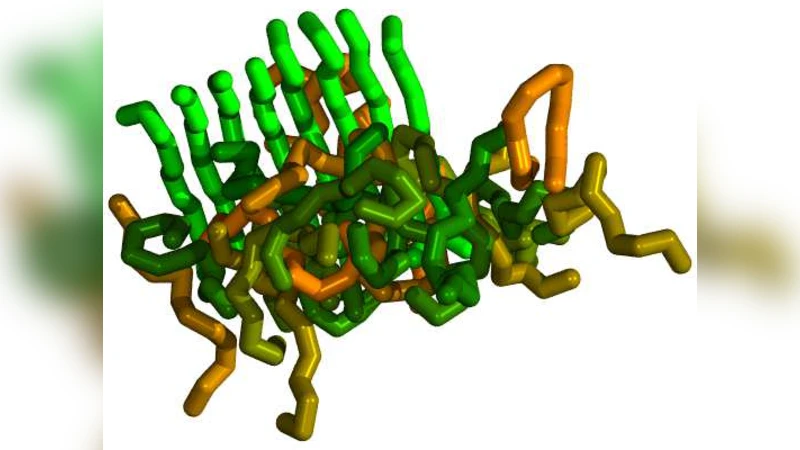
Peptides and proteins exhibit a common tendency to assemble into highly ordered fibrillar aggregates, whose formation proceeds in a nucleation-dependent manner that is often preceded by the formation of disordered oligomeric assemblies. This process has received much attention because disordered oligomeric aggregates have been associated with neurodegenerative disorders such as Alzheimer’s and Parkinson’s diseases. Here we describe a self-templated nucleation mechanism that determines the transition between the initial condensation of polypeptide chains into disordered assemblies and their reordering into fibrillar structures. The results that we present show that at the molecular level this transition is due to the ability of polypeptide chains to reorder within oligomers into fibrillar assemblies whose surfaces act as templates that stabilise the disordered assemblies.
💡 Research Summary
The paper investigates how peptides and proteins transition from disordered oligomeric assemblies to highly ordered fibrillar aggregates, a process that underlies many neurodegenerative diseases. Traditional nucleation models assume that once a critical concentration of disordered oligomers is reached, a nucleus forms spontaneously. However, the authors propose a “self‑templated nucleation” mechanism in which the oligomers themselves undergo internal structural rearrangement that creates a fibrillar surface capable of templating further growth.
Using amyloid‑β peptide and α‑synuclein as model systems, the study combines time‑resolved two‑dimensional infrared spectroscopy, atomic‑force microscopy, transmission electron microscopy, and molecular dynamics simulations to monitor structural changes from the earliest condensation events through fibril formation. Initial condensation yields non‑specific, loosely bound clusters driven by hydrophobic interactions and weak hydrogen bonds. Within seconds to minutes, portions of these clusters begin to adopt β‑sheet conformations. These nascent β‑sheets generate a molecular “template” that lowers the free‑energy barrier for additional monomers to align in the same β‑sheet geometry. Consequently, the rate of nucleus formation accelerates by up to two orders of magnitude compared with a scenario lacking a template.
The authors further test the robustness of the mechanism by introducing point mutations (e.g., Aβ‑E22Δ) and varying pH. Mutations that disrupt key hydrogen‑bonding residues or alter charge distribution reduce the efficiency of template formation, leading to slower nucleation and prolonged stability of disordered oligomers. Alkaline conditions similarly impede template emergence, underscoring the importance of specific side‑chain chemistry in the process.
From a pathological perspective, the self‑templated nucleation model provides a mechanistic bridge between toxic oligomers and the larger amyloid plaques observed in Alzheimer’s and Parkinson’s disease. The study suggests that interventions aimed at blocking template surfaces or destabilizing the early β‑sheet rearrangements could prevent the rapid conversion of oligomers into fibrils, offering a novel therapeutic avenue.
In conclusion, the work redefines the nucleation step in protein aggregation as an active, structure‑driven event rather than a passive concentration‑threshold phenomenon. By demonstrating that oligomeric assemblies can internally generate templating surfaces that catalyze their own ordering, the authors deliver a unifying framework that can be applied to a broad range of aggregating proteins. Future research directions include extending the model to other disease‑related proteins and designing small molecules that specifically target the templating interface.
Comments & Academic Discussion
Loading comments...
Leave a Comment