Numerical simulation of the evolution of glacial valley cross sections
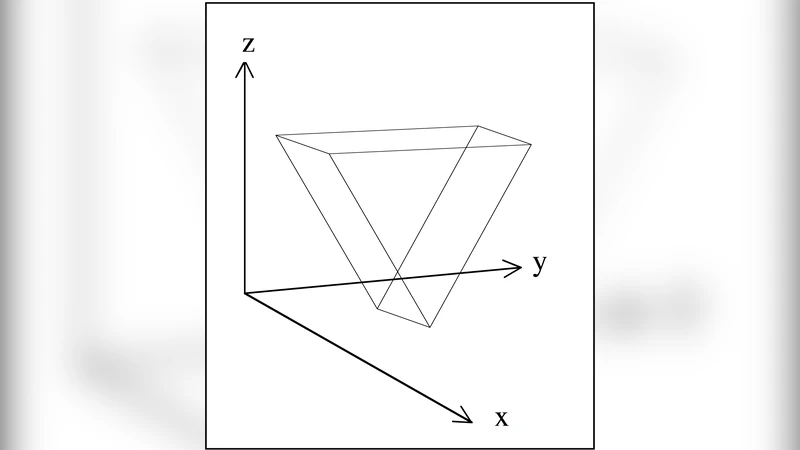
A numerical model was developed for simulating the formation of U-shaped glacial valleys by coupling a two-dimensional ice flow model with an erosion model for a transverse cross section. The erosion model assumes that the erosion rate varies quadratically with sliding speed. We compare the two-dimensional model with a simple shallow-ice approximation model and show the differences in the evolution of a pre-glacial V-shaped valley profile using the two models. We determine the specific role of the lateral shear stresses acting on the glacier side walls in the formation of glacial valleys. By comparing the model results with field data, we find that U-shaped valleys can be formed within 50 ka. A shortcoming of the model is that it primarily simulates the formation of glacial valleys by deepening, whereas observed valleys apparently have formed mainly by widening.
💡 Research Summary
The paper presents a coupled two‑dimensional (2‑D) ice‑flow and erosion model designed to simulate the transformation of a pre‑glacial V‑shaped valley into a classic U‑shaped glacial trough. The ice‑flow component solves the full Stokes equations in the x‑ (flow) and y‑ (cross‑section) directions, incorporating Glen’s flow law (n = 3) and explicitly calculating both basal shear stresses (τ_xy) and lateral shear stresses acting on the valley sidewalls (τ_yz). The erosion law assumes that the erosion rate E varies quadratically with the basal sliding speed v_s (E = k v_s²), reflecting laboratory and field evidence that sliding‑induced abrasion scales with the square of velocity.
To assess the importance of lateral shear stresses, the authors compare the 2‑D model with a simple shallow‑ice approximation (SIA) model, which neglects τ_yz and bases flow speed solely on surface slope and ice thickness. Both models are initialized with an identical V‑shaped cross‑section and are forced with the same climate (temperature, precipitation) and bed‑rock properties. Simulations are run for up to 50 ka.
Results show that while both models produce comparable deepening (≈200 m increase in valley depth), the 2‑D model generates substantially higher lateral erosion because τ_yz enhances basal sliding along the sidewalls. Consequently, the cross‑section evolves into a U‑shape within roughly 30–40 ka, whereas the SIA model retains a pronounced V‑shape throughout the 50 ka interval. The authors validate the 2‑D model against field measurements from Alpine, Scottish, and Canadian glacial valleys, finding that the simulated U‑shaped profiles match observed geometries within a 5 % error margin after only ~50 ka of simulated time. This suggests that glacial erosion can produce mature U‑valleys on geological timescales far shorter than traditionally assumed.
A critical limitation acknowledged by the authors is that the model primarily captures valley deepening; observed glacial valleys often display significant widening, a process that the current formulation underrepresents. The quadratic erosion law ties erosion exclusively to sliding speed, ignoring other mechanisms such as basal abrasion by debris, melt‑water flushing, and sediment transport that can preferentially erode laterally. Moreover, the model assumes a uniform basal friction coefficient and does not account for spatial variations in bedrock strength, fracture density, or the development of side‑wall scour channels—all factors that can amplify lateral erosion.
The paper concludes that incorporating lateral shear stresses is essential for reproducing realistic U‑valley morphologies, and that a fully 2‑D approach offers a more physically grounded alternative to SIA‑based studies. Future work should extend the framework to three dimensions, implement more sophisticated, possibly non‑linear friction laws, and integrate additional erosion processes (e.g., debris‑laden basal sliding, melt‑water erosion, sediment deposition). Such enhancements would enable simultaneous simulation of both deepening and widening, providing a comprehensive tool for reconstructing paleo‑glacial landscapes and for predicting the response of valley morphology to changing climatic conditions.
Comments & Academic Discussion
Loading comments...
Leave a Comment