A Grateful Dead Analysis: The Relationship Between Concert and Listening Behavior
The Grateful Dead were an American band that was born out of the San Francisco, California psychedelic movement of the 1960s. The band played music together from 1965 to 1995 and is well known for concert performances containing extended improvisatio…
Authors: Marko A. Rodriguez, Vadas Gintautas, Alberto Pepe
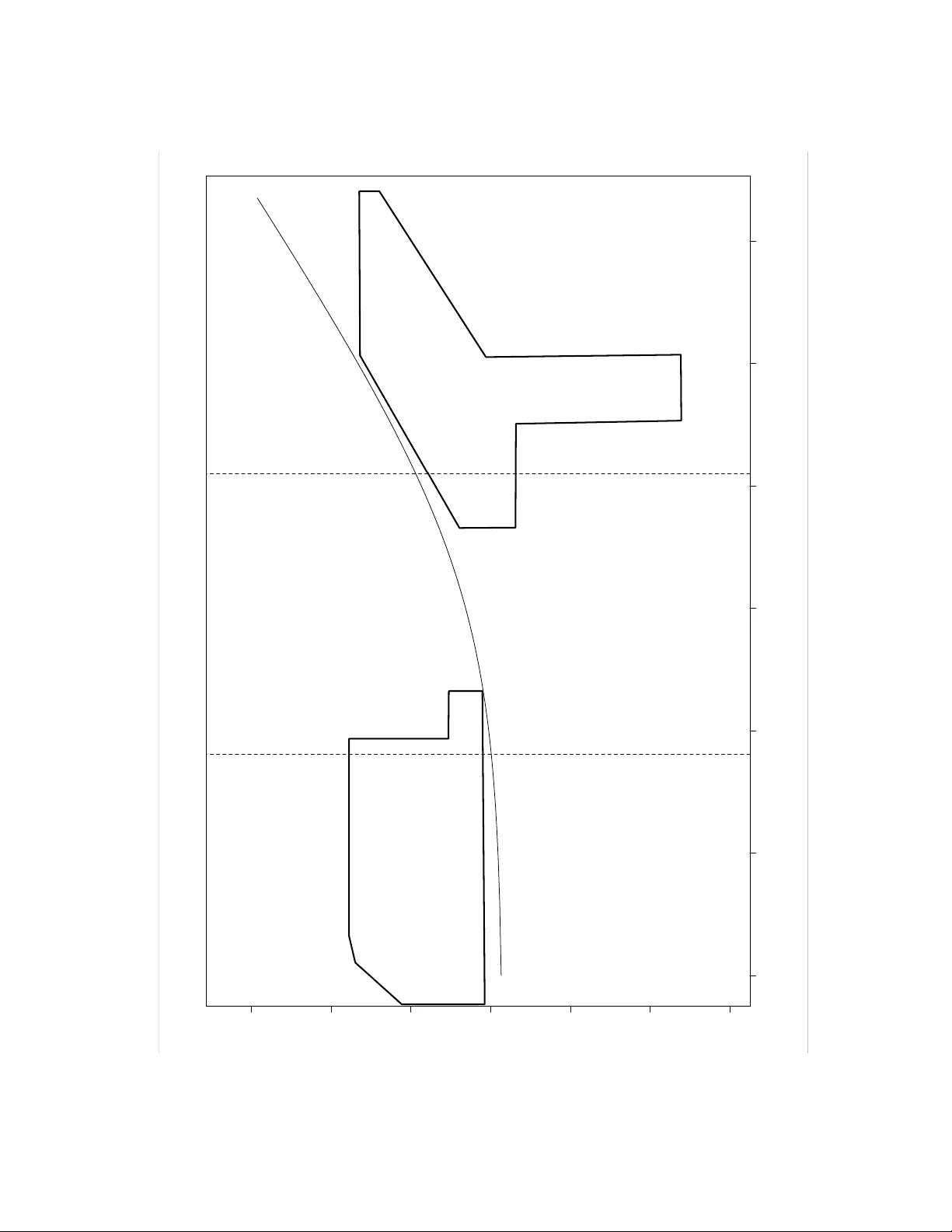
A Grateful Dead Analysis: The Relationship Bet w een Concert and Listening Beha vior Mark o A. Rodriguez 1 , V adas Gin tautas 1 , and Alb erto Pepe 2 1 T-7, Cen ter for Non-Linear Studies Los Alamos National Lab oratory Los Alamos, New Mexico 87545 marko@lanl.gov, vadasg@lanl.gov 2 Cen ter for Embedded Netw orked Sensing Univ ersity of California at Los Angeles Los Angeles, California 90095 apepe@ucla.edu Summary . The Grateful Dead w ere an American band that was born out of the San F rancisco, California psyc hedelic mov ement of the 1960s. The band play ed music together from 1965 to 1995 and is well kno wn for concert p erformances containing extended improvisations and long and unique set lists. This article presen ts a comparative analysis b etw een 1,590 of the Grateful Dead’s concert set lists from 1972 to 1995 and 2,616,990 last.fm Grateful Dead listening even ts from August 2005 to Octob er 2007. While there is a strong correlation betw een how songs were play ed in concert and ho w they are listened to b y last.fm mem b ers, the outlying songs in this trend identify interesting asp ects of the band and their fans 10 years after the band’s dissolution. 1 In tro duction The Grateful Dead were an American band which, despite relatively little p opular radio airtime, enjo yed a cult-lik e following from a fan base that num b ered in the millions [15]. The Grateful Dead originated in San F rancisco, California in the early 1960s and toured the world playing concerts un til the un timely death of the foreman and lead guitarist Jerry Garcia in 1995. The primary source of reven ue and exp osure for the band came through their concert tours. They pla yed ov er 37,000 songs liv e, in some 2,300 concerts ov er their 30 y ears as a band [14]. Throughout their y ears together, the Grateful Dead accumulated a large rep ertoire that included ov er 450 unique songs [14]. The Grateful Dead’s success and contin uity across multiple generations of music listeners is p erhaps due in part to their fundamen tally eclectic nature. The band utilized many song writers, comp osers and singers, and this resulted in a broad div ersity in sound. Rob ert Hunter and John Barlo w were the primary lyricists for scores written by Jerry Garcia and Bob W eir, resp ectively [4]. While Jerry Garcia and Bob W eir w ere the primary singers as well, other singers included Ron McKernan, Bren t Mydland, and Phil Lesh. Moreo ver, their eclectic nature can be seen in the large num be r of graphic icons they used to represent themselves. These icons include skeletons, roses, dancing b ears, terrapins, etc. Perhaps their most famous and recognizable image is the 2 Mark o A. Ro driguez 1 , V adas Gintautas 1 , and Alb erto P ep e 2 “Steal Y our F ace” icon in Figure 1 that was released as the album cov er art to the live 1976 Steal Y our F ace album [10]. Fig. 1. The Grateful Dead “Steal Y our F ace” icon. The history of the Grateful Dead’s album releases (13 studio albums and 77 live albums) further reinforces the band’s emphasis on concerts. More live albums are released regularly as high qualit y recordings of go o d performances are disco vered in the Grateful Dead concert arc hive. F or the band and for the fans, the performances of the Grateful Dead w ere all ab out diversit y in the live music exp erience. In any given sho w, the concert set list, the impro visations, and the mo o d of the band all v aried. In concert, all of these factors came together to create a unique exp erience for their fans eac h and every time. P erhaps even more astounding than their prolific concert p erformances is the dedication that their fans (kno wn as “deadheads”) had to their music [13, 1, 17, 16]. The t ypical deadhead was not a passive consumer of recorded studio albums, but an active concert go er that trav eled with the band from concert to concert, city to city , and country to country . Some 10 years after the Grateful Dead disbanded, the band’s music is still heavily listened to as evinced by statistics gathered from the p opular online m usic service kno wn as last.fm. 3 The last.fm “audioscrobbler” plug-in is recommendation soft ware that works with p opular computer music play ers such as iT unes or Winamp. Whenever a song is pla yed using, sa y , iT unes, the plug-in rep orts this activit y to the last.fm server where it is aggregated. F rom August 2005 to October 2007, there w ere ov er 2.5 million Grateful Dead song usages recorded by last.fm. With 72% of the users of last.fm under the age of 35 4 , the p opularity of the Grateful Dead, a generation of fans later and 10 y ears after the band’s dissolution, is still very strong. This article presents an analysis of the Grateful Dead’s concert b eha vior and exposes a rela- tionship b et ween the concert song patterns from 1972 to 1995 and the last.fm listening statistics of the band’s songs from August 2005 to Octob er 2007. First the a v ailable set list data is sum- marized and presen ted with an analysis of the concert b ehavior of the band. Next the usage data from last.fm is presen ted with an analysis of the listening b ehavior of last.fm mem b ers. Finally , a comparative analysis of the concert and listening b ehavior of the Grateful Dead is presented. 3 last.fm is av ailable at: http://www.last.fm/ 4 Source: last.fm internal web statistics, courtesy Anil Baw a-Cavia. A Grateful Dead Analysis: The Relationship Betw een Concert and Listening Behavior 3 2 The Grateful Dead Concert Beha vior Concert set lists pro vide the ra w data from which to study the concert behavior of the Grateful Dead. 5 The data gathered include 1,590 set lists for concerts from 1972 to 1995, with 28,904 individual song pla ys. A typical, unmo dified set list is presented b elow: Winterland Arena, San Francisco, CA (12/31/77) Music Never Stopped Tennessee Jed Funiculi Funicula Me and My Uncle Loser Jack Straw Friend of the Devil Lazy Lightnin’ Supplication Sugar Magnolia Scarlet Begonias Fire on the Mountain Truckin’ Wharf Rat drums Not Fade Away Around and Around One More Saturday Night Casey Jones Blank lines divide the set list into 4 comp onents. The first comp onent is the concert ven ue and lo cation along with the date that the concert was play ed. The second comp onent is the first set list in the sequence in which the songs w ere pla y ed. F or example, “F riend of the Devil” w as pla yed immediately after “Jack Stra w” in the ab ov e example. The third comp onent is the second set list of the concert. The second set of the Grateful Dead is known for fewer songs and extended impro visational sessions. F urthermore, the second set of a Grateful Dead concert is known for its “blending” of songs in which there exist few er pauses b etw een the end of one song and the b eginning of the next; that is, the second set was often a large medley of sorts. Second set medleys often featured pairs of songs that were almost alwa ys play ed together. F or example, “China Cat Sunflo wer” almost alwa ys preceded “I Know Y ou Rider”, but never in the opposite order. Also, “China Cat Sunflo wer” w as v ery rarely play ed with a different song following. 6 The fourth and 5 Set list data obtained from http://www.cs.cmu.edu/People/gdead/setlists.html . The data w ere cleaned to remedy v arious t yp ographical alterations (e.g. “T rucking” and “T ruckin’” are the same song), to fix v arious sp elling errors (e.g. “W arf Rat” and “Wharf Rat” are the same song), and to fix v arious abbreviations (e.g. “China Cat” and “China Cat Sunflow er” are the same song). 6 A similar pattern exists for other song pairs such as “Scarlet Begonias” and “Fire on the Mountain”, “Sain t of Circumstance” and “Lost Sailor”, and “Cryptic Env elopment” and “The Other One”. 4 Mark o A. Ro driguez 1 , V adas Gintautas 1 , and Alb erto P ep e 2 last comp onen t, which is usually the shortest, is the encore set list. The Grateful Dead were kno wn to typically play their concerts in this 3 set form. A basic measure, calculated using many concert set lists, is to simply coun t the n umber of times a given song is play ed ov er all concerts. This ranked list of songs is a rudimentary “greatest hits” list of sorts, but also a histogram of concert plays sheds light on the distribution of these coun ts. Did most songs get approximately the same num b er of concert pla ys, or did the band pla y a small set of fa vorite songs in tersp ersed with less p opular songs to provide v ariety? T able 2 sho ws the ra w coun ts for the 15 most play ed songs. Note that of the 1,590 concerts analyzed, 1,386 of those concerts included the “Drums” improvisational rh ythm sequence, whic h typically app eared in the second set of most concerts. The Grateful Dead very often used “Drums” in the second set to bridge tw o songs that would not otherwise b e simple to link as a medley . Figure 3 presen ts a histogram denoting the num b er of songs that were play ed a giv en num b er of times. In summary , man y songs were play ed only a few times and few songs were play ed many times. song times play ed “Drums” 1386 “Pla ying in the Band” 651 “Sugar Magnolia” 494 “Not F ade Awa y” 486 “The Other One” 438 “Jac k Straw” 437 “T rucking” 427 “Me and My Uncle” 412 “Lo oks Like Rain” 407 “Promised Land” 407 “I Know Y ou Rider” 406 “China Cat Sunflow er” 403 “New Minglewoo d Blues” 398 “Around and Around” 395 “T ennessee Jed” 390 Fig. 2. The top 15 Grateful Dead songs pla yed in concert from 1972 to 1995. times played counts 0 200 400 600 800 1000 1200 1400 0 10 20 30 40 50 Fig. 3. A histogram of the n um b er of times a song w as play ed in concert. Most songs were play ed only a few times and very few songs were play ed man y times. (The vertical axis w as trimmed from its maximum of 150 in order to preserve diagram clarit y). 3 The Grateful Dead Usage Statistics The online music service last.fm trac ks how registered mem b ers enjoy music by what songs they pla y on Internet radio or through a computer music play er plug-in. The last.fm service maintains A Grateful Dead Analysis: The Relationship Betw een Concert and Listening Behavior 5 a database of the listening behavior of its registered mem b ers. F rom this database, the last.fm service is able to recommend songs and artists to its members based on the listening b ehavior of similar membe rs. This service is analogous to Amazon.com using historical purc hasing b ehavior to recommend pro ducts to customers. T able 4 lists the top 15 Grateful Dead songs listened to b y last.fm mem b ers. These data were gathered from August 2005 to Octob er 2007 and include 2,616,990 unique listening ev ents. Figure 5 presents a histogram of the listening coun ts of songs. In summary , similar to the concert b eha vior of the Grateful Dead, man y songs w ere listened to a few times and a few songs were listened to many times. song times used “F riend of the Devil” 143988 “Sugar Magnolia” 124736 “T rucking” 122877 “Casey Jones” 102449 “Bo x of Rain” 88340 “Uncle John’s Band” 82431 “Ripple” 80629 “T ouch of Grey” 71270 “Brok edown Palace” 54675 “Candyman” 54344 “Fire on the Moun tain” 48516 “F ranklin’s T ow er” 45404 “Scarlet Begonias” 42137 “Dark Star” 39953 “China Cat Sunflow er” 36479 Fig. 4. The top 15 downloads of Grateful Dead songs on last.fm from August 2005 to Octob er 2007. times used counts 0 20000 40000 60000 80000 100000 120000 140000 0 10 20 30 40 50 Fig. 5. A histogram of times a song was lis- tened to, from last.fm data. (The v ertical axis w as trimmed from its maxim um of 200 in order to pre- serv e diagram clarity .) 4 The Relationship Betw een Concert and Usage Beha vior The last.fm m usic service records listening b ehavior of songs that hav e app eared in some published form, such as studio albums, singles, and recordings of live concerts. The Grateful Dead deviated from the standard mo del of releasing studio albums, in that their primary reven ue stream w as through concert p erformances, ev en from the start. The Grateful Dead produced 13 studio albums and 77 liv e albums. The band’s first live album, Liv e/Dead, was released in 1969 [6]. With respect to the influence of liv e recordings on the present generation of listeners, nearly all live albums w ere a direct reflection of a particular live concert p erformance and as such, resp ected that concert set list’s song sequence. Thus, if a last.fm listener were to listen to an y one of the many live albums, he or she is, in fact, repla ying concert history and contributing prop ortionately to the n umber 6 Mark o A. Ro driguez 1 , V adas Gintautas 1 , and Alb erto P ep e 2 of songs listened to as times pla yed in concert. This notion is further accen tuated by fans that created digital renditions of their fa vorite c oncert tap es. 7 Giv en that there are curren tly 5 times more live albums than studio albums, one may exp ect that last.fm users would primarily listen to recordings of concerts and that the usage data would b e directly correlated with that of the set list data. How ever, as shown in this section, there are significant deviations from a perfect correlation. Reasons for these deviations may include the fact that listeners can replay only their fa vorite songs from live albums, ma y prefer studio albums to recordings of liv e shows, and are able to make compilations of tracks (“playlists”) that differ from the live and studio pro ductions. Figure 6 plots each song in a tw o-dimensional space. Eac h song is pro vided a co ordinate in this space, where the horizontal co ordinate is the num b er of times the song was play ed in concert and the v ertical coordinate is the num b er of times the song w as listened to b y last.fm members. Giv en that eac h song has t wo asso ciated v alues (horizon tal and vertical co ordinates), it is p ossible to form t wo v ectors of these num b ers and to measure the correlation of these vectors to determine ho w strongly their v alues are related. The analysis reveals that the listening b ehavior of last.fm mem b ers is strongly correlated with the concert b ehavior of the Grateful Dead (a measured correlation of 0 . 763 where 0 is uncorrelated and 1 is p erfectly correlated). 8 Since the data are not p erfectly correlated, it is v aluable to examine songs which are exceptions to this trend. The solid curved line in Figure 6 sho ws regions for which songs display a strong correla- tion. 9 The tw o dashed lines represent the 40 th -quan tile and 75 th -quan tile of concert plays. These quan tiles were sub jectively c hosen in order to provide a discussion of songs that are noteworth y outliers from the trend. Finally , the tw o closed p olygons labeled A and B represent the in teresting outlying songs. Polygon A encapsulates songs that w ere heavily listened to b y last.fm members, but play ed few times in concert by the Grateful Dead. On the other hand, B encapsulates songs that were heavily play ed b y the Grateful Dead, but less listened to (and p ossibly ov erlo oked) by last.fm members. 10 P olygon A encapsulates those songs that w ere heavily listened to b y last.fm users but not hea vily play ed by the Grateful Dead in concert. Many of the songs in p olygon A are old classics that did not p ersist due to either changes in the band or to the band’s extremely prolific p erio d of songwriting in the early 1970s. F or example, although the song “Mister Charlie” was play ed for the last time in concert on May 26, 1972 at the Strand Lyceum in London, England, it was featured on the Europ e ‘72 album [7]. This album reached a p eak sp ot of 24 on the Billb oard p op albums c hart in 1973. Thus, while not b eing play ed m uch in concert during the band’s lifetime, 7 Prior to the adv ent of the In ternet and the easy distribution of digital audio files, Grateful Dead concert tap e trading was an extremely popular wa y of disseminating the Grateful Dead’s liv e exp erience. In fact, the band encouraged this [5]. Many tapes hav e now b een digitized and shared online by fans. 8 A Sp earman ρ rank-order correlation reveals a correlation of ρ = 0 . 763 with a p -v alue < 2 . 2 × 10 − 16 , where ρ = − 1 is inv ersely related, ρ = 0 is unrelated, and ρ = 1 is correlated. The p -v alue indicates the probabilit y of such a correlation o ccurring randomly; the p v alue for this correlation indicates that, at random, this correlation w ould o ccur 5 times out of 10 15 [18]. 9 Sp ecifically , the line represents a linear regression mo del that predicts usage in terms of concert pla ys. The data were fit to a line; the line app ears curv ed b ecause the v alues on b oth axes are plotted on logarithmic (base-10) scale to preserve diagram clarity . 10 A random sample of songs w ere remov ed from this diagram to preserv e clarity as to ensure that song labels did not o verlap. F urthermore, while A and B occupy regions outside of their quantile delimitations, this is to ensure that song lab els were encapsulated. A Grateful Dead Analysis: The Relationship Betw een Concert and Listening Behavior 7 “Mister Charlie” remains a fan treasure by virtue of securing a place on a muc h celebrated album. Similar arguments can b e made for “Sage and Spirit” and “Blues for Allah” whic h, while tec hnically difficult and therefore generally a voided in concert, are songs that were released on the Blues F or Allah LP [9] which reached sp ot 12 on the Billb oard charts for p op album in 1975. “Go o d Morning Little School Girl” was primarily sung by Ron McKernan, whose untimely death in 1973 caused the song to b e remo ved from the Grateful Dead concert play list except for a few sp ecial app earances in the late 80s and early 90s. 11 Ho wev er, “Go o d Morning Little Sc ho ol Girl” is the opening track of the Two from the V ault album [3] that con tains a live recording of the August 24, 1968 Shrine Exhibit Hall p erformance of the Grateful Dead. Although Jerry Garcia was the primary singer of “Death Don’t Hav e No Mercy”, the song had a similar concert fate as “Go o d Morning Little School Girl” and was also released on the Tw o from the V ault live album. Tw o from the V ault reached position 119 in 1992 on the Billb oard charts. 12 Lik ewise, “Hard to Handle”, lik e “Go o d Morning Little School Girl” was a Ron McKernan sp ecialty that w as dropp ed after his death, except for b eing play ed during the New Y ear’s Eve show of 1982 in Oakland, California. Finally , “Cryptic En velopmen t” provided a medley prelude to the p opular “The Other One” and only later in the bands life was “The Other One” separated from “Cryptic En velopmen t” and preceded b y “Drums”. It is worth noting that 28 of the 77 live albums of the Grateful Dead include “The Other One” while only 7 include “Cryptic Env elopment”. P olygon B encapsulates those songs that were heavily play ed in concert throughout the Grate- ful Dead’s career, but for v arious reasons, w ere less frequently listened to by last.fm mem b ers. “Drums” is p erhaps the most salient of this collection of songs at the extreme of the b ound- ary . “Drums” is an all-drum improvisational piece that usually app eared in the second set of a Grateful Dead concert. Usually app earing with “Drums” was the full sonic sp ectrum impro visa- tion of “Space” which included all band mem b ers. Both “Drums” and “Space” found a stable home on the Infrared Roses album [11], but unfortunately , due to the esoteric nature of these impro visations, Infrared Roses has b een le ss well receiv ed by the general public and thus receiv ed no p opular aw ards and did not make it on any music charts. F urthermore, to comp ound the situation, the Grateful Dead pro vided unique names for Infrared Roses trac ks and th us, when pla yed by last.fm users, are not asso ciated with the typical “Drums” and “Space” songs of the concert set lists. It is interesting to note the songs “Saint of Circumstance,” “When I P aint My Masterpiece,” “Victim or the Crime,” “Lost Sailor,” and “Greatest Story” in the b ottom left of p olygon B . All of these songs w ere created by the song writing duo of Barlo w and W eir and sung in concert often by Bob W eir. While these songs were pla yed extensiv ely in concert, they received relativ ely little attention from last.fm users. Finally , the extreme upp er righ t of this plot is imp ortant as “T ruc king” and “Sugar Magnolia” represen t not only the most p opular songs in terms of times pla yed in concert, but in terms of times listened to on last.fm. “T rucking” is on 25 of the 90 released Grateful Dead albums and “Sugar Magnolia” is on 32 of those albums. Both “T rucking” and “Sugar Magnolia” w ere also well receiv ed publicly . “T rucking” reac hed p osition 64 in 1971 and “Sugar Magnolia” reached position 91 in 1973 on the Billb oard pop singles charts. Also in this area is “T ouch of Grey”. “T ouch of Grey” was the only Grateful Dead song with an accompan ying music video and in 1987, reached 11 It is worth noting that “Mister Charlie” was also primarily sung by Ron McKernan and th us, didn’t last with the Grateful Dead past his lifetime. 12 “The Eleven” and “Cryptic Env elopment” are also on Two from the V ault. 8 Mark o A. Ro driguez 1 , V adas Gintautas 1 , and Alb erto P ep e 2 the top 10 Billb oard single’s chart. By comparison to pro duced greatest hits albums, T able 1 lists the songs that w ere released on the 2003 V ery Best of the Grateful Dead compilation. Of these songs, 12 out of the 17 songs are in the top right quadrant (these songs are mark ed with an ∗ in T able 1), meaning that they were b oth play ed and listened to heavily by the Grateful Dead and their fans, resp ectively . 13 A similar situation exists with the Skeletons from the Closet greatest hits album for whic h 8 out of 11 songs are in the top right quadrant [8] (T able 2 presen ts the songs on the album). 14 Of particular imp ortance is “Bo x of Rain” (on V ery Best of the Grateful Dead) b y Phil Lesh and Robert Hun ter. This song, written after the death of Phil Lesh’s father, is not only the last song ev er play ed by the Grateful Dead in concert 15 , but also unique in that it is one of the few songs for which Phil Lesh w as the primary singer. In summary , the upp er righ t hand quadrant of this diagram is rip e for creating compilation and greatest hits albums as it reflects b oth what the band as well as present day fans appreciate. # T rack name 1 “T rucking” ∗ 2 “T ouch of Grey” ∗ 3 “Sugar Magnolia” ∗ 4 “Casey Jones” ∗ 5 “Uncle John’s Band” ∗ 6 “F riend of the Devil” ∗ 7 “F ranklin’s T ow er” ∗ 8 “Estimated Prophet” ∗ 9 “Ey es of the W orld” ∗ 10 “Box of Rain” ∗ 11 “U.S. Blues” 12 “The Golden Road to Ultimate Devotion” 13 “One More Saturday Night” ∗ 14 “Fire on the Mountain” ∗ 15 “The Music Never Stopp ed” 16 “Hell in a Buck et” 17 “Ripple” T able 1. The tracks of the V ery Best of the Grateful Dead greatest hits album [12]. Upper righ t quadrant songs in Figure 6 are marked with ∗ . # T rack name 1 “The Golden Road to Ultimate Devotion” 2 “T rucking” ∗ 3 “Rosemary” 4 “Sugar Magnolia” ∗ 5 “St. Stephen” 6 “Uncle John’s Band” ∗ 7 “Casey Jones” ∗ 8 “Mexicali Blues” ∗ 9 “T urn on Y our Lov e Light” ∗ 10 “One More Saturday Night” ∗ 11 “F riend of the Devil” ∗ T able 2. The trac ks of the Skeletons in the Closet greatest hits album [8]. Upp er righ t quadrant songs in Figure 6 are marked with ∗ . 13 “Ey es of the W orld” and “Estimated Prophet” are not display ed as they were randomly remov ed to preserv e diagram clarity . 14 “Mexicali Blues” is not display ed as it was randomly remov ed to preserv e diagram clarit y . 15 The final Grateful Dead performance to ok place at Soldier Field on July 9, 1995 in Chicago. Jerry Garcia died exactly one month later on August 9, 1995. A Grateful Dead Analysis: The Relationship Betw een Concert and Listening Behavior 9 5 Conclusion The Grateful Dead were an American m usic phenomenon that influenced multiple generations of m usic lo vers. F or 30 years, the Grateful Dead made a career out of an unrelen ting tour schedule that to ok them around the world, and, unlike typical bands, to ok their fans with them. It is no w 43 years since the band started and with the use of online music providers and services, it is p ossible to track the listening b eha vior of the man y Grateful Dead fans in the world today . This article presented an analysis comparing the p opularit y of Grateful Dead songs as iden tified b y b oth how many times they w ere pla yed in concert and how man y times they w ere listened to b y mem b ers of the last.fm online music service. The correlation b et ween concert plays and fan listens is strong, but not p erfect. Those songs that existed as outliers to a p erfect correlation w ere analyzed to understand what made these songs deviate from the mo del. These deviations can b e understo o d by changes in the band, b y liv e p erformance album releases, and b y the very nature of the songs themselv es. There is muc h to be learned ab out American concert tour culture and the bands that bring this culture to fruition [2]. Perhaps more than any other band, there exists large amounts of Grateful Dead data that go b eyond set lists to include lyrics, chord progressions, concert reviews, and history . Many b o oks hav e b een published ab out the Grateful Dead and albums contin ue to b e released 13 y ears after their final concert in 1995. Without a doubt, the Grateful Dead hav e made a profound impact on that whic h is American ro c k m usic. Ac kno wledgements The authors would like to thank Anil Baw a-Cavia of last.fm for providing the Grateful Dead raw usage data, Jerry Stratton for pro viding the set list data, and the Grateful Dead for doing what they do b est. References 1. Rebecca G. Adams. Inciting so ciological though t by studying the deadhead comm unity: Engaging publics in dialogue. So cial F or c es , 77(1):1–25, 1998. 2. Gran t C. Blac k, Mark A. F ox, and Paul Ko chano wski. Concert tour success in North America: An examination of the top 100 tours from 1997 to 2005. Popular Music and So ciety , 30(2):149–172, 2007. 3. Grateful Dead. Tw o from the V ault. Music Album, May 1992. 4. Da vid Dobb. The Complete Annotate d Gr ateful De ad Lyrics . F ree Press, 2007. 5. John R. Dw ork and Michael Getz, editors. The De adhe ad’s T aping Comp endium: An In-Depth Guide to the Music of the Gr ateful De ad on T ap e . Holt, New Y ork, NY, 1998. 6. Grateful Dead. Liv e/Dead. Music Album, Nov ember 1969. 7. Grateful Dead. Europe ‘72. Music Album, Nov ember 1972. 8. Grateful Dead. Skeletons from the Closet: The Best of Grateful Dead. Music Album, F ebruary 1974. 9. Grateful Dead. Blues for Allah. Music Album, September 1975. 10. Grateful Dead. Steal Y our F ace. Music Album, June 1976. 11. Grateful Dead. Infrared Roses. Music Album, Nov ember 1991. 10 Mark o A. Ro driguez 1 , V adas Gintautas 1 , and Alb erto P ep e 2 12. Grateful Dead. The V ery Best of the Grateful Dead. Music Album, September 2003. 13. P aul Grushkin, Cynthia Bassett, and Jonas Grushkin. Gr ateful De ad: The Official Bo ok of the De ad He ads . Harp er Paperbacks, 1983. 14. Madh u Lundquist. The SetList Program: Grateful Dead Setlists and Listener Experiences. W ebpage, 1996. 15. Dennis McNally . A L ong Str ange T rip: The Inside History of the Gr ateful De ad . Broadwa y Books, 2002. 16. Melissa McCra y P attacini. Deadheads yesterda y and to day: An audience study . Popular Music and So ciety , 24, 2000. 17. Robert Sardiello. Y outh Culture: Identity in a Postmo dern World , chapter Identit y and Status Stratification in Deadhead Sub culture. Blac kwell Publishers, 1998. 18. Da vid J. Sheskin. Par ametric and nonp ar ametric statistic al pr o c e dur es . Chapman and HallCRC, New Y ork, NY, 2004. A Grateful Dead Analysis: The Relationship Betw een Concert and Listening Behavior 11 0.0 0.5 1.0 1.5 2.0 2.5 3.0 2.0 2.5 3.0 3.5 4.0 4.5 5.0 concert plays (log 10) last.fm usage (log 10) 0.0 0.5 1.0 1.5 2.0 2.5 3.0 2.0 2.5 3.0 3.5 4.0 4.5 5.0 NOT FADE AWAY BERTHA MONA HERE COMES SUNSHINE BLACK THROATED WIND ME AND MY UNCLE PLAYING IN THE BAND BIG RIVER WEATHER REPORT SUITE EL PASO CHINA CAT SUNFLOWER TRUCKING ME AND BOBBY MCGEE GREATEST STORY AROUND AND AROUND THROWING STONES WANG DANG DOODLE SPOONFUL VICTIM OR THE CRIME SAINT OF CIRCUMSTANCE SAMBA IN THE RAIN CUMBERLAND BLUES THE SAME THING ITS ALL OVER NOW ETERNITY BOX OF RAIN TOMORROW IS FOREVER CANDYMAN JACK STRAW ROW JIMMY BIG RAILROAD BLUES SUGAREE CRAZY FINGERS MIDNIGHT HOUR IKO IKO HIGH TIME HELL IN A BUCKET VISIONS OF JOHANNA SHIP OF FOOLS I NEED A MIRACLE DONT EASE ME IN UNCLE JOHNS BAND COLD RAIN AND SNOW SCARLET BEGONIAS SHAKEDOWN STREET THE WEIGHT TOUCH OF GREY DARK STAR TERRAPIN STATION STELLA BLUE DRUMS MY BROTHER ESAU IT MUST HAVE BEEN THE ROSES LET IT GROW THE MUSIC NEVER STOPPED FRIEND OF THE DEVIL ON THE ROAD AGAIN MAMA TRIED SMOKESTACK LIGHTNING ONE MORE SATURDAY NIGHT WHEN I PAINT MY MASTERPIECE LAZY LIGHTNING CASEY JONES MORNING DEW CHINA DOLL WHARF RAT HEY JUDE SUNSHINE DAYDREAM THE WHEEL DEATH DONT HAVE NO MERCY SO MANY ROADS ATTICS OF MY LIFE COMES A TIME CAUTION THE OTHER ONE SPANISH JAM HEY POCKY WAY SUGAR MAGNOLIA FRANKLINS TOWER WE BID YOU GOODNIGHT BLUES FOR ALLAH HARD TO HANDLE TURN ON YOUR LOVE LIGHT JOHNNY B GOODE BUILT TO LAST FIRE ON THE MOUNTAIN NEW SPEEDWAY BOOGIE UNBROKEN CHAIN COSMIC CHARLIE DEEP ELEM BLUES LOST SAILOR BABA ORILEY SPACE I KNOW YOU RIDER EASY TO LOVE YOU WEST LA FADEAWAY JACK A ROE PEGGY O US BLUES SUNRISE MONKEY AND THE ENGINEER DARK HOLLOW OH BABE IT AINT NO LIE KNOCKING ON HEAVENS DOOR MISTER CHARLIE NEXT TIME YOU SEE ME DAY JOB REVOLUTION WEREWOLVES OF LONDON HELP ON THE WAY SAGE AND SPIRIT LITTLE SADIE RIPPLE TONS OF STEEL ROSALIE MCFALL GLORIA MISSISSIPPI HALF-STEP THATS ALRIGHT MAMA MAN OF PEACE BALLAD OF A THIN MAN TAKE ME TO THE RIVER BEEN ALL AROUND THIS WORLD CRYPTICAL ENVELOPMENT THE ELEVEN SLIPKNOT KING BEE GOOD MORNING LITTLE SCHOOL GIRL MISSION IN THE RAIN MIND LEFT BODY JAM NOBODYS FAULT BUT MINE LET IT ROCK A B Fig. 6. Grateful Dead concert plays vs. last.fm usage. Unfortunately , not all song names could b e displa yed due to severe ov erlapping of the labels. In order to remedy this situation, in the more dense regions, song lab els w ere randomly remo ved.
Original Paper
Loading high-quality paper...
Comments & Academic Discussion
Loading comments...
Leave a Comment