Prototyping and Performance Analysis of a QoS MAC Layer for Industrial Wireless Network
Today's industrial sensor networks require strong reliability and guarantees on messages delivery. These needs are even more important in real time applications like control/command, such as robotic wireless communications where strong temporal const…
Authors: Adrien Van Den Bossche (LATTIS), Thierry Val (LATTIS), Eric Campo (LATTIS)
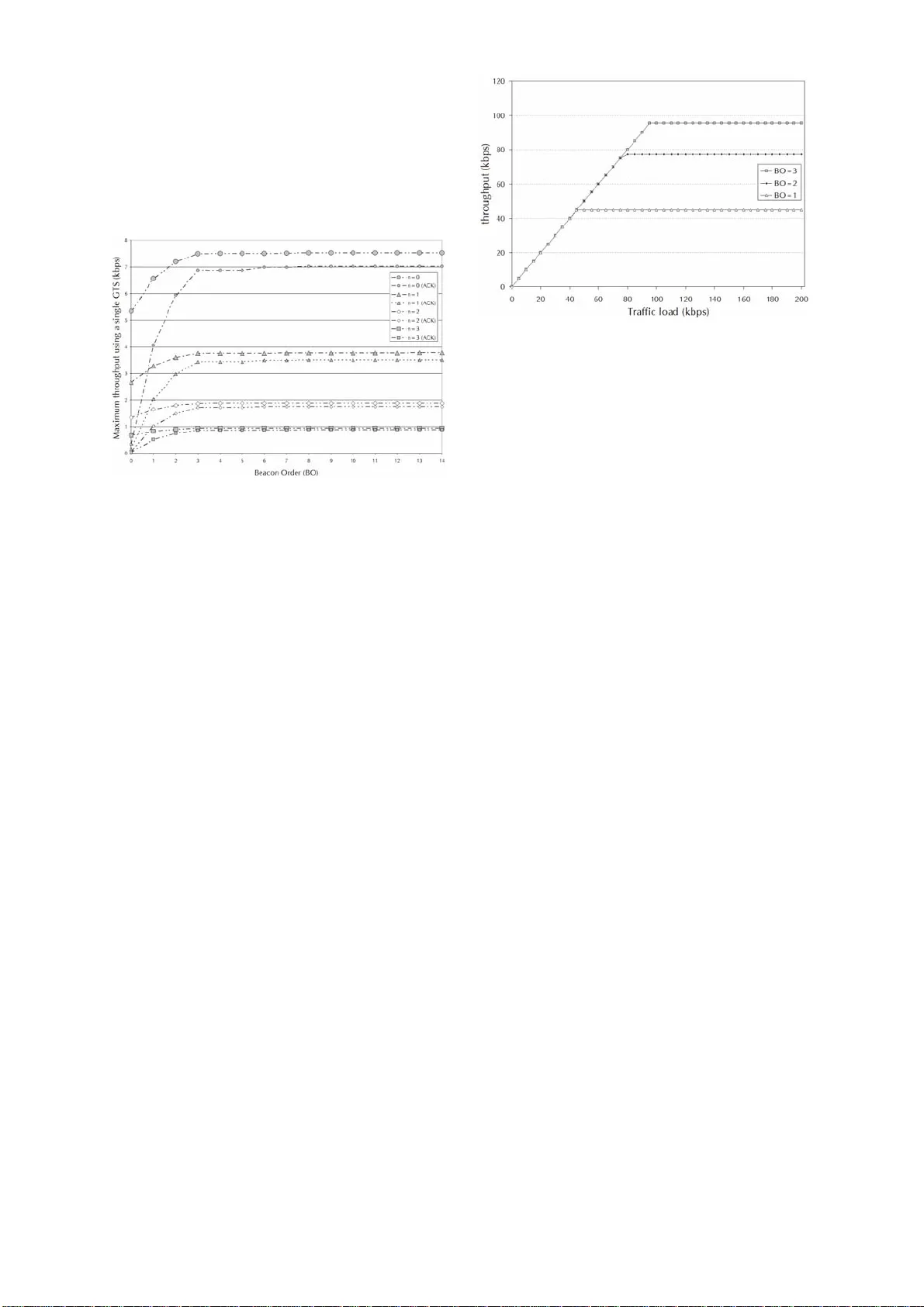
PROTOTYPING AND PERFO RMANCE ANALYSIS OF A QoS MAC LAYER FOR INDUSTRIAL WIRELESS NETWORK Adrien van den Bossc he, Thierry Val, Eric Campo University of Toul ouse, LATTIS EA415 5, SCSF group, IUT de Blagn ac-UTM BP60073, 1 pl. G. Brassen s, 31703 Blagnac, France {vandenbo, v al, campo}@iut -blagnac.fr Abstract: Today’s industrial sensor networks requ ire stro ng reliability and gu arantees on messages delivery. These needs are eve n more important in real time applications like control/com mand, such as robotic wireles s communi cations where stron g temporal constraints are critical. For th ese reasons, classical random -based Medium Access Cont rol (MAC) protocols present a non-nu ll frame collision probability. In th is paper we present an original full deterministic MAC-layer for industrial wireless network and its performance eval uation thanks t o the developm ent of a material prot otype. Copyright © 2002 IFAC Keywords: Wireless Networks, Industrial, Sensors, QoS, Real Time, Determinism, Robotic, Performance Analysis. 1. INTRODUCTION Today, a typic al wireless ad-hoc network techn ology has to propose st rong and rel iable mechanism s for each level of the OSI model: Physical layer (PHY) must deal with low Bit Error Rate, Medium Access Control layer (MAC) must avoid collisions an d solve hidden terminal, Network layer (NWK) must enable automatic routing and insure reliability for mobile nodes, and so on. For an indust rial applicati on, a higher reliability is required : communication technology m ust propose some gua ranties depen ding on the application (temporal bou nding on transmission l atency and packet forwarding, m inimal throughput, and maximal p acket loses…). For all these reasons, adding Quality of Serv ice (QoS) functionalities to the network tech nology is mandatory in real-time monito ring sensors network application. There are nu merous NWK-l evel QoS prot ocols for wire networks like IntServ (Wroclawski, 1997) , DiffServ (Nichols et al. 1998a, b) or for wireless mobile ad-h oc network l ike QOLSR (Badis et Al Agha, 2004). These QoS techni ques are generally based on a traffic admission control system: if the network capa city is lower than the requiremen ts of the candidate traf fic, network refuses to ha ndle this traffic. Nevertheless, the traffic admissi on technique needs 1) a fine description of each traffic potentially handled by t he network and 2) an e xhaustive knowledge of the communi cation resources, w hich is not simple in the case of a wireless network whe re PHY and M AC behavio r is diffi cult to pre dict. Ideally, on a wireless technolog y implementing QoS, the MAC-la yer shoul d be able t o not only send/receive traffic with a hi gh level of guarantee but also to return information on medium capacity in order to help the rel evance of the tra ffic control system at NWK-level. The aim of this pap er is to present an original MAC- layer for industrial a pplications based on IEEE 802.15.4 LP-WPAN with QoS implementing a full deterministic medium access method. Thru the sections of thi s paper, w e first present typical requirements for an industrial application of wireless sensor networ k. Then we present an o verview of the IEEE 802.15.4 standard and discuss wea knesses we identified. We then propose a ne w, totally deterministic medium access method and its performance eval uation by a m aterial prot otyping. 2. INDUSTRI AL AND ROBOTIC APPLIC ATION REQUIREMENTS Considering an industrial sens or network ap plication, random network congestions are not acceptable: a typical sensor application in a n industrial environm ent primaril y needs a high level of reliability. Messages must be deliv ered in time, without error with a prel iminary QoS n egotiation to define minim al bandwidt h, maxim al latency on message delive ry and maxim al message losses. To illustrate the typical communication needs an d an example of n etwork topology , we chose a m obile robotic application where robots can c ommunicate together ( cooperating robotic applica tion ). The wireless network allows just as well sensors / actuat ors comm unications (intra-robot communicat ions) as cooperati ng messages exchan ges (inter-robot s comm unication). The netwo rk topology is illustrated on fig. 1. For this type of app lication, transmitted da ta impose hard temporal c onstraints: for example, sens ors like ultrasound s onar (obstacle sensors) cannot accept va riable transmission delay due to collision s and retransmissions. While any transmission t echnology using ra diofrequenc y medium depends on an im perfect medium , the MAC- layer has to resolve medium access issues without introducing rando m parameters. Fig. 1. Typi cal network t opology f or intra-robot a nd extra-robot commun ications cohabitation. Finally, a typical i ndustrial sensor appl ication requires a reliable and energy-saver communication system. Average throughput is qu ite small – 100kbps at most – a higher reliability is preferab le than a higher throughput. IEEE ha s recently introduced a LP-WPAN (Low-Power Wireless Pers onal Area Network) ta king into accou nt the constraint s mentioned previously. T his LP-WPAN standard is IEEE 802.15.4. In addition, the a vailability and low- cost of these de vices are real advantages for the design of prototy pes. The works of the IEEE 802.15.4 task gr oup whose principal characteristics are detailed in the following section are the b ases of our develo pments. 3. PRES ENTATION OF IEEE 802.15.4 TECHNOLOGY IEEE 802.15.4 standard (IEEE 2003) proposes an original two -layer pr otocol stack (physical-layer and data link-lay er) for low pow er transceivers and lo w baud rate com munications bet ween em bedded devices. Innovative con cepts optimize energy saving. Moreover, IEEE 802.15. 4 standard is promot ed by the ZigBee Alliance (ZigBee Alliance, 2005) as the physical-layer and data- link-layer of the ZigBee Network specif ications. 3.1 Overview IEEE 802.15.4 proposes two PHY layers: PHY868/915 and PHY2450. The fir st one operates on both 868 MHz and 915MHz ra dio bands. It proposes a very low data-rat e (20kbps at 868M Hz and 40kbps at 915MHz) with a sim ple BPSK modulati on. The PHY2 450 layer is more interesti ng: it allows a greater through put (250kbps) thanks to an O-QPSK m odulation. Mo reover thank s to its Direct Sequence Spread Spectrum (DSSS) coding, PHY2450 has excellent noise imm unity (IEEE, 2003). The two PHY layers we re designed for maximum energy saving: prot ocols are optim ized for short and periodical data transfers. Nodes mostly sta y in a “sleeping” mode called doze mode. Radio modem allows ultra low po wer consum ption (40µA) (Freescale Sem iconductors, 200 5) and nodes bec ome operational i n a very short tim e (330µs). In doze mode, all radio functionalities are switched off, removing the ability to receive me ssages. The waking tim e has to be set before going in d oze mode (synchrono us wake-up) but sleepin g devices may also wake-up if a local ev ent occurs (asynchronous wake-up): m otion detection for exampl e. 3.2 Medium Access Control (MA C) and topolo gies The standard IEEE 802.15.4 proposes two data link- layer topologies: Peer-to-P eer and Star. Peer-to-peer topology m akes possible direct data t ransfers between devic es in radio ra nge on the same radio channel. Access to the me di um uses the CSMA/C A protocol wi thout RTS/C TS mechanism . On the contrary, Star topology need s a star coordinat or: all data transfers go t hrough the coordin ator and messages are buffered d uring the dozing period. This functionality is called ind irect data transfer. Star topology al lows high ene rgy saving t hanks to an optimal distribution of sleepin g periods between embedded devices. For synchronizat ion, the star coordinator sends beacon fr ames. Inter-beacon period is called superframe. During the superframe, the nodes sleep until the next beacon, wa ke up and receive the beacon, ask the star coordinator for pending data, transmit and receive and then go to doze mode ag ain. In addition to th e classical CSMA/CA-based medium access method, IEE E 802.15.4 proposes a C ontention Free method f or the Star beacone d topology. No des can request for Guaranteed Tim e Slots (GTS) to the star coordinat or. A GTS consists in one or several time slots dedi cated to a particular n ode and cannot be used by oth er nodes. GTSs are announced by the beacon frame, a superfram e contains up to seven GTS. The number of GTS re servations for a terminal node is direct ly linked to i ts communicatio n bandwidth. This process of medium access reservation provides Quality of Serv ice properties like bandwi dth reservation or latency gua rantees (Huang et al. 2006), like 802.1 1e HCF (IEEE, 2005). Fig. 2. IEEE 802.15.4 superfra me structure. The IEEE 802.15.4 superframe mixe d structure (Fig. 2) combines both met hods as follows : First, a star coordinato r sends a b eacon fram e to indicate the network and coo rdinator addresses, the nodal data pending, the sizes of the Contention Access Period (CAP) and Contention F ree Period (CFP). Then starts the CAP where the nodes and coordinat or send/receive frames using CSMA/CA protocol. This time is al so used for request from a node to obtain GTS in the ne xt superfram e. At the end o f the CAP, the CFP starts as defi ned by the coordi nator and broadcasted b y the beacon. Medium access is possible only if the node ha s successfully obtained a GTS. At the end of t he CFP, all nodes g o to doze mode if not already a nd wait until the next beacon scheduled br oadcast by using an i nternal wake up timer. This sleeping period is optio nal but greatly advised for e nergy savi ng. 14 0 2 * 36 . 15 ≤ ≤ = BO with ms BI BO (1) BO SO with ms SFAP SO ≤ ≤ = 0 2 * 36 . 15 (2) Therefore, the supe rframe is characterized by two temporal parameters Beacon Order (BO), Superframe Order (SO) announce d in beacon fram es: BO defines the time interval between two b eacon messages. Beacon Interval (BI) is calculated as mentioned i n (1). SO defines t he SuperFrame “Active Portion” (SFAP = TCAP+TCFP) and is calculated as m entioned in (2). If B O and SO values are small, the network is more reactive (low latency) with lower energy saving. The greater is the difference between B O and SO, the more energy is saved. Thus, an appropriate value for these two parameters will be required considering the applications re quirement s. 4. IDENTIFIED PROBLEM S ON MAC LAYER As shown in th e above section, 802.15.4 adopts an interesting mechanism of medium access reservation (GTS) to m ake free some pri vileged nodes from the collision phenomenon. T he medium reservation is conditioned by two factors: First, the netw ork must be maintained within its capacity and av oid saturation (Misic et al. 2006). Unfortunately, the standard does not grant to a st ar coordinator t he capability to permanently ma intain some ban dwidth for a particula r node. The GTS reservatio n process works as “first come, first served” and is not an acceptable rule of distributi on in terms of Quality of Service. Second, the primitive call “GTS.request” generates a m essage sent to the star coor dinator during the C AP using the CSM A/CA protocol . As this protocol is Best-effort, it can not provid e any temporal guarantee. By ex tension, the primitive call “association.request” message for joining a network is sent by using the sam e protocol and i s therefore also not tem porally gua ranteed. To achieve a communication network betwee n sensors in an appl ication with t emporal const raints, it is essential to insure bandwidth and network latency for a number of known crit ical nodes. Moreove r, sensors m ay have diff erent communi cation requirements: strong sp oradic flows, regul ar flows with tim e dependency, etc. The standard IEEE 802.15.4 has other weaknesses: • A connected node ca nnot preser ve its GTS lease. To renew the GTS, a new re quest must be sent during the CAP. The possibility to request an extension of GTS allocation s hould be available during the allocated GTS. • The GTS frequency is based upon the superframe frequency, t he star coordinat or BO and SO intern al clock param eters. The nodes may only need to communicate from time to time and not on a reg ular basis. In other w ords, it is extremely difficult for sensors with different dat a comm unication needs to cohabit on the same star without loss of continu ity and optimal GTS distribution. • If several stars are i n the same radio ra nge and on the same channel, there is a high probability for collisions even during the CFP because the standard does not provide com munication protocols between star coordi nators. According to all these obs ervations, the mechan ism of medi um reservation c ould be greatl y improve d by: • A fully deterministic access method to insure GTS for selected known nodes at each superframe , • A more flexible GTS all ocation to support various access fre quencies and bandwidth, • The introducti on of a new pr otocol betwee n star coordinators in order to avoid GTS collisions. 5. A NEW FULL DETERMINISTIC MAC LAYER In the above section, we exposed some difficulties of the actual IEEE 802.15.4 stan dard. In this section, we present an original MAC layer implementin g a fully deterministic medium access m ethod. The goal is to reinforce the GTS mechanism and increase flexibility for the medi um reservation and a comm unication set between stars. 5.1 New proposed function alities The proposed mechanism s ar e intended to achieve the following new func tionalities: • With the present standard, only nodes can request for a GTS. We propose to give a star coordinator the ability to all ocate GTS at any time to any known node, in anticipation of a request. This functionality makes possible deterministic network asso ciations for critical nodes. We call this abilit y PDS, for Previously Dedicated Slot. • With the present standard, the GTSs were managed by the coordinator with internal messages within the star. We now propose a mechanism to extend these comm unications between coordina tors to avo id “GTS collisions” (two coordinat ors give a same GTS fo r two nodes by t wo differe nt stars i n the same radi o range). • With the present standard, the GTSs were placed in the CFP, at the end of the superframe. We propose that the GTSs will be laid out anywhere in the superframe at the coordi nator discretion. This functionality will en able us to optimize GTS distribution and with a possible extension to generate an optim ized global superframe composed of several stars. • With the present standard, a GTS appeare d in every single superframe after allocation. We now sugge st regulating t his GTS incl usion in the superframe at a lower frequency to fit the node needs. Thus , a GTS can appea r in one superfram e out of two, one out of four, o ne out of eight, etc. We in troduce the notion of reservation level n , an integer f rom 0 to n MAX . The GTS of a node with a reserv ation level n will appear in every p = 2 n superframes. It will allow different QoS traffics to cohabit within the same star without need for adjustments of BO and SO parameters. • With the present standard, GTSs were allocated for a limited time and the lease could only be maintained via a repetition o f renewed GTS request and therefore the continuity was jeopardized. We propose th at GTSs will be allocated for an unlimited time, unless a release request by the node or a release notificat ion by the star coordinator is issued (inactiv ity timeout, f or exampl e). 5.2 Stars coh abitation on a comm on radio ran ge If several coo rdinators co habit in close pr oximity on the same radio channel, the GTS attribution must be decided in agre ement with the ot her coordinators. I n the specification, ZigBee de scribes a special node called PAN C oordinator. We propose t o centralize all GTS requests messages to this node. Thus, the PAN coordinator can manage GTS rep artition and ensures there is no GTS collision. Moreover, as GTS can appe ar in ev ery p = 2 n superfram es, the decision of GTS attributi on must be t aken regardi ng not only the instantaneous network lo ad, but also the futu re GTS. This decision is easier if only one device can tak e it, with an exhaust ive vision of 2 n MAX superframes. Typically, a GTS request message is transmitted by a node to it s coordinat or; the coor dinator rel ays this request to the global co ordinator and receives in return an autho rization of allocate the GTS with a reservation level n GTS . 5.3 Temporal orga nization of the beacons Another pr oblem i n the actual 802. 15.4 standa rd is the collision of beacons. IEEE 802.15.4b tasking group (I EEE, 2006) is w orking on th is problem but 802.15.4b does not pr opose a determ inistic way t o avoid beacon collisions. Our solution proposes that PAN coordinator regulates the beacons like GTSs by distributing s ome specific tim eslots dedicated to beacon frames: we call this beacon GTS Guaranteed Beacon Slot (GB S). GBS and GTS in formation are broadcasted i n PAN coordinat or beacons call ed superbeacons: this solution also solves the “hidde n coordinator” problem. Like GTS, a GBS can a ppear every p = 2 n superfram es depending of t he latency needed by the star. Star co ordinators act as nodes to the PAN coordinat or and have GBS wi th a reservation level n GBS . 5.4 Conclusion on the MAC meth od proposed The MAC m ethod proposed permits to m ake full deterministic accesses to the medium. Nevertheless, contention access is still possib le by using CAP timeslots (CSMA/CA). We can c onsider that determinist access GTS, GBS and PDS ens ure minimal medium accesses and provide minimal bandwidth and maxi mal latency bound s. Of course, higher ban dwidth and sm aller latency can be attempted, but with out guarantee. 6. VALIDATION BY PROTOTY PING The new evoked functionalities n eed to be tested in order to validate the ne w medium access method. We proceed to seve ral studies, first by simulation with the desi gn and devel opment of an original simulation tool and then by Petri nets (formal and mathematical validation ). Another way to validate our proposition is prototyp ing, which is the main topic of this pa per – simula tion and Petri nets studies are presented in some other submitted pap ers (van den Bossche, A. et al , 2007). If sim ulation gene rally enables to get some good resul ts on perform ances and scalability of the protocol, some functionalities such as signa l propagation or antenn as characterization are easier to test via prototyping. Moreover, fin al performances o n throughput or delay may be diffe rent from simulation res ults because of the PHY layer which is real. For those reasons, performances characterization via prototypi ng seems to be fundam ental. 6.1 Presentation and characteri zation of the designed platf orm Our test ben ch is based on Freescal e TM IEEE 802.15.4 / ZigBee solution. It consists in a dual chip module: st andard 8 bit mi crocontroller M C9S08 and a specific 2.4GHz radio modem compatible with IEEE 802.15.4 physical layer specifications. Freescale TM IEEE 802.15.4 solutio n presents a real advantage: the MAC leve l is totally reprogrammable in C-lang uage, whi ch enable us to modi fy the standard medium access me thod to f it with our proposition and enabling real proto type performance measurement. Ou r prototyp e network is m ade of some Freescale TM 13192-SAR D cards (top and rig ht on fig. 3) and som e cards develope d in labo ratory (left on fig. 3) based on Freescale TM ZRD-01 module. All m easures are realized in an anechoic chamber at short distance (m ax 2 m eters) in orde r to avoid perform ance degradation due to transm ission errors on radio. Measures results are sent to a computer via RS 232 serial port (DB9 c onnector). Fig. 3. IEEE 802.1 5.4 cards used for prot otyping. Before getting performance of th e proposed MAC layer, we first characteri zed ou r platform in a raw context, wit hout MAC im plementat ion. The goal of this preliminary study is to ob tain performance of the hardware platform and t h e IEEE 802.15.4 physical layer. Fig. 4. Maximum attain able throug hput according PSDU size without m edium access method and acknowledges. Fig. 4 represents maximum attainable thro ughput according PSDU ( PHY Service Data Unit ) size without medium access m ethod. These results were obtained by using t wo 13192-SARD modules: the first sends fra mes with diffe rent packet siz e and the second one is blocked i n receive mode. The data transmission is realized without acknowledgement while fram es containing e rrors are sim ply ignored by the receiver. As shown on fig. 4, maximum throughput is log ically obtained when PSDU size is set to the maximum (127 bytes) and is closed to 120kbps, whi ch is very far from t he 250kbps (theorical on baseband ). Considering that there is no MAC layer and acknow ledges, practical throughput may be close t o baseband thro ughput. In fact , this poor practical throughput is d ue to an i mportant inter-frame delay imposed by the packet mode protocol used on SPI- bus ( Serial Periphe ral Interface ) between the microcontr oller and t he radio modem as illustrated in fig. 5 which represents to tal transmission del ay including SP I and radio transmission. Fig. 5. Total transmission delay accordi ng PSDU size, including SPI-b us and radio delays . In future , this point should be im proved by using another prot ocol on SPI -bus called stre am mode which enables direct sendi ng of data packe t in real- time . In fact, this optimization part is not the topic of this paper and will be mentio ned as a potential perspective. Nevertheless we notice that all the performance eval uations present ed in this pape r are based on the packet mode . 6.2 Determination of gua ranteed throughpu t according to reservation level a nd BO The goal of this study is to determine the maximum attainable throughp ut of a communication using the proposed MAC protocol according to the temporal parameter BO ( Be acon Order ) a nd the GTS reservation level n . Fig. 6. Maxi mum thro ughput for a communi cation using a singl e GTS. Fig. 6 represents the maximum attainable throughput of a unidirect ional comm unication using one IEEE 802.15.4 slot (GTS) with / wi thout acknowl edgement frame, while medium access is done via the proposed deterministic medium access method. We c an see on fig. 6 that the lowest BO value is unusable because in this case, timeslots are too short to allo w transmitting DATA frames and a n ACK frame. This stu dy enables us to consider a minimum BO value of BO = 1 ( superframe durat ion SD = 30 ms). For BO = 0, a time slot is not long e nough to co ntain one DATA and o ne ACK frame. Fo r BO = 1 or 2, timeslots are too short to contain t he maximum si ze of an 802.15 .4 frame so throughpu t increases with BO . For BO va lues of 3 or more, throughpu t is constant. Nevertheless, while it is n ot the topic of this study, we note that high BO values increase delay of deterministic accesses. 6.3 Maximal guarantee d throughp ut ( deterministic aspect ) This last perform ance study proves the det erministic aspect of the presented MA C m ethod. In fact, while CSMA/CA based MAC have po or performance when the number of stations inc reases, the MAC method we propose g uaranties the single GTS throughput even if the number of stations is important, a s we can see on fig. 7. In fact, all stations have their own GTS so medium acces s is still guaranteed, even in a dense traffic c ontext. Fig. 7. Usual thro ughput in functi on of global traffic load on the entire n etwork. Results of fig. 7 can be co mpared with the classical bell curb of CSMA/CA (IEEE 802.15.4 CSMA/CA MAC-layer simulation in Gang, L. et al , 2004) where global network per formances usually co llapse if network solicitation is important. With th e proposed MAC-layer, the MAC-level th roughput is guaranteed whenever medium solicitatio n is important. W e can conclude on the real deterministic asp ect of the proposed M AC met hod. 7. CONCLUS ION AND FUT URE WORKS In this pape r, we have presente d the IEEE 802. 15.4 technology and iden tified some gaps on MAC-layer concerning Guaranteed Tim e Slots. To solve theses problems, we have proposed an original MAC-layer for industri al and roboti c wireless netw ork based on a full deterministic medium access. This new MAC has been validated by complement ary methods, w hile only the real prototypi ng is present ed in this pa per. Results are interesting: the proposed medium access method prese nts good perf ormance conside ring throughput, esp ecially if medium solicitation is important ( high traffi c load) whereas C SMA/CA protocol has poor perform ance on high tra ffic load. Moreover, the i ntroduction of the n parameter (GTS reservation le vel) permi ts different physiognom y traffics to be carried over the netwo rk. Thanks to th is new MAC-lay er, industrial s ensors appli cations like control/com mand can be considered w ith LP- WPANs. Works in progress are numerous and are focussed on message transport latency: while we prove in this paper that a MAC -level throughput can be guaranteed, i t could be intere sting to also gua rantee transmission delay (i.e. me dium access period). We also note in this paper that intern al SPI-bus protocol may be improved in order to get better temporal performances on data-packet processing. Anothe r future perspect ive is the st udy of the energ y part of the proposed M AC-layer because ai med applicati ons, like industria l sensor network , general ly use embedded de vices. REFERENCES Badis, H., K. Al Agha (2004). QOLSR Multi-path Routing for M obile Ad Hoc Netw orks Based on Multiple Metrics, IEEE VTC'04-Spring: Vehicular Technology Conferen ce, Milan, Italy. Freescale Semicond uctors (2005). M C13192 2.4 GHz Low Power Tra nsceiver for the IEEE 802.15.4 St andard: Refere nce Manual Docume nt,. MC131 92RM Rev. 1.3. Gang, L., B. Krishnamach ari, C.S. Raghavendra (2004). Performance evaluation of the IEEE 802.15.4 M AC for Low-Ra te Low-Power Wireless Networks – Workshop o n Energy- Efficient Wireless Communications an d Networks (EWCN ’04), IEEE International Performa nce Computing a nd Comm unications Conference (IPCCC), Phoe n ix, Arizona, USA. Huang, Y.K ., A.C. Pang and T.W. Kuo (2006). AGA: Adaptive GTS Allocation with Low Latency and Fairness Consi derations for IEEE 802.15.4, I EEE Internati onal Confe rence on Communications (ICC 2006), Istanbul, Turkey. IEEE (2003). LAN-MAN Standards Committee of the IEEE Computer Society, Part 15.4: Wireless Medium Access C ontrol (M AC) and Physical Layer (PHY) Specifications for Low-Rate Wireless Personal Area Networks (LR-WPANs) . IEEE (2005). LAN-MAN Standards Committee of the IEEE Computer Society, Part 11: Wireless LAN Medium Access Cont rol (MAC) and Physical Layer (P HY) Amendm ent: Medium Access Control (MAC) Quality of Service (QoS) Enhancements. IEEE 2006. LAN-MAN Standa rds Com mittee of the IEEE Computer Society, Pa rt 15.4b: Wireless Medium Access C ontrol (MAC) an d Physical Layer (PHY) Specifications for Low-Rate Wireless Personal Area Networks (LR-WPANs) . Misic, J., S. Shafi, V. Misic (2006). Real-time admission con trol in 802.15 .4 sensor clust ers, International Journal of Sens or Networks . vo.1, no.1/2 pp. 34-40. Nichols, K., S. Blake, F. Baker and D. Black (1998a). A n Architecture for Differe ntiated Service, RFC 2475, IETF Network Working Group. Nichols, K., S. Blake, F. Baker and D. Black (1998b). Definitio n of the Differentiated Services Field (DS Field) in the IPv4 an d IPv6 Headers, RFC 2474, I ETF Network Working Group. van den Boss che, A., T. Val, E. C ampo (200 6). Proposition of a full deterministic medium access method for wireless network in a robotic application, IEEE VTC'06-Spring: Vehicular Technology Conference, Melbourne , Australia. van den Boss che, A., T. Val, E. C ampo (200 7). Modelisation and validation of a full deterministic medium access method for IEEE 802.15.4 WPAN (in s ubmission ). Wroclawski, J. (1 997). The Use of RSVP with IETF Integrated Services, RFC 221 0, IETF Network Working Gr oup. ZigBee Alliance (2005). ZigBee Specification.
Original Paper
Loading high-quality paper...
Comments & Academic Discussion
Loading comments...
Leave a Comment