Presentation of a Game Semantics for First-Order Propositional Logic
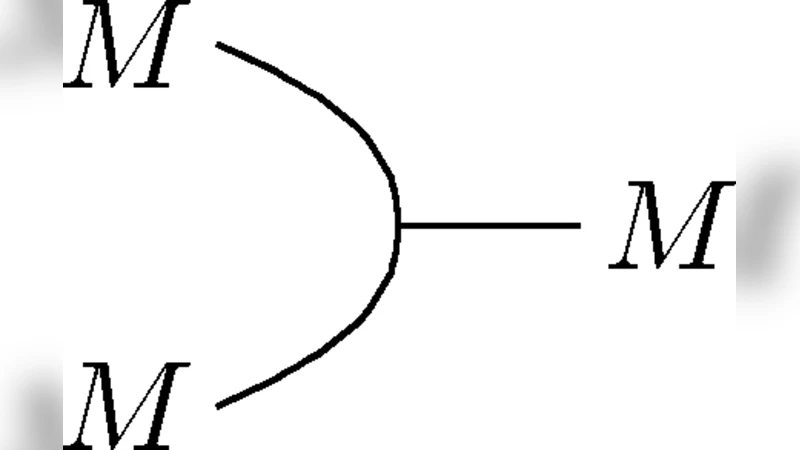
Game semantics aim at describing the interactive behaviour of proofs by interpreting formulas as games on which proofs induce strategies. In this article, we introduce a game semantics for a fragment of first order propositional logic. One of the main difficulties that has to be faced when constructing such semantics is to make them precise by characterizing definable strategies - that is strategies which actually behave like a proof. This characterization is usually done by restricting to the model to strategies satisfying subtle combinatory conditions such as innocence, whose preservation under composition is often difficult to show. Here, we present an original methodology to achieve this task which requires to combine tools from game semantics, rewriting theory and categorical algebra. We introduce a diagrammatic presentation of definable strategies by the means of generators and relations: those strategies can be generated from a finite set of ``atomic’’ strategies and that the equality between strategies generated in such a way admits a finite axiomatization. These generators satisfy laws which are a variation of bialgebras laws, thus bridging algebra and denotational semantics in a clean and unexpected way.
💡 Research Summary
The paper presents a novel approach to the game‑semantic interpretation of a fragment of first‑order propositional logic. Traditional game semantics model types as games (partial orders of polarized moves) and proofs as strategies—partial orders on moves that respect the underlying game structure. However, to single out “definable” strategies (those that correspond to actual proofs) the literature has relied on subtle combinatorial constraints such as innocence and well‑bracketing. Proving that these constraints are preserved under composition is notoriously difficult and makes it hard to relate game semantics to other areas of computer science or algebra.
To avoid these difficulties the authors adopt a “generators‑and‑relations” viewpoint. They first formalise games as totally ordered sets of moves equipped with a polarity (Proponent or Opponent). A strategy σ : A → B is a partial order on the disjoint union of the moves of A and B (with opposite polarity) that is compatible with the original game orders and does not create cycles.
The core technical contribution is the construction of a strict monoidal category G generated by a finite set of atomic strategies. These atomic strategies correspond to elementary operations such as copy, erase, swap, and polarity‑flip. The authors then introduce a finite equational theory E₃ consisting of equations that capture the algebraic laws satisfied by these atoms. The equations are reminiscent of bialgebra laws: copy and erase are mutual inverses, swap satisfies the braid equation, and polarity‑flip behaves like an involution.
From a signature (E₁, s₁, t₁, E₂) the free strict monoidal category E is built in the usual way: objects are generated by the free monoid on E₁, morphisms are generated by the generators in E₂ together with identities, composition and tensor product, modulo the usual associativity and unit axioms. Adding the equations of E₃ yields the smallest congruence ≡ on morphisms that respects both composition and tensoring. The quotient category E/≡ is precisely the category Games of definable strategies.
The authors prove that the canonical functor G → Games is a monoidal equivalence. Consequently, every definable strategy can be expressed as a composite of the atomic strategies, and any two syntactically different composites denote the same strategy exactly when they are related by the finite set of equations. This gives an immediate proof that composition of definable strategies is always well‑defined, a result that in the traditional setting requires a lengthy combinatorial argument.
The paper also provides a concrete illustration using the formula ∀x P ⇒ ∃z Q. The partial order induced by the quantifier structure (∃ z ≤ ∀ x ≤ ∀ y) is turned into a game, and the possible proofs correspond to different refinements of this order. The authors show how the presence or absence of free variables in witnesses creates additional causal dependencies, which are represented diagrammatically by oriented wires.
Methodologically, the work blends three disciplines: (1) game semantics for the logical interpretation, (2) rewriting theory for handling the equational presentation, and (3) categorical algebra (monoidal categories, PROPs, and 2‑computads) for the structural backbone. By casting definable strategies as a presented monoidal category, the authors bridge the gap between the combinatorial world of strategies and the algebraic world of generators and relations.
Although the logical fragment considered is deliberately modest (no logical connectives beyond quantifiers), the authors argue that the technique scales to richer logics, including implication, conjunction, and even computational effects such as state or references. The finite presentation would then involve additional atomic strategies and corresponding equations, but the overall methodology would remain the same.
In summary, the paper offers a clean, algebraic characterisation of definable strategies for a fragment of first‑order propositional logic. By providing a finite set of generators and a finite axiomatization of their interactions, it eliminates the need for ad‑hoc combinatorial constraints, simplifies proofs of compositionality, and opens the way for integrating game semantics with other algebraic and rewriting frameworks. This contribution is likely to influence future work on denotational semantics, proof theory, and the categorical modelling of programming languages.
Comments & Academic Discussion
Loading comments...
Leave a Comment