On the Influence of Selection Operators on Performances in Cellular Genetic Algorithms
In this paper, we study the influence of the selective pressure on the performance of cellular genetic algorithms. Cellular genetic algorithms are genetic algorithms where the population is embedded on a toroidal grid. This structure makes the propag…
Authors: David Simoncini (I3S), Philippe Collard (I3S), Sebastien Verel (I3S)
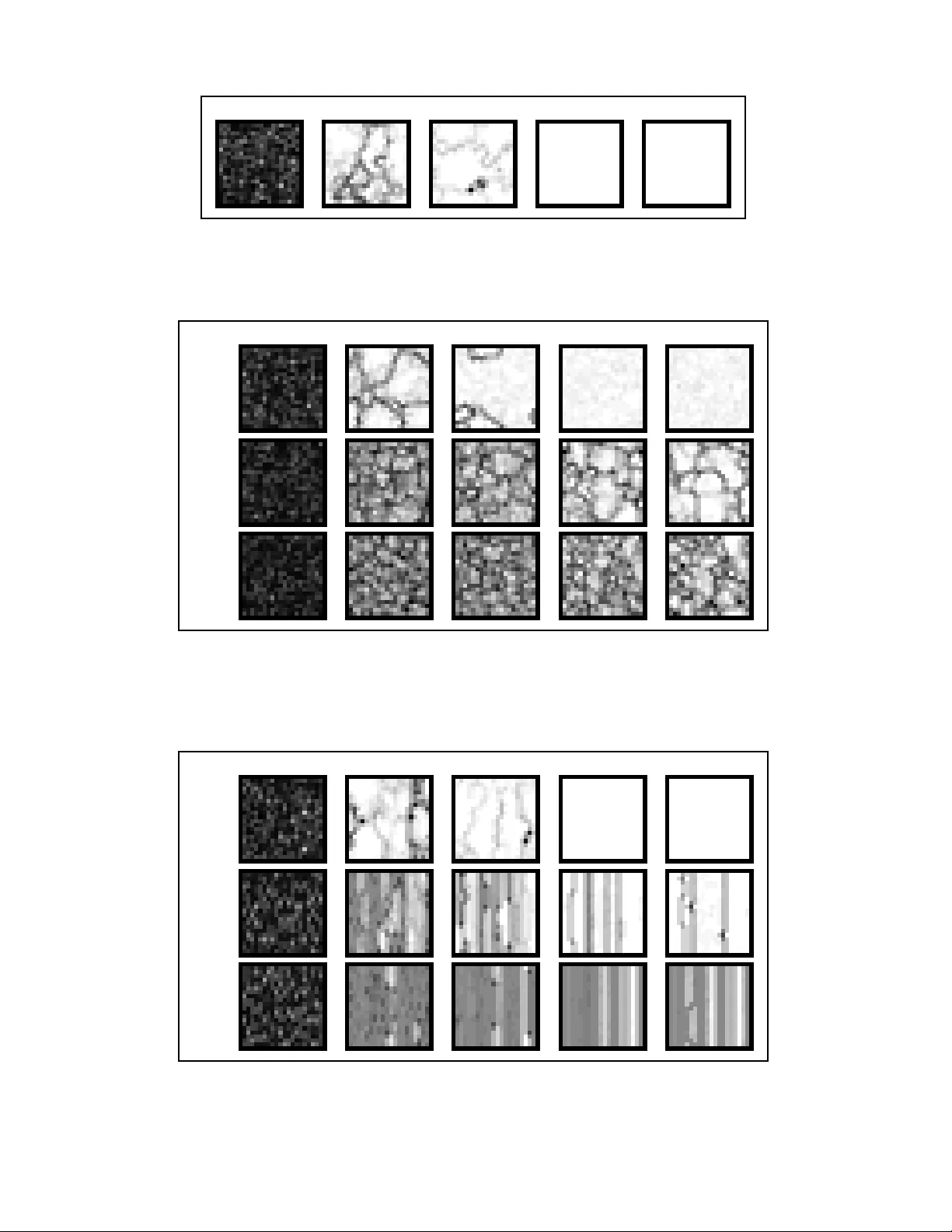
On the influence of selection operators on performances in cellular Genetic Algorithms D. Simoncini, P . Collard, S. V erel, M. Cler gue Abstract — In this paper , we study the influence of the selectiv e pressure on the perform ance of cellular genetic algorithms. Cellular genetic algorithms ar e genetic algorithms where the population is embedded on a toroidal g rid . This structure mak es the propagation of the best so far ind ividual slo w down, and allows to keep in the p opulation poten tially good solutions. W e present two selective pressure r ed ucing strategies in order to slow down ev en more th e best solut ion propag ation. W e experiment these strateg ies on a hard optimization pro b lem, the Quadratic Assignment Problem, and we sh ow that there is a threshold value of the contr ol parameter fo r both which giv es the b est p erf ormance. This opt imal value d oes not find explanation on the selective pressure only , measured eith er by takeove r time or div ersity ev oluti on. Th is stu dy makes us conclu de th at we need other tools than th e sole selectiv e pressure mea su res to explain the perf ormance of cellular genetic algorithms. I N T RO D U C T I O N The selective pressur e can be seen as the ability fo r solutions to su rvive in the population. When th e selecti ve pressure is hig h, only the best s o lutions survive and colonize the populatio n, allowing less time for the algorith m to explore the sear ch space. Thus, the selective pressur e has an impa ct on th e explo ration/exploitation trade-off: W h en it is too lo w , good solutions’ influence on the population is so weak that the algorithm can’t conv erge a nd behave a s a random search in the search space. When it is too stron g, the algorithm converges quickly and as so on a s it is stuc k in a local op timum it won’t b e able to find better solu tions. Cellular Genetic Algorithms (cGA) are a sub class of Ev o- lutionary Algorithms in which th e population is embedded on a bidimen sional toroidal grid. Ea ch cell of the grid co ntains one individual (solu tion) and th e sto chastic op erators are applied within the n eighbor hoods of each ce ll. The existence of such small overlappe d n eighbor hoods g uarantee the prop- agation of solutions throug h t h e grid and enhanc e e xp loration and populatio n diversity [1 3]. Such a k ind o f algorithm s is especially well suited for complex problem s with multiple local optima [6] . T o av oid the a lgorithm to conver ge to ward one loc al optimu m, one should app ly the right selective pressure on the pop ulation and find th e best b alance between exploitation of good solutio ns and exploration of th e search space. Section 1 p resents a state of the art on selective pressure in cGAs and introdu ces two selection o perators. Section 2 com - pares the influenc e of the selection oper ators o n the selective pressure. Section 3 giv es a description of the benchmark used to a nalyze the algor ithms. Section 4 p resents a comparative study of performance of the algorithms. Section 5 is a study on the ev olution of the ge notypic di versity in the pop ulations. Finally in section 6 we summariz e and discuss the results o f the paper . I . C E L L U L A R G E N E T I C A L G O R I T H M S A N D S E L E C T I V E P R E S S U R E Sev eral me thods hav e been pro posed to tune the selecti ve pressure an d deal with the explo ration/exploitation trade-off in c GA. For instance, the size and shape o f the cells neigh- borho ods in whic h the e volutiona ry op erators are a pplied, has some influence. A bigger neighbor hood will induce a stronger selective pr essure on the pop ulation [10 ]. When trying to solve co mplex p roblems, with numerous local optima, one would tr y to slow down th e convergence of the popu lation. That is why we use in our algor ithm a V on Ne umann neighbo rhood which is the sm allest symetric neighbo rhood that allo ws the con vergence of the po pulation. The shap e of th e grid also has an imp act on the selective pressure [1], [3] , [4]: thinner grid s give a weaker selective pressure o n the p opulation . This solu tion’ s weak ness is that there are not en ough grid sh apes for a fixed size of po pulation to a llow an accur ate control of the selective pressure. The selecti ve pressure can also be m onitored by choosing an adeq uate selection operato r . A. Stochastic tournament selection The stochastic to urnamen t selection proposed by Go ldberg is a bina ry tourn ament selection that do esn’t g uarantee the best solution to be selected. The stochastic tournament of rate r chooses two solutio ns from the neigh borho od of a cell and selects the best one with pr obability 1 − r (the worst one with p robability r ). Real parameter r sh ould b e in [0; 1] . Giv en the definition of selecti ve pressure, this selection operator explicitely gives a weaker selectiv e pr essure fo r increasing r values. As r is getting closer to 1 , worse solutions increase their chances to be maintain ed in the populatio n, wh ich means the selectiv e p ressure is getting weaker . B. Anisotr opic selection The Anisotropic selection is a selection metho d in which the neig hbors of a ce ll may h av e different probab ilities to be selected [12] . Th e V on Neum ann neighbo rhood o f a cell C is d efined as the sphere of radius 1 centered at C in manhattan distance. The Anisotro pic selection assigns different p robabilities to b e selected to the cells of the V on Neumann n eighbo rhood accordin g to their position. The probab ility p c to cho ose the center cell C remains fixed at 1 5 . Let u s call p ns the proba bility o f choosing the cells North ( N ) or South ( S ) an d p ew the probab ility of choo sing the cells East ( E ) o r W est ( W ). Let α ∈ [ − 1; 1] be the contro l parameter that will deter mine the probabilities p ns and p ew . This parameter will be called the anisotr opic degr e e . Th e probab ilities p ns and p ew can be describ ed as: p ns = (1 − p c ) 2 (1 + α ) p ew = (1 − p c ) 2 (1 − α ) Thus, when α = − 1 we hav e p ew = 1 − p c and p ns = 0 . When α = 0 , we ha ve p ns = p ew and when α = 1 , we ha ve p ns = 1 − p c and p ew = 0 . In th e following, the p robability p c remains fixed at 1 5 . C N E W S 0.2(1+α) 0.2(1+α) 0.2 0.2(1−α) 0.2(1−α) Fig. 1 V O N N E U M A N N N E I G H B OR H O OD W I T H P RO B A B I L I T IE S T O C H O O S E E A C H N E I G HB O R Figure 1 shows a V on N eumann Neig hborh ood with the probab ilities to select each cell as a fu nction of α . The Anisotrop ic Selection op erator works as follows. For each cell it selects k individuals in its neighbor hood ( k ∈ [1; 5] ). The k individuals pa rticipate to a tourname nt and the winne r replaces the old ind i v idual if it h as a better fitness or with probab ility 0 . 5 if the fitnesses ar e e qual. When α = 0 , the a nisotropic selection is equ i valent to a standard to urnamen t selection and when α = 1 o r α = − 1 the an isotropy is max imal an d we have an uni-dim ensional neighbo rhood with th ree neighbors o nly . In the fo llowing, considerin g the grid sym metry , we will consider α ∈ [0; 1] only: wh en α is in the range [-1;0] makin g a rotation of 90 ◦ of the grid is equivalent to considerin g α in the range [0;1]. I I . T A K E OV E R T I M E A commo n ana lytical approac h to m easure the selective pressure is the computation of the takeover time [9] [14 ]. It is the time need ed fo r the b est solution to colonize th e whole pop ulation whe n the only active ev o lutionary operator is selection [5]. When the takeover time is sho rt, it means that the best solution ’ s pr opagatio n speed in the popula tion is high. So, worse solution s’ life time in the population is short an d th us th e selective pressure is strong. On the oth er hand, when the takeover time is high, it means that the best solution colo nizes slowly the populatio n, giving a long er lifetime to worse solution s. In tha t case, th e selecti ve pressure is low . So the selective pressure in the popu lation is inversely propo rtionnal to the takeover time. In orde r to measure the takeover time, w e place one solution of fitness 1 o n a 20 × 20 grid. All the other solu tions have a nu ll fitn ess. Then we run the pro cess an d measure the time ne eded for the solution of fitness 1 to spread over the whole g rid. W e measur ed av er age takeover times over 100 0 simula- tions for a cGA u sing a stochastic tournam ent selection, and fo r one using the anisotr opic selection. The simulatio ns are made on square gr ids of side 20 . Fig ure 2 sho ws the results of these simulatio ns. The takeover time increases when α incr eases in the case of a cGA using th e an isotropic selection (figure 2(a)). So the selective pressure is inversely propo rtional to α . On figure 2(b) we can see that the takeover time increases as long as the pro bability r to select the worst solution in the stochastic tou rnamen t grows. This mea ns that the selecti ve pressur e in the pop ulation is inversely propo rtional to r f or a cGA u sing a stochastic tou rnament selection. The slope of the curve r epresenting the takeover time as a function of α ( fig. 2(a)) f or values close to 1 is m ore importan t than the one of th e curve represen ting the takeover time as a function o f r (fig. 2(b )). W e can also no tice that in the case of a cGA using stochastic tourn ament selection, the takeov er time is define d when the probab ility to selec t the b est solu tion is 0 . The best solution still can colo nize the p opulation in this case since the two candid ates for the tournam ent are selected b y a ran dom d raw with replacemen t. In the ca se of a cGA using anisotropic selection , the takeover time is not defined for α = 1 .The a nisotropic degree α is a continuo us parameter and the curve representing the takeover time a s a function of α is not bo unded. I I I . T H E Q U A D R AT I C A S S I G N M E N T P RO B L E M This section p resents the Qua dratic Assign ment Problem (QAP) which is kn own to be d ifficult to optimize. The QAP is an important prob lem in theory and practice as well. It was introduced b y K o opman s and Beckmann in 1957 a nd is a model fo r many p ractical pro blems [7]. The QAP can be described as th e problem of assign ing a set of facilities to a set of locations with giv en d istances between the locations and given flows be tween the facilities. The go al is to place the facilities on locations in such a way that the sum of the p roducts between flows and d istances is minimal. Giv en n facilities and n locatio ns, two n × n ma trices D = [ d ij ] and F = [ f kl ] wher e d ij is th e distance between locations i and j and f kl the flow between facilities k and l , the objective function is: Φ = X i X j d p ( i ) p ( j ) f ij where p ( i ) gives the location of fa- cility i in the current permuta tion p . Nugent, V ollman an d Ruml prop osed a set of pr oblem instances of different sizes noted f or their difficulty [2] . The instances they pr oposed are known to have multiple local optima, so they are difficult for a gene tic algorithm . 20 40 60 80 100 120 140 160 180 200 220 0 0.1 0.2 0.3 0.4 0.5 0.6 0.7 0.8 0.9 1 Takeover Time alpha (a) 20 40 60 80 100 120 140 160 0 0.2 0.4 0.6 0.8 1 Takeover Time r (b) Fig. 2 A V E R AG E TA K E OV E R T I M E S F O R A C G A U S I N G A N I S OT RO P I C S EL E C T I O N ( A ) A N D S T O C H A S T I C T O U R N A M E N T S E L E C T I O N ( B ) W e experiment our algorithm on the instances nug30 (3 0 variables), tho4 0 (40 variables) and sko49 (49 variables) from QAPLIB. Set up W e use a po pulation of 400 ind i v iduals plac ed on a square grid ( 20 × 20 ). Ea ch individual is reprensente d by a permutatio n of N where N is the size of an indi vid ual. The algorithm u ses a crossover that preserves the permu tations: • Select two in dividuals p 1 and p 2 as genitors. • Cho ose a ran dom position i . • Find j and k so that p 1 ( i ) = p 2 ( j ) and p 2 ( i ) = p 1 ( k ) . • excha nge positions i and j f rom p 1 and positions i and k f rom p 2 . • r epeat N/ 3 ti m es this pro cedure where N is the size of an individual. This cr ossover is an extended version of the UPMX crossover prop osed in [ 8]. The mutatio n o perator consist in random ly selecting two positions from the individual and T ABLE I A V E R AG E P E R F O R M A N C E A N D T A K E O V E R T I M E S F O R α o A N D r o Anisotropi c select ion Stochast ic tourna m ent selection Instance Perf V al TO Perf V al TO Nug30 6156 . 3 18 . 6 0 . 92 65 . 7 6152.6 18 . 5 0 . 85 79 . 6 Tho40 242788 988 . 4 0 . 94 75 . 3 243115 1177 . 2 0 . 8 70 . 4 Sko49 23537.2 55 . 5 0 . 92 65 . 7 23550 . 3 58 0 . 8 70 . 4 exchanging those positions. Th e crossover rate is 1 an d we do a mutation per individual. W e p erform 200 runs for each tuning o f the two selection o perators. An elitism replacemen t proced ure gu arantees th e individuals to stay on the gr id if they ar e fitter than their offspring. E ach run stops after 20 00 generation s for nug30 and tho40, and after 3 000 generations for sko49 . I V . P E R F O R M A N C E S In this section we presen t per forman ce results on the Quadratic Assignment Prob lem for a c GA u sing stochastic tournam ent and anisotropic selectio n o perators. I n [ 11] the authors show that there is an optimal value of α param eter for the anisotropic selection that gi ves optimal performan ce. W e want to see if the same behaviour is observed with the stochastic tourname nt selectio n and th en to comp are the perfor mance obtained fo r these two operato rs. Figures 3, 4 and 5 show perfor mance obtain ed with the anisotr opic and th e stochastic selectio n operato r on the QAP in stances nug30, th o40 and sko49. W e mea sure the perfor mance by averaging th e best solution found on each run f or each value of an isotropy degree and stochastic rate. When the rate of the stoch astic tourname nt selection and the anisotropic degree are nu ll, the two alg orithms are the same : A standa rd cGA with bin ary tourn ament selection. The selecti ve pressure dro ps when the values of the contr ol parameters of the two algor ithms increase. In bo th cases we see that as the selective pressure drops, perfo rmance increases until a threshold v alue. Once this value is reach ed, the perfo rmance d ecreases. T hese threshold values giv e the best explora tion/exploitation trad e-off for this prob lem. In the f ollowing, th e thr eshold values of pa rameters α and r are den oted α o and r o . T able 1 gi ves α o and r o for each instance of QAP an d their correspo nding takeover times (TO). Best p erform ances are in b old and d ifferences between p erform ances of the two algorith ms ar e statistically sign ificant for e ach instance accordin g to the Stud ent’ s t-test. Differences in takeover times are also statistically sign ificant. The algor ithm using stochastic tournamen t selection is the best for nug3 0, and the one using anisotrop ic selection is the best fo r tho4 0 and sko49. The threshold v alu es stand in the same rang es for all instances: α o ∈ { 0 . 92 , 0 . 94 } and r o ∈ { 0 . 8 , 0 . 85 } . The differences in takeover times indicate that the selecti ve pressure on the popu lation is d ifferent fo r the two metho ds for th e setting s that give th e b est average per forman ce. These differences ca n be explained by the way the alg orithm explores the search space and explo its good solu tions. 6155 6160 6165 6170 6175 6180 0 0.2 0.4 0.6 0.8 1 Cost alpha (a) 6150 6155 6160 6165 6170 6175 6180 0 0.2 0.4 0.6 0.8 1 Cost r (b) Fig. 3 P E R F O R M A N C E O F C G A W I T H A N I S OT RO P I C S E L E C T I O N F O R D I FF E R E N T A N I S OT RO P Y D E G R E E S ( A ) A N D W I T H S TO C H A S T I C T O U R N A M E N T F OR D I FF E R E N T R A T E S ( B ) O N I NS TA N C E N U G 3 0 V . D I V E R S I T Y In this s ectio n, we present statistic m easures on th e evolu- tion of the gen otypic diversity in the po pulation. Three kinds of measu res ar e pe rformed : The glob al average diversity , the vertical/horizo ntal diversity and th e local diversity . The global average div ersity me asure is made on a set of 50 runs of one instance of Q AP for each kind of algorithm. It consists in c omputing the genotypic diversity between each solution s generation after generatio n. g D = ( 1 ♯r♯c ) 2 X r 1 ,r 2 X c 1 ,c 2 d ( x r 1 c 1 , x r 2 c 2 ) where d ( x 1 , x 2 ) is the distance between solutions x 1 and x 2 . The distan ce used is inspired from the Ham ming distance: It is the number of locatio ns that d iffer between two solutions divided by their length n . The r esults for each gener ation are averaged on 50 run s. W e ob tain a curve representin g the evolution of the global 242600 242800 243000 243200 243400 243600 243800 244000 244200 0 0.2 0.4 0.6 0.8 1 Cost alpha (a) 243000 243200 243400 243600 243800 244000 244200 244400 244600 244800 245000 245200 0 0.2 0.4 0.6 0.8 1 Cost r (b) Fig. 4 P E R F O R M A N C E O F C G A W I T H A N I S OT R O P I C S E L E C T I O N F O R D I FF E R E N T A N I S OT RO P Y D EG R E E S ( A ) A N D W I T H S T O C H A S T I C T O U R N A M E N T F O R D I FF E R E N T R A T E S ( B ) O N I N S T A N C E T H O 4 0 div er sity in the po pulation throug h 2000 gener ations. The vertical/horizon tal di versity mea sures th e average di- versity in the colum ns and in the rows of th e grid. The vertical (r esp. horizontal) diversity is the su m of the average distance between all solutions in the same column ( resp. row) divided by the numb er of co lumns (resp. rows): v D = 1 ♯r 1 ♯c 2 X r X c 1 ,c 2 d ( x r c 1 , x r c 2 ) hD = 1 ♯c 1 ♯r 2 X c X r 1 ,r 2 d ( x r 1 c , x r 2 c ) where ♯r and ♯c are the number of rows and co lumns in the grid. This mea sure is only mad e for th e cGA with anisotrop ic selection. As th e stoc hastic to urname nt selection p rovides an isotropic diffusion o f solutions, the difference b etween horizon tal and vertical d iv ersities is null. 23530 23540 23550 23560 23570 23580 23590 23600 23610 0 0.2 0.4 0.6 0.8 1 Cost alpha (a) 23550 23560 23570 23580 23590 23600 23610 23620 23630 0 0.2 0.4 0.6 0.8 1 Cost r (b) Fig. 5 P E R F O R M A N C E O F C G A W I T H A N I S OT RO P I C S E L E C T I O N F O R D I FF E R E N T A N I S OT RO P Y D E G R E E S ( A ) A N D W I T H S TO C H A S T I C T O U R N A M E N T F OR D I FF E R E N T R A T E S ( B ) O N I NS TA N C E S KO 4 9 Figure 6 shows the e volution of globa l di versity for different settings o f the anisotrop ic selection (fig 6(a)) and the stochastic tourn ament selectio n (fig 6(b)). Curves on figure 6(a) rep resent di versity for increasin g values o f α from bottom to top. These curves show that the more α is high, the more the diversity is maintained in the p opulation . Similar results are obtain ed in the case o f the stocha stic tournam ent on figure 6(b). These curves r epresent di versity for increasing values of r fr om bottom to top. The shape of the curves are different for the two meth ods: For the stochastic tou rnament, the curves are c oncave in a first time and then become conv ex. For high values of r , the concave phase is longer and it is n ot finishe d at generatio n 2000 fo r values above 0 . 8 . For the anisotropic selection, the co n vexity does not chang e, the cur ves are conve x. The differences in the evolution of g enotyp ic div ersity are shown on figure 7. This figure present th e e volution of the d i- versity for the thr eshold values of the two algorithms: α o and 0 0.1 0.2 0.3 0.4 0.5 0.6 0.7 0.8 0.9 1 0 200 400 600 800 1000 1200 1400 1600 1800 2000 Diversity Generations 0 0.8 0.86 0.92 0.96 1 (a) 0 0.1 0.2 0.3 0.4 0.5 0.6 0.7 0.8 0.9 1 0 200 400 600 800 1000 1200 1400 1600 1800 2000 Diversity Generations 0 0.2 0.5 0.7 0.8 0.85 1 (b) Fig. 6 E VO L U T I O N O F G L O B A L D I V E R S I T Y F O R A C G A U S I N G A N I S OT RO P I C S EL E C T I O N ( A ) A N D S T O C H A S T I C T O U R NA M E N T S E L E T I O N ( B ) O N I N S TA N C E N U G 3 0 r o . W e can see that th e d i versity is higher fo r the a lgorithm using the stochastic tournam ent selection. Nevertheless, s in ce the c urve of the stochastic tournamen t is concave and the curve o f the anisotr opic selection convex, the difference of div er sity starts to decrease aro und gen eration 1 000 an d at generation 200 0 the algorithm using anisotropic selection has preserved mor e di versity . On figure 8, the horizon tal di versity is plotted as a function of the vertical d i versity for different settings of anisotropic selection. The straig ht line is the cu rve obtained for α = 0 and α is increasing on curves from the left to the r ight. As α increases, th e algorithm fav ors the pro pagation of so lutions in the columns of the grid and th e vertical div ersity decr eases quicker . On th e o ther hand the horizon tal div ersity d ecreases slower , and is constant fo r the limit case α = 1 . In th e latter case, there are no interactions between the columns of the grid and the algorithm behave as se veral independ ant algorithm s executing in parallel. These alg orithms run on grids of width 1 and with 3 so lutions in the “ vertical” 0.55 0.6 0.65 0.7 0.75 0.8 0.85 0.9 0.95 1 0 200 400 600 800 1000 1200 1400 1600 1800 2000 Diversity Generations anisotropic stochastic Fig. 7 E VO L U T I O N O F G L O B A L D I V E R S I T Y F O R α o A N D r o O N I N S T A N C E N U G 3 0 0 0.1 0.2 0.3 0.4 0.5 0.6 0.7 0.8 0.9 1 0 0.1 0.2 0.3 0.4 0.5 0.6 0.7 0.8 0.9 1 Horizontal diversity Vertical diversity 0 0.4 0.8 0.86 0.92 0.96 1 Fig. 8 H O R I Z O N T A L D I V E R S I T Y A S A F U N C T I O N O F V E RT I C A L DI V E R S I T Y F O R D I FF E R E N T S E T T I N G S O F A C G A U S I N G A N I S O T RO P I C S E L E C T I O N O N I N S TA N C E N U G 3 0 neighbo rhood s. The local di versity measure is compu ted on one sing le run f or each kind of algo rithm. It is th e g enotypic diversity observed in th e neighb orhoo d of each cell of the grid. It is repre sented as “snap shots” of the popu lation, wher e a dark point repre sents a high degree of div er sity in the neighbo rhood , and a clear point repre sents a low degree of div er sity in the neighb orhoo d. Figure 9 represents the local div er sity along gener ations for a cGA with standard bin ary tournament selection. W e can see on snapshots of g eneration s 3 00 and 50 0 the formation of circles. Each circle c ontains co pies o f g ood solu tions fou nd locally . The frontier between the areas fr om which g ood solutions c olonize the grid a re the only sites on the grid where the cro ssover oper ator still can h av e some effect. At generation 1000 the genotyp ic diversity on the grid is nu ll , the population has been colon ized by on e solutio n, and perfor mance will no t improve anymore. Figure 1 0 r epresents the local diversity along generation s for a cGA with stochastic tourn ament selection. The prob- ability of selectin g the best participan t to th e tournam ent is decreasing from top to bottom. Th e first thing we notice is that the pro pagation m ode of good solution s is the same as for the cGA using a standard binary tourn ament selection. The only difference is th e speed of pr opagation of good solutions monitore d by the r parameter . As long as we giv e less ch ances to the best solution in the neigh borho od to be selected, it will take more tim e b efore the algo rithm conv erges. Th e areas where crossovers can h elp to explore the search sp ace and to imp rove p erforman ce are bigg er when r in creases. The cr ossover ope rator d oes not hav e any effect in the white zones of the g rid since ther e is no more gen otypic diversity in such areas. For r = 1 , we see that at ge neration 1500 the div er sity is still very high and the a lgorithm does no t exploit go od solutio ns be cause the selecti ve p ressure o n the popu lation is too low . Figure 1 1 r epresents the local diversity along generation s for a cGA with anisotropic selection . V alues of α increase from top to b ottom. By monitoring the anisotropy degree, we can influen ce on the dynam ics o f propag ation of goo d solutions. For low values of α , goo d solutions ro ughly propag ate in circles as for a cGA using binary to urnamen t selection. When α r eaches values clo se to 1 , the goo d solutions ten d to colo nize the c olumns o f th e grid. The div er sity is conser ved be tween the columns, which indicate that the algorith m con verge toward dif fer ent solutions in each columns. Thus, the anisotrop ic selection fa vors th e fo rmation of subp opulation s in th e column s of the grid [1 1]. Crossovers between su bpopu lations then allow the algorithm to explore the search space , as long as the p robability of selecting participants from different columns for the tournam ent is not too lo w (i.e. α is not too high). When α is too high, the selecti ve p ressure on the p opulation is too low and negati vely affects performan ce. V I . D I S C U S S I O N In this section we summ arize and discuss the results o n takeover time, perfor mance an d g enotypic diversity a nd we compare th e cGAs using anisotro pic selection an d stochastic tournam ent selection . T wo cGAs using different selection operator s have been tested o n instances of QAP . The two selection operators allow to con trol the selecti ve pressure on the popula tion. The analysis of takeover time and g enotypic div er sity show the influen ce o f the two operator s on the selecti ve p ressure. When lo oking at the p erforman ce on QAP , we can see that on each in stance and f or both methods, the per forman ce in - creases as the selectiv e pressure drop s down until a threshold value of the co ntrol parameter . After this value, the perfo r- mance d ecreases as the selective p ressure co ntinue to drop down. The threshold values of the co ntrol p arameter stand in the same ra nge on all instance s f or both of the metho ds. Nev er theless, we no tice from table 1 that the takeover times are not similar for α o and r o . Consequently , the selecti ve pressure indu ced o n the population is different fo r the two algorithm s. T he ob servations on fig ure 7 are in adeq uation with this: The algorithm with stochastic tournamen t preserves more g enotypic di versity for the threshold value than th e one with anisotropic selection . T he genotypic diversity mea sures were made on instance nu g30 for which the cGA with stochastic tournam ent selection obtains the best perfo rmance. Howe ver , resu lts o n di versity p ut in evidence p roperties of the selection operato rs wh ich are indepen dant from the instance tested. The selective pressure is related to the explo- ration/exploitation trade-off. W e conclud e f rom th e results p resented in table 1 and figu re 6 that study ing the exploration/explo itation trade-o ff is insufficient to explain perfor mance of ce llular gen etic algo rithms. In cGAs, the grid topo logy structur es the search dynam ic. 1 300 500 1000 1500 Fig. 9 L OC A L D I V E R S I T Y I N T H E P O P U LAT I O N A L O N G G E N E R ATI O N S ( L E F T T O R I G H T ) F O R A C G A W I T H S TA N DA R D T O U R N A M E N T S E L E C T I O N 1 300 500 1000 1500 0 . 3 0 . 85 1 Fig. 10 L OC A L D I V E R S I T Y I N T H E P O P U LAT I O N A L O N G G E N E R ATI O N S ( L E F T T O R I G H T ) F O R I N C R E A S I N G r VAL U E S O F S TO C H A S T I C T O U R N A M E N T ( T OP T O B O T T O M ) 1 200 500 1000 1500 0 . 4 0 . 92 0 . 98 Fig. 11 L OC A L D I V E R S I T Y I N T H E P OP U L A T I O N A L O N G G E N E R ATI O N S ( L E F T T O R I G H T ) F O R I N C R E A S I N G α ( T O P T O B O T T O M ) The overlapped neighborh oods allo w to contro l the diffu- sion of p henoty pic an d gen otypic informa tions thr ough the populatio n. Figures 10 and 1 1 show that the algor ithm with stochastic tournam ent or anisotrop ic selection explo it differently th e structure of th e grid. When u sing the an isotropic selec- tion, the algorith m can fa vor the prop agation of so lutions vertically . This stru cturation cr eates su bpopu lations in the columns of the grid, and solutions can occasionally share informa tion with adjacent subpo pulations. On th e o ther side, the stochastic tourn ament selection provides an isotropic propag ation of solution s. The algorithm ca n control the speed of the p ropagatio n by decreasing the p robab ility to select the best p articipant to the tour nament as gen itor . The snapshots and the fig ures 6 and 7 show that th e genoty pic diversity in the po pulation is influenced by the exploitation of the grid structure. The s elec tion operator plays an important role in the explo- ration of the search spac e and in the exploitation of solutions. The two operators we compare allow to c ontrol the selectiv e pressure. For r o and α o the selec ti ve pressure indu ced on the p opulation gives the b est ratio between explo ration and exploitation. But this ratio is dependant of the explo ration and exploitation dy namics of the algorithm. Thu s, it is depend ant of the selection operator used. T he measur es o n genotyp ic diversity and the snapshots show these differences whether the algorithm uses the stoch astic tourn ament or th e anisotropic selection . T hus, the selective pressure n eeded to find the best explo ration/exploitatio n trade- off is depend ant of the transmission mode of in formatio n thro ugh the grid . Furthermo re, the existence of a thr eshold value for th e parameter which c ontrols the selective pressure do not find explanation in th e statistic measur es o n genoty pic diversity and takeover time. A study of the relations between topologic, phen otypic and geno typic d istances should g i ve a b etter explanation of perform ance and as a co nsequence sh ould explain the takeover time and di versity during the search process. In order to exp lain perfor mance of cGAs, we need to study the transmission m ode of the inf ormation s throug h th e grid since the ratio between exploration and exploitation seems to rely on it. C O N C L U S I O N A N D P E R S P E C T I V E S This paper pre sents a compar ativ e study of two selection operator s, the anisotr opic selection and th e stoch astic tour- nament selection , that allow a cellular Genetic Alg orithm to contro l the selective pressur e on the pop ulation. A study on th e in fluence of the selection oper ators on the selective pressure is made by measuring the takeover time an d the genotyp ic div er sity . W e analyse the av era ge perfor mance obtained o n three instances of the well-known Quadr atic Assignment Prob lem. A thre shold value f or the parameters of b oth o f the selection operators that giv es optimal p er- forman ce has been put in evidence. Th ese th reshold values giv e the a dequate selecti ve pressure o n the population for the QAP . Howe ver, the selective pressure is d ifferent f or the two method s. A study on the gen otypic diversity shows that the dynamic of diffusion of inform ations th rough the grid is different when using the stochastic to urnamen t or the an isotropic selection ope rator . The anisotrop ic selection fa vors the formation o f subp opulation s in the columns o f the grid, whereas the stochastic tournamen t selection slows down the propagation speed of the good solutions. T he selection operator have some influence on the dynam ic of transmission of the infor mation throug h the g rid and the ratio between exploration and exploitation is n ot su fficient to explain the perfor mance of a cGA. Nev er theless, we show tha t even if it is different for th e anisotropic selection an d the stochastic tournam ent selection, the selective pressur e h as some influe nce on per formanc es. Further works will analy ze the dyn amic of diffusion of the informa tion through th e grid and explain the existence of a thresh old value for th e two cGAs by stu dying statistic measures o n th e re lations between topolo gic, genoty pic and pheno typic distances. R E F E R E N C E S [1] E. Alba an d J. M. Troya . Cellula r e volutiona ry algorithms: Evalua ting the influence of ratio. In PPSN , pages 29–38, 2000. [2] J. R. C.E . Nugent, T .E. V ollman. An experimenta l comparison of techni ques for the assignme nt of technique s to lo cations. Operati ons Resear ch , 16:150–173, 1968. [3] M. Giacobini, E. Alba, A. T ettamanzi, and M. T omassini. Model ing select ion intensity for toroidal cellular ev olutionary algo rithms. In GECCO , pages 3–11, 2004. [4] M. Giaco bini, A. T ettama nzi, and M. T omassini. Modelli ng sele ction intensi ty for linear cellul ar ev olutionary algorithms. In P . L. et al., editor , A rtificia l Evolution, Si xth Internati onal Confer ence, Evolutio n Artificiel le, EA 2003 , Lecture Notes in Computer Scienc e, pages 345– 356, Marseille , France , Octobe r 2003. Springe r . [5] D. E. Goldber g and K. Deb. A comparati ve analysis of selection schemes used in genet ic algo rithms. In FOGA , pages 69 –93, 19 90. [6] K. A. D. Jong and J. Sarma. On decentrali zing selection algo rithms. In ICGA , pages 17–23, 1995. [7] T . Ko opmans and M. Beckmann. Assign ment problems and the locat ion of economic acti vities. Econometrica , 25(1):53–7 6, 1957. [8] V . V . Migkikh, A. P . T opchy , V . M. Kureichi k, and A. Y . T ete lbaum. Combined geneti c and lo cal s earch al gorithm for the quadratic assign- ment problem. [9] G. Rudolph. On takeo ver times in s patia lly structured population s: Array and ring. P r oceedings of the SecondAsia-P acific Confere nce on Genetic Algorithms and Applicat ions (AP GA ’00) , pages 144–151, 2000. [10] J. Sa rma and K. A. De Jong. An analysi s of the ef fects of nei ghborhood size and shape on loc al selecti on algorithms. In PPSN , pages 236–244, 1996. [11] D. Simoncini, P . Collard, S. V erel, and M. Cle rgue. From cells to islands: An unified model of cellul ar parallel genet ic algorithms. In S. E. Y acoubi, B. Chopard, and S. Bandini , editors, ACRI 2006, 7th Internationa l Confere nce , pages 248–257, Perpignan, France, sept 2006. Lecture Notes in Computer Scienc e 4173. [12] D. Simonci ni, S. V erel, P . Collard, and M. Clergue. Anisotropic select ion in cel lular genetic algori thms. I n M. K. et al., ed itor , Genetic and Evolutio nary Computation – GE CCO-2006 , pages 559– 566, Seatle, 8-12 July 2006. A CM. [13] P . Spiessens and B. Ma nderick. A massiv ely parallel genetic algorithm: Implementa tion and first analysi s. In IC GA , page s 279–287 , 1991. [14] J. Spra ve. A unified model of non-panmic tic populatio n structure s in e volutiona ry algorithms. Proc eedings of the congr ess on Evolutionary computat ion , 2:1384–13 91, 1999.
Original Paper
Loading high-quality paper...
Comments & Academic Discussion
Loading comments...
Leave a Comment