Local Polynomial Estimation for Sensitivity Analysis on Models With Correlated Inputs
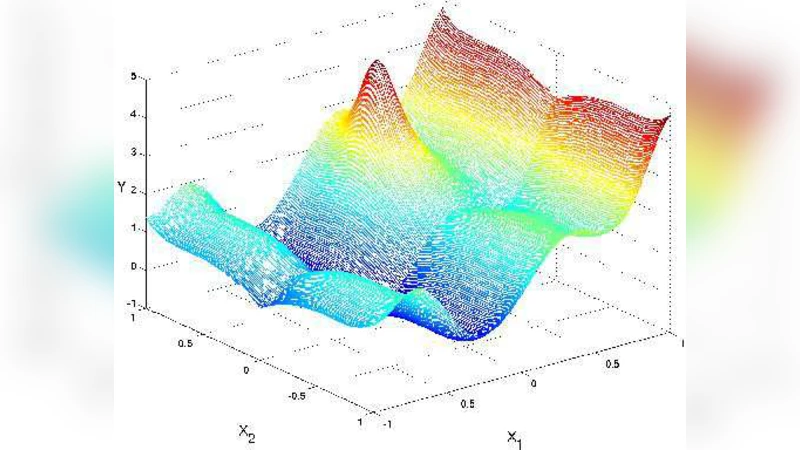
Sensitivity indices when the inputs of a model are not independent are estimated by local polynomial techniques. Two original estimators based on local polynomial smoothers are proposed. Both have good theoretical properties which are exhibited and also illustrated through analytical examples. They are used to carry out a sensitivity analysis on a real case of a kinetic model with correlated parameters.
💡 Research Summary
The paper addresses a fundamental problem in global sensitivity analysis: how to estimate variance‑based sensitivity indices when the input variables are statistically dependent. Classical variance‑decomposition methods such as Sobol’ indices or FAST assume independent inputs; when this assumption is violated, the decomposition no longer holds and the resulting indices can be misleading. Existing remedies—Ratto et al.’s replicated Latin hypercube sampling, Jacques et al.’s multidimensional block‑based indices, and Oakley & O’Hagan’s Bayesian kriging approach—each suffer from serious drawbacks. Ratto’s method requires a prohibitive number of model evaluations, Jacques’ block construction becomes impossible when many variables are correlated, and Oakley & O’Hagan need analytical conditional densities and high‑dimensional integrals that are computationally intractable in practice.
The authors propose a new framework based on local polynomial regression (LPR) to estimate the conditional moments (E(Y\mid X_i)) and (\operatorname{Var}(Y\mid X_i)) directly from a single input‑output sample ({(X_j,Y_j)}_{j=1}^n). By fitting a low‑order polynomial (linear or quadratic) within a kernel‑weighted neighbourhood of each observation, the method yields non‑parametric, bias‑reduced estimates of the conditional expectation and variance without requiring any knowledge of the joint or conditional densities of the inputs. Two estimators of the first‑order Sobol’ index are introduced:
- Linear‑LPR estimator: Uses a local linear fit for the conditional mean and a separate local linear fit for the conditional variance. The index is computed as \
Comments & Academic Discussion
Loading comments...
Leave a Comment