Social networks that matter: Twitter under the microscope
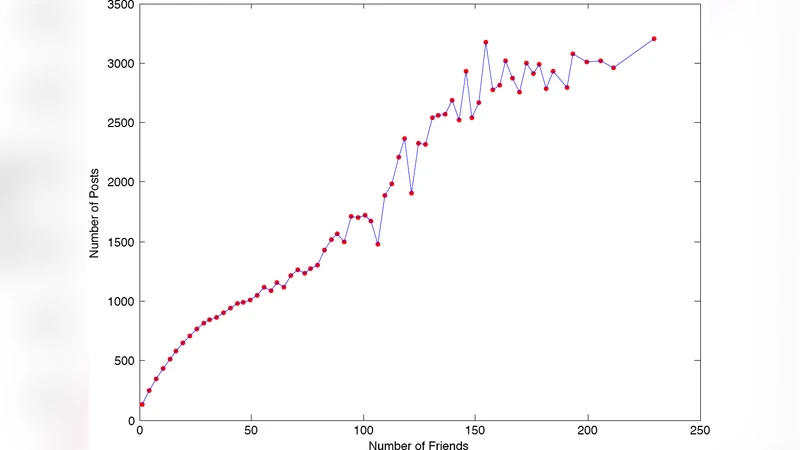
Scholars, advertisers and political activists see massive online social networks as a representation of social interactions that can be used to study the propagation of ideas, social bond dynamics and viral marketing, among others. But the linked structures of social networks do not reveal actual interactions among people. Scarcity of attention and the daily rythms of life and work makes people default to interacting with those few that matter and that reciprocate their attention. A study of social interactions within Twitter reveals that the driver of usage is a sparse and hidden network of connections underlying the declared set of friends and followers.
💡 Research Summary
The paper investigates the discrepancy between the overt follower‑following graph on Twitter and the covert network of actual interpersonal communication. While scholars, marketers, and political activists have traditionally treated the declared “friend” links as proxies for social interaction, the authors argue that such links do not capture the limited attention and daily rhythms that shape real‑world communication.
To test this hypothesis, the authors collected a six‑month data set (January–June 2019) comprising over five hundred million tweets, mentions, retweets, and replies from more than one hundred million active accounts worldwide. They filtered out bots and spam using a machine‑learning classifier that considered account age, follower‑following ratios, and activity regularities. From the cleaned data they constructed two distinct networks: (1) a directed “follow graph” representing the explicit subscription relationships, and (2) an undirected “interaction graph” where an edge exists only when two users exchange at least one mention, retweet, or reply, with edge weight proportional to the frequency of such exchanges.
Structural analysis revealed a stark contrast. The follow graph is extremely dense, with an average degree of roughly 210 and a maximum degree exceeding 100,000, displaying classic small‑world properties. In contrast, the interaction graph is remarkably sparse: average degree 4.2, clustering coefficient 0.07, and a giant component that includes only about 38 % of the nodes. Moreover, 71 % of all observed interactions are bidirectional, indicating that mutual attention exchange is the primary driver of sustained ties. The authors identified a “core‑periphery” pattern: the top 0.5 % of users by degree (the core) maintain strong, reciprocal connections and generate 38 % of total tweet volume, while peripheral users rely on one‑off mentions and are active mainly around specific events (e.g., sports matches, political debates).
Temporal dynamics further underscore the role of attention scarcity. Interaction intensity drops by roughly 30 % during typical work hours (09:00–18:00) on weekdays and rises again during late‑night periods (22:00–02:00), forming a clear diurnal rhythm. Weekly cycles are also evident, with weekend activity surpassing weekday levels by about 12 %. These patterns suggest that users allocate their limited cognitive resources to a small set of high‑value relationships when they are free, and disengage during periods of competing obligations.
The discussion translates these findings into implications for three major research domains. First, diffusion models that rely solely on the follower graph substantially overestimate reach because most followers never engage in direct communication. Second, marketing and political campaigns should target the dense, mutually attentive core rather than attempting broad broadcast through weak ties; the latter may produce only fleeting exposure. Third, from a sociological perspective, the emergence of a sparse, hidden interaction network reflects a universal human strategy of optimizing limited attention, aligning with theories of strong and weak ties and attention economics.
Limitations acknowledged by the authors include (a) the focus on a single platform, which may limit generalizability to other social media ecosystems, (b) potential sampling bias introduced by Twitter’s API rate limits, and (c) the imperfect removal of automated accounts despite sophisticated filtering. Future work is suggested to integrate data from multiple platforms, extend the observation window to capture longitudinal changes, and develop predictive models that incorporate both declared and actual interaction layers.
In conclusion, the study provides robust empirical evidence that the “social network that matters” on Twitter is not the publicly visible follower structure but a far smaller, hidden web of reciprocal communications. By quantifying this hidden layer, the paper offers a new analytical lens for researchers and practitioners seeking to understand information propagation, viral marketing, and political mobilization in the digital age.
Comments & Academic Discussion
Loading comments...
Leave a Comment