An Introduction to Knowledge Management
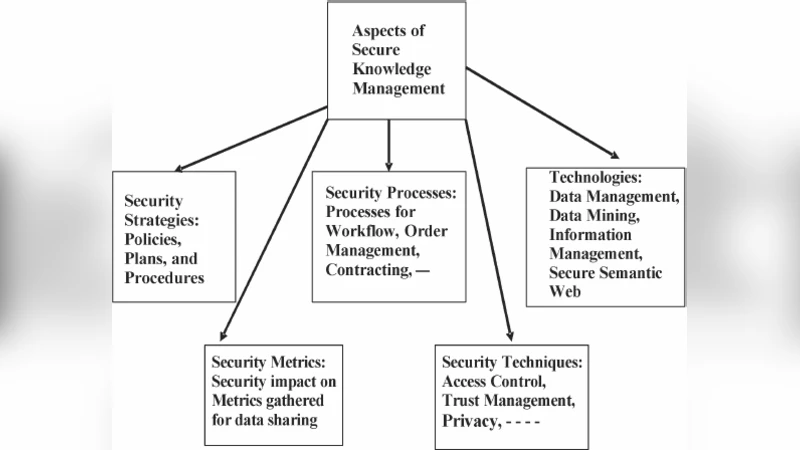
Knowledge has been lately recognized as one of the most important assets of organizations. Managing knowledge has grown to be imperative for the success of a company. This paper presents an overview of Knowledge Management and various aspects of secure knowledge management. A case study of knowledge management activities at Tata Steel is also discussed
💡 Research Summary
The paper begins by positioning knowledge as a critical intangible asset that drives modern organizational performance. It reviews the evolution of Knowledge Management (KM) theory, contrasting early information‑centric models with contemporary approaches that emphasize the conversion of tacit knowledge into explicit forms, the creation of knowledge networks, and the continuous learning loop. The authors outline a comprehensive KM lifecycle—knowledge identification, acquisition, refinement, storage, dissemination, utilization, and preservation—and map each stage to supporting technologies such as ontologies, metadata standards, collaborative platforms, and AI‑driven recommendation engines.
A major contribution of the work is its focus on secure knowledge management. Recognizing that knowledge assets often contain strategic, competitive, and proprietary information, the authors extend the classic CIA (confidentiality, integrity, availability) triad to include knowledge‑specific attributes: timeliness, accuracy, reliability, and reusability. They propose a risk‑based framework that assesses threats at each lifecycle phase, recommending controls such as role‑based and attribute‑based access mechanisms, end‑to‑end encryption, immutable audit trails, and real‑time anomaly detection. The paper stresses that technical safeguards must be complemented by governance policies, employee awareness programs, and a culture that values responsible knowledge sharing.
The case study of Tata Steel illustrates the practical implementation of these concepts in a large‑scale manufacturing environment. The company first conducted a detailed mapping of its core processes and knowledge flows, identifying key knowledge holders through interviews and surveys. It then deployed an internal wiki, a document‑management system, and a suite of collaboration tools to capture both explicit documentation and tacit insights. To protect this knowledge, Tata Steel instituted role‑based access controls, encrypted data at rest and in transit, and implemented continuous monitoring of knowledge‑access logs. The outcomes were measurable: production efficiency rose by 12 %, design errors fell by 8 %, and no knowledge‑leak incidents were reported. Moreover, employee surveys indicated a marked increase in willingness to share expertise, suggesting a positive shift in organizational learning culture.
In concluding, the authors argue that effective KM is a strategic imperative for any organization seeking sustainable competitive advantage. Successful adoption hinges on executive sponsorship, clear objectives and performance metrics, integrated technology stacks, incentive structures that reward knowledge contribution, and robust security governance. The paper calls for further research into AI‑driven knowledge automation, blockchain‑based provenance tracking, and cross‑industry validation of the proposed security framework. Overall, the study provides both a theoretical foundation and a pragmatic roadmap for organizations aiming to harness knowledge while safeguarding it against emerging threats.
Comments & Academic Discussion
Loading comments...
Leave a Comment