A Raman spectroscopic study of zircons on micro-scale and Its significance in explaining the origin of zircons
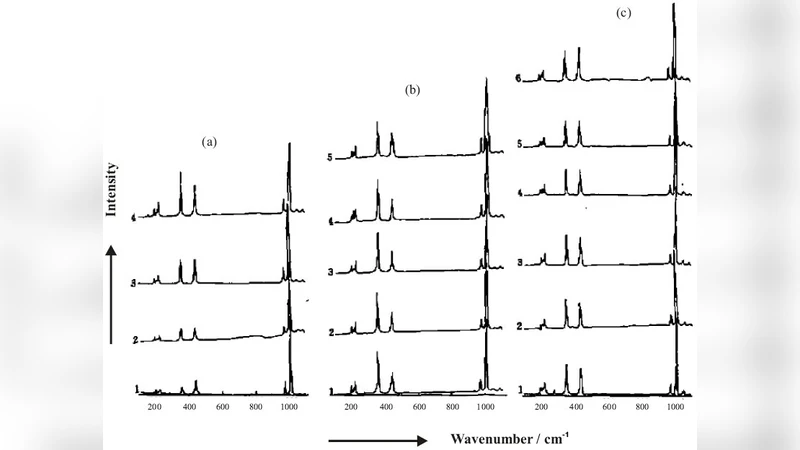
The magmatic and metamorphic zircons were investigated with Raman spectrum microprobe analysis. We found notable differences between these two kinds of zircons exhibited by the variation trend of Raman peak intensity from core to rim of a crystal. In magmatic zircons, the intensity and the ratio H/W of Raman spectrum peaks gradually decrease from core to rim of a crystal, which is produced by an increase in metamictization degree and suggests an increase in U and Th concentrations from core to rim. In metamorphic zircons, there are two kinds of crystals according to their Raman spectra: the first group of zircons exhibits a variation trend opposite to those of magmatic zircons, tending to increase in the Raman peak intensity and H/W value from core to rim of a crystal, which is produced by a decrease in metamictization degree and indicates a decrease of U and Th concentrations from core to rim of a crystal. The second group of zircons exhibits no change in Raman peak intensity and H/W value through a crystal. The data of infrared and Raman spectra of these crystals show that they are well crystallized and have no lattice destruction induced by metamictization, and are thought to crystallize in high temperature stages of metamorphism. During these stages, the U and Th ions have been removed by metamorphic fluids from the parent rocks of these zircons. The other difference between magmatic and metamorphic zircons is the background level of their Raman spectra, which is high and sloped in magmatic zircons, but low and horizontal in metamorphic zircons. The differences between magmatic and metamorphic zircons can be used to identify the genesis of zircons and understand the origin and evolution history of their parent rocks.
💡 Research Summary
The authors employed a Raman micro‑probe to investigate the internal compositional and structural variations of individual zircon crystals of magmatic and metamorphic origin. By recording spectra from the core and rim of each crystal, they quantified two key parameters: the intensity of the characteristic Raman bands (mainly at ~100, 355 and 415 cm⁻¹) and the height‑to‑width ratio (H/W) of these bands. The H/W ratio is a well‑established proxy for the degree of metamictization, i.e., lattice damage caused by radioactive decay of uranium and thorium.
In magmatic zircons, both the Raman band intensity and H/W systematically decline from core to rim. This trend indicates an increasing metamictization toward the rim, which the authors interpret as a rise in U and Th concentrations in the outer portions of the crystal. The implication is that during magmatic cooling, U‑ and Th‑rich melt components are progressively concentrated in the later‑forming rim material.
Metamorphic zircons separate into two distinct groups. The first group shows the opposite pattern: intensity and H/W increase outward, signifying decreasing metamictization and a corresponding drop in U and Th content from core to rim. This is consistent with high‑temperature metamorphism in the presence of fluid phases that leach U and Th from the host rock, allowing relatively pristine zircon to crystallize at the rim. The second group exhibits essentially constant intensity and H/W across the whole crystal, suggesting that metamictization was already minimal at the time of growth, likely because U and Th had been largely removed before zircon nucleation.
Complementary infrared (IR) spectroscopy confirms that the metamorphic zircons possess well‑ordered lattices with low background absorption, whereas magmatic zircons display higher, sloping Raman backgrounds. The elevated background in magmatic samples may reflect a higher proportion of amorphous or organic contaminants, but the authors argue it primarily records the more radiogenic, defect‑rich nature of these crystals.
The combined Raman‑IR dataset demonstrates that Raman spectroscopy can serve as a non‑destructive, spatially resolved tool for distinguishing zircon provenance. By mapping the core‑to‑rim variation of Raman peak intensity and H/W, one can infer the original U‑Th distribution and the extent of radiation‑induced damage, which are crucial for interpreting U‑Pb ages and reconstructing the thermal‑fluid history of the host rock.
Furthermore, the study supports the model that high‑temperature metamorphic conditions promote the removal of U and Th by metamorphic fluids, leading to the growth of well‑crystallized, low‑metamict zircons. This contrasts with magmatic environments where U and Th are incorporated into the crystal lattice throughout growth, resulting in progressively higher metamictization toward the rim.
In summary, the paper establishes Raman spectral profiling as an effective method for (1) discriminating magmatic versus metamorphic zircon origins, (2) assessing internal U‑Th zoning and metamictization, and (3) providing insights into the physicochemical evolution of the parent rocks. The authors suggest that integrating Raman data with other micro‑analytical techniques such as LA‑ICP‑MS, EDS, and high‑resolution IR spectroscopy will further refine zircon‑based geochronology and petrogenetic interpretations.
Comments & Academic Discussion
Loading comments...
Leave a Comment