Cohomology theory in 2-categories
Recently, symmetric categorical groups are used for the study of the Brauer groups of symmetric monoidal categories. As a part of these efforts, some algebraic structures of the 2-category of symmetric categorical groups $\mathrm{SCG}$ are being inve…
Authors: Hiroyuki Nakaoka
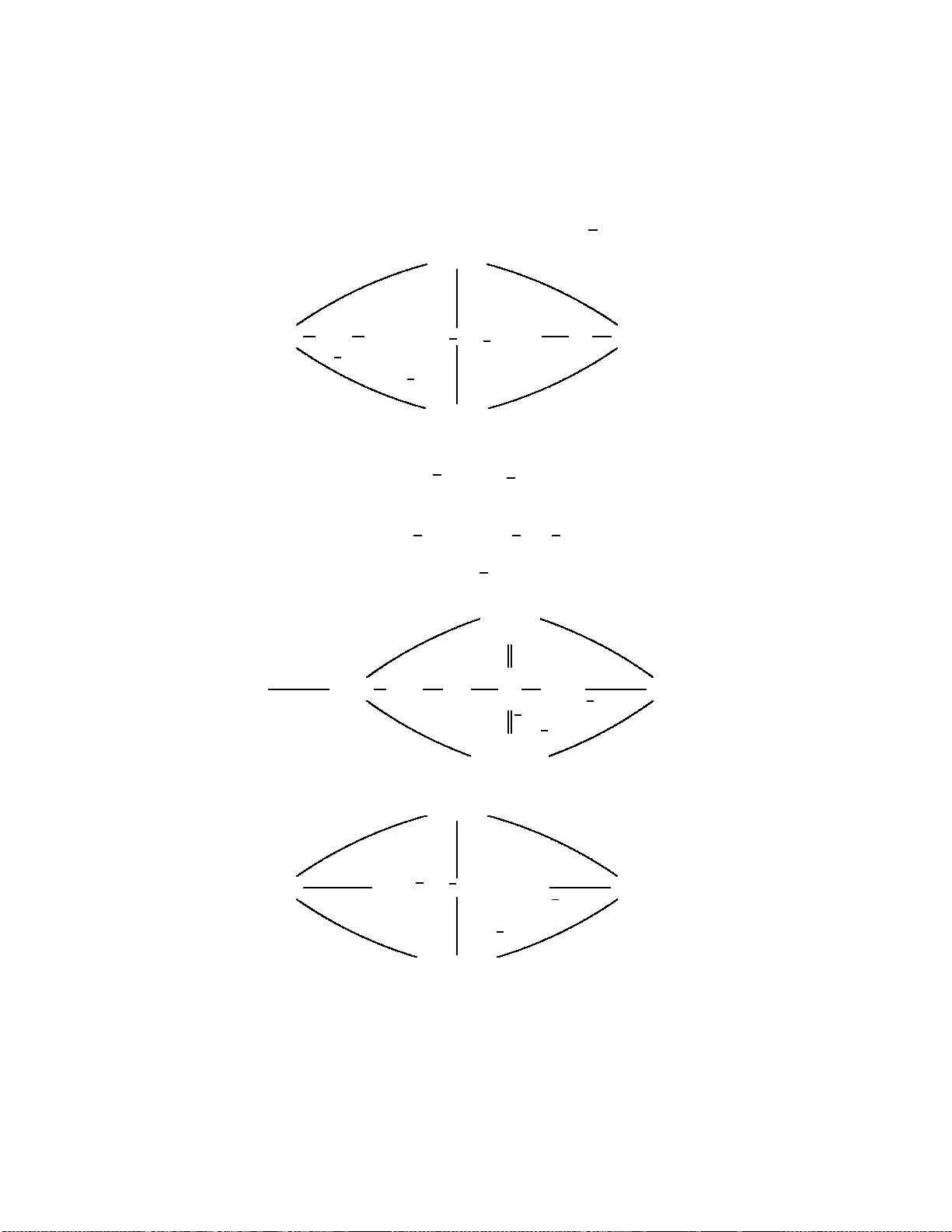
COHOMOLOGY THEOR Y IN 2-CA T EGORIES HIRO YUKI NAKAOKA Abstract. Recen t ly , symmetric categorical groups are used for the study of the Brauer groups of symmetric monoidal ca tegories. As a part o f the se effo rts, some algebraic structures of the 2-category of sym- metric categorical groups SCG are being i n ve stigated. In this pap er, w e consider a 2-categorical analogue of an ab elian category , i n suc h a wa y that i t cont ains SCG as an example. As a main theorem, we construct a long cohomology 2-exact sequence from an y extension of complexes in suc h a 2-category . Our axiomatic and self -dual definition wi l l enable us to si mplify the pro ofs, by analogy wi th abelian categories. 1. Introduction In 1970s , B. Pareigis star ted his study on the B r auer groups of symmetric monoidal categories in [6]. Ar ound 2000, the notion of symmetric categorical groups are intro duced to this study b y E. M. Vitale in [9] (see also [8]). By definition, a s ymmetric categ orical group is a ca tegorificatio n of an a belia n group, and in this sense the 2-ca tegory o f sy mmetric categorical groups SCG can b e rega rded as a 2- dimens ional analog ue of the categor y Ab of a belia n groups. As such, SCG and its v ariants (e.g . 2- category G -SMo d of symmetric categoric al g r oups with G -action where G is a fixed c ategorica l group) admit a 2-dimensional analogue of the homological algebra in Ab. F or example, E. M. Vitale co nstructed for any monoidal functor F : C → D betw een symmetric monoidal categories C and D , a 2-e xact sequence of P ic a rd and Brauer categorical groups P ( C ) → P ( D ) → F → B ( C ) → B ( C ) . By tak ing π 0 and π 1 , w e can induce the well-kno wn Pica rd-Bra ue r and Unit- Picard exa ct se q uences of abelian groups r esp e c tiv ely . In [7 ], A. del R ´ ıo, J. Ma rt ´ ınez-Moreno and E. M. Vitale defined a more s ubtle notion of the relative 2-exa ctness, a nd succeede d in co nstructing a co homology lo ng 2-exact sequence from any short relatively 2-exa ct sequence of co mplex es in SCG. In this pap er , we co nsider a 2-categ orical analog ue o f an ab elian catego ry , in The author wishes to thank Professor T oshiyuk i K atsura for his encouragemen t. The author is supp orted by JSPS. This pap er w as s ubmi tted to The ory and Applic ations of Cate gories in 25 Nov e mber 2007. 1 2 HIR OYUKI NAKAOKA such a w ay that it co nt ains SCG as an ex a mple, so as to tre a t SCG and their v ariants in a more abstract, unified wa y . In sectio n 2, we review g eneral definitions in a 2- category and prop erties o f SCG, with simple comments. In section 3, we define the notion of a rela tively exact 2-catego ry a s a ge ner alization o f SCG, also as a 2-dimensiona l analogue of a n a belia n catego ry . W e tr y to make the homological alg ebra in SCG ([7]) w o rk well in this general 2-catego ry . It will b e worth y to note that o ur definition of a relatively exact 2-categ ory is self-dual. category 2-catego ry general theory ab elian category relatively ex act 2-categor y example Ab SCG In s ection 4, we show the existence of pr op er factorization s ystems in any relatively exact 2-c ategory , which will make several diagram lemmas mor e easy to handle. In any ab elia n categor y , any mo rphism f c a n b e written in the form f = e ◦ m (uniquely up to an isomorphism), where e is epimorphic and m is mono morphic. As a 2- dimensional analogue, we show that any 1-cell f in a relatively exact 2-ca teg ory S a dmits the following t wo ways of factorization: (1) i ◦ m = ⇒ f where i is fully cofaithful and m is faithful. (2) e ◦ j = ⇒ f where e is cofaithful and j is fully faithful. (In the case of SCG, see [3].) In section 5, complexes in S and the relative 2- exactness are defined, genera lizing thos e in SCG ([7]). Since we start from the self-dual definition, we can make go o d use o f duality in the pro ofs. In section 6, a s a main theorem, we constr uc t a long co homology 2-e x act se q uence from any sho rt rela tively 2-exact sequence (i.e. an extension) o f co mplexes. Our pro of is purely dia grammatic, and is a n analog y o f that for an ab elian catego r y . In section 5 and 6, s e veral 2-dimensional diagra m lemma s are shown. Most of them have 1-dimensional a nalogues in an ab elian ca tegory , s o we only have to be car eful about the co mpa tibilit y of 2-cells. Since SCG is an example o f a r elatively exact 2-catego ry , we expect some other 2- c a tegories constructed from SCG will b e a r elatively exac t 2-ca tegory . F or exa mple, G -SMo d, SCG × SCG and the 2-categor y of bifunctors from SCG are candidates. W e will examine such examples in forthco ming paper s. 2. Preliminaries Definitions in a 2-categor y. Notation 2.1. T hr oughout this p ap er, S denotes a 2-c ate gory ( in the strict sense ) . We use the fol lowing notation. S 0 , S 1 , S 2 : class of 0-c el ls, 1-c el ls, and 2-c el ls in S , r esp e ctively. S 1 ( A, B ) : 1-c el ls fr om A to B , wher e A, B ∈ S 0 . S 2 ( f , g ) : 2-c el ls fr om f t o g , wher e f , g ∈ S 1 ( A, B ) for c ertain A, B ∈ S 0 . COHOMOLOGY THEOR Y IN 2-CA TEGORIES 3 S ( A, B ) : Hom -c ate gory b etwe en A and B ( i.e. Ob( S ( A, B )) = S 1 ( A, B ) , S ( A, B )( f , g ) = S 2 ( f , g )) . In diagr ams, − → re pr esents a 1-c el l, = ⇒ r epr esen t s a 2-c el l, ◦ re pr esents a horizontal c omp osition, and · r epr esents a vertic al c omp osition. We use c apital letters A, B , . . . for 0-c el ls, smal l letters f , g, . . . for 1-c el ls, and Gr e ek symb ols α, β , . . . for 2-c el ls. F or example, o ne of the conditions in the definition o f a 2-categ o ry can be written as follo ws (see fo r example [4]): R emark 2.2 . F or any diag ram in S A B C f 1 # # f 2 ; ; g 1 # # g 2 ; ; α β , we hav e (2.1) ( f 1 ◦ β ) · ( α ◦ g 2 ) = ( α ◦ g 1 ) · ( f 2 ◦ β ) . (Note: co mpos ition is a lways written diagr a mmatically .) This equality is frequently used in la ter arguments. Pro ducts, pullbacks, difference kernels and their dua ls ar e defined by the universalit y . Definition 2.3 . F or any A 1 and A 2 ∈ S 0 , their pro duct ( A 1 × A 2 , p 1 , p 2 ) is defined as follows: (a) A 1 × A 2 ∈ S 0 , p i ∈ S 1 ( A 1 × A 2 , A i ) ( i = 1 , 2). (b1) (existence of a factorization) F or any X ∈ S 0 and q i ∈ S 1 ( X, A i ) ( i = 1 , 2), ther e exist q ∈ S 1 ( X, A 1 × A 2 ) and ξ i ∈ S 2 ( q ◦ p i , q i ) ( i = 1 , 2). X A 1 A 1 × A 2 A 2 q 1 } } { { { { { { { { { { q q 2 ! ! C C C C C C C C C C p 1 o o p 2 / / ξ 1 [ c ? ? ? ? ? ? ? ? ξ 2 ; C (b2) (uniqueness of the factorization) F or any factorizations ( q , ξ 1 , ξ 2 ) and ( q ′ , ξ ′ 1 , ξ ′ 2 ) whic h satisfy (b1), there exists a unique 2-cell η ∈ S 2 ( q , q ′ ) such that ( η ◦ p i ) · ξ ′ i = ξ i ( i = 1 , 2). q ◦ p i q ′ ◦ p i q i η ◦ p i + 3 ξ i 4 4 4 4 4 4 4 4 4 4 4 4 4 4 ξ ′ i 4 HIR OYUKI NAKAOKA The copro duct of A 1 and A 2 is defined dually . Definition 2 .4. F or any A 1 , A 2 , B ∈ S 0 and f i ∈ S 1 ( A i , B ) ( i = 1 , 2), the pullback ( A 1 × B A 2 , f ′ 1 , f ′ 2 , ξ ) o f f 1 and f 2 is defined as follows: (a) A 1 × B A 2 ∈ S 0 , f ′ 1 ∈ S 1 ( A 1 × B A 2 , A 2 ), f ′ 2 ∈ S 1 ( A 1 × B A 2 , A 1 ), ξ ∈ S 2 ( f ′ 1 ◦ f 2 , f ′ 2 ◦ f 1 ). A 1 × B A 2 A 2 A 1 B f ′ 1 ; ; w w w w f ′ 2 # # G G G G f 1 ; ; w w w w w f 2 # # G G G G G ξ (b1) (existence of a factorization) F or any X ∈ S 0 , g 1 ∈ S 1 ( X, A 2 ), g 2 ∈ S 1 ( X, A 1 ) and η ∈ S 2 ( g 1 ◦ f 2 , g 2 ◦ f 1 ), there exist g ∈ S 1 ( X, A 1 × A 2 ) , ξ i ∈ S 2 ( g ◦ f ′ i , g i ) ( i = 1 , 2) such tha t ( ξ 1 ◦ f 2 ) · η = ( g ◦ ξ ) · ( ξ 2 ◦ f 1 ). A 1 × B A 2 A 2 A 1 B X f ′ 1 ? ? f ′ 2 ? ? ? ? f 1 @ @ f 2 ! ! B B B B g / / g 1 , , g 2 2 2 ξ ξ 1 V ^ 4 4 4 4 4 4 4 4 ξ 2 g ◦ f ′ 1 ◦ f 2 g 1 ◦ f 2 g ◦ f ′ 2 ◦ f 1 g 2 ◦ f 1 ξ 1 ◦ f 2 + 3 g ◦ ξ η ξ 2 ◦ f 1 + 3 (b2) (uniqueness of the factorization) F or any factor izations ( g , ξ 1 , ξ 2 ) and ( g ′ , ξ ′ 1 , ξ ′ 2 ) whic h sa tisfy (b1), there exists a unique 2-cell ζ ∈ S 2 ( g , g ′ ) such that ( ζ ◦ f ′ i ) · ξ ′ i = ξ i ( i = 1 , 2). The pushout of f i ∈ S 1 ( A, B i ) ( i = 1 , 2) is defined dually . Definition 2.5. F or any A, B ∈ S 0 and f , g ∈ S 1 ( A, B ), the difference kernel (DK( f , g ) , d ( f ,g ) , ϕ ( f ,g ) ) of f and g is defined as follows: (a) DK( f , g ) ∈ S 0 , d ( f ,g ) ∈ S 1 (DK( f , g ) , A ), ϕ ( f ,g ) ∈ S 2 ( d ( f ,g ) ◦ f , d ( f ,g ) ◦ g ). DK( f , g ) A B d ( f,g ) / / f * * g 4 4 , DK( f , g ) B d ( f,g ) ◦ f ( ( d ( f,g ) ◦ g 6 6 ϕ ( f,g ) (b1) (existence of a factorization) F or an y X ∈ S 0 , d ∈ S 1 ( X, A ), ϕ ∈ S 2 ( d ◦ f , d ◦ g ), there exist d ∈ S 1 ( X, DK( f , g )) , ϕ ∈ S 2 ( d ◦ d ( f ,g ) , d ) such that ( d ◦ ϕ ( f ,g ) ) · ( ϕ ◦ g ) = ( ϕ ◦ f ) · ϕ. (b2) (uniqueness of the factorization) F or a ny factorizations ( d , ϕ ) and ( d ′ , ϕ ′ ) which satisfy (b1), ther e exists a unique 2-cell η ∈ S 2 ( d , d ′ ) such that ( η ◦ d ( f ,g ) ) · ϕ ′ = ϕ . COHOMOLOGY THEOR Y IN 2-CA TEGORIES 5 The difference cokernel o f f a nd g is defined dua lly . The following definition is from [2]. Definition 2.6. Let f ∈ S 1 ( A, B ). (1) f is said to b e faithful if f ♭ := − ◦ f : S 1 ( C, A ) → S 1 ( C, B ) is faithful fo r any C ∈ S 0 . (2) f is said to b e fully faithful if f ♭ is fully faithful for any C ∈ S 0 . (3) f is said to b e c o faithful if f ♯ := f ◦ − : S 1 ( B , C ) → S 1 ( A, C ) is faithful for any C ∈ S 0 . (4) f is said to b e fully cofaithful if f ♯ is fully faithful for any C ∈ S 0 . Prop erties of SCG. By definition, a symmetric ca teg orical g roup is a symmetric monoidal cat- egory ( G , ⊗ , 0 ), in which each ar row is an isomor phism and each ob ject has an inv er se up to an equiv a lence with resp ect to the tensor ⊗ . More precisely; Definition 2.7. A symmetric catego rical gr oup ( G , ⊗ , 0) co nsists of (a1) a category G (a2) a tensor functor ⊗ : G × G → G (a3) a unit o b ject 0 ∈ Ob( G ) (a4) natural isomorphisms α A,B ,C : A ⊗ ( B ⊗ C ) → ( A ⊗ B ) ⊗ C , λ A : 0 ⊗ A → A, ρ A : A ⊗ 0 → A, γ A,B : A ⊗ B → B ⊗ A which satisfy certa in c o mpatibilit y conditions (cf. [5]), and the following tw o conditions are satisfied: (b1) F o r any A, B ∈ Ob( G ) a nd f ∈ G ( A, B ), there exists g ∈ G ( B , A ) such that f ◦ g = id A , g ◦ f = id B . (b2) F or an y A ∈ Ob( G ), there exist A ∗ ∈ Ob( G ) and η A ∈ G (0 , A ⊗ A ∗ ). In pa rticular, there is a ‘zero ca tegorical gro up’ 0, which consists of only one ob ject 0 a nd one morphism id 0 . Definition 2.8. F o r symmetr ic categ orical g r oups G and H , a monoidal func- tor F from G to H consists of (a1) a functor F : G → H (a2) natural isomorphisms F A,B : F ( A ⊗ B ) → F ( A ) ⊗ F ( B ) a nd F I : F (0) → 0 which satisfy certain compatibilities with α , λ , ρ , γ . (cf. [5]) R emark 2 .9 . F or any monoida l functors F : G → H and G : H → K , their comp osition F ◦ G : G → K is defined by ( F ◦ G ) A,B := G ( F A,B ) ◦ G F ( A ) , F ( B ) (2.2) ( F ◦ G ) I := G ( F I ) ◦ G I . (2.3) 6 HIR OYUKI NAKAOKA In particular, there is a ‘zer o monoida l functor ’ 0 G , H : G → H for each G and H , which sends every ob ject in G to 0 H , every arrow in G to id 0 H , a nd (0 G , H ) A,B = λ − 1 0 = ρ − 1 0 , (0 G , H ) I = id 0 . It is easy to see that 0 G , H ◦ 0 H , K = 0 G , K ( ∀ G , H , K ). R emark 2.1 0 . Our no tion o f a monoidal functor is equal to that of a ‘ γ - monoidal functor’ in [7]. Definition 2 .11. F o r mono ida l functors F , G : G → H , a na tur al transfor - mation ϕ from F to G is said to be a monoidal transfor mation if it sa tisfies ϕ A ⊗ B ◦ G A,B = F A,B ◦ ( ϕ A ⊗ ϕ B ) F I = ϕ 0 ◦ G I . (2.4) The following remar k is from [9]. R emark 2.12 . B y condition (b2), it is shown that there ex is ts a 2- cell ε A ∈ G ( A ∗ ⊗ A, 0 ) for each ob ject A , suc h that the following co mpo sitions ar e ident ities: A − → λ − 1 A 0 ⊗ A − → η A ⊗ 1 ( A ⊗ A ∗ ) ⊗ A − → α − 1 A ⊗ ( A ∗ ⊗ A ) − → 1 ⊗ ε A A ⊗ 0 − → ρ A A A ∗ − → ρ − 1 A ∗ A ∗ ⊗ 0 − → 1 ⊗ η A A ∗ ⊗ ( A ⊗ A ∗ ) − → α ( A ∗ ⊗ A ) ⊗ A ∗ − → ε A ⊗ 1 0 ⊗ A ∗ − → λ A ∗ A ∗ F or ea ch monoidal functor F : G → H , there exists a na tural morphism ι F, A : F ( A ∗ ) → F ( A ) ∗ . Definition 2. 1 3. SCG is defined to be the 2-category whose 0-cells are symmetric ca tegorical gro ups, 1 -cells are mono idal functors, and 2-cells are monoidal transformations. The following tw o prop ositio ns are sa tisfied in SCG (se e for example [1]). Prop ositio n 2.14. F or any symmetric c ate goric al gr oups G and H , if we define a monoidal fun ctor F ⊗ G , H G : G → H by F ⊗ G , H G ( A ) := F ( A ) ⊗ H G ( A ) ( F ⊗ G , H G ) A,B := ( F ( A ⊗ B ) ⊗ G ( A ⊗ B ) F A,B ⊗ G A,B − → F ( A ) ⊗ F ( B ) ⊗ G ( A ) ⊗ G ( B ) ≃ − → F ( A ) ⊗ G ( A ) ⊗ F ( B ) ⊗ G ( B )) ( F ⊗ G , H G ) I := ( F ( I ) ⊗ G ( I ) F I ⊗ G I − → I ⊗ I ≃ − → I ) , then (SCG( G , H ) , ⊗ G , H , 0 G , H ) b e c omes again a symmetric c ate goric al gr oup with appr opriately define d α, λ, ρ, γ , and Hom = SCG( − , − ) : SCG × SCG → SCG b e c omes a 2-fu n ctor ( cf. se ction 6 in [1]) . COHOMOLOGY THEOR Y IN 2-CA TEGORIES 7 In SCG, b y definition of the zer o categ orical group w e hav e S 1 ( G , 0) = { 0 G , 0 } , while S 1 (0 , G ) may ha ve more than o ne o b jects. In this p oint SCG might b e said to have ‘non self-dual’ structure, but S 1 ( G , 0) and S 1 (0 , G ) ha ve the following ‘self-dual’ prop erty . R emark 2.15 . (1) F or any symmetric categor ical group G and a n y mono ida l functor F : G → 0, there exists a unique 2-cell ϕ : F = ⇒ 0 G , 0 . (2) F or any symmetric categorica l group G and an y monoidal functor F : 0 → G , there exists a unique 2-cell ϕ : F = ⇒ 0 0 , G . Pr o of. (1) fo llows fr o m the fac t that the zero catego rical group has only one morphism id 0 . (2) follows fr om condition (2.4) in Definition 2.11. The usual compatibility arg umen ts sho w the following Lemma. Lemma 2. 16. L et F : G → H b e a m onoidal functor. F or any A, B ∈ Ob( G ) , Φ A,B : G ( A, B ) G ( A ⊗ B ∗ , 0) ∈ ∈ f ( f ⊗ 1 B ∗ ) ◦ η − 1 B / / / / and Ψ A,B : G ( A ⊗ B ∗ , 0) G ( A, B ) ∈ ∈ g ρ − 1 A ◦ (1 A ⊗ ε − 1 B ) ◦ α A,B ∗ ,B ◦ ( g ⊗ 1 B ) ◦ λ B / / / / ar e mutual ly inverse, and the fol lowing diagr am is c ommutative ; G ( A, B ) G ( A ⊗ B ∗ , 0) H ( F ( A ) , F ( B )) H ( F ( A ) ⊗ F ( B ) ∗ , 0) H ( F ( A ⊗ B ∗ ) , F (0)) , Φ A,B / / F F : : : : : : : Φ F ( A ) ,F ( B ) & & M M M M M M M M M M M M Θ F A,B x x q q q q q q q q q q q q wher e Θ F A,B is define d by Θ F A,B : H ( F ( A ⊗ B ∗ ) , F (0)) H ( F ( A ) ⊗ F ( B ) ∗ , 0) ∈ ∈ h (1 F ( A ) ⊗ ( ι F B ) − 1 ) ◦ ( F A,B ∗ ) − 1 ◦ h ◦ F I . / / / / 8 HIR OYUKI NAKAOKA 3. Definition of a rela tivel y exact 2-ca tegor y Lo cally SCG 2-category . W e define a lo c a lly SCG 2-categor y not only as a 2-categor y whose Hom- categorie s ar e SCG, but with s o me more co nditions, in o r der to let it b e a 2-dimensional analogue of that of an a dditive categor y . Definition 3.1. A lo ca lly sma ll 2-catego ry S is said to b e lo c a lly SCG if the following conditions are satisfied: (A1) F or ev ery A, B ∈ S 0 , there is a given functor ⊗ A,B : S ( A, B ) × S ( A, B ) → S ( A, B ), and a g iven o b ject 0 A,B ∈ O b( S ( A, B )) = S 1 ( A, B ) such that ( S ( A, B ) , ⊗ A,B , 0 A,B ) beco mes a symmetric catego rical gro up, and the fol- lowing naturality co nditions are satisfied: 0 A,B ◦ 0 B ,C = 0 A,C ( ∀ A, B , C ∈ S 0 ) (A2) Hom = S ( − , − ) : S × S → SCG is a 2-functor which s atisfies for any A, B , C ∈ S 0 , (0 A,B ) ♯ I = id 0 A,C ∈ S 2 (0 A,C , 0 A,C ) (3.1) (0 A,B ) ♭ I = id 0 C,B ∈ S 2 (0 C,B , 0 C,B ) . (3.2) (A3) There is a 0-cell 0 ∈ S 0 called a zero ob ject, which sa tisfy the following conditions: (a3-1) S (0 , 0) is the zero categorical group. (a3-2) F or any A ∈ S 0 and f ∈ S 1 (0 , A ), ther e ex ists a unique 2-cell θ f ∈ S 2 ( f , 0 0 ,A ). (a3-3) F or a n y A ∈ S 0 and f ∈ S 1 ( A, 0), ther e ex ists a unique 2-cell τ f ∈ S 2 ( f , 0 A, 0 ). (A4) F or any A, B ∈ S 0 , their pro duct and copro duct exist. Let us explain ab out these conditions. R emark 3.2 . By condition (A1) of Definition 3.1, every 2-cell in a lo cally SCG 2-catego ry beco mes inv ertible, as in the case of SCG (cf. [9]). This helps us to av o id b eing fussy abo ut the directions of 2-c ells in many prop os itions and lemmas, and w e us e the w o rd ‘dual’ s imply to r everse 1-cells. R emark 3.3 . By condition (A2) in Definition 3.1, f ♯ := f ◦ − : S ( B , C ) → S ( A, C ) f ♭ := − ◦ f : S ( C, A ) → S ( C, B ) are monoidal functors ( ∀ C ∈ S 0 ) for a n y f ∈ S 1 ( A, B ), and the following naturality conditions are satisfied: (a2-1) F or any f ∈ S 1 ( A, B ) , g ∈ S 1 ( B , C ) and D ∈ S 0 , we have ( f ◦ g ) ♯ = COHOMOLOGY THEOR Y IN 2-CA TEGORIES 9 g ♯ ◦ f ♯ as monoidal functors. A B C D f / / g / / / / S ( C, D ) S ( B , D ) S ( A, D ) g ♯ / / ( f ◦ g ) ♯ 9 9 9 9 9 9 9 f ♯ (a2-2) The dual of (a2-1) for − ♭ . (a2-3) F or any f ∈ S 1 ( A, B ) , g ∈ S 1 ( C, D ), we hav e f ♯ ◦ g ♭ = g ♭ ◦ f ♯ as monoidal functors. A B C D f / / / / g / / S ( B , C ) S ( A, C ) S ( B , D ) S ( A, D ) f ♯ / / g ♭ g ♭ f ♯ / / Since alr eady ( f ◦ g ) ♯ = g ♯ ◦ f ♯ as functors, (a2-1) means ( f ◦ g ) ♯ I = ( g ♯ ◦ f ♯ ) I , and b y (2.3 ) in Rema rk 2 .9, this is e q uiv a lent to ( f ◦ g ) ♯ I = f ♯ ( g ♯ I ) · f ♯ I = ( f ◦ g ♯ I ) · f ♯ I . Similarly , we obta in ( f ◦ g ) ♭ I = ( f ♭ I ◦ g ) · g ♭ I , (3.3) ( f ♯ I ◦ g ) · g ♭ I = ( f ◦ g ♭ I ) · f ♯ I . (3.4) R emark 3.4 . By condition (A2), for any f , g ∈ S 1 ( A, B ) and any α ∈ S 2 ( f , g ), α ◦ − : f ♯ ⇒ g ♯ bec omes a monoidal transformation. So, the dia grams f ◦ ( k ⊗ h ) ( f ◦ k ) ⊗ ( f ◦ h ) g ◦ ( k ⊗ h ) ( g ◦ k ) ⊗ ( g ◦ h ) α ◦ ( k ⊗ h ) + 3 f ♯ k,h ( α ◦ k ) ⊗ ( α ◦ h ) + 3 g ♯ k,h and f ◦ 0 B ,C g ◦ 0 B ,C 0 A,C α ◦ 0 B,C + 3 f ♯ I ! : : : : : : : : : : : : g ♯ I } are comm utative for an y C ∈ S 0 and k , h ∈ S 1 ( B , C ). Similar statement also holds for − ◦ α : f ♭ ⇒ g ♭ . Corollary 3.5. In a lo c al ly SCG 2-c ate gory S , the fol lowing ar e satisfie d : (1) F or any diagr am in S C A B h & & 0 C,A 8 8 f & & g 8 8 ε α we have (3.5) h ◦ α = ( ε ◦ f ) · f ♭ I · g ♭ − 1 I · ( ε − 1 ◦ g ) . 10 HIR OYUKI NAKAOKA (2) F or any diagr am in S A B C f & & g 8 8 h & & 0 B,C 8 8 α ε , we have (3.6) α ◦ h = ( f ◦ ε ) · f ♯ I · g ♯ − 1 I · ( g ◦ ε − 1 ) . (3) F or any diagr am in S A B C f & & 0 A,B 8 8 g & & 0 B,C 8 8 α β , we have (3.7) ( f ◦ β ) · f ♯ I = ( α ◦ g ) · g ♭ I . Pr o of. (1) ( h ◦ α ) = 2.1 ( ε ◦ f ) · (0 C,A ◦ α ) · ( ε − 1 ◦ g ) = ( ε ◦ f ) · f ♭ I · g ♭ − 1 I · ( ε − 1 ◦ g ). (2) is the dual o f (1). And (3) follows fro m (3 .1), (3.2), (3 .5 ), (3.6). R emark 3.6 . W e don’t req uire a lo cally SCG 2- category to satisfy S 1 ( A, 0) = { 0 A, 0 } , for the sake o f dualit y (see the commen ts befor e Remar k 2.1 5 ). Relatively exact 2-ca tegory. Definition 3. 7. Let S b e a lo ca lly SCG 2-categor y . S is said to be relatively exact if the following c o nditions are satisfied: (B1) F or any 1-c ell f ∈ S 1 ( A, B ), its kernel and cok ernel exist. (B2) F or any 1 -cell f ∈ S 1 ( A, B ), f is fa ithful if a nd only if f = ker(cok( f )). (B3) F or a n y 1-cell f ∈ S 1 ( A, B ), f is cofaithful if and only if f = cok(k er( g )). It is sho wn in [9] tha t SCG s a tisfies these conditions. Let us explain ab out these conditions. Definition 3.8. Let S be a lo cally SCG 2-categor y . F or any f ∈ S 1 ( A, B ), its kernel (Ker( f ) , ker( f ) , ε f ) is defined by universality as follows (we a bbreviate ker( f ) to k ( f )) : (a) Ker( f ) ∈ S 0 , k ( f ) ∈ S 1 (Ker( f ) , A ), ε f ∈ S 2 ( k ( f ) ◦ f , 0). (b1) (existence of a factorization) COHOMOLOGY THEOR Y IN 2-CA TEGORIES 11 F or an y K ∈ S 0 , k ∈ S 1 ( K, A ) and ε ∈ S 2 ( k ◦ f , 0), there exist k ∈ S 1 ( K, K er( f )) and ε ∈ S 2 ( k ◦ k ( f ) , k ) such that ( ε ◦ f ) · ε = ( k ◦ ε f ) · ( k ) ♯ I . Ker( f ) K A B k ( f ) 6 6 m m m m m m m m k ' ' O O O O O O O k f / / 0 ! ! 0 < < ε H P ε f % % % % % % ε = E (b2) (uniqueness of the factorization) F or a ny factor izations ( k , ε ) a nd ( k ′ , ε ′ ) which satisfy (b1), there e x ists a unique 2-cell ξ ∈ S 2 ( k , k ′ ) such that ( ξ ◦ k ( f )) · ε ′ = ε . R emark 3.9 . (1 ) By its univ ersality , the k ernel of f is unique up to an equiv- alence. W e write this equiv alence clas s ag ain Ke r( f ) = [Ker( f ) , k ( f ) , ε f ]. (2) It is also easy to see tha t if f and f ′ are equiv alent, then [Ker( f ) , k ( f ) , ε f ] = [Ker( f ′ ) , k ( f ′ ) , ε f ′ ] . F or a ny f , its c o kernel Cok( f ) = [Cok( f ) , c ( f ) , π f ] is defined dually , a nd the dual statemen ts also hold fo r the cokernel. R emark 3.10 . Let S be a lo c a lly SCG 2-categor y , and let f b e in S 1 ( A, B ). F or any pair ( k , ε ) with k ∈ S 1 (0 , A ) , ε ∈ S 2 ( k ◦ f , 0 ) 0 A B k / / f / / 0 # # ε K S and for any pair ( k ′ , ε ′ ) with k ′ ∈ S 1 (0 , A ) , ε ′ ∈ S 2 ( k ◦ f , 0 ), there exis ts a unique 2-cell ξ ∈ S 2 ( k , k ′ ) such that ( ξ ◦ f ) · ε ′ = ε. Pr o of. By co ndition (a3-2) of Definition 3.1, ε ∈ S 2 ( k ◦ f , 0) must be equal to the unique 2-cell ( θ k ◦ f ) · f ♭ I . Similarly we have ε ′ = ( θ k ′ ◦ f ) · f ♭ I , and, ξ should be the unique 2- cell θ k · θ − 1 k ′ ∈ S 2 ( k , k ′ ), which satisfies ( ξ ◦ f ) · ε ′ = ε . F rom this, it makes no amb iguity if we abbre viate Ker( f ) = [0 , 0 0 ,A , f ♭ I ] to Ker( f ) = 0 , b ecause [0 , k, ε ] = [0 , k ′ , ε ′ ] for a n y ( k , ε ) and ( k ′ , ε ′ ). Dually , we abbreviate Cok( f ) = [0 , 0 A, 0 , f ♯ I ] to Cok( f ) = 0 . By using co ndition (A3) of Definition 3.1, we can show the following ea s ily: Example 3.11 . (1) F or any A ∈ S 0 , Ker(0 A, 0 : A → 0) = [ A, id A , id 0 ]. (2) F or any A ∈ S 0 , Cok(0 0 ,A : 0 → A ) = [ A, id A , id 0 ]. Caution 3.12. (1) Ker(0 0 ,A : 0 → A ) ne e d not b e e quivalent to 0 . Inde e d, in the c ase of SCG , for any symmetric c ate goric al gr oup G , Ker(0 0 , G : 0 → G ) is e quivalent to an imp ortant invariant π 1 ( G )[0] . 12 HIR OYUKI NAKAOKA (2) Co k(0 A, 0 : A → 0) ne e d not b e e quivalent t o 0 either. In the c ase of SCG , Cok(0 G , 0 : G → 0) is e quivalent t o π 0 ( G )[1] . R emark 3.13 . The pr e cise meaning o f condition (B2) in Definition 3.7 is that, for any 1 - cell f ∈ S 1 ( A, B ) and its cokernel [Cok( f ) , co k( f ) , π f ], f is faithful if and only if K er(cok( f )) = [ A, f , π f ]. Similar ly for condition (B3 ). Relative (co-)kernel a nd fir st prop erties of a relatively exact 2-ca tegory. Throughout this subsection, S is a relatively exa ct 2 -categor y . Definition 3.14. F or any diag ram in S (3.8) A B C f / / g / / 0 # # ϕ K S , its relative kernel (Ker( f , ϕ ) , ker( f , ϕ ) , ε ( f ,ϕ ) ) is defined as follo ws (we a bbre- viate ker ( f , ϕ ) to k ( f , ϕ )) : (a) Ker( f , ϕ ) ∈ S 0 , k ( f , ϕ ) ∈ S 1 (Ker( f , ϕ ) , A ), ε ( f ,ϕ ) ∈ S 2 ( k ( f , ϕ ) ◦ f , 0). (b0) (compatibilit y of the 2-cells) ε ( f ,ϕ ) is compatible with ϕ i.e. ( k ( f , ϕ ) ◦ ϕ ) · k ( f , ϕ ) ♯ I = ( ε ( f ,ϕ ) ◦ g ) · g ♭ I . (b1) (existence of a factorization) F or any K ∈ S 0 , k ∈ S 1 ( K, A ) and ε ∈ S 2 ( k ◦ f , 0 ) which are c ompatible with ϕ , i.e. ( k ◦ ϕ ) · k ♯ I = ( ε ◦ g ) · g ♭ I , ther e exist k ∈ S 1 ( K, K er( f , ϕ )) a nd ε ∈ S 2 ( k ◦ k ( f , ϕ ) , k ) such that ( ε ◦ f ) · ε = ( k ◦ ε ( f ,ϕ ) ) · ( k ) ♯ I . Ker( f , ϕ ) K A B C k ( f ,ϕ ) 6 6 m m m m m m m m k ' ' O O O O O O O k f / / g / / 0 ! ! 0 < < 0 # # ϕ K S ε H P ε ( f,ϕ ) % % % % % % ε = E (b2) (uniqueness of the factorization) F or a ny factor izations ( k , ε ) a nd ( k ′ , ε ′ ) which satisfy (b1), there e x ists a unique 2-cell ξ ∈ S 2 ( k , k ′ ) such that ( ξ ◦ k ( f , ϕ )) · ε ′ = ε. R emark 3.15 . By its universality , the relative kernel of ( f , ϕ ) is unique up to an equiv a lence. W e write this equiv a lence class [K er( f , ϕ ) , k ( f , ϕ ) , ε ( f ,ϕ ) ]. Definition 3.1 6. Let S b e a relatively exa ct 2 -categor y . F or any diag ram (3.8) in S , its r elative cokernel (Cok( g , ϕ ) , cok( g , ϕ ) , π ( g,ϕ ) ) is defined dually by universality . W e abbreviate cok( g , ϕ ) to c ( g , ϕ ), and write the equiv ale nc e class of the relative c okernel [Cok( g , ϕ ) , c ( g , ϕ ) , π ( g,ϕ ) ]. COHOMOLOGY THEOR Y IN 2-CA TEGORIES 13 Caution 3.17. In t he r est of this p ap er, S denotes a r elatively exact 2- c ate gory, unless otherwise sp e cifie d. In t he fol lowing pr op ositions and lemmas, we often omit t he statement and the pr o of of their duals. Each t erm should b e re plac e d by its dual. F or example, kernel and c okernel, faithfulness and c ofaithfulness ar e mutu al ly dual. R emark 3 .18 . By using condition (A3) of Definition 3.1, we ca n show the following easily . (These are also corollarie s of Prop os ition 3.20.) (1) Ker( f , f ♯ I ) = Ker( f ) (a nd thus the or dinary k ernel can be rega rded as a relative kernel). A B 0 f / / 0 / / 0 # # f ♯ I K S (2) k er( f , ϕ ) is faithful. Lemma 3. 19. L et f ∈ S 1 ( A, B ) and take its kernel [Ker( f ) , k ( f ) , ε f ] . If K ∈ S 0 , k ∈ S 1 ( K, K er( f )) and σ ∈ S 2 ( k ◦ k ( f ) , 0) K Ker( f ) A B k / / k ( f ) / / f / / 0 % % 0 9 9 ε f K S σ is c omp atible with ε f , i.e. if σ satisfies (3.9) ( σ ◦ f ) · f ♭ I = ( k ◦ ε f ) · k ♯ I , then ther e exists a u nique 2-c el l ζ ∈ S 2 ( k , 0) s u ch that σ = ( ζ ◦ k ( f )) · k ( f ) ♭ I . Pr o of. By (3.9), σ : k ◦ k ( f ) = ⇒ 0 is a factoriza tion compatible with ε f and f ♭ I . On the o ther ha nd, b y Remark 3.4, k ( f ) ♭ I : 0 ◦ k ( f ) ⇒ 0 is als o a factor ization compatible with ε f , f ♭ I . So, by the universality of the kernel, ther e exists a unique 2-cell ζ ∈ S 2 ( k , 0) such that σ = ( ζ ◦ k ( f )) · k ( f ) ♭ I . It is easy to see that the same statement also holds for relative (co- )kernels. In an y rela tively exact 2-categor y , the relative (co-)kernel a lwa ys exist. More precisely , the following prop ositio n ho lds. Prop ositio n 3 .20. Consider diagr am ( 3.8 ) in S . By the u niversality of Ker( g ) = [Ker( g ) , ℓ , ε ] , f factors thr ough ℓ uniquely u p to an e quivalenc e as 14 HIR OYUKI NAKAOKA ϕ : f ◦ ℓ = ⇒ f , wher e f ∈ S 1 ( A, Ker( g )) and ϕ ∈ S 2 ( f ◦ ℓ, f ) : ( f ◦ ε ) · ( f ) ♯ I = ( ϕ ◦ g ) · ϕ Ker( f ) Ker( g ) A B C ℓ 4 4 4 4 4 f D D k ( f ) D D f / / f / / g / / 0 " " 0 ; ; 0 5 5 ϕ ϕ ε f ` h J J J J ε A I Then we have Ker( f , ϕ ) = [Ker( f ) , k ( f ) , η ] , wher e η := ( k ( f ) ◦ ϕ − 1 ) · ( ε f ◦ ℓ ) · ℓ ♭ I ∈ S 2 ( k ( f ) ◦ f , 0) . We abbr eviate this to K er( f , ϕ ) = Ker( f ) . Pr o of. F or any K ∈ S 0 , k ∈ S 1 ( K, A ) and σ ∈ S 2 ( k ◦ f , 0) which a re co mpat- ible with ϕ , i.e. ( σ ◦ g ) · g ♭ I = ( k ◦ ϕ ) · k ♯ I , if w e put ρ := ( k ◦ ϕ ) · σ ∈ S 2 ( k ◦ f ◦ ℓ, 0) , then ρ is compa tible with ε . By Lemma 3 .19, there exists a 2-cell ζ : k ◦ f ⇒ 0 such that ρ = ( ζ ◦ ℓ ) · ℓ ♭ I . So, by the universality of Ke r( f ), there exist k ∈ S 1 ( K, K er( f )) and σ ∈ S 2 ( k ◦ k ( f ) , k ) such that ( σ ◦ f ) · ζ = ( k ◦ ε f ) · ( k ) ♯ I . Then, σ is compatible with σ and η , Ker( f ) K A B k ( f ) 6 6 m m m m m m m m k ' ' O O O O O O O k f / / 0 ! ! 0 < < σ H P η % % % % % % σ = E and the existence of a fac torization is shown. T o show the uniqueness of the factorization, let ( k ′ , σ ′ ) b e another factor ization which is compatible with σ , η , i.e. ( σ ′ ◦ f ) · σ = ( k ′ ◦ η ) · ( k ′ ) ♯ I . Then, by using η = ( k ( f ) ◦ ε − 1 ) · ( ε f ◦ ℓ ) · ℓ ♭ I and ζ ◦ ℓ = ρ · ℓ ♭ − 1 I = ( k ◦ ε ) · σ · ℓ ♭ − 1 I , we c a n show (( σ ′ ◦ f ) · ζ ) ◦ ℓ = (( k ′ ◦ ε f ) · ( k ′ ) ♯ I ) ◦ ℓ . Since ℓ is faithful, w e obtain (( σ ′ ◦ f ) · ζ ) = ( k ′ ◦ ε f ) · ( k ′ ) ♯ I . Thus, σ ′ is co mpatible with ζ and ε f . By the univ ersality of Ker( f ), there exists a 2-ce ll ξ ∈ S 2 ( k , k ′ ) such that ( ξ ◦ k ( f )) · σ ′ = σ . Uniqueness of such ξ ∈ S 2 ( k , k ′ ) follows fro m the faithfulness of k ( f ). Prop ositio n 3.21. L et f ∈ S 1 ( A, B ) , g ∈ S 1 ( B , C ) and s u pp ose g is ful ly faithful. Then, Ker( f ◦ g ) = [K er( f ) , k ( f ) , ( ε f ◦ g ) · g ♭ I ] . We abbr eviate this to Ker( f ◦ g ) = Ker( f ) . Pr o of. Since g is fully fa ithful, for an y K ∈ S 0 , k ∈ S 1 ( K, A ) and σ ∈ S 2 ( k ◦ f ◦ g , 0), there exists ρ ∈ S 2 ( k ◦ f , 0 ) such that σ = ( ρ ◦ g ) · g ♭ I . And by the universalit y of Ker( f ), there are k ∈ S 1 ( K, K er( f )) and σ ∈ S 2 ( k ◦ k ( f ) , k ) COHOMOLOGY THEOR Y IN 2-CA TEGORIES 15 such that ( σ ◦ f ) · ρ = ( k ◦ ε f ) · ( k ) ♯ I . Then, it can b e easily seen that σ is compatible with σ and ( ε f ◦ g ) · g ♭ I : ( σ ◦ f ◦ g ) · σ = ( k ◦ (( ε f ◦ g ) · g ♭ I )) · ( k ) ♯ I Ker( f ) K A C k ( f ) 6 6 m m m m m m m m k ' ' O O O O O O O k f ◦ g / / 0 ! ! 0 < < σ H P % % % % % % σ = E ( ε f ◦ g ) · g ♭ I Thu s we obtain a de s ired factoriza tion. T o s how the uniquenes s of the fa ctor- ization, let ( k ′ , σ ′ ) be a nother fa ctorization of k whic h satisfies ( σ ′ ◦ f ◦ g ) · σ = ( k ′ ◦ (( ε f ◦ g ) · g ♭ I )) · ( k ′ ) ♯ I Then, we can show σ ′ is compatible with ρ a nd ε f . By the universalit y of Ker( f ), there exists a 2 -cell ξ ∈ S 2 ( k , k ′ ) such that ( ξ ◦ k ( f )) · σ ′ = σ . Uniqueness of such ξ follows fro m the faithfulness o f k ( f ). By definition, f ∈ S 1 ( A, B ) is faithful (r esp. fully faithful) if and o nly if − ◦ f : S 2 ( g , h ) → S 2 ( g ◦ f , h ◦ f ) is injectiv e (resp. bijectiv e) for a n y K ∈ S 0 and an y g , h ∈ S 1 ( K, A ). Concerning this, we have the following lemma. Lemma 3.22. L et f ∈ S 1 ( A, B ) . (1) f is faithful if and only if for any K ∈ S 0 and k ∈ S 1 ( K, A ) , − ◦ f : S 2 ( k , 0) → S 2 ( k ◦ f , 0 ◦ f ) is inje ct ive . (2) f is ful ly faithful if and only if for any K ∈ S 0 and k ∈ S 1 ( K, A ) , − ◦ f : S 2 ( k , 0) → S 2 ( k ◦ f , 0 ◦ f ) is bije ctive . Pr o of. By Lemma 2 .16, we have the following commutativ e diag r am for an y g , h ∈ S 1 ( K, A ): S 2 ( g , h ) S 2 ( g ⊗ h ∗ , 0) S 2 ( g ◦ f , h ◦ f ) S 2 (( g ◦ f ) ⊗ ( h ◦ f ) ∗ , 0) S 2 (( g ⊗ h ∗ ) ◦ f , 0 ◦ f ) bij. Φ g,h / / −◦ f −◦ f : : : : : : : bij. Φ g ◦ f ,h ◦ f ! ! D D D D D D D D D D D D D D D D bij. Θ f ♭ g,h } } z z z z z z z z z z z z z z z z −◦ f : : : : : : : 16 HIR OYUKI NAKAOKA So w e ha ve − ◦ f : S 2 ( g , h ) → S 2 ( g ◦ f , h ◦ f ) is injective (resp.bijectiv e) ⇔ − ◦ f : S 2 ( g ⊗ h ∗ , 0) → S 2 (( g ⊗ h ∗ ) ◦ f , 0 ◦ f ) is injectiv e (resp.bijective) . Corollary 3.23. F or any f ∈ S 1 ( A, B ) , f is faithful if and only if t he fol- lowing c ondition is satisfie d : (3.10) α ◦ f = id 0 ◦ f ⇒ α = id 0 ( ∀ K ∈ S 0 , ∀ α ∈ S 2 (0 K,A , 0 K,A )) Pr o of. If f is faithful, (3.10) is tr ivially satisfied, since we hav e id 0 ◦ f = id 0 ◦ f . T o show the other implication, by Lemma 3.22, it suffices to show that − ◦ f : S 2 ( k , 0) → S 2 ( k ◦ f , 0 ◦ f ) is injective. F o r a n y α 1 , α 2 ∈ S 2 ( k , 0) whic h satisfy α 1 ◦ f = α 2 ◦ f , w e have ( α − 1 1 · α 2 ) ◦ f = ( α 1 ◦ f ) − 1 · ( α 2 ◦ f ) = id 0 ◦ f . F rom the assumption we obtain α − 1 1 · α 2 = id 0 , i.e. α 1 = α 2 . The next corolla ry immediately follows fro m Lemma 3.22. Corollary 3.24 . F or any f ∈ S 1 ( A, B ) , f is ful ly faithful if and only if for any K ∈ S 0 , k ∈ S 1 ( K, A ) , and any σ ∈ S 2 ( k ◦ f , 0 ) , ther e exists u n ique τ ∈ S 2 ( k , 0) such that σ = ( τ ◦ f ) · f ♭ I . Corollary 3.25. F or any f ∈ S 1 ( A, B ) , the fol lowing ar e e quivalent : (1) f is ful ly faithful. (2) Ker( f ) = 0 . Pr o of. (1) ⇒ (2) Since f is fully fa ithful, for a n y k ∈ S 1 ( K, A ) and ε ∈ S 2 ( k ◦ f , 0), there exists a 2-cell ε ∈ S 2 (0 K,A , k ) s uc h that ( ε ◦ f ) = (0 ◦ f ♭ I ) · 0 ♯ I · ε − 1 = (0 ◦ f ♭ I ) · ε − 1 , and the existence of a fac torization is shown. T o show the uniqueness of the factorization, it s uffice s to show that for an y other factorizatio n ( k ′ , ε ′ ) with ( ε ′ ◦ f ) · ε = ( k ′ ◦ f ♭ I ) · ( k ′ ) ♯ I , the uniq ue 2 -cell τ ∈ S 2 ( k ′ , 0) (see condition (a3-2) in Definition 3.1) satisfies ( τ ◦ 0) · ε = ε ′ . Since f is faithful, this is equiv alent to ( τ ◦ 0 ◦ f ) · ( ε ◦ f ) · ε = ( ε ′ ◦ f ) · ε , and this follows easily from τ ◦ 0 = ( τ ◦ 0 ) · 0 ♯ I = ( k ′ ) ♯ I and ( τ ◦ 0 ◦ f ) · (0 ◦ f ♭ I ) = ( k ′ ◦ f ♭ I ) · ( τ ◦ 0). (see Corollar y 3.5.) (2) ⇒ (1) Since K er( f ) = [0 , 0 , f ♭ I ], for an y K ∈ S 0 , k ∈ S 1 ( K, A ) and any σ ∈ S 2 ( k ◦ f , 0), there exis t k ∈ S 1 ( K, 0 ) and σ ∈ S 2 ( k ◦ 0 , k ) such that ( σ ◦ f ) · σ = ( k ◦ f ♭ I ) · ( k ) ♯ I . Thu s τ := σ − 1 · k ♯ I satisfies σ = ( τ ◦ f ) · f ♭ I . If there exists another τ ′ ∈ S 2 ( k , 0) s atisfying σ = ( τ ′ ◦ f ) · f ♭ I , then by the universalit y of the kernel, there e x ists υ ∈ S 2 ( k , 0) such that ( υ ◦ 0) · τ ′− 1 = τ . Since υ ◦ 0 = k ♯ I by (3.7), we obta in τ = τ ′ . Thus τ is uniquely determined. COHOMOLOGY THEOR Y IN 2-CA TEGORIES 17 Prop ositio n 3. 26. F or any f ∈ S 1 ( A, B ) , the fol lowing ar e e quivalent. (1) f is an e quivalenc e. (2) f is c ofaithful and ful ly faithf ul. (3) f is faithful and ful ly c ofaithful. Pr o of. Since (1) ⇔ (3) is the dual of (1) ⇔ (2), we show o nly (1) ⇔ (2). (1) ⇒ (2) : trivial. (2) ⇒ (1) : Since f is c o faithful, we hav e f = cok(ker( f )), Cok( k ( f )) = [ B , f , ε f ]. On the other hand, since f is fully faithful, we hav e Ker( f ) = [0 , 0 , f ♭ I ], and so we have Cok( k ( f )) = [ A, id A , id 0 ]. And by the uniquenes s (up to a n e quiv alence) of the co kernel, there is an equiv a lence from A to B , which is equiv alent to f . Th us, f b ecomes an equiv alence. 0 A A B id A G G G G G G G G G G G G G G G G G G k ( f )=0 0 ,A / / f ; ; w w w w w w w w ∃ equiv. O O 0 - - ε f N V % % % % % % V ^ 4 4 4 4 4 4 4 4 Lemma 3.27. L et f : A → B b e a faithful 1-c el l in S . Then, for any K ∈ S 0 and k ∈ S 1 ( K, 0 ) , we have S 2 ( k ◦ 0 0 , Ker( f ) , 0 K, Ker( f ) ) = { k ♯ I } . K 0 Ker( f ) k / / 0 0 , Ker( f ) / / 0 K, Ker( f ) % % k ♯ I K S Pr o of. F or an y σ ∈ S 2 ( k ◦ 0 0 , Ker( f ) , 0 K, Ker( f ) ), we ca n show (( σ ◦ k ( f )) · k ( f ) ♭ I ) ◦ f = (( k ◦ k ( f ) ♭ I ) · k ♯ I ) ◦ f . B y the faithfulness o f f , we have ( σ ◦ k ( f )) · k ( f ) ♭ I = ( k ◦ k ( f ) ♭ I ) · k ♯ I . Thus, we ha ve σ ◦ k ( f ) = k ♯ I ◦ k ( f ). By the faithfulness o f k ( f ), we obtain σ = k ♯ I . Corollary 3.28. f : A → B is faithful if and only if Ker(0 0 ,A , f ♭ I ) = 0 . Pr o of. Since there is a facto rization diagra m with (0 0 , Ker( f ) ◦ ε f ) · (0 0 , Ker( f ) ) ♯ I = ( k ( f ) ♭ I ◦ f ) · f ♭ I B , A Ker( f ) 0 f / / k ( f ) % % L L L L L L L L L 0 0 ,A r r r 9 9 r r r 0 0 , Ker( f ) J J 0 " " 0 < < ε f C K f ♭ I / / / / / / k ( f ) ♭ I 4 4 4 4 4 4 4 4 18 HIR OYUKI NAKAOKA (see (a3-2) in Definition 3.1) we have Ker(0 0 ,A , f ♭ I ) = Ker(0 0 , Ker( f ) ) by Pro p o- sition 3.2 0. So, it suffices to show K er(0 0 , Ker( f ) ) = 0. F o r any K ∈ S 0 and k ∈ S 1 ( K, 0 ), we ha ve S 2 ( k ◦ 0 0 , Ker( f ) , 0 K, Ker( f ) ) = { k ♯ I } by the Lemma 3.27. So 0 0 , Ker( f ) bec omes fully faithful, and thus Ker(0 0 , Ker( f ) ) = 0. Conv er s ely , assume Ker(0 0 ,A , f ♭ I ) = 0. F or any K ∈ S 0 and α ∈ S 2 (0 K,A , 0 K,A ) satisfying α ◦ f = id 0 ◦ f , we show α = id 0 (Corollar y 3.23). By α ◦ f = id 0 ◦ f , α is compatible with f ♭ I : B A 0 Ker(0 0 ,A , f ♭ I ) = 0 K f / / 0 0 ,A / / 0 K, 0 9 9 r r r r r r r r r r r id 0 % % L L L L L L L L L L 0 ! ! 0 = = 0 $ $ id 0 H P α % % % % % % f ♭ I K S So there exist k ∈ S 1 ( K, 0 ) and ε ∈ S 2 ( k ◦ id 0 , 0 K, 0 ) satisfying ( ε ◦ 0 0 ,A ) · α = ( k ◦ id 0 ) · k ♯ I . Since ε ◦ 0 0 ,A = k ♯ I by (3.1) and (3.6), we obtain α = id 0 . In any relatively exact 2 -categor y S , the difference kernel of a ny pair of 1-cells g , h : A → B always exis ts . Mo re precisely , w e have the following prop osition: Prop ositio n 3. 29. F or any g , h ∈ S 1 ( A, B ) , if we take the kernel Ker( g ⊗ h ∗ ) = [Ker( g ⊗ h ∗ ) , k , ε ] of g ⊗ h ∗ and put e ε := Ψ k ◦ g ,k ◦ h (Θ k ♯ g,h ( ε · k ♯ − 1 I )) ∈ S 2 ( k ◦ g , k ◦ h ) , then (Ker( g ⊗ h ∗ ) , k , e ε ) is the differ en c e kernel of g and h . Pr o of. F or any K ∈ S 0 and ℓ ∈ S 1 ( K, A ), there exists a natur a l iso mo rphism (Lemma 2.16) S 2 ( ℓ ◦ ( g ⊗ h ∗ ) , 0) S 2 ( ℓ ◦ g , ℓ ◦ h ) ∈ ∈ σ e σ := Ψ ℓ ◦ g, ℓ ◦ h (Θ ℓ ♯ g,h ( σ · ℓ ♯ I )) . / / / / So, to give a 2-cell σ ∈ S 2 ( ℓ ◦ ( g ⊗ h ∗ ) , 0) is equiv a len t to give a 2-cell e σ ∈ S 2 ( ℓ ◦ g , ℓ ◦ h ). And, by using Remark 3 .4 and Corolla ry 3 .5, the usual co mpatibilit y argument shows the pro po sition. In any relatively exact 2- category S , the pullba ck of any pair of morphisms f i : A i → B ( i = 1 , 2) alwa ys ex ists. More prec isely , we hav e the following prop osition: COHOMOLOGY THEOR Y IN 2-CA TEGORIES 19 Prop ositio n 3. 30. F or any f i ∈ S 1 ( A i , B ) (1 = 1 , 2) , if we take the pr o duct of A 1 and A 2 ( A 1 × A 2 , p 1 , p 2 ) , and take the differ en c e kernel ( D, d, ϕ ) of p 1 ◦ f 1 and p 2 ◦ f 2 D A 1 × A 2 B d / / p 1 ◦ f 1 " " p 2 ◦ f 2 < < D A 1 A 2 B d ◦ p 1 : : t t t t t d ◦ p 2 $ $ J J J J J f 1 $ $ J J J J J f 2 : : t t t t t ϕ , then, ( D , d ◦ p 1 , d ◦ p 2 , ϕ ) is the pul lb ack of f 1 and f 2 . of c ondition (b1) (in D efinition 2.4). F or any X ∈ S 0 , g i ∈ S 1 ( X, A i ) ( i = 1 , 2) and η ∈ S 2 ( g 1 ◦ f 1 , g 2 ◦ f 2 ), by the universality of A 1 × A 2 , there exis t g ∈ S 1 ( X, A 1 × A 2 ) and ξ i ∈ S 2 ( d ◦ p i , g i ) ( i = 1 , 2). Applying the universality of the difference kernel to the 2-cell (3.11) ζ := ( ξ 1 ◦ f 1 ) · η · ( ξ − 1 2 ◦ f 2 ) ∈ S 2 ( g ◦ p 1 ◦ f 1 , g ◦ p 2 ◦ f 2 ) , we see there exist g ∈ S 1 ( X, D ) and ζ ∈ S 2 ( g ◦ d, g ) (3.12) D A 1 × A 2 B X d / / p 1 ◦ f 1 + + p 2 ◦ f 2 3 3 g ' ' O O O O O O O O g ζ 0 8 j j j j j j j j such that (3.13) ( g ◦ ϕ ) · ( ζ ◦ p 2 ◦ f 2 ) = ( ζ ◦ p 1 ◦ f 1 ) · ζ . By (3.11) and (3.1 3), we hav e ( g ◦ ϕ ) · ((( ζ ◦ p 2 ) · ξ 2 ) ◦ f 2 ) = ((( ζ ◦ p 1 ) · ξ 1 ) ◦ f 1 ) · η , and th us condition (b1 ) is satisfied. D A 1 A 2 B X d ◦ p 1 ? ? d ◦ p 2 ? ? ? ? ? f 2 @ @ f 1 ! ! B B B B g / / g 1 , , g 2 2 2 ϕ V ^ 4 4 4 4 4 4 4 4 ( ζ ◦ p 1 ) · ξ 1 ( ζ ◦ p 2 ) · ξ 2 pro of of condition (b2) If we take h ∈ S 1 ( X, D ) a nd η i ∈ S 2 ( h ◦ d ◦ p i , g i ) ( i = 1 , 2) which satisfy ( h ◦ ϕ ) · ( η 2 ◦ f 2 ) = ( η 1 ◦ f 1 ) · η , then b y the universalit y of A 1 × A 2 , there exists a unique 2-cell κ ∈ S 2 ( h ◦ d, g ) such that (3.14) ( κ ◦ p i ) · ξ i = η i ( i = 1 , 2) . 20 HIR OYUKI NAKAOKA Then, κ bec o mes compatible with ϕ a nd ζ , i.e. ( h ◦ ϕ ) · ( κ ◦ p 2 ◦ f 2 ) = ( κ ◦ p 1 ◦ f 1 ) · ζ . So , comparing this with factoriz ation (3.12), by the universality of the difference k er nel, we see there exists a unique 2-ce ll χ ∈ S 2 ( h, g ) which satisfies (3.15) ( χ ◦ d ) · ζ = κ Then we hav e ( χ ◦ d ◦ p i ) · ( ζ ◦ p i ) · ξ i = ( κ ◦ p i ) · ξ i = η i ( i = 1 , 2 ). Thus χ is the desired 2-cell in condition (b2), and the uniqueness of such a χ follows from the uniqueness of κ a nd χ whic h s atisfy (3.14) and (3 .15). By the universalit y of the pullback, we hav e the following r emark: R emark 3.31 . Let A 1 × B A 2 A 2 A 1 B f ′ 1 8 8 q q q q q f ′ 2 & & M M M M M f 2 $ $ J J J J J f 1 : : t t t t t ξ (3.16) be a pull-back dia gram. Then, for an y K ∈ S 0 , g , h ∈ S 1 ( K, A 1 × B A 2 ) a nd α, β ∈ S 2 ( g , h ), we have α ◦ f ′ i = β ◦ f ′ i ( i = 1 , 2) = ⇒ α = β . Pr o of. T o the diagra m K A 1 A 2 B g ◦ f ′ 1 8 8 q q q q q q g ◦ f ′ 2 & & M M M M M M f 1 : : t t t t t f 2 $ $ J J J J J g ◦ ξ , the following diagr am gives a factoriza tion which satisfies condition (b1) in Definition 2.4. A 1 × B A 2 A 2 A 1 B K f ′ 1 < < z z z z z f ′ 2 " " D D D D D f 1 ? ? f 2 ? ? ? ? ? g / / g ◦ f ′ 1 , , g ◦ f ′ 2 2 2 ξ Since each of id g : g = ⇒ g and α ◦ β − 1 : g = ⇒ g gives a 2-cell which satisfies condition (b2), w e ha ve α ◦ β − 1 = id b y the uniqueness. Thus α = β . Prop ositio n 3.32 . ( Se e also Pr op osition 5.12. ) L et ( 3.16 ) b e a pul l-b ack diagr am. We have (1) f 1 : faithful ⇒ f ′ 1 : faithf ul. (2) f 1 : ful ly faithful ⇒ f ′ 1 : ful ly faithful. COHOMOLOGY THEOR Y IN 2-CA TEGORIES 21 (3) f 1 : c ofaithful ⇒ f ′ 1 : c ofaithful. Pr o of. pro of of (1) By Corolla ry 3.23, it suffices to show α ◦ f ′ 1 = id 0 ◦ f ′ 1 ⇒ α = id 0 for any K ∈ S 0 and α ∈ S 2 (0 K,A 1 × B A 2 , 0 K,A 1 × B A 2 ). Since (0 ◦ ξ ) · ( α ◦ f ′ 2 ◦ f 1 ) = ( α ◦ f ′ 1 ◦ f 2 ) · (0 ◦ ξ ) = id 0 ◦ f ′ 1 ◦ f 2 · (0 ◦ ξ ) = 0 ◦ ξ , we ha ve α ◦ f ′ 2 ◦ f 1 = id 0 ◦ f ′ 2 ◦ f 1 = id 0 ◦ f ′ 2 ◦ f 1 . Since f 1 is faithful, we obtain α ◦ f ′ 2 = id 0 ◦ f ′ 2 . Thu s, we hav e α ◦ f ′ i = id 0 ◦ f ′ i = id 0 ◦ f ′ i ( i = 1 , 2). By Remark 3 .31, this implies α = id 0 . pro of of (2) By (1 ), f ′ 1 is alrea dy faithful. By Cor ollary 3 .23, it suffices to show that for any K ∈ S 0 , k ∈ S 1 ( K, A 1 × B A 2 ) and any σ ∈ S 2 ( k ◦ f ′ 1 , 0), there exists a unique 2-cell κ ∈ S 2 ( k , 0) such that σ = ( κ ◦ f ′ 1 ) · ( f ′ 1 ) ♭ I . Since f 1 is fully faithful, for a n y K ∈ S 0 , k ∈ S 1 ( K, A 1 × B A 2 ) and any σ ∈ S 2 ( k ◦ f ′ 1 , 0), there exists τ ∈ S 2 ( k ◦ f ′ 2 , 0) such that ( τ ◦ f 1 ) · ( f 1 ) ♭ I = ( k ◦ ξ − 1 ) · ( σ ◦ f 2 ) · ( f 2 ) ♭ I . Then, for the dia gram K A 1 A 2 B 0 : : v v v v v v 0 $ $ H H H H H H f 2 : : v v v v v v f 1 $ $ H H H H H H ( f 1 ) ♭ I · ( f 2 ) ♭ − 1 I , each o f the factorizations A 1 × B A 2 A 2 A 1 B K f ′ 1 : : v v v v v v f ′ 2 $ $ H H H H H H f 1 : : v v v v v v f 2 $ $ H H H H H H k / / 0 , , 0 2 2 ξ σ X ` 9 9 9 9 9 9 9 9 τ ~ A 1 × B A 2 A 2 A 1 B K f ′ 1 : : v v v v v v f ′ 2 $ $ H H H H H H f 1 : : v v v v v v f 2 $ $ H H H H H H 0 / / 0 , , 0 2 2 ξ ( f ′ 1 ) ♭ I X ` 9 9 9 9 9 9 9 9 ( f ′ 2 ) ♭ I ~ satisfies condition (b1 ) in Definition 2.4. So there exists a 2-cell κ ∈ S 2 ( k , 0) such that σ = ( κ ◦ f ′ 1 ) · ( f ′ 1 ) ♭ I . Uniquenes s of such κ follows from the faithfulness of f ′ 1 . pro of of (3) Let ( A 1 × A 2 , p 1 , p 2 ) b e the pro duct of A 1 and A 2 . F o r id A 1 ∈ S 1 ( A 1 , A 1 ) a nd 0 ∈ S 1 ( A 1 , A 2 ), by the universalit y of A 1 × A 2 , ther e exist i 1 ∈ S 1 ( A 1 , A 1 × A 2 ), ξ 1 ∈ S 2 ( i 1 ◦ p 1 , id A 1 ) and ξ 2 ∈ S 2 ( i 2 ◦ p 2 , 0). Similar ly , there is a 1- cell i 2 ∈ S 1 ( A 2 , A 1 × A 2 ) such that there are equiv a lences i 2 ◦ p 2 ≃ id A 2 , i 2 ◦ p 1 ≃ 0. If we put t := ( p 1 ◦ f 1 ) ⊗ ( p 2 ◦ f 2 ) ∗ , then by Pro po sition 3.29 and 3 .30, we hav e A 1 × B A 2 = Ker( t ). So we may as s ume K e r( t ) = [ A 1 × B A 2 , d, ε t ] and f ′ 1 = d ◦ p 2 . A 1 × B A 2 A 1 × A 2 B d / / t / / 0 ' ' ε t K S 22 HIR OYUKI NAKAOKA Since i 1 ◦ t and f 1 are equiv alent; i 1 ◦ t ≃ ( i 1 ◦ p 1 ◦ f 1 ) ⊗ ( i 1 ◦ p 2 ◦ f ∗ 2 ) ≃ (id A 1 ◦ f 1 ) ⊗ (0 ◦ f ∗ 2 ) ≃ f 1 , by the cofaithfulness of f 1 , it follows that t is cofaithful. Thus, we ha ve B = Cok(k er( t )), i.e. Cok( d ) = [ B , t, ε t ]. By (the dual of ) Cor ollary 3.23, it suffices to show f ′ 1 ◦ α = id f ′ 1 ◦ 0 ⇒ α = id 0 for an y C ∈ S 0 and an y α ∈ S 2 (0 A 2 ,C , 0 A 2 ,C ). F or the 2-cell ( d ◦ p 2 ) ♯ I ∈ S 2 ( d ◦ p 2 ◦ 0 A 2 ,C , 0) (see the following diagra m), by the universalit y of Cok( d ), there exist u ∈ S 1 ( B , C ) and γ ∈ S 2 ( t ◦ u, p 2 ◦ 0) such tha t ( d ◦ γ ) · ( d ◦ p 2 ) ♯ I = ( ε t ◦ u ) · u ♭ I . Thus, if w e put γ ′ := γ · ( p 2 ◦ α ), we hav e ( d ◦ γ ′ ) · ( d ◦ p 2 ) ♯ I = ( d ◦ γ ) · ( d ◦ p 2 ◦ α ) · ( d ◦ p 2 ) ♯ I = ( d ◦ γ ) · ( f ′ 1 ◦ α ) · ( d ◦ p 2 ) ♯ I = ( ε t ◦ u ) · u ♭ I . So, γ and γ ′ ∈ S 2 ( t ◦ u, p 2 ◦ 0) g ive t wo factoriza tion o f p 2 ◦ 0 c o mpatible with ε t and ( d ◦ p 2 ) ♯ I . By the universality of Cok( d ) = [ B , t, ε t ], there exists a unique 2-cell β ∈ S 2 ( u, u ) such that (3.17) ( t ◦ β ) · γ = γ ′ . A 1 × B A 2 A 1 × A 2 B A 2 C A 1 d / / i 1 f 1 ! ! D D D D D D D p 2 f ′ 1 " " E E E E E E E E E E E t / / u u 0 * * 0 4 4 α γ β k s ; C equiv alence Then w e ha ve ( i 1 ◦ t ◦ β ) · ( i 1 ◦ γ ) = i 1 ◦ γ ′ = ( i 1 ◦ γ ) · ( i 1 ◦ p 2 ◦ α ) = ( i 1 ◦ γ ) · ( ξ 2 ◦ 0) · (0 ◦ α ) · ( ξ − 1 2 ◦ 0) = ( i 1 ◦ γ ), and thus, ( i 1 ◦ t ) ◦ β = id i 1 ◦ t ◦ u . Since i 1 ◦ t ≃ f 1 is cofaithful, we obtain β = id u . So, by (3.17), we hav e γ = γ ′ = γ · ( p 2 ◦ α ), and c onsequently p 2 ◦ α = id p 2 ◦ 0 . Since p 2 is cofa ithful (beca use i 2 ◦ p 2 ≃ id A 2 is cofaithful), we obtain α = id 0 . Prop ositio n 3.33. Consider diagr am ( 3.8 ) in S . If we take Ker( f , ϕ ) = [Ker( f , ϕ ) , ℓ, ε ] , then by the universality of K er( f ) = [Ker( f ) , k ( f ) , ε f ] , ℓ fac- tors uniquely up to an e quivalenc e as Ker( f ) Ker( f , ϕ ) A B C , k ( f ) 6 6 m m m m m m m m ℓ ' ' O O O O O O ℓ f / / g / / 0 ! ! 0 < < ε H P ε f % % % % % % ε = E COHOMOLOGY THEOR Y IN 2-CA TEGORIES 23 wher e ( ε ◦ f ) · ε = ( ℓ ◦ ε f ) · ( ℓ ) ♯ I . Then, ℓ b e c omes ful ly faithful. Pr o of. Since ℓ ◦ k ( f ) is equiv a lent to a faithful 1 -cell ℓ , s o ℓ b ecomes faithful. F or any K ∈ S 0 , k ∈ S 1 ( K, K er( f , ϕ )) and σ ∈ S 2 ( k ◦ ℓ , 0), if we put σ ′ := ( k ◦ ε − 1 ) · ( σ ◦ k ( f )) · k ( f ) ♭ I ∈ S 2 ( k ◦ ℓ, 0), then σ ′ bec omes co mpatible with ε . So, b y Lemma 3.19, there ex is ts τ ∈ S 2 ( k , 0) such that σ ′ = ( τ ◦ ℓ ) · ℓ ♭ I , i.e. (3.18) ( k ◦ ε − 1 ) · ( σ ◦ k ( f )) · ( k ( f )) ♭ I = ( τ ◦ ℓ ) · ℓ ♭ I . Now, since ( k ◦ ε ) · ( τ ◦ ℓ ) · ℓ ♭ I = ( τ ◦ ℓ ◦ k ( f )) · ( ℓ ◦ k ( f )) ♭ I by Corollary 3.5, (3.18) is eq uiv a lent to ( σ ◦ k ( f )) · ( k ( f )) ♭ I = ( τ ◦ ℓ ◦ k ( f )) · ( ℓ ♭ I ◦ k ( f )) · ( k ( f )) ♭ I . Thu s, we obta in σ ◦ k ( f ) = (( τ ◦ ℓ ) · ℓ ♭ I ) ◦ k ( f ). Since k ( f ) is faithful, it follows that σ = ( τ ◦ ℓ ) · ℓ ♭ I . Uniqueness of such τ follows fro m the faithfulness of ℓ . Thus ℓ b ecomes fully faithful by Corollar y 3.24. 4. Existence of proper f a cto riza tion systems Definition 4.1. F o r any A, B ∈ S 0 and f ∈ S 1 ( A, B ), we de fine its image as Ker(cok( f )). R emark 4.2 . By the universality of the kernel, there exist i ( f ) ∈ S 1 ( A, Im( f )) and ι ∈ S 2 ( i ( f ) ◦ k ( c ( f )) , f ) such that ( ι ◦ c ( f )) · π f = ( i ( f ) ◦ ε c ( f ) ) · i ( f ) ♯ I . Coimage o f f is defined dually , a nd we obtain a factoriza tion through Co im( f ). Prop ositio n 4.3 (1st factoriz ation) . F or any f ∈ S 1 ( A, B ) , the factorization ι : i ( f ) ◦ k ( c ( f )) = ⇒ f thr ough Im( f ) A B Im( f ) f / / k ( c ( f )) B B i ( f ) : : : : : : ι K S satisfies the fol lowing pr op ert ies : (A) i ( f ) is ful ly c ofaithful and k ( c ( f )) is faithf ul. (B) F or any factorization η : i ◦ m = ⇒ f wher e m is faithful, fol lowing (b1) and (b2) hold : (b1) Ther e exist t ∈ S 1 (Im( f ) , C ) , ζ m ∈ S 2 ( t ◦ m, k ( c ( f ))) , ζ i ∈ S 2 ( i ( f ) ◦ t, i ) A B C Im( f ) t O O k ( c ( f )) ? ? i ( f ) ? ? ? ? ? ? m ? ? ? ? ? ? ? i ? ? ζ m ' ' ' ' ' ' ' ' ' ' ζ i O W ' ' ' ' ' ' ' ' ' ' 24 HIR OYUKI NAKAOKA such that ( i ( f ) ◦ ζ m ) · ι = ( ζ i ◦ m ) · η . (b2) If b oth ( t, ζ m , ζ i ) and ( t ′ , ζ ′ m , ζ ′ i ) satisfy (b1) , then ther e is a unique 2-c el l κ ∈ S 2 ( t, t ′ ) su ch that ( i ( f ) ◦ κ ) · ζ ′ i = ζ i and ( κ ◦ m ) · ζ ′ m = ζ m . Dually , we obtain the following pr op osition for the coimage factorization. Prop ositio n 4.4 (2nd fa c to rization) . F or any f ∈ S 1 ( A, B ) , the factorization µ : c ( k ( f )) ◦ j ( f ) = ⇒ f thr ough Coim( f ) A B Coim( f ) f / / j ( f ) : : : : : : c ( k ( f )) B B µ satisfies the fol lowing pr op ert ies : (A) j ( f ) is ful ly faithful and c ( k ( f )) is c ofaithful. (B) F or any factorization ν : e ◦ j = ⇒ f wher e e is c ofaithful, fol lowing (b1) and (b2) ( the dual of the c onditions in Pr op osition 4.3 ) hold : (b1) Ther e exists s ∈ S 1 ( C, Coim( f )) , ζ e ∈ S 2 ( e ◦ s, c ( k ( f ))) , and ζ j ∈ S 2 ( s ◦ j ( f ) , j ) A B Coim( f ) C s O O j ? ? e ? ? ? ? ? ? ? j ( f ) ? ? ? ? ? ? c ( k ( f )) ? ? ζ j ' ' ' ' ' ' ' ' ' ' ζ e O W ' ' ' ' ' ' ' ' ' ' such that ( e ◦ ζ j ) · ν = ( ζ e ◦ j ( f )) · µ . (b2) If b oth ( s, ζ e , ζ j ) and ( s ′ , ζ ′ e , ζ ′ j ) satisfy (b1) , t hen t her e is a un ique 2-c el l λ ∈ S 2 ( t, t ′ ) su ch that ( λ ◦ j ( f )) · ζ ′ j = ζ j and ( e ◦ λ ) · ζ ′ e = ζ e . In the rest of this section, w e show Prop os ition 4.3. Lemma 4.5. F or any f ∈ S 1 ( A, B ) , i ( f ) is c ofaithful. Pr o of. It suffices to show that for any C ∈ S 0 and α ∈ S 2 (0 Im( f ) ,C , 0 Im( f ) ,C ) A Im( f ) C i ( f ) / / 0 ! ! 0 = = α , COHOMOLOGY THEOR Y IN 2-CA TEGORIES 25 we hav e i ( f ) ◦ α = id i ( f ) ◦ 0 = ⇒ α = id 0 . T ake the pushout of k ( c ( f )) and 0 Im( f ) ,C Im( f ) C a Im( f ) B B C i C 8 8 q q q 0 & & M M M M M i B & & M M M k ( c ( f )) 8 8 q q q q q ξ and put ξ 1 := ξ · ( ξ 1 ◦ f 2 ) · η = ( g ◦ ξ ) · ( ξ 2 ◦ f 1 )( i C ) ♭ I = ( k ( c ( f )) ◦ i B ξ = ⇒ 0 ◦ i C ( i C ) ♭ I = ⇒ 0) ξ 2 := ξ · ( α ◦ i C ) · ( i C ) ♭ I = ( k ( c ( f )) ◦ i B ξ = ⇒ 0 ◦ i C α ◦ i C = ⇒ 0 ◦ i C ( i C ) ♭ I = ⇒ 0) . Then, since i C is faithful b y (the dual of ) Lemma 3.3 2, we have α = id 0 ⇐ ⇒ α ◦ i C = id 0 ◦ i C ⇐ ⇒ ξ · ( α ◦ i C ) · ( i C ) ♭ 0 = ξ · id 0 ◦ i C · ( i C ) ♭ I ⇐ ⇒ ξ 1 = ξ 2 . So, it suffices to show ξ 1 = ξ 2 . F o r each i = 1 , 2, since Cok( k ( c ( f )) = [Cok( f ) , c ( f ) , ε c ( f ) ], there exis t e i ∈ S 1 (Cok( f ) , C ` Im( f ) B ) and ε i ∈ S 2 ( c ( f ) ◦ e i , i B ) such that (4.1) ( k ( c ( f )) ◦ ε i ) · ξ i = ( ε c ( f ) ◦ e i ) · ( e i ) ♭ I . Im( f ) C a Im( f ) B B Cok( f ) 0 / / i B ! ! C C C C C C k ( c ( f ) u u : : u u u c ( f ) t t t : : e i 0 0 0 ξ i ε i ε c ( f ) [ c ? ? ? ? Since b y assumption i ( f ) ◦ α = id i ( f ) ◦ 0 , we hav e i ( f ) ◦ ξ 2 = ( i ( f ) ◦ ξ ) · ( i ( f ) ◦ α ◦ i C ) · ( i ( f ) ◦ ( i C ) ♭ I ) = ( i ( f ) ◦ ξ ) · (id i ( f ) ◦ 0 ◦ i C ) · ( i ( f ) ◦ ( i C ) ♭ I ) = i ( f ) ◦ ξ 1 . So, if we put := ( ι − 1 ◦ i B ) · ( i ( f ) ◦ ξ i ) · ( i ( f )) ♯ I ∈ S 2 ( f ◦ i B , 0), this do es n’t depe nd on i = 1 , 2. W e ca n show eas ily ( f ◦ ε i ) · = ( π f ◦ e i ) · ( e i ) ♭ I ( i = 1 , 2). Thu s ( e 1 , ε 1 ) and ( e 2 , ε 2 ) are tw o factor izations of i B compatible with and 26 HIR OYUKI NAKAOKA π f . A C a I mf B B Cok( f ) 0 1 1 i B # # G G G G G f / / c ( f ) ; ; w w w w w w w e i 0 . . π f N V $ $ $ $ $ $ ε i By the universality o f Cok( f ), there exists a 2 -cell β ∈ S 2 ( e 1 , e 2 ) s uch that ( c ( f ) ◦ β ) · ε 2 = ε 1 , a nd thus we hav e ε − 1 1 = ε − 1 2 · ( c ( f ) ◦ β − 1 ). So, by (4.1), we hav e ξ 1 = ( k ( c ( f )) ◦ ε − 1 1 ) · ( ε c ( f ) ◦ e 1 ) · ( e 1 ) ♭ I = ( k ( c ( f )) ◦ ε − 1 2 ) · ( k ( c ( f )) ◦ c ( f ) ◦ β − 1 ) · ( ε c ( f ) ◦ e 1 ) · ( e 1 ) ♭ I = 3.5 ( k ( c ( f )) ◦ ε − 1 2 ) · ( ε c ( f ) ◦ e 2 ) · ( e 2 ) ♭ I = ξ 2 . Lemma 4.6. L et f ∈ S 1 ( A, B ) . L et ι : i ( f ) ◦ k ( c ( f )) = ⇒ f b e the factorization of f thr ough Im( f ) as b efor e. If we ar e given a factorization η : i ◦ m = ⇒ f of f wher e i ∈ S 1 ( A, C ) , m ∈ S 1 ( C, B ) and m is faithful, then ther e ex ist t ∈ S 1 (Im( f ) , C ) , ζ i ∈ S 2 ( i ( f ) ◦ t, i ) and ζ m ∈ S 2 ( t ◦ m, k ( c ( f ))) such that ( ζ i ◦ m ) · η = ( i ( f ) ◦ ζ m ) · ι. Pr o of. By the universality of Cok( f ), for π := ( η − 1 ◦ c ( m )) · ( i ◦ π m ) · i ♯ I ∈ S 2 ( f ◦ c ( m ) , 0), there exist m ∈ S 1 (Cok( f ) , Co k( m )) and η ∈ S 2 ( c ( f ) ◦ m, c ( m )) such that (4.2) ( f ◦ η ) · π = ( π f ◦ m ) · ( m ) ♭ I . A Cok( m ) B Cok( f ) 0 1 1 c ( m ) ! ! D D D D D D D f / / c ( f ) ; ; w w w w w w w m 0 . . π f N V $ $ $ $ $ $ π η Since m is faithful b y assumption, it fo llows Ker( c ( m )) = [ C, m, π m ]. By the universalit y of Ker( c ( m )), for the 2-cell (4.3) ζ := ( k ( c ( f )) ◦ η − 1 ) · ( ε c ( f ) ◦ m ) · ( m ) ♭ I ∈ S 2 ( k ( c ( f )) ◦ c ( m ) , 0 ) , there ex is t t ∈ S 1 (Im( f ) , C ) and ζ m ∈ S 2 ( t ◦ m, k ( c ( f ))) such that ( ζ m ◦ c ( m )) · ζ = ( t ◦ π m ) · t ♯ I . If w e put ζ := ( i ( f ) ◦ ζ m ) · ι , then the following claim ho lds: COHOMOLOGY THEOR Y IN 2-CA TEGORIES 27 Claim 4.7. Each of the two factorizations of f thr ough Ker( c ( m )) η : i ◦ m = ⇒ f and ζ : i ( f ) ◦ t ◦ m = ⇒ f is c omp atible with π m and π . A C B Cok( m ) f 6 6 m m m m m m m m m m m m ' ' O O O O O O O O J J c ( m ) / / 0 # # 0 : : π m G O π % % % % % % 2 2 2 2 2 2 If the ab ov e claim is proven, then by the univ e rsality of Ker( c ( m )) = [ C, m, π m ], there exists a unique 2-cell ζ i ∈ S 2 ( i ( f ) ◦ t, i ) such that ( ζ i ◦ m ) · η = ζ . Thus we obtain ( t, ζ m , ζ i ) which s atisfies ( ζ i ◦ m ) · η = ζ = ( i ( f ) ◦ ζ m ) · ι , and the lemma is prov en. So, we show Claim 4 .7. (a) compatibilit y of η with π m , π This follows immediately from the definition of π . (b) compatibility of ζ with π m , π W e hav e i ( f ) ◦ ζ = 4.3 ( ι ◦ c ( m )) · ( f ◦ η − 1 ) · ( ι − 1 ◦ c ( f ) ◦ m ) · ( i ( f ) ◦ ε c ( f ) ◦ m )) · ( i ( f ) ◦ ( m ) ♭ I ) = 4.2 ( ι ◦ c ( m )) · π · i ( f ) ♯ − 1 I . F rom this, we obtain ( i ( f ) ◦ t ◦ π m ) · ( i ( f ) ◦ t ♯ I ) = ( ζ ◦ c ( m )) · π · i ( f ) ♯ − 1 I . So we hav e ( ζ ◦ c ( m )) · π = ( i ( f ) ◦ t ◦ π m ) · ( i ( f ) ◦ t ♯ I ) · i ( f ) ♯ − 1 I = ( i ( f ) ◦ t ◦ π m ) · ( i ( f ) ◦ t ) ♯ I . Lemma 4.8 . L et A, B , C ∈ S 0 , f , m, i ∈ S 1 , η ∈ S 2 b e as in L emma 4.6. If a triplet ( t ′ , ζ ′ m , ζ ′ i ) ( wher e t ′ ∈ S 1 (Im( f ) , C ) , ζ ′ m ∈ S 2 ( t ′ ◦ m, k ( c ( f ))) , ζ ′ i ∈ S 2 ( i ( f ) ◦ t ′ , i ) satisfies (4.4) ( i ( f ) ◦ ζ ′ m ) · ι = ( ζ ′ i ◦ m ) · η , then ζ ′ m b e c omes c omp atible with ζ and π m ( in the n otation of the pr o of of L emma 4.6 ) , i.e. we have ( ζ ′ m ◦ c ( m )) · ζ = ( t ′ ◦ π m ) · ( t ′ ) ♯ I . R emark 4 .9 . Since m is faithful, ζ ′ m which satisfies (4 .4) is uniquely deter- mined b y t ′ and ζ ′ i if it exists. 28 HIR OYUKI NAKAOKA of L emma 4.8. Since we hav e i ( f ) ◦ (( ζ ′ m ◦ c ( m ) · ζ ) = 4.4 , 2.1 ( ζ ′ i ◦ m ◦ c ( m )) · ( η ◦ c ( m )) · ( f ◦ η − 1 ) · ( ι − 1 ◦ c ( f ) ◦ m ) · ( i ( f ) ◦ ε c ( f ) ◦ m ) · ( i ( f ) ◦ ( m ) ♭ I ) = 4.2 (( i ( f ) ◦ t ′ ◦ π m ) · ( i ( f ) ◦ ( t ′ ) ♯ I ) , we obtain ( ζ ′ m ◦ c ( m )) · ζ = ( t ′ ◦ π m ) · ( t ′ ) ♯ I by the cofaithfulness of i ( f ). Corollary 4. 10. L et A , B , C , f , m , i , η as in Pr op osition 4.3. If b oth ( t, ζ m , ζ i ) and ( t ′ , ζ ′ m , ζ ′ i ) satisfy (b1) , then ther e exists a unique 2-c el l κ ∈ S 2 ( t, t ′ ) su ch that ( i ( f ) ◦ κ ) · ζ ′ i = ζ i and ( κ ◦ m ) · ζ ′ m = ζ m . Pr o of. By Lemma 4.8 , ther e e x ists a 2- cell κ ∈ S 2 ( t, t ′ ) such that ( κ ◦ m ) · ζ ′ m = ζ m by the univ e r sality of Ker( c ( m )) = [ C , m, π m ]. This κ also satis fie s ζ i = ( i ( f ) ◦ κ ) · ζ ′ i , and unique b y the cofaithfulness o f i ( f ). Considering the case of C = Im( f ), we obtain the following corollary . Corollary 4.11. F or any t ∈ S 1 (Im( f ) , Im( f )) , ζ m ∈ S 2 ( t ◦ k ( c ( f )) , k ( c ( f ))) and ζ i ∈ S 2 ( i ( f ) ◦ t, i ( f )) satisfying ( ζ i ◦ k ( c ( f ))) · ι = ( i ( f ) ◦ ζ m ) · ι, ther e exists a unique 2-c el l κ ∈ S 2 ( t, id Im( f ) ) such that i ( f ) ◦ κ = ζ i and κ ◦ k ( c ( f )) = ζ m . Now, we c a n prov e Prop osition 4.3. of Pr op osition 4.3. Since all the other is alr e ady shown, it suffices to show the following: Claim 4.12. F or any C ∈ S 0 and any g , h ∈ S 1 (Im( f ) , C ) , i ( f ) ◦ − : S 2 ( g , h ) − → S 2 ( i ( f ) ◦ g , i ( f ) ◦ h ) is su rje ctive. So, we show Cla im 4.12. If we take the differ ence k ernel of g and h ; d ( g,h ) : DK( g , h ) − → Im( f ) , ϕ ( g,h ) : d ( g,h ) ◦ g = ⇒ d ( g,h ) ◦ h, then by the universality of the difference k ernel, for any β ∈ S 2 ( i ( f ) ◦ g , i ( f ) ◦ h ) there exist i ∈ S 1 ( A, DK( g , h )) and λ ∈ S 2 ( i ◦ d ( g,h ) , i ( f )) DK( g , h ) Im( f ) C A d ( g,h ) / / g + + h 3 3 i ( f ) $ $ I I I I I I I I I I i λ 0 8 j j j j j j j j such that ( i ◦ ϕ ( g,h ) ) · ( λ ◦ h ) = ( λ ◦ g ) · β . COHOMOLOGY THEOR Y IN 2-CA TEGORIES 29 If we put m := d ( g,h ) ◦ k ( c ( f )), then m b ecomes fa ithful since d ( g,h ) and k ( c ( f )) are faithful. Applying Lemma 4.6 to the factoriza tio n η := ( λ ◦ k ( c ( f ))) · ι : i ◦ m = ⇒ f , we obtain t ∈ S 1 (Im( f ) , DK( g , h )), ζ m ∈ S 2 ( t ◦ m, k ( c ( f ))) and ζ i ∈ S 2 ( i ( f ) ◦ t, i ) s uch that ( ζ i ◦ m ) · η = ( i ( f ) ◦ ζ m ) · ι . Thus we hav e ( ζ i ◦ d ( g,h ) ◦ k ( c ( f ))) · ( λ ◦ k ( c ( f ))) · ι = ( i ( f ) ◦ ζ m ) · ι. So, if w e put ζ i := ( ζ i ◦ d ( g,h ) ) · λ ∈ S 2 ( i ( f ) ◦ t ◦ d ( g,h ) , i ( f )), then we hav e ( ζ i ◦ k ( c ( f ))) · ι = ( i ( f ) ◦ ζ m ) · ι. By Corolla r y 4.1 1, there e x ists a 2-cell κ ∈ S 2 ( t ◦ d ( g,h ) , id Im( f ) ) such that κ ◦ k ( c ( f )) = ζ m and i ( f ) ◦ κ = ζ i . If we put α := ( κ − 1 ◦ g ) · ( t ◦ ϕ ( g,h ) ) · ( κ ◦ h ) ∈ S 2 ( g , h ), we c an show that α satisfies i ( f ) ◦ α = β . Thus i ( f ) ◦ − : S 2 ( g , h ) − → S 2 ( i ( f ) ◦ g , i ( f ) ◦ h ) is sur jective. R emark 4 .13 . In co ndition (B) o f Prop os itio n 4.3, if moreov er i is fully co- faithful, then t b ecomes fully cofaithful since i and i ( f ) are fully co faithful. On the o ther hand, t is faithful since k ( c ( f )) is faithful. So , in this case t bec omes an equiv a le nc e by Prop osition 3.26. T ogether with Corolla ry 4.1 1, we can show ea sily the following coro llary: Corollary 4.14. F or any f ∈ S 1 ( A, B ) , the fol lowing (b1) and (b2) hold: (b1) If in the factorizations A B C f / / m : : : : : : i B B η A B , C ′ f / / m ′ : : : : : : i ′ B B η ′ m, m ′ ar e faithful and i, i ′ ar e ful ly c ofaithful, then ther e ex ist t ∈ S 1 ( C, C ′ ) , ζ m ∈ S 2 ( t ◦ m ′ , m ) , and ζ i ∈ S 2 ( i ◦ t, i ′ ) su ch that ( i ◦ ζ m ) · η = ( ζ i ◦ m ′ ) · η ′ . (b2) If b oth ( t, ζ m , ζ i ) and ( t ′ , ζ ′ m , ζ ′ i ) satisfy (b1) , then ther e is a unique 2-c el l κ ∈ S 2 ( t, t ′ ) su ch that ( i ◦ κ ) · ζ ′ i = ζ i and ( κ ◦ m ′ ) · ζ ′ m = ζ m . R emark 4.15 . Pro po sition 4.3 and Prop osition 4.4 implies resp ectively the existence of (2,1)-pro pe r factor ization s ystem and (1,2)-prop er factoriz ation system in any relatively exa ct 2 -categor y , in the sense of [2]. In the notation o f this section, condition (B2 ) and (B3 ) in Definition 3.7 can be wr itten as follows: Corollary 4.16. F or any f ∈ S 1 ( A, B ) , we have ; (1) f is faithful iff i ( f ) : A − → Im( f ) is an e quivalenc e. (2) f is c ofaithful iff j ( f ) : Co im( f ) − → B is an e quivalenc e. 30 HIR OYUKI NAKAOKA Pr o of. Since (1) is the dual of (2), we show o nly (2). In the coimage factorization diagram A B Coim( f ) f / / j ( f ) : : : : : : c ( k ( f )) B B µ f , since c ( k ( f )) is co faithful and j ( f ) is fully faithful, we have f is cofaithful ⇐ ⇒ j ( f ) is cofaithful ⇐ ⇒ Prop. 3.26 j ( f ) is an eq uiv a lence. 5. Definition of rela tive 2-exactness Diagram lemmas (1). Definition 5.1. A complex A • = ( A n , d A n , δ A n ) is a dia gram · · · A n − 2 A n − 1 A n A n +1 A n +2 · · · d A n − 2 / / d A n − 1 / / d A n / / d A n +1 / / 0 % % 0 : : 0 % % 0 : : 0 < < δ A n − 1 K S δ A n δ A n +1 K S where A n ∈ S 0 , d A n ∈ S 1 ( A n , A n +1 ), δ A n ∈ S 2 ( d A n − 1 ◦ d A n , 0), and satisfies the following compatibility condition fo r ea ch n ∈ Z : ( d A n − 1 ◦ δ A n +1 ) · ( d A n − 1 ) ♯ I = ( δ A n ◦ d A n +1 ) ◦ ( d A n +1 ) ♭ I R emark 5.2 . W e cons ider a b ounded complex a s a particular ca se of a complex, by adding zero es. · · · 0 0 A 0 A 1 A 2 A 3 · · · 0 / / 0 / / d A 0 / / d A 1 / / d A 2 / / 0 $ $ 0 : : 0 % % 0 : : 0 < < ( d A 0 ) ♭ I K S δ A 1 δ A 2 K S id Definition 5. 3. F o r any complexes A • = ( A n , d A n , δ A n ) and B • = ( B n , d B n , δ B n ), a complex morphism f • = ( f n , λ n ) : A • − → B • consists of f n ∈ S 1 ( A n , B n ) and λ n ∈ S 2 ( d A n ◦ f n +1 , f n ◦ d B n ) for each n , satisfying ( δ A n ◦ f n +1 ) · ( f n +1 ) ♭ I = ( d A n − 1 ◦ λ n ) · ( λ n − 1 ◦ d B n ) · ( f n − 1 ◦ δ B n ) · ( f n − 1 ) ♯ I . · · · A n − 2 A n − 1 A n A n +1 A n +2 · · · · · · B n − 2 B n − 1 B n B n +1 B n +2 · · · d A n − 2 / / d A n − 1 / / d A n / / d A n +1 / / d B n − 2 / / d B n − 1 / / d B n / / d B n +1 / / f n − 2 f n − 1 f n f n +1 f n +2 λ n − 2 λ n − 1 λ n λ n +1 COHOMOLOGY THEOR Y IN 2-CA TEGORIES 31 Prop ositio n 5. 4. Consider the fol lowing diagr am in S . A 1 A 2 B 1 B 2 f 1 / / a f 2 / / b λ (5.1) If we take the c okernels of f 1 and f 2 , t hen t her e exist b ∈ S 1 (Cok( f 1 ) , Cok( f 2 )) and λ ∈ S 2 ( c ( f 1 ) ◦ b, b ◦ c ( f 2 )) su ch that ( π f 1 ◦ b ) · ( b ) ♭ I = ( f 1 ◦ λ ) · ( λ ◦ c ( f 2 )) · ( a ◦ π f 2 ) · a ♯ I . A 1 A 2 B 1 B 2 Cok( f 1 ) Cok( f 2 ) f 1 / / a f 2 / / b b c ( f 1 ) / / c ( f 2 ) / / 0 % % 0 9 9 λ λ π f 1 K S π f 2 If ( b ′ , λ ′ ) also satisfies this c ondition, ther e exists a u nique 2-c el l ξ ∈ S 2 ( b, b ′ ) such that ( c ( f 1 ) ◦ ξ ) · λ ′ = λ . Pr o of. This follows immediately if w e apply the universality of Co k( f 1 ) to ( λ ◦ c ( f 2 )) · ( a ◦ π f 2 ) · a ♯ I ∈ S 2 ( f 1 ◦ b ◦ c ( f 2 ) , 0). Prop ositio n 5. 5. Consider the fol lowing diagr ams in S , A 1 A 2 A 3 B 1 B 2 B 3 f 1 / / a 1 f 2 / / b 1 f 3 / / a 2 b 2 a b λ 1 λ 2 α k s β + 3 A 1 A 3 B 1 B 3 f 1 / / a f 3 / / b λ which satisfy ( f 1 ◦ β ) · λ = ( λ 1 ◦ b 2 ) · ( a 1 ◦ λ 2 ) · ( α ◦ f 3 ) . Applying Pr op osition 5.4, we obtain diagr ams B 1 B 3 Cok( f 1 ) Cok( f 3 ) c ( f 1 ) / / b c ( f 3 ) / / b λ B 1 B 2 Cok( f 1 ) Cok( f 2 ) c ( f 1 ) / / b 1 c ( f 2 ) / / b 1 λ 1 B 2 B 3 Cok( f 2 ) Cok( f 3 ) c ( f 2 ) / / b 2 c ( f 3 ) / / b 2 λ 2 32 HIR OYUKI NAKAOKA with ( π f 1 ◦ b ) · ( b ) ♭ I = ( f 1 ◦ λ ) · ( λ ◦ c ( f 3 )) · ( a ◦ π f 3 ) · a ♯ I (5.2) ( π f 1 ◦ b 1 ) · ( b 1 ) ♭ I = ( f 1 ◦ λ 1 ) · ( λ 1 ◦ c ( f 2 )) · ( a 1 ◦ π f 2 ) · ( a 1 ) ♯ I ( π f 2 ◦ b 2 ) · ( b 2 ) ♭ I = ( f 2 ◦ λ 2 ) · ( λ 2 ◦ c ( f 3 )) · ( a 2 ◦ π f 3 ) · ( a 2 ) ♯ I . Then, ther e exists a u nique 2-c el l β ∈ S 2 ( b 1 ◦ b 2 , b ) such t hat ( c ( f 1 ) ◦ β ) · λ = ( λ 1 ◦ b 2 ) · ( b 1 ◦ λ 2 ) · ( β ◦ c ( f 3 )) . Pr o of. By (5.2), λ is compatible with π f 1 and ( λ ◦ c ( f 3 )) · ( a ◦ π f 3 ) · a ♯ I . A 1 B 1 Cok( f 1 ) Cok( f 3 ) f 1 / / c ( f 1 ) { { = = { { b ◦ c ( f 3 ) C C ! ! C C b 0 0 0 0 . . π f 1 U ] 2 2 2 2 2 2 λ ( λ ◦ c ( f 3 )) · ( a ◦ π f 3 ) · a ♯ I On the other hand, λ ′ := ( λ 1 ◦ b 2 ) · ( b 1 ◦ λ 2 ) · ( β ◦ c ( f 3 )) is a lso compatible with π f 1 and ( λ ◦ c ( f 3 )) · ( a ◦ π f 3 ) · a ♯ I . So, by the universalit y o f the Cok( f 1 ), there exists a unique 2-cell β ∈ S 2 ( b 1 ◦ b 2 , b ) such that ( c ( f 1 ) ◦ β ) · λ = λ ′ . Corollary 5. 6. L et ( f n , λ n ) : ( A n , d A n , δ A n ) − → ( B n , d B n , δ B n ) b e a c omplex morphism. Then, by taking the c okernels, we obtain a c omplex morph ism ( c ( f n ) , λ n ) : ( B n , d B n , δ B n ) − → (Cok( f n ) , d B n , δ B n ) which satisfies (5.3) ( d A n ◦ π f n +1 ) · ( d A n ) ♯ I = ( λ n ◦ c ( f n +1 )) · ( f n ◦ λ n ) · ( π f n ◦ d B n ) · ( d B n ) ♭ I for e ach n . Pr o of. By Pr op osition 5.4, w e obtain d B n and λ n which satis fy (5 .3). And by Prop ositio n 5.5, for each n , ther e exists a unique 2-cell δ B n ∈ S 2 ( d B n − 1 ◦ d B n , 0) such that (( δ B n ◦ c ( f n +1 )) · c ( f n +1 ) ♭ I = ( d B n − 1 ◦ λ n ) · ( λ n − 1 ◦ d B n ) · ( c ( f n − 1 ) ◦ δ B n ) · c ( f n − 1 ) ♯ I . By the uniqueness o f β in Pr op osition 5 .5, it is ea sy to see that ( δ B n ◦ d B n +1 ) · ( d B n +1 ) ♭ I = ( d B n − 1 ◦ δ B n +1 ) · ( d B n − 1 ) ♯ I . These are s aying that (Cok( f n ) , d B n , δ B n ) is a complex and ( c ( f n ) , λ n ) is a complex morphism. COHOMOLOGY THEOR Y IN 2-CA TEGORIES 33 Prop ositio n 5. 7. Consider the fol lowing diagr am in S . A 1 A 3 B 1 B 3 f 1 / / a f 3 / / b λ By taking the c okernels of f 1 and f 2 , we obtain A 1 A 2 B 1 B 2 Cok( f 1 ) Cok( f 2 ) , f 1 / / a f 2 / / b b c ( f 1 ) / / c ( f 2 ) / / λ λ ′ and fr om this diagr am, by taking t he c okernels of a, b, b , we obtain A 2 B 2 Cok( a ) Cok( b ) Cok( f 2 ) Cok( b ) . f 2 / / c ( f 2 ) / / c ( a ) c ( b ) c ( b ) c ( f 2 ) / / f 2 / / λ λ ′ 0 & & 0 7 7 π f 2 K S π f 2 Then we have Cok( f 2 ) = [Cok( b ) , c ( f 2 ) , π f 2 ] . We abbr eviate t his to Cok( f 2 ) = Cok( b ) . Pr o of. Left to the reader. Prop ositio n 5.8. In the fol lowing diagr am, assume f • : A • − → B • is a c omplex morphi sm. (5.4) A 1 B 1 A 2 B 2 A 3 B 3 d A 1 / / f 1 d B 1 / / f 2 f 3 d A 2 / / d B 2 / / 0 $ $ 0 : : λ 1 λ 2 δ A 2 K S δ B 2 34 HIR OYUKI NAKAOKA If we take the c okernels of d A 1 and d B 1 , A 1 B 1 A 2 B 2 Cok( d A 1 ) Cok( d B 1 ) d A 1 / / f 1 d B 1 / / f 2 f 2 c ( d A 1 ) / / c ( d B 1 ) / / λ 1 λ 1 then by the universality of c okernel, we obtain d A 2 ∈ S 1 (Cok( d A 1 ) , A 3 ) and δ A 2 ∈ S 2 ( c ( d A 1 ) ◦ d A 2 , d A 2 ) such that ( d A 1 ◦ δ A 2 ) · δ A 2 = ( π d A 1 ◦ d A 2 ) · ( d A 2 ) ♭ I . Similarly, we obtain d B 2 ∈ S 1 (Cok( d B 1 ) , B 3 ) , δ B 2 ∈ S 2 ( c ( d B 1 ) ◦ d B 2 , d B 2 ) with ( d B 1 ◦ δ B 2 ) · δ B 2 = ( π d B 1 ◦ d B 2 ) · ( d B 2 ) ♭ I . Then, ther e exists a unique 2-c el l λ 2 ∈ S 2 ( d A 2 ◦ f 3 , f 2 ◦ d B 2 ) such that ( c ( d A 1 ) ◦ λ 2 ) · ( λ 1 ◦ d B 2 ) · ( f 2 ◦ δ B 2 ) = ( δ A 2 ◦ f 3 ) · λ 2 . Pr o of. If we put δ := ( d A 1 ◦ λ − 1 2 ) · ( δ A 2 ◦ f 3 ) · ( f 3 ) ♭ I , then b oth the factor izations ( δ A 2 ◦ f 3 ) · λ 2 : c ( d A 1 ) ◦ ( d A 2 ◦ f 3 ) = ⇒ f 2 ◦ d B 2 ( λ 1 ◦ d B 2 ) · ( f 2 ◦ δ B 2 ) : c ( d A 1 ) ◦ ( f 2 ◦ d B 2 ) = ⇒ f 2 ◦ d B 2 are compatible with π d A 1 and δ . So the prop osition follows from the univer- sality of Cok( d A 2 ). Prop ositio n 5 .9. In diagr am ( 5.1 ) , if we take the c oimage factorization µ a : c ( k ( a )) ◦ j ( a ) = ⇒ a and µ b : c ( k ( b )) ◦ j ( b ) = ⇒ b , t hen ther e ex- ist f ∈ S 1 (Coim( a ) , Coim( b )) , λ 1 ∈ S 2 ( f 1 ◦ c ( k ( b )) , c ( k ( a )) ◦ f ) and λ 2 ∈ S 2 ( f ◦ j ( b ) , j ( a ) ◦ f 2 ) such that ( f 1 ◦ µ b ) · λ = ( λ 1 ◦ j ( b )) · ( c ( k ( a )) ◦ λ 2 ) · ( µ a ◦ f 2 ) . (5.5) A 1 Coim( a ) A 2 B 1 Coim( b ) B 2 f 1 / / f / / f 2 / / c ( k ( a )) j ( a ) c ( k ( b )) j ( b ) a $ $ b z z λ 1 λ 2 µ a k s µ b + 3 Mor e over, for any other ( f ′ , λ ′ 1 , λ ′ 2 ) with this pr op erty, t her e exists a unique 2-c el l ξ ∈ S 2 ( f , f ′ ) su ch that λ 1 · ( c ( k ( a )) ◦ ξ ) = λ ′ 1 and ( ξ ◦ j ( b )) · λ ′ 2 = λ 2 . Pr o of. Since the c oimage factor ization is unique up to an e quiv alence and is obtained by the factoriza tion which fills in the fo llowing diag ram, we may assume Ker( a ) = [Ker( a ) , k ( a ) , ε a ], Cok( k ( a )) = [Coim( a ) , c ( k ( a )) , π k ( a ) ], and COHOMOLOGY THEOR Y IN 2-CA TEGORIES 35 ( k ( a ) ◦ µ a ) · ε a = ( π k ( a ) ◦ j ( a )) · j ( a ) ♭ I . Ker( a ) A 1 Coim( a ) A 2 k ( a ) / / c ( k ( a )) x x x ; ; x x a # # F F F F F F F F F 0 0 0 0 0 0 π k ( a ) U ] 2 2 2 2 2 2 ε a ∃ µ a ∃ j ( a ) Similarly , we may as sume Ker( b ) = [Ker( b ) , k ( b ) , ε b ] , Cok( k ( b )) = [Coim( b ) , c ( k ( b )) , π k ( b ) ] and ( k ( b ) ◦ µ b ) · ε b = ( π k ( b ) ◦ j ( b )) · j ( b ) ♭ I . B y (the dual of ) Pro po sition 5.4, there are f 1 ∈ S 1 (Ker( a ) , Ker( b )) and λ ∈ S 2 ( f 1 ◦ k ( b ) , k ( a ) ◦ f 1 ) such that ( λ ◦ b ) · ( k ( a ) ◦ λ ) · ( ε a ◦ f 2 ) · ( f 2 ) ♭ I = ( f 1 ◦ ε b ) · ( f 1 ) ♯ I . Applying Prop os ition 5.8, we can show the existence of ( f , λ 1 , λ 2 ). T o show the uniqueness (up to an equiv a lence), let ( f ′ , λ ′ 1 , λ ′ 2 ) satisfy ( f 1 ◦ µ b ) · λ = ( λ ′ 1 ◦ j ( b )) · ( c ( k ( a )) ◦ λ ′ 2 ) · ( µ a ◦ f 2 ) . F rom this, we can obtain ( f 1 ◦ π k ( b ) ) · ( f 1 ) ♯ I = ( λ ◦ c ( k ( b ))) · ( k ( a ) ◦ λ ′ 1 ) · ( π k ( a ) ◦ f ′ ) · f ′ ♭ I . And the uniqueness follows from the uniqueness o f 2- cells in Prop osition 5 .4 and Prop osition 5.8. Prop ositio n 5.10. L et f • : A • − → B • b e a c omplex morphism as in diagr am ( 5.4 ) . If we take the c okernels of f 1 , f 2 , f 3 and r elative c okernels of the c omplex A • and B • as in the fol lowing diagr am, then we hav e Cok( f 3 ) = Cok( d B 2 , δ B 2 ) . A 1 A 2 A 3 Cok( d A 2 , δ A 2 ) B 1 B 2 B 3 Cok( d B 2 , δ B 2 ) Cok( f 1 ) Cok( f 2 ) Cok( f 3 ) d A 1 / / d A 2 / / c ( d A 2 ,δ A 2 ) / / f 1 f 2 f 3 f 3 d B 1 / / d B 2 / / c ( d B 2 ,δ B 2 ) / / c ( f 1 ) c ( f 2 ) c ( f 3 ) d B 1 / / d B 2 / / 0 & & 0 8 8 λ 1 λ 2 ∃ δ A 2 K S δ B 2 λ 1 λ 2 36 HIR OYUKI NAKAOKA Pr o of. Immediately follows fr o m Prop osition 5.7, Prop ositio n 5.8 and (the dual of ) Pro po sition 3.2 0. Prop ositio n 5.11 . In diagr am ( 5.1 ) , if a is ful ly c ofaithful, then the fol lowing diagr am obtaine d in Pr op osition 5.4 is a pus hout diagr am. B 1 B 2 Cok( f 1 ) Cok( f 2 ) b b c ( f 1 ) / / c ( f 2 ) / / λ Pr o of. Left to the reader. Concerning Pro po sition 3.3 2, we ha ve the following prop ositio n. Prop ositio n 5. 12. L et A 1 × B A 2 A 1 A 2 B f ′ 1 / / f ′ 2 f 1 / / f 2 ξ b e a pul lb ack diagr am in S . If f 1 is ful ly c ofaithful, t hen f ′ 1 is ful ly c ofaithful. Pr o of. Since f 1 is cofaithful, in the notation of the pr o of of Pro p os ition 3.32, Cok( i 1 ) = [ A 2 , p 2 , ξ 2 ] and Cok( d ) = [ B , t, ε t ]. Applying Prop ositio n 5 .7 to the diagram 0 A 1 × B A 2 A 1 A 1 × A 2 , 0 / / 0 d / / i 1 we obtain Cok( f 1 ) = 0 ⇐ ⇒ Cok( f ′ 1 ) = 0 . 0 A 1 × B A 2 A 1 × B A 2 A 1 A 1 × A 2 A 2 A 1 B 0 0 0 / / 0 / / 0 id id d / / t / / i 1 p 2 f 1 f ′ 1 / / COHOMOLOGY THEOR Y IN 2-CA TEGORIES 37 Prop ositio n 5. 13. In diagr am ( 5.1 ) , assume a is c ofaithful. By Pr op osi- tion 5.9, we obtain a c oimage factorization diagr am as ( 5.5 ) . If we take the c okernel of this diagr am as B 1 Coim( b ) B 2 Cok( f 1 ) Cok( f ) Cok( f 2 ) , c ( f 1 ) / / c ( f ) / / c ( f 2 ) / / c ( k ( b )) j ( b ) c ( k ( b )) j ( b ) b " " b | | λ 1 λ 2 µ b k s µ b + 3 then the factorization Cok( f 1 ) Cok( f 2 ) Cok( f ) b / / j ( b ) ? ? ? ? ? ? ? c ( k ( b )) ? ? µ b b e c omes again a c oimage factorization. Pr o of. It s uffice s to show that c ( k ( b )) is cofaithful and j ( b ) is fully faithful. Since c ( k ( b )) and c ( f ) are cofaithful, it follows that c ( k ( b )) is cofaithful. Since j ( a ) is an e q uiv a lence, Coim( b ) B 2 Cok( f ) Cok( f 2 ) c ( f ) / / c ( f 2 ) / / j ( b ) j ( b ) λ 2 is a pushout diag ram by P rop osition 5.1 1. By (the dual of ) Prop osition 5.12, j ( b ) becomes fully faithful. Definition of the relative 2-exa ctness. Lemma 5.14. Consider the fol lowing diagr am in S . A B C f / / g / / 0 ; ; ϕ (5.6) 38 HIR OYUKI NAKAOKA If we factor it as Ker( g ) Cok( f ) A B C f / / g / / k ( g ) : : : : c ( f ) A A f A A g : : : : : : : ϕ ϕ 0 8 8 ϕ (5.7) with ( ϕ ◦ g ) · ϕ = ( f ◦ ε g ) · ( f ) ♯ I ( f ◦ ϕ ) · ϕ = ( π f ◦ g ) · ( g ) ♭ I , then Cok( f ) = 0 if and only if Ker( g ) = 0 . Pr o of. W e show only Cok ( f ) = 0 ⇒ Ker( g ) = 0, since the other implication can be shown dually . If Cok( f ) = 0, i.e. if f is fully cofaithful, then we hav e Cok( f ) = Cok( f ◦ k ( g )) = Cok( k ( g )) = Coim( g ) . Thu s the following diagra m is a coima g e factor ization, and g b eco mes fully faithful. Cok( f ) B C g / / c ( f ) A A g : : : : : : : ϕ Definition 5. 15. Diagra m (5.6) is said to b e 2-exact in B , if Cok( f ) = 0 (or equiv alently Ker( g ) = 0 ). R emark 5.16 . In the notation of Lemma 5.14, the following are equiv alent : (i) (5.6) is 2-exact in B . (ii) f is fully cofaithful. (iii) g is fully faithful. (iv) c ( f ) = cok( k ( g )) (i.e. Co k( f ) = Coim( g )). (v) k ( g ) = ker ( c ( f )) (i.e. K er( g ) = Im( f )). Pr o of. By the duality , we only sho w (i) ⇔ (iii) ⇔ (v) . (i) ⇔ (iii) follows from Co rollary 3.25. (iii) ⇒ (v) follows from P rop osition 3.21. (v) ⇒ (iii) follows from P rop osition 4.3. Let us fix the notation for relative (co-)kernels o f a complex. COHOMOLOGY THEOR Y IN 2-CA TEGORIES 39 Definition 5.17. F or any co mplex A • = ( A n , d n , δ n ) in S , we put (1) [ Z n ( A • ) , z A n , ζ A n ] := Ker( d n , δ n +1 ). (2) [ Q n ( A • ) , q A n , ρ A n ] := Cok( d n − 1 , δ n − 1 ). R emark 5.18 . By the universalit y of Ker( d n , δ n +1 ) and Lemma 3.19, there exist k n ∈ S 1 ( A n − 1 , Z n ( A • )), ν n, 1 ∈ S 2 ( k n ◦ z n , d n − 1 ) and ν n, 2 ∈ S 2 ( d n − 2 ◦ k n , 0) such that ( ν n, 1 ◦ d n ) · δ n = ( k n ◦ ζ n ) · ( k n ) ♯ I ( d n − 2 ◦ ν n, 1 ) · δ n − 1 = ( ν n, 2 ◦ z n ) · ( z n ) ♭ I . Z n ( A • ) A n − 2 A n − 1 A n A n +1 A n +2 d n − 2 / / d n − 1 / / k n D D d n / / d n +1 / / z n 4 4 4 4 4 4 4 4 4 ζ n A I ν n, 2 U ] 2 2 2 2 2 2 0 7 7 0 6 6 0 # # 0 4 4 δ n δ n − 1 ν n, 1 On the other hand, b y the universality o f Ker( d n ), we obtain a factorizatio n diagram Ker( d n ) A n − 2 A n − 1 A n A n +1 A n +2 d n − 2 / / d n − 1 / / d n − 1 4 4 4 4 4 4 d n / / d n +1 / / k ( d n ) D D ε d n 2 2 2 2 2 2 δ n − 1 0 ' ' 0 ( ( 0 ; ; 0 * * δ n K S δ n − 1 K S δ n K S which satisfy ( δ n ◦ d n ) · δ n = ( d n − 1 ◦ ε d n ) · ( d n − 1 ) ♯ I ( d n − 2 ◦ δ n ) · δ n − 1 = ( δ n − 1 ◦ k ( d n )) · ( k ( d n )) ♭ I By Prop osition 3.20, there exists a factorization of z n through Ker( d n ) Z n ( A • ) Ker( d n ) A n A n +1 d n / / k ( d n ) 8 8 q q q q q q q z n ε d n / / / / / / 0 8 8 0 & & z n & & M M M M M M M ζ n C K ζ n @ H which satisfies ( ζ n ◦ d n ) · ζ n = ( z n ◦ ε d n ) · ( z n ) ♯ I . Moreov er z n is fully faithful b y Prop osition 3.33. 40 HIR OYUKI NAKAOKA By the universalit y of Ker( d n ), w e can sho w easily the follo wing cla im. Claim 5.19. Ther e exists a unique 2-c el l b ζ n ∈ S ( k n ◦ z n , d n − 1 ) Z n ( A • ) Ker( d n ) A n − 2 A n − 1 A n A n +1 d n − 2 / / k n A A d n / / z n ; ; ; ; ; ; ; ; ; ; d n − 1 ; ; ; ; ; ; k ( d n ) A A z n 0 $ $ 0 3 3 0 : : 0 + + ζ n A I ν n, 2 U ] 2 2 2 2 2 2 ε d n 2 2 2 2 2 2 δ n − 1 b ζ n ζ n H P such that ( b ζ n ◦ k ( d n )) · δ n = ( k n ◦ ζ n ) · ν n, 1 . This b ζ n also satisfies ( d n − 2 ◦ b ζ n ) · δ n − 1 = ( ν n, 2 ◦ z n ) · ( z n ) ♭ I . R emark 5.2 0 . Dually , by the universalit y of the cokernels, we obtain the fol- lowing tw o factoriza tio n diagr ams, wher e q n is fully cofaithful. Q n ( A • ) Cok( d n − 1 ) A n − 2 A n − 1 A n A n +1 A n +2 d n − 2 / / d n − 1 / / q n D D c ( d n − 1 ) 4 4 4 4 4 4 4 4 4 d n / / d n +1 / / ℓ n 4 4 4 4 4 4 4 4 4 d n D D µ n, 2 A I ρ n U ] 2 2 2 2 2 2 δ n +1 2 2 2 2 2 2 π d n − 1 0 # # 0 4 4 0 ; ; 0 ) ) µ n, 1 δ n K S Q n ( A • ) Cok( d n − 1 ) A n − 1 A n A n +1 A n +2 q n A A c ( d n − 1 ) ; ; ; ; ; ; ; ; ; ; d n +1 / / q n O O d n − 1 / / ℓ n ; ; ; ; ; ; ; ; ; ; d n A A µ n, 2 A I ρ n U ] 2 2 2 2 2 2 δ n +1 2 2 2 2 2 2 π d n − 1 0 $ $ 0 3 3 0 : : 0 * * ρ n N V % % % % % % % % % % % % b ρ n % % % % % % % % % % % % COHOMOLOGY THEOR Y IN 2-CA TEGORIES 41 W e define rela tiv e 2- cohomolog y in the following tw o ways, which will b e shown to be equiv a len t later. Definition 5.21. H n 1 ( A • ) := Cok( k n , ν n, 2 ) H n 2 ( A • ) := Ker( ℓ n , µ n, 2 ) Lemma 5. 22. In the factorization diagr am ( 5.7 ) in L emma 5.14, if we take the c okernel of f and t he kernel of g , then ther e exist w ∈ S 1 (Cok( f ) , Ker( g )) and ω ∈ S 2 ( c ( f ) ◦ w ◦ k ( g ) , k ( g ) ◦ c ( f )) such that ( f ◦ ω ) · ( ϕ ◦ c ( f )) · π f = ( π f ◦ w ◦ k ( g )) · ( w ◦ k ( g )) ♭ I (5.8) ( ω ◦ g ) · ( k ( g ) ◦ ϕ ) · ε g = ( c ( f ) ◦ w ◦ ε g ) · ( c ( f ) ◦ w ) ♯ I . (5.9) Ker( g ) Co k( f ) A B C Cok( f ) Ker( g ) w / / f / / g / / k ( g ) ? ? ? ? ? ? c ( f ) ? ? k ( g ) + + + + c ( f ) I I f G G g / / / / / / / 0 8 8 0 7 7 0 ϕ ϕ ϕ ω π f [ c ? ? ? ? ε g ; C Mor e over, for any other factorizatio n ( w ′ , ω ′ ) with these pr op erties, ther e ex- ists a unique 2-c el l κ ∈ S 2 ( w, w ′ ) su ch that ( c ( f ) ◦ κ ◦ k ( g )) · ω ′ = ω . Pr o of. Applying Pr op osition 5.4 to (5.10) A Ker( g ) A B , id A f k ( g ) / / f ϕ − 1 we obta in w 1 ∈ S 1 (Cok( f ) , Cok( f )) a nd ω 1 ∈ S 2 ( c ( f ) ◦ w 1 , k ( g ) ◦ c ( f )) which satisfy (5.11) ( f ◦ ω 1 ) · ( ϕ ◦ c ( f )) · π f = ( π f ◦ w 1 ) · ( w 1 ) ♭ I . 42 HIR OYUKI NAKAOKA Then ( ω 1 ◦ g ) · ( k ( g ) ◦ ϕ ) · ε g ∈ S 2 ( c ( f ) ◦ w 1 ◦ g , 0) beco mes compatible with π f . A Ker( g ) Cok( f ) C f / / c ( f ) / / w 1 ◦ g / / 0 ' ' 0 8 8 π f K S ( ω 1 ◦ g ) · ( k ( g ) ◦ ϕ ) · ε g By Lemma 3.19, there exists a 2 - cell δ ∈ S ( w 1 ◦ g , 0) such that ( c ( f ) ◦ δ ) · c ( f ) ♯ I = ( ω 1 ◦ g ) · ( k ( g ) ◦ ϕ ) · ε g . So, if we tak e the cokernels of k ( g ) and w 1 , then by P rop osition 5.8, we obtain the following diagra m: Ker( g ) B Cok( f ) Cok( f ) C C Coim( g ) Cok( w 1 ) c ( k ( g )) / / c ( w 1 ) / / j ( g ) / / ∃ g † / / k ( g ) / / id C w 1 / / ∃ c c ( f ) c ( f ) g $ $ g : : ∃ ϕ 2 + 3 ∃ ϕ 1 + 3 ω 1 + 3 µ g K S ∃ Applying Prop osition 5.7 to (5.10), we obtain [Cok( w 1 ) , c, ( c ) ♭ I ] = Cok(0 0 − → Coim( g )) . Thu s c is an equiv alence. Since j ( g ) is fully faithful, g † bec omes fully faithful. Thu s the following dia gram is 2-exact in Cok( f ). (5.12) Cok( f ) Cok( f ) C w 1 / / g / / 0 : : δ So if w e factor (5.1 2) by w ∈ S 1 (Cok( f ) , Ker( g )) and ω 2 ∈ S 2 ( w ◦ k ( g ) , w 1 ) as in the dia gram (5.13) Cok( f ) Cok( f ) Ker( g ) C w 1 / / w D D k ( g ) 6 6 6 6 6 6 g / / 0 : : 0 δ ω 2 ε g ; C which satisfies ( w ◦ ε g ) · w ♯ I = ( ω 2 ◦ g ) · δ, COHOMOLOGY THEOR Y IN 2-CA TEGORIES 43 then w beco mes fully co faithful b y Lemma 5.14. If we put ω := ( c ( f ) ◦ ω 2 ) · ω 1 , then ( w, ω ) satisfies conditions (5.8) and (5.9). If ( w ′ , ω ′ ) satisfies ( f ◦ ω ′ ) · ( ϕ ◦ c ( f )) · π f = ( π f ◦ w ′ ◦ k ( g )) · ( w ′ ◦ k ( g )) ♭ I (5.14) ( ω ′ ◦ g ) · ( k ( g ) ◦ ϕ ) · ε g = ( c ( f ) ◦ w ′ ◦ ε g ) · ( c ( f ) ◦ w ′ ) ♯ I , then, since both the factor ization of k ( g ) ◦ c ( f ) throug h Cok( f ) ω ′ : c ( f ) ◦ w ′ ◦ k ( g ) = ⇒ k ( g ) ◦ c ( f ) ω 1 : c ( f ) ◦ w 1 = ⇒ k ( g ) ◦ c ( f ) are compatible with π f and ( ϕ ◦ c ( f )) · π f by (5.11) and (5.14), there exists ω ′ 2 ∈ S 2 ( w ′ ◦ k ( g ) , w 1 ) s uch that ( c ( f ) ◦ ω ′ 2 ) · ω 1 = ω ′ . Then we can see ω ′ 2 is compatible with ε g and δ . So, comparing this with the fac torization (5.13), b y the universalit y of Ker( g ), we s ee there exists a unique 2-c ell κ ∈ S 2 ( w, w ′ ) s uch that ( κ ◦ k ( g )) · ω ′ 2 = ω 2 . Then κ satisfies ( c ( f ) ◦ κ ◦ k ( g )) · ω ′ = ω . Uniqueness of such κ follows from the fact that c ( f ) is cofaithful and k ( g ) is faithful. Prop ositio n 5. 23. In L emma 5.22, w is an e quivalenc e. Pr o of. W e show ed Lemma 5.22 by taking the cokernel firs t a nd the kernel sec- ond, but we o btain the sa me ( w, ω ) if we take the kernel fir st and the cokernel second, bec a use of the sy mmetr icit y of the statement (and the uniqueness of ( w, ω ) up to an equiv alence) of L e mma 5 .22. As shown in the pr o of, since (5.12) is 2- exact in Co k( f ), w b ecomes fully cofaithful in the factorizatio n (5.13). By the above remar k, similar ly w c a n be obtained a lso b y the factor- ization A Ker( g ) Cok( f ) Ker( g ) / / D D w 4 4 4 4 4 4 / / 0 9 9 where the b ottom row is 2-exact in K e r( g ). So w b ecomes fully faithful. Thus, w is fully co faithful and fully faithful, i.e. an equiv alence. 44 HIR OYUKI NAKAOKA Corollary 5.24. F or any c omplex A • = ( A n , d n , δ n ) , if we factor it as Z n ( A • ) Q n ( A • ) A n − 1 A n A n +1 A n − 2 A n +2 H n 1 ( A • ) H n 2 ( A • ) d n − 1 / / d n / / z n ? ? ? ? ? ? ? ? ? q n ? ? d n − 2 / / d n +2 / / k ( ℓ n ,µ n, 2 ) + + + + c ( k n ,ν n, 2 ) I I k n G G ℓ n / / / / / / / ν n, 1 µ n, 1 0 7 7 0 9 9 0 0 4 4 0 δ A n ν n, 2 U ] 2 2 2 2 2 2 µ n, 2 C K c k O O O O O O 3 ; o o o o o o ( in the notation of D efinition 5.17, R emark 5.18 and Rema rk 5.20 ) , then t her e exist w ∈ S 1 ( H n 1 ( A • ) , H n 2 ( A • )) and ω ∈ S 2 ( c ( k n , ν n, 2 ) ◦ w ◦ k ( ℓ n , µ n, 2 ) , z n ◦ q n ) such that ( k n ◦ ω ) · ( ν n, 1 ◦ q n ) · ρ n = ( π ( k n ,ν n, 2 ) ◦ w ◦ k ( ℓ n , µ n, 2 )) · ( w ◦ k ( ℓ n , µ n, 2 )) ♭ I ( ω ◦ ℓ n ) · ( z n ◦ µ n, 1 ) · ζ n = ( c ( k n , ν n, 2 ) ◦ w ◦ ε ( ℓ n ,µ n, 2 ) ) · ( c ( k n , ν n, 2 ) ◦ w ) ♯ I . Z n ( A • ) Q n ( A • ) A n − 1 A n A n +1 A n − 2 A n +2 H n 1 ( A • ) H n 2 ( A • ) w / / d n − 1 / / d n / / z n ? ? ? ? ? ? ? ? ? q n ? ? d n − 2 / / d n +2 / / k ( ℓ n ,µ n, 2 ) + + + + c ( k n ,ν n, 2 ) I I k n G G ℓ n / / / / / / / 0 7 7 0 9 9 0 0 4 4 0 ν n, 1 µ n, 1 δ A n ω ν n, 2 U ] 2 2 2 2 2 2 µ n, 2 C K c k O O O O O O 3 ; o o o o o o F or any other factorization ( w ′ , ω ′ ) with these c onditions, ther e exists a unique 2-c el l κ ∈ S 2 ( ω , ω ′ ) such that ( c ( k n , ν n, 2 ) ◦ κ ◦ k ( ℓ n , µ n, 2 )) · ω ′ = ω . Mor e over, this w b e c omes an e quivalenc e. COHOMOLOGY THEOR Y IN 2-CA TEGORIES 45 Pr o of. F or the factoriz a tion diag rams Cok( d n − 2 ) A n − 2 A n − 1 A n A n +1 d n − 2 / / c ( d n − 2 ) 4 4 4 4 4 4 d n − 1 / / d n / / d n − 1 D D 0 ; ; 0 ) ) 0 ' ' 0 ( ( δ n 2 2 2 2 2 2 π d n − 2 δ n − 1 K S δ n K S δ n − 1 K S Ker( d n +1 ) A n − 1 A n A n +1 A n +2 d n − 1 / / d n / / d n 4 4 4 4 4 4 d n +1 / / k ( d n +1 ) D D 0 ( ( 0 ( ( 0 ; ; 0 ) ) ε d n +1 2 2 2 2 2 2 δ n δ n +1 K S δ n K S δ n +1 K S which satisfy ( d n − 2 ◦ δ n − 1 ) · δ n − 1 = ( π d n − 2 ◦ d n − 1 ) · ( d n − 1 ) ♭ I ( δ n − 1 ◦ d n ) · δ n = ( c ( d n − 2 ) ◦ δ n ) · c ( d n − 2 ) ♯ I ( δ n +1 ◦ d n +1 ) · δ n +1 = ( d n ◦ ε d n +1 ) · ( d n ) ♯ I ( d n − 1 ◦ δ n +1 ) · δ n = ( δ n ◦ k ( d n +1 )) · k ( d n +1 ) ♭ I , there exists a unique 2-cell δ † n ∈ S 2 ( d n − 1 ◦ d n , 0) such that ( δ † n ◦ k ( d n +1 )) · k ( d n +1 ) ♭ I = ( d n − 1 ◦ δ n +1 ) · δ n ( c ( d n − 2 ) ◦ δ † n ) · c ( d n − 2 ) ♯ I = ( δ n − 1 ◦ d n ) · δ n . By Pr op osition 3.2 0, applying Lemma 5.2 2 and Pro po sition 5.23 to the fol- lowing diagra m, we can obtain Coro llary 5.2 4. Z n ( A • ) Q n ( A • ) Cok( d n − 2 ) A n Ker( d n +1 ) d n − 1 / / d n / / z n ? ? ? ? ? ? ? q n ? ? ? ? ? ? ? ? ? ? ? 0 6 6 δ † n Thu s H n 1 ( A • ) and H n 2 ( A • ) are equiv alent. W e abbr eviate this to H n ( A • ). Definition 5.25. A complex A • is said to be rela tively 2 -exact in A n if H n ( A • ) is equiv alent to zer o. 46 HIR OYUKI NAKAOKA R emark 5.2 6 . If the co mplex is b ounded, w e co ns ider the r elative 2 -exactness after adding zero es a s in Remark 5.2. F or example, a b ounded complex A B C f / / g / / 0 # # ϕ K S is relatively 2-exact in B if and only if 0 A B C 0 0 / / f / / g / / 0 / / 0 ; ; 0 # # 0 ; ; f ♭ I g ♯ I ϕ K S is relatively 2-exact in B , and this is equiv alent to the 2-exa ctness in B by Remark 3.18. 6. Long cohomology sequence in a rela tivel y exac t 2-ca tegor y Diagram lemmas (2). Lemma 6.1. L et A • b e a c omplex in S , in which A 5 = 0 and d 4 = 0 : (6.1) A 1 A 2 A 3 A 4 0 d A 1 / / d A 2 / / d A 3 / / 0 / / 0 # # 0 ; ; 0 " " δ A 2 K S δ A 3 ( d A 3 ) ♯ I K S Then, ( 6.1 ) is r elatively 2-ex act in A 3 and A 4 if and only if Cok( d 2 , δ 2 ) = A 4 , i.e. [ Q 3 ( A • ) , q 3 , ρ 3 ] = [ A 4 , d 3 , δ 3 ] . Pr o of. As in Remark 5.20, w e hav e t wo factoriza tion diag rams Q 3 ( A • ) Cok( d 2 ) A 2 A 3 A 4 d 2 / / q 3 D D c ( d 2 ) 4 4 4 4 4 4 4 4 4 d 3 / / ℓ 3 4 4 4 4 4 4 4 4 4 d 3 D D ρ 3 U ] 2 2 2 2 2 2 π d 2 0 4 4 0 * * µ 3 , 1 δ 3 K S Q 3 ( A • ) Cok( d 2 ) A 2 A 3 A 4 q 3 C C c ( d 2 ) 8 8 8 8 8 8 8 8 8 8 q 3 O O d 2 / / ℓ 3 8 8 8 8 8 8 8 8 8 8 d 3 C C ρ 3 U ] 2 2 2 2 2 2 π d 2 0 4 4 0 * * ρ 3 N V $ $ $ $ $ $ $ $ $ $ $ $ $ $ b ρ 3 $ $ $ $ $ $ $ $ $ $ $ $ $ $ COHOMOLOGY THEOR Y IN 2-CA TEGORIES 47 where q 3 is fully cofaithful. W e hav e (6.1) is relatively 2-exa ct in A 4 ⇔ Cok( d 3 , δ 3 ) = 0 ⇔ Prop. 3.20 Cok( d 3 ) = 0 ⇔ Cok( q 3 ◦ ℓ 3 ) = 0 ⇔ Prop. 3.21 Cok( ℓ 3 ) = 0 ⇔ ℓ 3 is fully cofaithful and (6.1) is relatively 2-exa ct in A 3 ⇔ Ker( ℓ 3 , ( ℓ 3 ) ♯ I ) = 0 ⇔ Rem. 3.18 Ker( ℓ 3 ) = 0 ⇔ ℓ 3 is fully faithful . Thu s, (6 .1) is relatively 2 -exact in A 3 and A 4 if and only if ℓ is fully cofaithful and fully faithful, i.e. ℓ is an equiv alence. By Remark 3.18, we hav e the following corollary: Corollary 6.2. L et ( A n , d n , δ n ) b e a b ounde d c omplex in S , as fol lows : (6.2) A 1 A 2 A 3 0 d A 1 / / d A 2 / / 0 / / 0 # # 0 < < δ A 2 K S ( d A 2 ) ♯ I Then, ( 6.2 ) is r elatively 2-exact in A 2 and A 3 if and only if Cok( d A 1 ) = [ A 3 , d A 2 , δ A 2 ] . Lemma 6.3. L et A • b e a c omplex. As in Definition 5.17, R emark 5.18 and R emark 5.20, take a factorization diagr am Z n +1 ( A • ) Q n ( A • ) A n − 1 A n A n +1 A n +2 d n − 1 / / k n +1 D D q n 4 4 4 4 4 4 4 4 4 d n / / d n +1 / / z n +1 4 4 4 4 4 4 4 ℓ n D D ζ n +1 A I ν n +1 , 2 U ] 2 2 2 2 2 2 µ n, 2 2 2 2 2 2 2 ρ n 0 # # 0 4 4 0 ; ; 0 * * ν n +1 , 1 µ n, 1 K S which satisfies ( ν n +1 , 1 ◦ d n +1 ) · δ n +1 = ( k n +1 ◦ ζ n +1 ) · ( k n +1 ) ♯ I ( d n − 1 ◦ ν n +1 , 1 ) · δ n = ( ν n +1 , 2 ◦ z n +1 ) · ( z n +1 ) ♭ I ( d n − 1 ◦ µ n, 1 ) · δ n = ( ρ n ◦ ℓ n ) · ( ℓ n ) ♭ I ( µ n, 1 ◦ d n +1 ) · δ n +1 = ( q n ◦ µ n, 2 ) · ( q n ) ♯ I . 48 HIR OYUKI NAKAOKA Then, t her e exist x n ∈ S 1 ( Q n ( A • ) , Z n +1 ( A • )) , ξ n ∈ S 2 ( x n ◦ z n +1 , ℓ n ) and η n ∈ S 2 ( q n ◦ x n , k n +1 ) su ch that ( ξ n ◦ d n +1 ) · µ n, 2 = ( x n ◦ ζ n +1 ) · ( x n ) ♯ I ( q n ◦ ξ n ) · µ n, 1 = ( η n ◦ z n +1 ) · ν n +1 , 1 ( d n − 1 ◦ η n ) · ν n +1 , 2 = ( ρ n ◦ x n ) · ( x n ) ♭ I . (6.3) Mor e over, for any other ( x ′ n , ξ ′ n , η ′ n ) with t hese pr op erties, ther e exists a unique 2-c el l κ ∈ S 2 ( x n , x ′ n ) su ch that ( κ ◦ z n +1 ) · ξ ′ n = ξ n and ( q n ◦ κ ) · η ′ n = η n . Pr o of. By the co faithfulness of q n , we can show µ n, 2 is compatible with δ n +2 . By the universality o f the rela tive kernel Z n +1 ( A • ), there exist x n ∈ S 1 ( Q n ( A • ) , Z n +1 ( A • )) and ξ n ∈ S 2 ( x n ◦ z n +1 , ℓ n ) such that ( ξ n ◦ d n +1 ) · µ n, 2 = ( x n ◦ ζ n +1 ) · ( x n ) ♯ I . Then, both the factor izations ν n +1 , 1 : k n +1 ◦ z n +1 = ⇒ d n ( q n ◦ ξ n ) · µ n, 1 : q n ◦ x n ◦ z n +1 = ⇒ d n are compatible with ζ n +1 and δ n +1 . Thus b y the univ er s ality of relative kernel Z n +1 ( A • ), there exis ts a uniq ue 2-cell η n ∈ S 2 ( q n ◦ x n , k n +1 ) such that ( q n ◦ ξ n ) · µ n, 1 = ( η n ◦ z n +1 ) · ν n +1 , 1 . It can b e eas ily seen that η n also satisfies (6.3). Uniqueness (up to a n equiv alence) of ( x n , ξ n , η n ) follows from the universality o f the relative kernel Z n +1 ( A • ) and the uniqueness of η n . Lemma 6.4. Consider the fol lowing c omplex diagr am in S . (6.4) A B C f / / g / / 0 % % ϕ K S If ( 6.4 ) is 2-ex act in B and g is c ofaithful, then we have Co k( f ) = [ C, g , ϕ ] . Pr o of. If we factor (6.4) as A B Cok( f ) C , f / / c ( f ) o o o 7 7 o o o g O O O O ' ' O O O O g 0 , , 0 3 3 π f O W ' ' ' ' ϕ ϕ then, since (6.4) is 2 -exact in B , g b ecomes fully faithful. On the other hand, since g is cofaithful, g is also c o faithful. Thus g b eco mes an eq uiv a lence. COHOMOLOGY THEOR Y IN 2-CA TEGORIES 49 Lemma 6.5. Consider the fol lowing c omplex morphism in S . A 1 A 1 A 2 B 2 A 3 B 3 0 0 d A 1 / / id d B 1 / / f 2 f 3 d A 2 / / d B 2 / / 0 / / 0 / / 0 # # 0 ; ; λ κ δ A 2 K S δ B 2 If the c omplexes ar e r elatively 2-exact in A 2 , A 3 and B 2 , B 3 r esp e ctively, i.e. they satisfy Cok( d A 1 ) = [ A 3 , d A 2 , δ A 2 ] and Cok( d B 1 ) = [ B 3 , d B 2 , δ B 2 ] ( se e Cor ol lary 6.2 ) , then the fol lowing diagr am obtaine d by taking the kernel of f 2 b e c omes 2-exact in A 3 . (6.5) Ker( f 2 ) A 3 B 3 k ( f 2 ) ◦ d A 2 / / f 3 / / 0 & & K S ( k ( f 2 ) ◦ κ ) · ( ε f 2 ◦ d B 2 ) · ( d B 2 ) ♭ I Pr o of. By taking the kernels of id A 1 and f 2 in the diagram A 1 A 2 A 1 B 2 d A 1 / / id f 2 d B 1 / / λ and taking the cokernels of 0 0 ,A 1 and k ( f 2 ), w e obtain the follo wing diagram by Prop os ition 5.8, where θ = k ( f 2 ) ♭ I · ( d A 1 ) ♭ − 1 I : (6.6) 0 Ker( f 2 ) A 1 A 2 A 1 Coim( f 2 ) A 1 B 2 0 0 / / k ( f 2 ) / / d A 1 id c ( k ( f 2 )) / / d A 1 id j ( f 2 ) / / d B 1 f 2 8 8 θ + 3 λ 1 + 3 λ 2 + 3 µ f 2 By taking the cokernels of 0 0 , Ker( f 2 ) , d A 1 and d B 1 in (6.6), we obtain the left of the follo wing diagrams, while b y Prop osition 5.13 w e obtain the rig ht as a 50 HIR OYUKI NAKAOKA coimage factorization if w e tak e the c okernels of d A 1 , d A 1 and d B 1 in (6.6): Ker( f 2 ) Ker( f 2 ) A 2 A 3 B 2 B 3 id k ( f 2 ) / / k ( f 2 ) ◦ d A 2 / / d A 2 f 2 / / f 3 / / d B 2 0 % % 0 9 9 κ + 3 ε f 2 K S ( k ( f 2 ) ◦ κ ) · ( ε f 2 ◦ d B 2 ) · ( d B 2 ) ♭ I A 2 A 3 Coim( f 2 ) Coim( f 3 ) B 2 B 3 d A 2 c ( k ( f 2 )) / / c ( k ( f 3 )) / / d A 2 j ( f 2 ) / / j ( f 3 ) / / d B 2 f 2 % % f 3 9 9 κ 1 + 3 κ 2 + 3 µ f 2 K S µ f 3 On the other hand by Prop osition 5.7, if we ta ke the compatible 2 -cell υ = ( k ( f 2 ) ◦ κ 1 ) · ( π k ( f 2 ) ◦ d A 2 ) · ( d A 2 ) ♭ I ∈ S 2 ( k ( f 2 ) ◦ d A 2 ◦ c ( k ( f 3 )) , 0), Ker( f 2 ) Ker( f 2 ) A 2 A 3 Coim( f 2 ) Coim( f 3 ) id k ( f 2 ) / / k ( f 2 ) ◦ d A 2 / / d A 2 c ( k ( f 2 )) / / c ( k ( f 3 )) / / d A 2 0 & & 0 8 8 κ 1 + 3 π k ( f 2 ) K S υ then we hav e Cok( k ( f 2 ) ◦ d A 2 ) = [Coim( f 3 ) , c ( k ( f 3 )) , υ ]. It can b e easily shown that υ is co mpatible with µ f 3 and ( k ( f 2 ) ◦ κ ) · ( ε f 2 ◦ d B 2 ) · ( d B 2 ) ♭ I . Ker( f 2 ) B 3 A 3 Coim( f 3 ) 0 2 2 f 3 ( ( P P P P P P P P P P k ( f 2 ) ◦ d A 2 / / c ( k ( f 3 )) 6 6 n n n n n n n n j ( f 3 ) 0 - - υ N V % % % % % % µ f 3 ~ ( k ( f 2 ) ◦ κ ) · ( ε f 2 ◦ d B 2 ) · ( d B 2 ) ♭ I Since Cok( k ( f 2 ) ◦ d A 2 ) = [Coim( f 3 ) , c ( k ( f 3 )) , υ ] a nd j ( f 3 ) is fully faithful by Prop ositio n 4.4, this means (6 .5) is 2-exact in A 3 . COHOMOLOGY THEOR Y IN 2-CA TEGORIES 51 Lemma 6.6. Consider the fol lowing c omplex morphism in S . (6.7) A 1 B 1 A 2 B 2 A 3 B 3 0 d A 1 / / f 1 d B 1 / / f 2 f 3 d A 2 / / d B 2 / / 0 / / 0 $ $ 0 : : λ 1 λ 2 δ A 2 K S δ B 2 If the c omplexes ar e r elatively 2-exact in A 2 and B 1 , B 2 r esp e ctively, then the fol lowing diagr am obtaine d by taking t he kernels (6.8) Ker( f 1 ) Ker( f 2 ) Ker( f 3 ) d A 1 / / d A 2 / / 0 ' ' δ A 2 K S is 2-exact in K er( f 2 ) . Pr o of. If we decomp ose (6.7) into A 1 B 1 Ker( d A 2 ) Ker( d B 2 ) 0 d A † 1 / / f 1 d B † 1 / / f 2 0 / / λ † 1 and Ker( d A 2 ) Ker( d B 2 ) A 2 B 2 A 3 B 3 , k ( d A 2 ) / / f 2 k ( d B 2 ) / / f 2 f 3 d A 2 / / d B 2 / / λ 1 λ 2 then by (the dual of ) Pr o po sition 5.7 , w e hav e K er( d A 2 ) = K er( f 2 ). Since d B † 1 is an equiv ale nc e b y (the dual o f ) Co rollary 6 .2, the dia gram obtained by taking the kernels of f 1 and f 2 Ker( f 1 ) A 1 Ker( f 2 ) Ker( d A 2 ) d A † 1 / / k ( f 1 ) d A † 1 / / k ( f 2 ) λ † 1 bec omes a pullbac k diagram b y (the dual of ) P rop osition 5.11. Since d A † 1 is fully co faithful, d A † 1 bec omes als o fully cofaithful b y Prop ositio n 5.12. This means (6.8) is 2-exact in Ker( f 2 ). 52 HIR OYUKI NAKAOKA Lemma 6.7. Consider the fol lowing c omplex morphism in S . (6.9) A 1 A 1 A 2 A 2 A 3 B 3 d A 1 / / id d B 1 / / id f 3 d A 2 / / d B 2 / / 0 $ $ 0 : : λ 1 λ 2 δ A 2 K S δ B 2 If f 3 is faithful and the b ottom r ow is 2-exact in A 2 , then t he top r ow is also 2-exact in A 2 . Pr o of. By taking the cokernels o f d A 1 and d B 1 in (6.9), we obtain (b y Pr op osi- tion 5.8) Cok( d A 1 ) A 3 Cok( d B 1 ) B 3 . d A 2 / / id f 3 d B 2 / / λ 2 Since d B 2 is fully faithful, by taking the kernels in this dia gram, we obtain the following diagra m. 0 Ker( f 3 ) Ker( d A 2 ) Cok( d A 1 ) A 3 0 Cok( d B 1 ) B 3 0 / / 0 k ( f 3 ) k ( d A 2 ) / / d A 2 / / 0 id f 3 0 / / d B 2 / / ∃ ∃ λ 2 In this diagram, we hav e Ker( d A 2 ) = Ker(Ker( d A 2 ) − → 0) = Prop. 5.7 Ker(0 − → Ker( f 3 )) = Cor. 3. 28 0 . This means that the top row in (6.9) is 2- exact in A 2 . Corollary 6.8. L et A 1 A 2 A 3 d A 1 / / d A 2 / / 0 $ $ δ A 2 K S and B 1 A 2 B 3 d B 1 / / d B 2 / / 0 $ $ δ B 2 K S COHOMOLOGY THEOR Y IN 2-CA TEGORIES 53 b e two c omplexes, and assume that ther e exist 1-c el ls f 1 , f 3 and 2-c el ls λ 1 , λ 2 , σ as in the fol lowing diagr am B 1 A 1 A 2 A 3 B 3 , f 1 d B 1 * * T T T T T T T T T T T d A 1 4 4 j j j j j j j j j j j d B 2 * * T T T T T T T T T T T d A 2 4 4 j j j j j j j j j j j f 3 0 5 5 σ λ 1 ; C λ 2 { wher e f 1 is c ofaithf ul and f 3 is faithful. Assume they satisfy (d1) ( λ 1 ◦ d B 2 ) · δ B 2 = ( f 1 ◦ σ ) · ( f 1 ) ♯ I (d2) ( d A 1 ◦ λ 2 ) · σ = ( δ A 2 ◦ f 3 ) · ( f 3 ) ♭ I . Then, if the dia gr am B 1 A 2 B 3 d B 1 / / d B 2 / / 0 $ $ δ B 2 K S is 2-exact in A 2 , then the diagr am A 1 A 2 A 3 d A 1 / / d A 2 / / 0 $ $ δ A 2 K S is also 2-exact in A 2 . Pr o of. This follows if we apply Lemma 6.7 and its dual to the following dia - grams: B 1 A 1 A 2 A 2 B 3 B 3 , d B 1 / / f 1 d A 1 / / id id d B 2 / / d B 2 / / 0 $ $ 0 : : λ − 1 1 δ B 2 K S σ A 1 A 1 A 2 A 2 A 3 B 3 d A 1 / / id d A 1 / / id f 3 d A 2 / / d B 2 / / 0 $ $ 0 : : λ 2 δ A 2 K S σ By Cor ollary 6.8, it ca n b e shown that the 2-exactness plus compatibility implies the relative 2-exa ctness (see [7] in the case of SCG): 54 HIR OYUKI NAKAOKA Corollary 6.9. L et A • = ( A n , d n , δ n ) b e a c omplex in S . I f A n − 1 A n A n +1 d A n − 1 / / d A n / / 0 $ $ δ A n K S is 2-exact in A n , then A • is r elatively 2-exact in A n . Pr o of. This follows immediately if we apply Corollar y 6 .8 to the following diagram (see the proo f o f Corollar y 5.24): A n − 1 Cok( d n − 2 ) A n Ker( d n +1 ) A n +1 c ( d n − 2 ) d n − 1 * * U U U U U U U U U U U d n − 1 4 4 i i i i i i i i i d n * * U U U U U U U U U U U d n 4 4 i i i i i i i i i k ( d n +1 ) 0 4 4 δ n δ n − 1 ; C δ n +1 { Construction of the long cohomology sequence. Definition 6.10. A complex in S (6.10) A B C f / / g / / 0 # # ϕ K S is called an extension if it is r e latively 2-ex act in every 0 -cell. R emark 6 .11 . B y Cor ollary 6.2 (and its dual), (6.10) is an extension if and only if Ker( g ) = [ A, f , ϕ ] and Cok( f ) = [ C, g, ϕ ]. Definition 6. 12. Let ( f • , λ • ) : A • − → B • and ( g • , κ • ) : B • − → C • be complex morphisms and ϕ • = { ϕ n : f n ◦ g n = ⇒ 0 } be 2 -cells. Then, (6.11) A • B • C • f • / / g • / / 0 $ $ ϕ • K S is said to be an extension of complexe s if it satisfies the following pro per ties: (e1) F or ev ery n , the follo wing complex is a n extension: A n B n C n f n / / g n / / 0 $ $ ϕ n K S COHOMOLOGY THEOR Y IN 2-CA TEGORIES 55 (e2) ϕ • satisfies ( λ n ◦ g n +1 ) · ( f n ◦ κ n ) · ( ϕ n ◦ d C n ) · ( d C n ) ♭ I = ( d A n ◦ ϕ n +1 ) · ( d A n ) ♯ I . A n A n +1 B n B n +1 C n C n +1 f n / / d A n f n +1 / / d B n d C n g n / / g n +1 / / 0 $ $ 0 : : λ n + 3 κ n + 3 ϕ n K S ϕ n +1 Our main theorem is the following: Theorem 6.13. F or any extension of c omplexes in S A • B • C • f • / / g • / / 0 $ $ ϕ • K S , we c an c onstru ct a long 2-exact se quenc e : · · · H n ( B • ) H n ( C • ) H n +1 ( A • ) H n +1 ( B • ) · · · / / / / / / / / / / 0 & & 0 8 8 0 ( ( 0 8 8 K S K S Caution 6. 14. Thi s se quenc e is not ne c essarily a c omplex. ( Se e R emark 6.19. ) W e prov e this theorem in the rest of this section. Lemma 6.15. In t he notation of L emma 6.3, we have (1) Ker( x n ) = H n ( A • ) , (2) Cok( x n ) = H n +1 ( A • ) . Pr o of. W e only show (1), since (2) can b e shown in the sa me way . In the notation of Lemma 6.3 a nd Remark 5.18, w e can s how that the factorization ( x n ◦ ζ n +1 ) · ξ n : ( x n ◦ z n +1 ) ◦ k ( d n +1 ) = ⇒ ℓ n 56 HIR OYUKI NAKAOKA is compatible with ε d n +1 and µ n, 2 . Q n ( A • ) Ker( d n +1 ) A n +1 A n +2 d n +1 / / k ( d n +1 ) 7 7 o o o o o o o o o x n ◦ z n +1 ε d n +1 % % % % % % 0 9 9 0 % % ℓ n ' ' O O O O O O O O O µ n, 2 H P C K ( x n ◦ ζ n +1 ) · ξ n So, by Pr op osition 3.20, Prop ositio n 3.2 1 and the fact that z n +1 is fully faith- ful, w e ha ve H n ( A • ) = Ker( ℓ n , µ n, 2 ) = Ker( x n ◦ z n +1 ) = Ker( x n ) . Lemma 6.16. F or any extension ( 6.11 ) of c omplexes in S , we c an c onstruct a c omplex morphism Q n ( A • ) Z n +1 ( A • ) Q n ( B • ) Z n +1 ( B • ) Q n ( C • ) 0 Z n +1 ( C • ) 0 Q n ( f • ) / / x A n 0 / / 0 / / Z n +1 ( f • ) / / x B n x C n Q n ( g • ) / / Z n +1 ( g • ) / / 0 ' ' 0 7 7 e λ n e κ n Q n ( ϕ • ) K S Z n +1 ( ϕ • ) wher e the top line is a c omplex which is r elatively 2-ex act in Q n ( B • ) , Q n ( C • ) , and the b ottom line is a c omplex which is r elatively 2-exact in Z n +1 ( A • ) , Z n +1 ( B • ) . Pr o of. If we take the relative c o kernels Q n ( A • ), Q n ( B • ) a nd Q n ( C • ) of the complex diagram A n − 2 A n − 1 A n A n +1 B n − 2 B n − 1 B n B n +1 C n − 2 C n − 1 C n C n +1 , d A n − 2 / / d A n − 1 / / d A n / / f n − 2 f n − 1 f n f n +1 d B n − 2 / / d B n − 1 / / d B n / / g n − 2 g n − 1 g n g n +1 d C n − 2 / / d C n − 1 / / d C n / / 0 ' ' 0 7 7 λ n − 2 λ n − 1 λ n δ A n − 1 K S δ C n − 1 κ n − 2 κ n − 1 κ n COHOMOLOGY THEOR Y IN 2-CA TEGORIES 57 then by (the dual of ) Prop osition 3 .20, Prop ositio n 5 .4 and P rop osition 5 .5, we obtain a factorization diagr a m A n − 1 A n Q n ( A • ) A n +1 B n − 1 B n Q n ( B • ) B n +1 C n − 1 C n Q n ( C • ) C n +1 d A n − 1 / / q A n / / ℓ A n / / f n − 1 f n Q n ( f • ) f n +1 d B n − 1 / / q B n / / ℓ B n / / g n − 1 g n Q n ( g • ) g n +1 d C n − 1 / / q C n / / ℓ C n / / λ n − 1 λ n − 1 , 1 λ n − 1 , 2 κ n − 1 κ n − 1 , 1 κ n − 1 , 2 and a 2- cell Q n ( ϕ • ) ∈ S 2 ( Q n ( f • ) ◦ Q n ( g • ) , 0), which satisfy compa tibilit y conditions in Prop os ition 5.4 a nd Pr o po sition 5.5. It is also easy to s e e by the universalit y of the relative co kernels that ( ℓ A n ◦ λ n +1 ) · ( λ n − 1 , 2 ◦ d B n +1 ) · ( Q n ( f • ) ◦ µ B n, 2 ) · ( Q n ( f • )) ♯ I = ( µ A n, 2 ◦ f n +2 ) · ( f n +2 ) ♭ I . Now, since A n B n C n 0 f n / / g n / / 0 / / 0 $ $ ϕ n K S is relatively 2-exact in B n and C n , we have Cok( f n ) = [ C n , g n , ϕ n ]. So, from Cok( f n ) = [ C n , g n , ϕ n ] and Cok( f n − 1 ) = [ C n − 1 , g n − 1 , ϕ n − 1 ], by Prop os itio n 5.10 w e obtain Cok( Q n ( f • )) = [ Q n ( C • ) , Q n ( g • ) , Q n ( ϕ • )] , i.e. the co mplex Q n ( A • ) Q n ( B • ) Q n ( C • ) 0 Q n ( f • ) / / 0 / / Q n ( g • ) / / 0 ' ' Q n ( ϕ • ) K S is relatively 2-exact in Q n ( B • ), Q n ( C • ). Dually , we obtain a factoriza tio n diagram A n Z n +1 ( A • ) A n +1 A n +2 B n Z n +1 ( B • ) B n +1 B n +2 C n Z n +1 ( C • ) C n +1 C n +2 k A n +1 / / z A n +1 / / d A n +1 / / f n Z n +1 ( f • ) f n +1 f n +2 k B n +1 / / z B n +1 / / d B n +1 / / g n Z n +1 ( g • ) g n +1 g n +2 k C n +1 / / z C n +1 / / d C n +1 / / λ n +1 , 2 λ n +1 , 1 λ n +1 κ n +1 , 2 κ n +1 , 1 κ n +1 58 HIR OYUKI NAKAOKA such that ( z A n +1 ◦ λ n +1 ) · ( λ n +1 , 1 ◦ d B n +1 ) · ( Z n +1 ( f • ) ◦ ζ B n +1 ) · Z n +1 ( f • ) ♯ I = ( ζ A n +1 ◦ f n +2 ) · ( f n +2 ) ♭ I . Then, it can be shown that ea ch of the factorizatio ns Q n ( f • ) ◦ ξ B n : Q n ( f • ) ◦ x B n ◦ z B n +1 = ⇒ Q n ( f • ) ◦ ℓ B n ( x A n ◦ λ − 1 n +1 , 1 ) · ( ξ A n ◦ f n +1 ) · λ n − 1 , 2 : x A n ◦ Z n +1 ( f • ) ◦ z B n +1 = ⇒ Q n ( f • ) ◦ ℓ B n are compatible with ζ B n +1 and ( Q n ( f • ) ◦ µ B n, 2 ) · ( Q n ( f • )) ♯ I . Q n ( A • ) Z n +1 ( B • ) B n +1 B n +2 d B n +1 / / z B n +1 C C 0 > > 0 Q n ( f • ) ◦ x B n Q n ( f • ) ◦ ℓ B n 8 8 8 8 8 8 C K ( Q n ( f • ) ◦ µ B n, 2 ) · ( Q n ( f • )) ♯ I ζ B n +1 2 2 2 2 2 2 C K Q n ( f • ) ◦ ξ B n Q n ( A • ) Z n +1 ( B • ) B n +1 B n +2 d B n +1 / / z B n +1 C C 0 > > 0 x A n ◦ Z n +1 ( f • ) Q n ( f • ) ◦ ℓ B n 8 8 8 8 8 8 ζ B n +1 2 2 2 2 2 2 C K ( Q n ( f • ) ◦ µ B n, 2 ) · ( Q n ( f • )) ♯ I C K ( x A n ◦ λ − 1 n +1 , 1 ) · ( ξ A n ◦ f n +1 ) · λ n − 1 , 2 So, by the universality of the r elative kernel, there exists a unique 2-cell e λ n ∈ S 2 ( Q n ( f • ) ◦ x B n , x A n ◦ Z n +1 ( f • )) such that ( e λ n ◦ z B n +1 ) · ( x A n ◦ λ − 1 n +1 , 1 ) · ( ξ A n ◦ f n +1 ) · λ n − 1 , 2 = Q n ( f • ) ◦ ξ B n . This e λ n also satisfies ( q A n ◦ e λ n ) · ( η A n ◦ Z n +1 ( f • )) · λ n +1 , 2 = ( λ n − 1 , 1 ◦ x B n ) · ( f n ◦ η B n ) (see Remar k 6.1 7). Similarly , we obtain a 2-cell e κ n ∈ S 2 ( Q n ( g • ) ◦ x C n , x B n ◦ Z n +1 ( g • )) such that ( e κ n ◦ z C n +1 ) · ( x B n ◦ κ − 1 n +1 , 1 ) · ( ξ B n ◦ g n +1 ) · κ n − 1 , 2 = Q n ( g • ) ◦ ξ C n . In the rest, w e show the following: (6.12) ( Q n ( f • ) ◦ e κ n ) · ( e λ n ◦ Z n +1 ( g • )) · ( x A n ◦ Z n +1 ( ϕ • )) · ( x A n ) ♯ I = ( Q n ( ϕ • ) ◦ x C n ) · ( x C n ) ♭ I . W e hav e the following equalities: ( Q n ( f • ) ◦ e κ n ◦ z C n +1 ) · ( e λ n ◦ Z n +1 ( g • ) ◦ z C n +1 ) = ( Q n ( f • ) ◦ Q n ( g • ) ◦ ξ C n ) · ( Q n ( f • ) ◦ κ − 1 n − 1 , 2 ) · ( λ − 1 n − 1 , 2 ◦ g n +1 ) · (( ξ A n ) − 1 ◦ f n +1 ◦ g n +1 ) · ( x A n ◦ λ n +1 , 1 ◦ g n +1 ) · ( x A n ◦ Z n +1 ( f • ) ◦ κ n +1 , 1 ) , COHOMOLOGY THEOR Y IN 2-CA TEGORIES 59 ( Q n ( ϕ • ) ◦ x C n ◦ z C n +1 ) · ( x C n ◦ z C n +1 ) ♭ I · ( x A n ◦ z A n +1 ) ♯ − 1 I · ( x A n ◦ z A n +1 ◦ ϕ − 1 n +1 ) = ( Q n ( f • ) ◦ Q n ( g • ) ◦ ξ C n ) · ( Q n ( f • ) ◦ κ − 1 n − 1 , 2 ) · ( λ − 1 n − 1 , 2 ◦ g n +1 ) · (( ξ A n ) − 1 ◦ f n +1 ◦ g n +1 ) , ( z C n +1 ) ♭ − 1 I = ( x A n ◦ z A n +1 ) ♯ − 1 I · ( x A n ◦ z A n +1 ◦ ϕ − 1 n +1 ) · ( x A n ◦ λ n +1 , 1 ◦ g n +1 ) · ( x A n ◦ Z n +1 ( f • ) ◦ κ n +1 , 1 ) · ( x A n ◦ Z n +1 ( ϕ • ) ◦ z C n +1 ) · (( x A n ) ♯ I ◦ z C n +1 ) . F rom these equalities and the faithfulness of z C n +1 , we obtain (6.12). R emark 6.17 . It can be a ls o shown that e λ n in the pro of of Lemma 6.16 sa tis fie s ( q A n ◦ e λ n ) · ( η A n ◦ Z n +1 ( f • )) · λ n +1 , 2 = ( λ n − 1 , 1 ◦ x B n ) · ( f n ◦ η B n ) . By Lemma 6 .1 5 a nd Lemma 6.16, Theorem 6.13 is r e duce d to the following Prop ositio n: Prop ositio n 6. 18. Consider the fol lowing diagr am in S , wher e ( A • , d A • , δ A • ) is a c omplex which is r elatively 2-ex act in A 2 and A 3 , and ( B • , d B • , δ B • ) is a c omplex which is r elatively 2-exact in B 1 and B 2 . A 1 B 1 A 2 B 2 A 3 0 B 3 0 d A 1 / / f 1 0 / / 0 / / d B 1 / / f 2 f 3 d A 2 / / d B 2 / / 0 $ $ 0 : : λ 1 λ 2 δ A 2 K S δ B 2 Assume f • : A • − → B • is a c omplex morphism. Then t her e exist d ∈ S 1 (Ker( f 3 ) , Cok( f 1 )) , α ∈ S 2 ( d A 2 ◦ d, 0 ) and β ∈ S 2 ( d ◦ d B 1 , 0) su ch that t he se quenc e (6.13) Ker( f 1 ) K er( f 2 ) Ker( f 3 ) Cok( f 1 ) Cok( f 2 ) Cok( f 3 ) d A 1 / / d A 2 / / d / / d B 1 / / d B 2 / / 0 & & 0 8 8 0 & & 0 8 8 δ A 2 K S α β K S δ B 2 is 2-exact in K er( f 2 ) , Ker( f 3 ) , Cok( f 1 ) , Cok( f 2 ) . R emark 6.19 . This sequence do es not nece ssarily b ecome a complex. Indeed, for a relatively exact 2-ca tegory S , the following ar e shown to be equiv a lent by an easy diagramma tic arg umen t: (i) Any (6.13) obtained in Pro p os ition 6.1 8 b ecomes a c o mplex. 60 HIR OYUKI NAKAOKA (ii) F or any f ∈ S 1 ( A, B ), (6.14) Ker( f ) A B Cok( f ) k ( f ) / / f / / c ( f ) / / 0 # # 0 : : ε f K S π f is a complex. (Indeed, if (6.14) is a complex for each of f 1 , f 2 and f 3 , then (6.13) bec o mes a complex.) Thu s if S satisfie s (ii), then the lo ng cohomology seq uence in Theorem 6.13 bec omes a complex. But this as sumption is a bit to o str ong, since it is not satisfied b y SCG. This is p ointed out by the referee. of Pr op osition 6.18. Put Ker( d A 2 ◦ f 3 ) = [ K , k , ζ ]. If we ta ke the kernel o f the diagram A 1 0 A 2 B 3 A 3 B 3 0 0 d A 1 / / 0 0 / / d A 2 ◦ f 3 f 3 d A 2 / / id 0 / / 0 / / 0 $ $ ξ 0 δ A 2 K S (6.15) where ξ 0 := ( δ A 2 ◦ f 3 ) · ( f 3 ) ♭ I , then by Prop os itio n 5.5 we obta in a diag ram (6.16) A 1 A 1 K A 2 Ker( f 3 ) A 3 0 k 1 / / id d A 1 / / k k ( f 3 ) k 2 / / d A 2 / / 0 / / 0 % % 0 9 9 ξ 1 ξ 2 α 2 K S δ A 2 which satisfies ( k 2 ◦ ε f 3 ) · ( k 2 ) ♯ I = ( ξ 2 ◦ f 3 ) · ζ ( ξ 1 ◦ d A 2 ◦ f 3 ) · ξ 0 = ( k 1 ◦ ζ ) · ( k 1 ) ♯ I ( k 1 ◦ ξ 2 ) · ( ξ 1 ◦ d A 2 ) · δ A 2 = ( α 2 ◦ k ( f 3 )) · k ( f 3 ) ♭ I . By Lemma 6.6, A 1 K Ker( f 3 ) k 1 / / k 2 / / 0 $ $ α 2 K S COHOMOLOGY THEOR Y IN 2-CA TEGORIES 61 is 2-exact in K . On the other hand, b y (the dual of ) Prop ositio n 5.11, K A 2 Ker( f 3 ) A 3 k 2 / / k d A 2 / / f 3 ξ 2 is a pullbac k diagra m, and k 2 bec omes cofaithful since d A 2 is cofaithful. Thus, we hav e Cok( k 1 ) = [Ker( f 3 ) , k 2 , α 2 ] by Lemma 6.4. Dually , if we put Cok( f 1 ◦ d B 1 ) = [ Q, q , ρ ], then w e obtain the following diagram 0 A 1 A 1 0 0 B 1 B 2 B 3 Cok( f 1 ) Q B 3 0 / / id 0 / / f 1 f 1 ◦ d B 1 0 0 / / d B 1 / / d B 2 / / c ( f 1 ) q id q 1 / / q 2 / / 0 9 9 η 0 η 1 η 2 β 2 which satisfies η 0 = ( f 1 ) ♯ − 1 I · ( f 1 ◦ δ B − 1 2 ) ρ = ( f 1 ◦ η 1 ) · ( π f 1 ◦ q 1 ) ◦ ( q 1 ) ♭ I id 0 = η 0 · ( f 1 ◦ d B 1 ◦ η 2 ) · ( ρ ◦ q 2 ) · ( q 2 ) ♭ I δ B 2 = ( d B 1 ◦ η 2 ) · ( η 1 ◦ q 2 ) · ( c ( f 1 ) ◦ β 2 ) · c ( f 1 ) ♯ I , and we have Ke r( q 2 ) = [Cok( f 1 ) , q 1 , β 2 ]. (The “un-duality” in app ear ance is simply b ecause o f the direction o f the 2-ce lls .) Thus, we obtain complex morphisms: A 1 K Ker( f 3 ) A 1 A 2 A 3 B 1 B 2 B 3 Cok( f 1 ) Q B 3 k 1 k 2 id k / / k ( f 3 ) / / d A 1 d A 2 f 1 / / f 2 / / f 3 / / d B 1 d B 2 c ( f 1 ) / / q / / id q 1 q 2 ξ 1 + 3 ξ 2 + 3 λ 1 + 3 λ 2 + 3 η 1 + 3 η 2 + 3 62 HIR OYUKI NAKAOKA If w e put c := k ◦ f 2 ◦ q α K := ( ξ 1 ◦ f 2 ◦ q ) · ( λ 1 ◦ q ) · ρ β Q := ( k ◦ f 2 ◦ η − 1 2 ) · ( k ◦ λ − 1 2 ) · ζ , then, it can be shown that the follo wing dia g ram is a complex. A 1 K Q B 3 k 1 / / c / / q 2 / / 0 # # 0 : : α K K S β Q Since Cok( k 1 ) = [Ker( f 3 ) , k 2 , α 2 ] a s already shown, we have a factoriza tion diagram Ker( f 3 ) A 1 K Q B 3 k 1 / / c / / k 2 D D q 2 / / c 4 4 4 4 4 4 4 4 4 β Q @ H α 2 U ] 2 2 2 2 2 2 0 7 7 0 7 7 0 # # 0 4 4 β Q α K α K which satisfies ( k 1 ◦ α K ) · α K = ( α 2 ◦ c ) · ( c ) ♭ I ( α K ◦ q 2 ) · β Q = ( k 2 ◦ β Q ) · ( k 2 ) ♯ I . Similarly , since Ker( q 2 ) = [Cok( f 1 ) , q 1 , β 2 ], we hav e a factoriza tion diag ram Cok( f 1 ) A 1 K Q B 3 k 1 / / c / / c 4 4 4 4 4 4 4 4 4 q 2 / / q 1 D D β 2 4 4 4 4 4 4 4 4 α K 0 ' ' 0 ' ' 0 ; ; 0 * * β Q K S α K K S β Q K S which satisfies ( β Q ◦ q 2 ) · β Q = ( c ◦ β 2 ) · ( c ) ♯ I ( k 1 ◦ β Q ) · α K = ( α K ◦ q 1 ) · ( q 1 ) ♭ I . COHOMOLOGY THEOR Y IN 2-CA TEGORIES 63 Then, there exist d ∈ S 1 (Ker( f 3 ) , Cok( f 1 )), α † ∈ S 2 ( k 2 ◦ d, c ) and β † ∈ S 2 ( d ◦ q 1 , c ) such that ( k 1 ◦ α † ) · α K = ( α 2 ◦ d ) · d ♭ I ( β † ◦ q 2 ) · β Q = ( d ◦ β 2 ) · d ♯ I ( k 2 ◦ β † ) · α K = ( α † ◦ q 1 ) · β Q (note that Cok( k 1 ) = [K er( f 3 ) , k 2 , α 2 ] and Ker( q 2 ) = [Co k( f 1 ) , q 1 , β 2 ] (cf. Lemma 6.3)): Ker( f 3 ) Cok( f 1 ) A 1 K Q B 3 k 2 C C c 8 8 8 8 8 8 8 8 8 8 q 2 / / d k 1 / / c 8 8 8 8 8 8 8 8 8 8 q 1 C C 0 $ $ 0 4 4 0 : : 0 * * β Q @ H α 2 U ] 2 2 2 2 2 2 β 2 4 4 4 4 4 4 4 4 α K α † β † H P Applying (the dual of ) Pro po sition 5.8 to the dia g ram Ker( f 1 ) Ker( f 2 ) K er( f 3 ) A 1 A 2 A 3 0 B 3 B 3 , d A 1 / / d A 2 / / k ( f 1 ) k ( f 2 ) k ( f 3 ) d A 1 / / d A 2 / / 0 d A 2 ◦ f 3 f 3 0 / / id λ 1 λ 2 ξ 0 we s e e that there exist k ′ ∈ S 1 (Ker( f 2 ) , K ), ξ ′ 1 ∈ S 2 ( d A 1 ◦ k ′ , k ( f 1 ) ◦ k 1 ), ξ ′ 2 ∈ S 2 ( d A 2 , k ′ ◦ k 2 ) and ξ ∈ S 2 ( k ′ ◦ k , k ( f 2 )) such that δ A 2 = ( d A 1 ◦ ξ ′ 2 ) · ( ξ ′ 1 ◦ k 2 ) · ( k ( f 1 ) ◦ α 2 ) · k ( f 1 ) ♯ I λ 2 = ( ξ ′ 2 ◦ k ( f 3 )) · ( k ′ ◦ ξ 2 ) · ( ξ ◦ d A 2 ) ( d A 1 ◦ ξ ) · λ 1 = ( ξ ′ 1 ◦ k ) · ( k ( f 1 ) ◦ ξ 1 ) . 64 HIR OYUKI NAKAOKA Similarly , there exis t q ′ ∈ S 1 ( Q, Cok( f 2 )), η ′ 1 ∈ S 2 ( q 1 ◦ q ′ , d B 1 ), η ′ 2 ∈ S 2 ( q 2 ◦ c ( f 3 ) , q ′ ◦ d B 2 ) and η ∈ S 2 ( q ◦ q ′ , c ( f 2 )) such that ( β 2 ◦ c ( f 3 )) · c ( f 3 ) ♭ I = ( q 1 ◦ η ′ 2 ) · ( η ′ 1 ◦ d B 2 ) · δ B 2 ( η 1 ◦ q ′ ) · ( c ( f 1 ) ◦ η ′ 1 ) = ( d B 1 ◦ η ) · λ 1 ( η 2 ◦ c ( f 3 )) · ( q ◦ η ′ 2 ) · ( η ◦ d B 2 ) = λ 2 . If w e put α 0 := ( d A 2 ◦ β † ) · ( ξ ′ 2 ◦ c ) · ( k ′ ◦ α K ) · ( ξ ◦ f 2 ◦ q ) · ( ε f 2 ◦ q ) · q ♭ I , then it can be shown that α 0 : d A 2 ◦ d ◦ q 1 = ⇒ 0 is compatible with β 2 . Ker( f 2 ) Cok( f 1 ) Q B 3 d A 2 ◦ d / / q 1 / / q 2 / / 0 ' ' 0 7 7 α 0 K S β 2 So b y Lemma 3.19, there ex is ts α ∈ S 2 ( d A 2 ◦ d, 0) such tha t ( α ◦ q 1 ) · ( q 1 ) ♭ I = α 0 . Dually , if we put β 0 := ( α † ◦ d B 1 ) · ( c ◦ η ′− 1 1 ) · ( β Q ◦ q ′ ) · ( k ◦ f 2 ◦ η ) · ( k ◦ π f 2 ) · k ♯ I , then β 0 : k 2 ◦ d ◦ d B 1 = ⇒ 0 is compatible with α 2 , and there exis ts β ∈ S 2 ( d ◦ d B 1 , 0) such that ( k 2 ◦ β ) · ( k 2 ) ♯ I = β 0 . Ker( f 1 ) K er( f 2 ) Ker( f 3 ) Cok( f 1 ) Cok( f 2 ) Cok( f 3 ) d A 1 / / d A 2 / / d / / d B 1 / / d B 2 / / 0 & & 0 8 8 0 & & 0 8 8 δ A 2 K S α β K S δ B 2 In the re st, we show that this is 2-ex act in Ker( f 2 ) , Ker( f 3 ) , Cok( f 1 ) , Cok( f 2 ). W e show only the 2- exactness in Ker( f 2 ) and Ker( f 3 ), since the res t ca n be shown dually . The 2- exactness in Ker( f 2 ) follows immedia tely from Lemma 6.6. So, we show the 2-exactness in Ker( f 3 ). Since w e have Cok( d A 1 ) = COHOMOLOGY THEOR Y IN 2-CA TEGORIES 65 [ A 3 , d A 2 , δ A 2 ] and Cok( f 1 ◦ d B 2 ) = [ Q, q , ρ ], there exists a factorization ( ℓ, 1 ) (6.17) A 1 A 1 A 2 B 2 A 3 Q 0 0 d A 1 / / id f 1 ◦ d B 1 / / f 2 ℓ d A 2 / / q / / 0 / / 0 / / 0 ! ! 0 = = λ 1 1 δ A 2 K S ρ such that ( d A 1 ◦ 1 ) · ( λ 1 ◦ q ) · ρ = ( δ A 2 ◦ ℓ ) · ℓ ♭ I . Applying L emma 6 .5 to diagram (6.17), we s ee tha t the following diagram bec omes 2-exact in A 3 : (6.18) Ker( f 2 ) A 3 Q k ( f 2 ) ◦ d A 2 / / ℓ / / 0 ' ' K S ( k ( f 2 ) ◦ 1 ) · ( ε f 2 ◦ q ) · q ♭ I Then it can be s hown that ( 1 ◦ q 2 ) · ( f 2 ◦ η − 1 2 ) : d A 2 ◦ ℓ ◦ q 2 = ⇒ f 2 ◦ d B 2 is compatible with δ A 2 and ( λ 1 ◦ d B 2 ) · ( f 1 ◦ d B 2 ) · ( f 1 ) ♯ I . So , comparing the following t wo fa ctorizations A 1 B 3 A 2 A 3 f 2 ◦ d B 2 ? ? ? ? d A 1 / / d A 2 ? ? 0 0 0 ℓ ◦ q 2 0 . . δ A 2 P X * * * * * * * * ( λ 1 ◦ d B 2 ) · ( f 1 ◦ δ B 2 ) · ( f 1 ) ♯ I ( 1 ◦ q 2 ) · ( f 2 ◦ η − 1 2 ) A 1 B 3 , A 2 A 3 f 2 ◦ d B 2 ? ? ? ? d A 1 / / d A 2 ? ? 0 0 0 f 3 0 . . δ A 2 P X * * * * * * * * λ 2 ( λ 1 ◦ d B 2 ) · ( f 1 ◦ δ B 2 ) · ( f 1 ) ♯ I we see there exists a unique 2-cell 2 ∈ S 2 ( ℓ ◦ q 2 , f 3 ) such that ( d A 2 ◦ 2 ) · λ 2 = ( 1 ◦ q 2 ) · ( f 2 ◦ η − 1 2 ) . Then it can be shown that ea ch of the tw o factorizations (1) ( α † ◦ q 1 ) · β Q : k 2 ◦ d ◦ q 1 = ⇒ c (2) ( ξ 2 ◦ ℓ ) · ( k ◦ 1 ) : k 2 ◦ k ( f 3 ) ◦ ℓ = ⇒ k ◦ f 2 ◦ q = c 66 HIR OYUKI NAKAOKA is compatible with α 2 and α K . A 1 Q K Ker( f 3 ) c ? ? ? ? ? ? ? ? k 1 / / k 2 ? ? 0 0 0 d ◦ q 1 0 0 0 α 2 P X * * * * * * * * α K ( α † ◦ q 1 ) · β Q A 1 Q K Ker( f 3 ) c ? ? ? ? ? ? ? ? k 1 / / k 2 ? ? 0 0 0 k ( f 3 ) ◦ ℓ 0 0 0 α 2 P X * * * * * * * * α K ( ξ 2 ◦ ℓ ) · ( k ◦ 1 ) So there exists a unique 2-cell 3 ∈ S 2 ( d ◦ q 1 , k ( f 3 ) ◦ ℓ ) suc h that ( k 2 ◦ 3 ) · ( ξ 2 ◦ ℓ ) · ( k ◦ 1 ) = ( α † ◦ q 1 ) · β Q (recall that Cok( k 1 ) = [Ker( f 3 ) , k 2 , α 2 ]). Then we hav e ( 3 ◦ q 2 ) · ( k ( f 3 ) ◦ 2 ) · ε f 3 = ( d ◦ β 2 ) · d ♯ I . (6.19) Ker( f 3 ) Cok( f 1 ) A 3 Q B 3 B 3 d / / k ( f 3 ) q 1 ℓ / / f 3 q 2 id 0 0 3 2 ε f 3 k s β 2 + 3 By tak ing k ernels of d, ℓ and id B 3 in (6.19), we o btain the following diag ram. Ker( d ) Ker( f 3 ) Cok( f 1 ) Ker( ℓ ) A 3 Q 0 B 3 B 3 k ( d ) / / d / / k ( f 3 ) k ( f 3 ) q 1 k ( ℓ ) / / ℓ / / 0 f 3 q 2 0 / / id 3 3 2 2 Since K er(0 : Ker( ℓ ) − → 0) = K e r( d ) by (the dua l of ) P rop osition 5.7, so k ( f 3 ) b ecomes an equiv ale nce. On the other hand, the following is a c omplex COHOMOLOGY THEOR Y IN 2-CA TEGORIES 67 morphism, where s := k ( f 2 ) ◦ d A 2 . (6.20) Ker( f 2 ) Ker( f 2 ) Ker( f 3 ) A 3 Cok( f 1 ) Q d A 2 / / id s / / k ( f 3 ) q 1 d / / ℓ / / 0 & & 0 9 9 λ 2 3 α K S ( k ( f 2 ) ◦ 1 ) · ( ε f 2 ◦ q ) · q ♭ I Thu s by ta king kernels o f d and ℓ in diagram (6.20), we obtain the following factorization b y (the dual of ) Pro po sition 5 .8. Ker( f 2 ) Ker( f 2 ) Ker( d ) Ker( ℓ ) Ker( f 3 ) A 3 ∃ ( d A 2 ) † / / id ∃ s / / k ( f 3 ) k ( f 3 ) k ( d ) / / k ( ℓ ) / / d A 2 ( ( s 7 7 ∃ 3 ∃ α K S ∃ Since (6.18) is 2-exa ct in A 3 , so s be c omes fully cofaithful. Since k ( f 3 ) is an equiv alence, this means ( d A 2 ) † is fully cofaithful, and Ker( f 2 ) Ker( f 3 ) Co k( f 1 ) d A 2 / / d / / 0 ( ( α K S bec omes 2-exact in Ker( f 3 ). References [1] D. Bourn, E. M. Vitale, Extensions of symmetric cat-groups, H omol. Homotopy Appl. 4 (2002), 103-162. [2] M. Dup ont, E. M. Vitale, Proper factorization systems in 2- catego ries, Journal of Pur e and Applie d Algebr a 179 (2003), 65-86. [3] S. Kasangian, E. M . Vitale, F actorization systems for symmetric cat-groups, The ory and Applic ation of Cate gories 7 (2000), 47-70. [4] S. Mac Lane, “Categories for the working mathematician”, Graduate T exts in Math., V ol. 5, Springer- V erlag, New Y ork, 1998. [5] B. Pa reigis, Non-additiv e ri ng and module theo ry I, General theory of monoids, Publ. Math. Debr e c en 24 (1977), 189-204. [6] B. Pareigis, Non-additive ring and mo dule theory IV, Brauer group of a symmetric monoidal category , in “Brauer groups”, Lecture Notes i n Math., V ol. 549, pp. 112-133, Springer-V er l ag, Berlin, 1976. [7] A. del R ´ ıo, J. Mart ´ ınez-Moreno, E. M. Vi tale, Chain complexes of symmetric categorical groups, J. Pur e Applie d A lge br a 1 96 (2004) , 279-312. 68 HIR OYUKI NAKAOKA [8] E. M. Vitale, The Brauer and Brauer-T aylor groups of a s ymmetric monoidal category , Cahier T op olo gie G´ eom´ etrie Diff´ e rentiel le Cate goriques 37 (1996), 91-122. [9] E. M. Vitale, A Picard-Brauer exact sequence of categorical groups, J. Pur e Applie d Algebr a 175 (2002), 383-408. Gradua te School of Ma thema tical Sciences, The University of Tokyo 3-8-1 Ko maba, Meguro, Tokyo, 153-8914 J ap an E-mail addr ess : deutsche@ms. u-tokyo. ac.jp
Original Paper
Loading high-quality paper...
Comments & Academic Discussion
Loading comments...
Leave a Comment