Detection of subthreshold pulses in neurons with channel noise
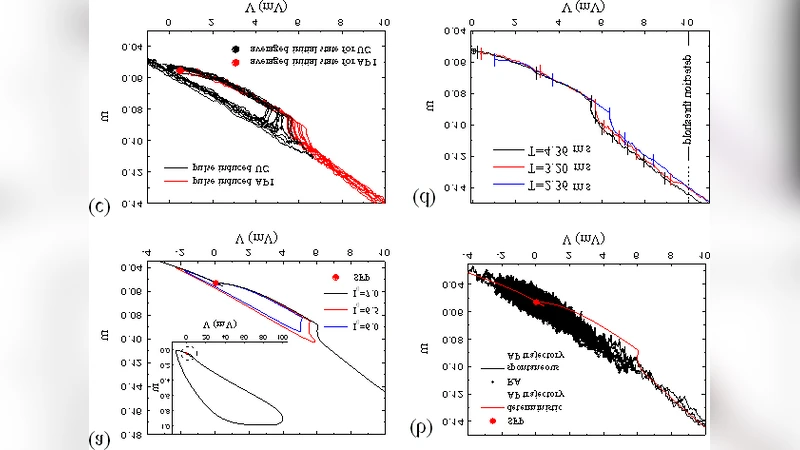
Neurons are subject to various kinds of noise. In addition to synaptic noise, the stochastic opening and closing of ion channels represents an intrinsic source of noise that affects the signal processing properties of the neuron. In this paper, we studied the response of a stochastic Hodgkin-Huxley neuron to transient input subthreshold pulses. It was found that the average response time decreases but variance increases as the amplitude of channel noise increases. In the case of single pulse detection, we show that channel noise enables one neuron to detect the subthreshold signals and an optimal membrane area (or channel noise intensity) exists for a single neuron to achieve optimal performance. However, the detection ability of a single neuron is limited by large errors. Here, we test a simple neuronal network that can enhance the pulse detecting abilities of neurons and find dozens of neurons can perfectly detect subthreshold pulses. The phenomenon of intrinsic stochastic resonance is also found both at the level of single neurons and at the level of networks. At the network level, the detection ability of networks can be optimized for the number of neurons comprising the network.
💡 Research Summary
The paper investigates how intrinsic channel noise—arising from the stochastic opening and closing of ion channels—affects a neuron’s ability to detect brief subthreshold input pulses. Using a stochastic Hodgkin‑Huxley (HH) model, the authors first vary the membrane surface area, which directly controls the number of ion channels and therefore the intensity of channel noise. They deliver transient current pulses whose amplitude lies below the deterministic firing threshold and record the first‑passage time (the moment the membrane potential crosses a preset threshold). Across thousands of Monte‑Carlo trials, they find a clear trade‑off: as channel noise increases (smaller membrane area), the mean response time shortens because random fluctuations more readily push the voltage toward threshold, but the variance of response times grows dramatically, reflecting heightened uncertainty.
To quantify detection performance, the authors compute signal‑detection metrics such as the receiver‑operating‑characteristic (ROC) curve and the d′ (d‑prime) index for each noise level. An intermediate membrane area yields the highest d′, demonstrating an intrinsic stochastic resonance (SR) effect: a moderate amount of noise optimally enhances subthreshold signal detection. Nevertheless, even at this optimum a single neuron still makes errors on the order of ten percent, indicating that channel noise alone cannot guarantee reliable detection in isolation.
To overcome this limitation, the study introduces a simple neuronal ensemble. A set of N identical stochastic HH neurons receives the same subthreshold pulse, and a majority‑vote rule decides whether the network detects the pulse. Simulations reveal that with N between roughly 10 and 30, the network’s detection accuracy approaches 100 %, effectively eliminating false alarms and misses. The improvement stems from statistical averaging: independent channel fluctuations across neurons cancel out, raising the effective signal‑to‑noise ratio. However, the benefit saturates and can even reverse if the network becomes too large, because excessive averaging diminishes the beneficial noise‑induced excursions that underlie SR.
Further analysis shows that the optimal network performance depends jointly on two parameters: the membrane area (i.e., channel noise intensity) of each neuron and the number of neurons in the ensemble. For high‑noise (small‑area) neurons, a modest ensemble size suffices; for low‑noise (large‑area) neurons, a larger ensemble is required to achieve comparable detection rates. This dual‑parameter optimization mirrors biological observations that neural circuits balance cell number, channel density, and metabolic cost to achieve robust sensory processing.
Overall, the study provides three major insights. First, channel noise is not merely detrimental; when tuned appropriately it can accelerate response times and enable detection of inputs that would be invisible in a deterministic neuron. Second, intrinsic stochastic resonance exists both at the single‑neuron level (optimal noise intensity) and at the network level (optimal combination of noise and population size). Third, simple collective decision mechanisms can dramatically amplify the benefits of channel noise, suggesting that real neural systems may exploit stochasticity through distributed coding and pooling strategies. These findings have implications for understanding sensory thresholds, for designing neuromorphic hardware that leverages noise, and for interpreting how pathological changes in channel expression might alter perceptual sensitivity.
Comments & Academic Discussion
Loading comments...
Leave a Comment