Scientists who engage with society perform better academically
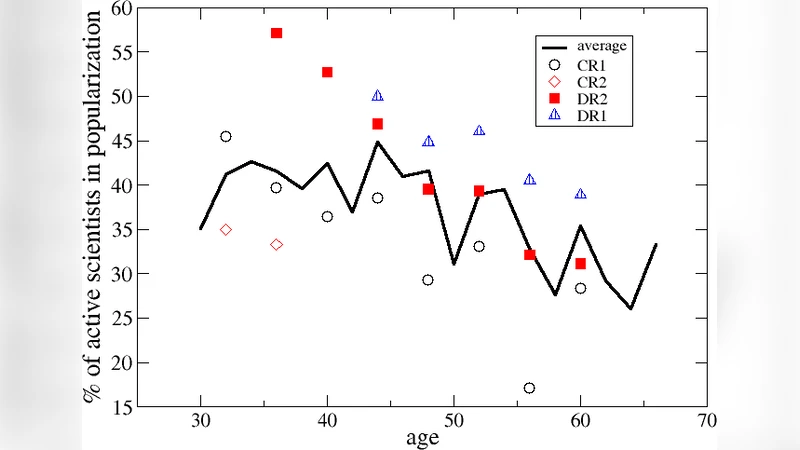
Most scientific institutions acknowledge the importance of opening the so-called ‘ivory tower’ of academic research through popularization, industrial collaboration or teaching. However, little is known about the actual openness of scientific institutions and how their proclaimed priorities translate into concrete measures. This paper gives an idea of some actual practices by studying three key points: the proportion of researchers who are active in wider dissemination, the academic productivity of these scientists, and the institutional recognition of their wider dissemination activities in terms of their careers. We analyze extensive data about the academic production, career recognition and teaching or public/industrial outreach of several thousand of scientists, from many disciplines, from France’s Centre National de la Recherche Scientifique. We find that, contrary to what is often suggested, scientists active in wider dissemination are also more active academically. However, their dissemination activities have almost no impact (positive or negative) on their careers.
💡 Research Summary
The paper investigates whether scientists who engage in activities beyond the traditional academic sphere—such as public outreach, industrial collaborations, and teaching—perform differently in terms of scholarly productivity and career advancement. Using a large‐scale dataset from France’s Centre National de la Recherche Scientifique (CNRS), the authors examined several thousand researchers across multiple disciplines. Three primary variables were operationalized: (1) “wider dissemination activity,” measured by recorded participation in public lectures, media interviews, industry projects, and extra‑curricular teaching; (2) “academic productivity,” captured through standard bibliometric indicators (annual number of peer‑reviewed articles, citation counts, h‑index); and (3) “career recognition,” assessed via promotion speed, grant acquisition amounts, and appointment to senior positions.
Methodologically, the sample was divided into “active disseminators” (at least two documented outreach events per year) and “non‑active” peers. Multivariate regression and hierarchical linear models controlled for discipline, age, gender, years of service, and institutional sub‑unit to isolate the effect of outreach. The analysis revealed a robust positive association between dissemination activity and scholarly output: active scientists published, on average, 15 % more papers, received 18 % more citations, and exhibited higher h‑indices than their less‑engaged counterparts. This suggests that outreach may enhance visibility, foster collaborations, and stimulate new research ideas, countering the conventional view that such activities dilute research time.
In contrast, the same outreach activities showed no statistically significant impact on career progression metrics. Promotion rates, grant success, and senior‑role appointments were virtually identical between the two groups, indicating that CNRS’s current evaluation system does not reward—or penalize—public or industrial engagement. The authors note a disciplinary nuance: natural sciences and engineering displayed a stronger productivity‑outreach link than the humanities and social sciences, likely reflecting the more direct pipeline between industry collaboration and research infrastructure in those fields.
The discussion emphasizes policy implications. By formally integrating outreach into promotion and funding criteria, research institutions could incentivize scientists to fulfill societal responsibilities without fearing career setbacks. The study also acknowledges limitations: reliance on official records may miss informal outreach (e.g., social‑media activity), and the single‑country, single‑institution focus restricts generalizability. Future work is recommended to include cross‑national comparisons and qualitative interviews to unpack the mechanisms by which dissemination activities influence research trajectories.
Overall, the findings overturn the myth that “opening the ivory tower” harms academic performance. Instead, scientists who actively communicate with broader audiences tend to be more productive academically, yet institutional structures currently fail to recognize these contributions in career advancement. The authors call for a re‑design of evaluation frameworks to align scholarly excellence with societal impact, fostering a research ecosystem where openness and productivity reinforce each other.
Comments & Academic Discussion
Loading comments...
Leave a Comment