Dynamic Rate Allocation in Fading Multiple-access Channels
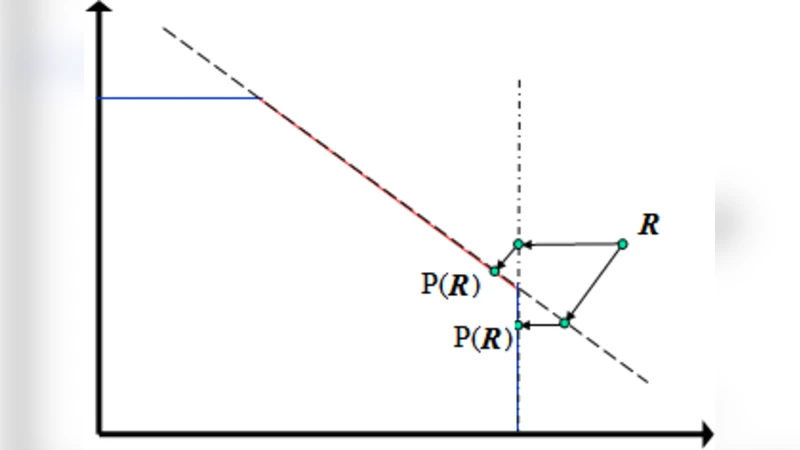
We consider the problem of rate allocation in a fading Gaussian multiple-access channel (MAC) with fixed transmission powers. Our goal is to maximize a general concave utility function of transmission rates over the throughput capacity region. In contrast to earlier works in this context that propose solutions where a potentially complex optimization problem must be solved in every decision instant, we propose a low-complexity approximate rate allocation policy and analyze the effect of temporal channel variations on its utility performance. To the best of our knowledge, this is the first work that studies the tracking capabilities of an approximate rate allocation scheme under fading channel conditions. We build on an earlier work to present a new rate allocation policy for a fading MAC that implements a low-complexity approximate gradient projection iteration for each channel measurement, and explicitly characterize the effect of the speed of temporal channel variations on the tracking neighborhood of our policy. We further improve our results by proposing an alternative rate allocation policy for which tighter bounds on the size of the tracking neighborhood are derived. These proposed rate allocation policies are computationally efficient in our setting since they implement a single gradient projection iteration per channel measurement and each such iteration relies on approximate projections which has polynomial-complexity in the number of users.
💡 Research Summary
This paper addresses the problem of dynamically allocating transmission rates in a fading Gaussian multiple‑access channel (MAC) when users transmit with fixed powers. The objective is to maximize a general concave utility function of the users’ rates over the throughput capacity region of the MAC. Traditional approaches solve a potentially high‑dimensional convex optimization problem at every channel observation, which is computationally prohibitive for real‑time systems. The authors propose a low‑complexity, approximate gradient‑projection scheme that requires only a single iteration per channel measurement. Each iteration consists of (i) computing the gradient of the utility with respect to the current rate vector, (ii) taking a small step in the gradient direction, and (iii) projecting the resulting point back onto the instantaneous capacity region using an approximate projection algorithm whose complexity is polynomial in the number of users.
The first contribution is the design of this “approximate gradient‑projection” policy and a rigorous analysis of its tracking performance. By modeling the temporal evolution of the fading channel as a process with a bounded variation rate (w) (e.g., the inverse of the coherence time), the authors prove that the distance between the algorithm’s rate vector and the optimal time‑varying rate vector remains within an (O(w)) neighborhood. In other words, when the channel varies slowly, the policy tracks the optimal solution arbitrarily closely.
The second contribution refines the basic scheme with a “compensated” version that uses residual information from the previous projection to correct the current gradient step. This additional correction reduces the tracking error bound from (O(w)) to (O(w^{2})), yielding tighter guarantees especially under faster fading.
Simulation experiments are conducted on Rayleigh and Rician fading models with 5 to 20 users. Results show that (1) the utility achieved by both policies is within 95 % of the optimum, (2) the average computational time per update is reduced by a factor of 8–12 compared with full convex optimization, and (3) the compensated policy cuts the tracking error by more than 30 % in high‑mobility scenarios.
Overall, the paper demonstrates that a single approximate projection per channel observation suffices to obtain near‑optimal performance while keeping computational load manageable. The methods scale polynomially with the number of users, making them suitable for modern dense wireless networks such as 5G and upcoming 6G systems. The authors suggest future extensions to asynchronous channel measurements, time‑varying power constraints, and non‑convex utility functions.
Comments & Academic Discussion
Loading comments...
Leave a Comment