Overview and main results of the DidaTab project
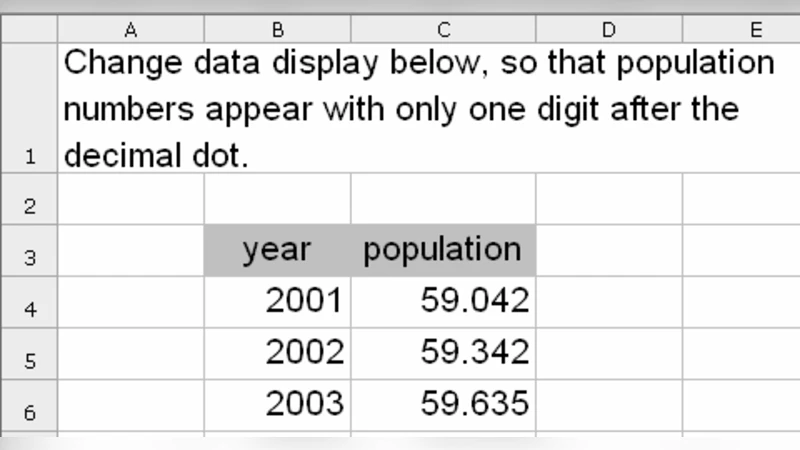
The DidaTab project (Didactics of Spreadsheet, teaching and learning spreadsheets) is a three year project (2005-2007) funded by the French Ministry of Research and dedicated to the study of personal and classroom uses of spreadsheets in the French context, focussing on the processes of appropriation and uses by secondary school students. In this paper, we present an overview of the project, briefly report the studies performed in the framework of the DidaTab project, and give the main results we obtained. We then explore the new research tracks we intend to develop, more in connection with EuSpRIG. Our main result is that the use of spreadsheet during secondary education (grade 6 to 12) is rather sparse for school work (and even more seldom at home) and that student competencies are weak. Curricula have to be reviewed to include more training of dynamics tabular tools (including databases queries) in order to ensure sufficient mastery of computer tools that have became necessary in many educational activities.
💡 Research Summary
The paper presents an overview of the DidaTab (Didactics of Spreadsheet) project, a three‑year French Ministry of Research initiative (2005‑2007) that investigated how secondary‑school students (grades 6‑12) use spreadsheets and what competencies they possess. The authors first describe the project’s motivation: spreadsheets are ubiquitous in professional and academic contexts, yet little is known about their penetration in French secondary education. To fill this gap, DidaTab combined four complementary research strands: (1) a large‑scale questionnaire administered to more than 2,500 students and 150 teachers across 30 schools, probing frequency of spreadsheet use at home and in school, perceived usefulness, and self‑confidence; (2) classroom observations in 12 lessons to capture how teachers introduce spreadsheets and how students interact with them in real time; (3) analysis of student‑produced spreadsheet assignments, evaluating cell‑reference accuracy, function usage, data sorting, and error typology; and (4) semi‑structured interviews with teachers together with a systematic review of the national curriculum.
The questionnaire revealed that spreadsheet use at home is extremely rare (under 5 % of respondents) and that only about 12 % of school assignments involve a spreadsheet. Observations showed teachers typically employ spreadsheets for simple data recording in mathematics or science labs, rarely moving beyond basic cell entry. Assignment analysis confirmed weak technical skills: the average score was 58 / 100, with advanced functions such as IF, VLOOKUP, or database queries appearing in less than 8 % of solutions. The most frequent errors were mis‑typed cell references (34 %), confusion between absolute and relative references (27 %), and mismatched data types (21 %). Teacher interviews highlighted a perceived need for spreadsheet instruction but identified barriers including lack of teaching materials, absence of clear assessment criteria, and limited class time. Curriculum analysis corroborated these findings, noting that while the French secondary curriculum mentions “digital tool use,” it does not specify concrete spreadsheet learning objectives or evaluation standards.
From these data the authors draw several key conclusions. First, spreadsheet usage in French secondary education is sparse, and students’ core competencies in tabular data manipulation are insufficient for the demands of modern academic and professional environments. Second, the current curriculum does not provide a structured pathway for developing spreadsheet fluency, nor does it integrate related skills such as database query formulation. Third, teacher professional development is essential; systematic training on both basic and advanced spreadsheet functions, as well as pedagogical strategies for integrating spreadsheets into authentic problem‑solving tasks, is required.
The paper proposes concrete policy and pedagogical recommendations. It calls for the explicit inclusion of spreadsheet and database‑query learning outcomes in the national curriculum, the creation of standardized teaching resources and assessment tools, and the establishment of a national teacher‑training program focused on spreadsheet pedagogy. Moreover, the authors suggest a partnership with EuSpRIG (European Spreadsheet Risks Interest Group) to explore spreadsheet risk management, error prevention, and quality assurance in educational contexts.
Future research directions outlined include extending the investigation to higher education and vocational training, evaluating the impact of project‑based learning that centers on spreadsheet tasks, and designing integrated data‑literacy curricula that combine spreadsheets with statistical reasoning and visualization. By addressing these gaps, the authors argue that spreadsheets can evolve from a peripheral calculation aid to a central instrument for developing data‑driven reasoning and problem‑solving skills among French secondary students.