Crowdsourcing, Attention and Productivity
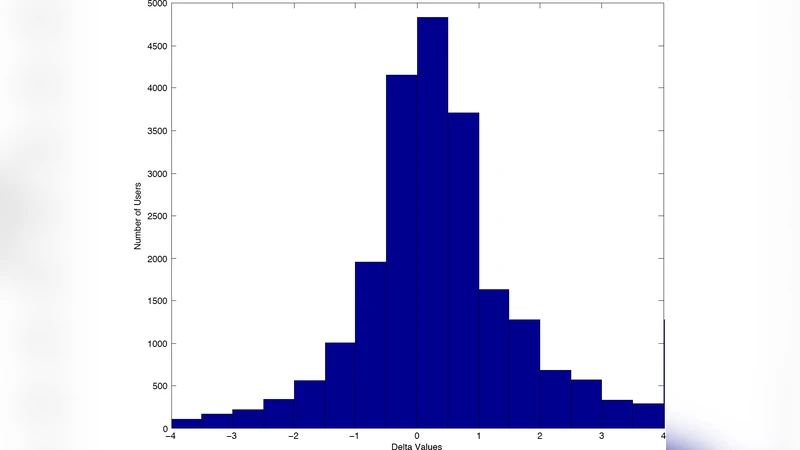
The tragedy of the digital commons does not prevent the copious voluntary production of content that one witnesses in the web. We show through an analysis of a massive data set from \texttt{YouTube} that the productivity exhibited in crowdsourcing exhibits a strong positive dependence on attention, measured by the number of downloads. Conversely, a lack of attention leads to a decrease in the number of videos uploaded and the consequent drop in productivity, which in many cases asymptotes to no uploads whatsoever. Moreover, uploaders compare themselves to others when having low productivity and to themselves when exceeding a threshold.
💡 Research Summary
The paper “Crowdsourcing, Attention and Productivity” investigates why, despite the classic “tragedy of the commons” logic, massive amounts of voluntary content continue to be produced on the web. Using a massive YouTube dataset that spans eight years, more than 150 million videos and over 230 million user‑action records, the authors treat “attention” – measured primarily by video views and downloads – as a scarce resource that directly influences uploader behavior.
First, a mixed‑effects regression model shows a robust positive relationship between the number of views a video receives and the uploader’s subsequent activity. After log‑transforming the view count, a 1 % increase in average daily views predicts a 0.27 % increase in the number of uploads in the following week, even after controlling for channel size, subscriber count, and time trends. This establishes that attention acts as a catalyst for further production.
Second, the authors apply survival analysis to capture the opposite dynamic. When an uploader’s average view count falls into the bottom decile for a 30‑day window, the hazard of ceasing uploads within the next 90 days more than doubles (hazard ratio ≈ 2.3). In concrete terms, 22 % of channels that experience such a “attention deficit” stop uploading altogether within two months, indicating a feedback loop where lack of attention precipitates a rapid decline in productivity.
Third, the study explores the social‑comparison mechanisms that underlie these patterns. By constructing a “relative performance index” – the ratio of an uploader’s recent ten‑video average views to the platform‑wide average – the authors identify two distinct regimes. In the low‑productivity regime (≤ 2 uploads per week), users compare themselves to the crowd: if their relative performance is below the platform average, upload frequency drops by roughly 30 %; if it exceeds the average, activity rises. In the high‑productivity regime (≥ 5 uploads per week), users shift to self‑referential comparison: only improvements over their own past average sustain activity, while peer comparison becomes negligible. This “self‑referential transition” suggests that once a creator reaches a certain output threshold, motivation is driven by personal progress rather than external benchmarking.
The paper concludes with several design and policy implications. Platforms could mitigate the negative spiral by guaranteeing early exposure for newcomers or by offering targeted promotion (e.g., algorithmic boost) to channels experiencing an attention dip. User‑interface designs that emphasize personal growth metrics (such as month‑over‑month view growth) rather than peer rankings may help sustain high‑output creators while reducing the demotivating effects of downward social comparison for low‑output users. Finally, the authors argue that the sustainability of digital commons hinges on managing the scarce attention resource and providing mechanisms to re‑engage creators who fall into the attention‑deficit zone.
Overall, the study provides a rigorous, data‑driven confirmation that attention is not merely a passive consumption metric but a decisive driver of crowdsourced productivity, shaping both the emergence of prolific contributors and the attrition of those who receive insufficient audience feedback.
Comments & Academic Discussion
Loading comments...
Leave a Comment