Sparse sampling: Spatial design for monitoring stream networks
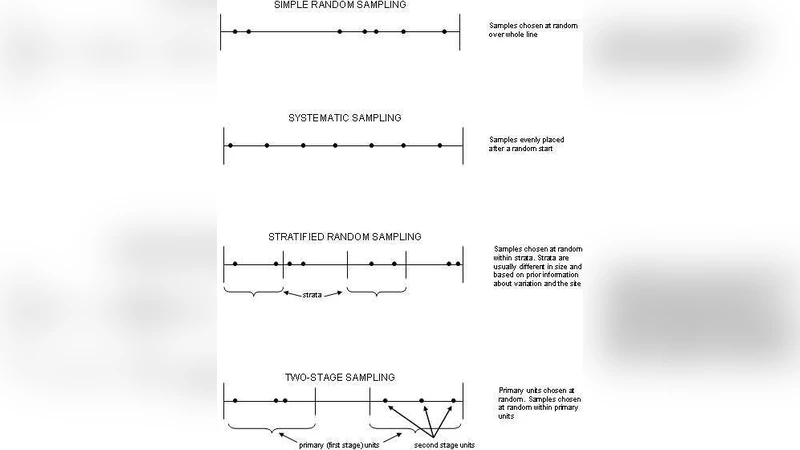
Spatial designs for monitoring stream networks, especially ephemeral systems, are typically non-standard, `sparse’ and can be very complex, reflecting the complexity of the ecosystem being monitored, the scale of the population, and the competing multiple monitoring objectives. The main purpose of this paper is to present a review of approaches to spatial design to enable informed decisions to be made about developing practical and optimal spatial designs for future monitoring of streams.
💡 Research Summary
The paper provides a comprehensive review of spatial design approaches for monitoring stream networks, with a particular focus on the challenges posed by complex and often ephemeral systems. Traditional monitoring designs—typically based on regular grids or uniformly spaced stations—are ill‑suited for riverine networks because streams form a hierarchical, tree‑like topology in which upstream and downstream processes are linked through highly non‑linear, temporally variable pathways. Consequently, attempting to monitor every reach at high density quickly becomes financially and logistically infeasible, and it can even degrade data quality through redundancy and increased measurement noise.
To address these limitations, the authors advocate a “sparse sampling” paradigm. Sparse sampling seeks to extract the maximum amount of information from the smallest feasible set of observation points, thereby balancing scientific rigor with budgetary constraints. The review first outlines the statistical foundations of sparse sampling. Using spatial covariance functions and variogram models, the degree of information overlap between potential sites can be quantified. By estimating variogram parameters from preliminary surveys and embedding them within a Bayesian framework, the design can explicitly incorporate parameter uncertainty and produce an “information‑gain” objective that is minimized when site redundancy is low.
The paper then surveys a suite of optimization techniques that have been applied to derive sparse designs. Randomized approaches such as Latin Hypercube sampling are useful for initial exploration but lack the ability to guarantee optimal information capture. Information‑theoretic methods, notably maximum‑entropy designs, explicitly minimize mutual information among sites and thus spread observations across the most informative parts of the network. Linear and integer programming formulations allow the inclusion of hard budget constraints, while evolutionary algorithms and simulation‑based heuristics can handle highly non‑linear, multi‑objective formulations that simultaneously address cost, detection power, and spatial coverage. The authors compare these methods across a set of criteria—computational tractability, robustness to model misspecification, and suitability for different monitoring goals (e.g., water quality, habitat condition, sediment transport).
A key contribution of the review is the emphasis on hierarchical, order‑based sampling strategies. By leveraging stream order (e.g., Strahler or Horton classifications) and basin area, the authors propose a tiered design: high‑resolution sampling in small, upstream tributaries captures fine‑scale variability, while lower‑resolution stations on large downstream reaches capture basin‑scale trends. This hierarchical approach respects the natural scaling of hydrological processes and dramatically reduces the number of required stations without sacrificing the ability to model network‑wide dynamics. The authors also discuss temporal stratification—seasonal or event‑driven sampling (e.g., after storm events or during drought periods)—as a complementary dimension that can be integrated into the spatial design to capture episodic pulses that dominate the behavior of intermittent streams.
The review presents several real‑world case studies that illustrate the practical benefits of sparse designs. In pilot projects across the Colorado River basin (USA), the Rhine catchment (Europe), and semi‑arid catchments in the Sahel, sparse designs achieved cost savings of 30–45 % relative to conventional dense networks while maintaining statistically indistinguishable estimates of key water‑quality indicators such as total phosphorus, dissolved oxygen, and temperature. The authors also describe a “predictive augmentation” technique, wherein model‑based predictions fill gaps between sparse observations, further improving the overall accuracy of network‑scale assessments.
Finally, the paper outlines future research directions. First, the integration of real‑time sensor networks (e.g., in‑situ optical or acoustic sensors) could enable adaptive, on‑the‑fly reallocation of sampling effort based on emerging conditions. Second, machine‑learning algorithms—particularly reinforcement learning—could be employed to continuously update the design as new data arrive, ensuring that the monitoring program remains optimal over time. Third, the development of multi‑objective optimization frameworks that simultaneously address water‑quality, habitat, and geomorphological objectives is identified as a critical need for comprehensive watershed management.
In summary, the authors argue that sparse sampling represents a scientifically sound, cost‑effective, and flexible strategy for modern stream‑network monitoring. By grounding design decisions in spatial statistics, optimization theory, and hierarchical ecological understanding, practitioners can construct monitoring programs that are both operationally feasible and capable of delivering high‑quality data for decision‑making in the face of increasing environmental uncertainty.
Comments & Academic Discussion
Loading comments...
Leave a Comment