Correlated connectivity and the distribution of firing rates in the neocortex
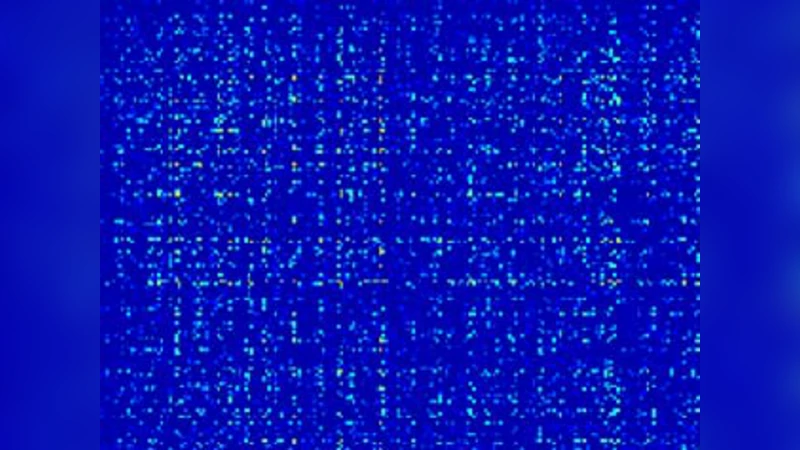
Two recent experimental observations pose a challenge to many cortical models. First, the activity in the auditory cortex is sparse, and firing rates can be described by a lognormal distribution. Second, the distribution of non-zero synaptic strengths between nearby cortical neurons can also be described by a lognormal distribution. Here we use a simple model of cortical activity to reconcile these observations. The model makes the experimentally testable prediction that synaptic efficacies onto a given cortical neuron are statistically correlated, i.e. it predicts that some neurons receive many more strong connections than other neurons. We propose a simple Hebb-like learning rule which gives rise to both lognormal firing rates and synaptic efficacies. Our results represent a first step toward reconciling sparse activity and sparse connectivity in cortical networks.
💡 Research Summary
The paper addresses a puzzling pair of experimental findings that have been difficult to reconcile within conventional cortical network models. First, recordings from auditory cortex reveal that neuronal firing is sparse and that the distribution of firing rates across active cells follows a log‑normal shape. Second, measurements of excitatory synaptic strengths between nearby cortical neurons also show a log‑normal distribution for the non‑zero connections. Traditional models that assume independent, identically distributed synaptic weights cannot simultaneously generate both of these statistical signatures.
To resolve this, the authors propose a new hypothesis: synaptic efficacies onto a given postsynaptic neuron are not independent but are statistically correlated. In other words, some neurons receive a disproportionate number of strong inputs, while others are predominantly driven by weaker inputs. This “correlated connectivity” is implemented in a simple rate‑based network model. Each neuron i receives an external drive plus the summed input Σ_j w_{ij} r_j from presynaptic partners. The firing rate r_i is determined by a rectified linear activation function f(I_i) =
Comments & Academic Discussion
Loading comments...
Leave a Comment